Guide
How to make clear ice at home
Directional freezing, explained properly - including the version that costs nothing and tells you within a day whether clear ice is worth spending money on.
By Michael W. · Published September 2026
The short answer
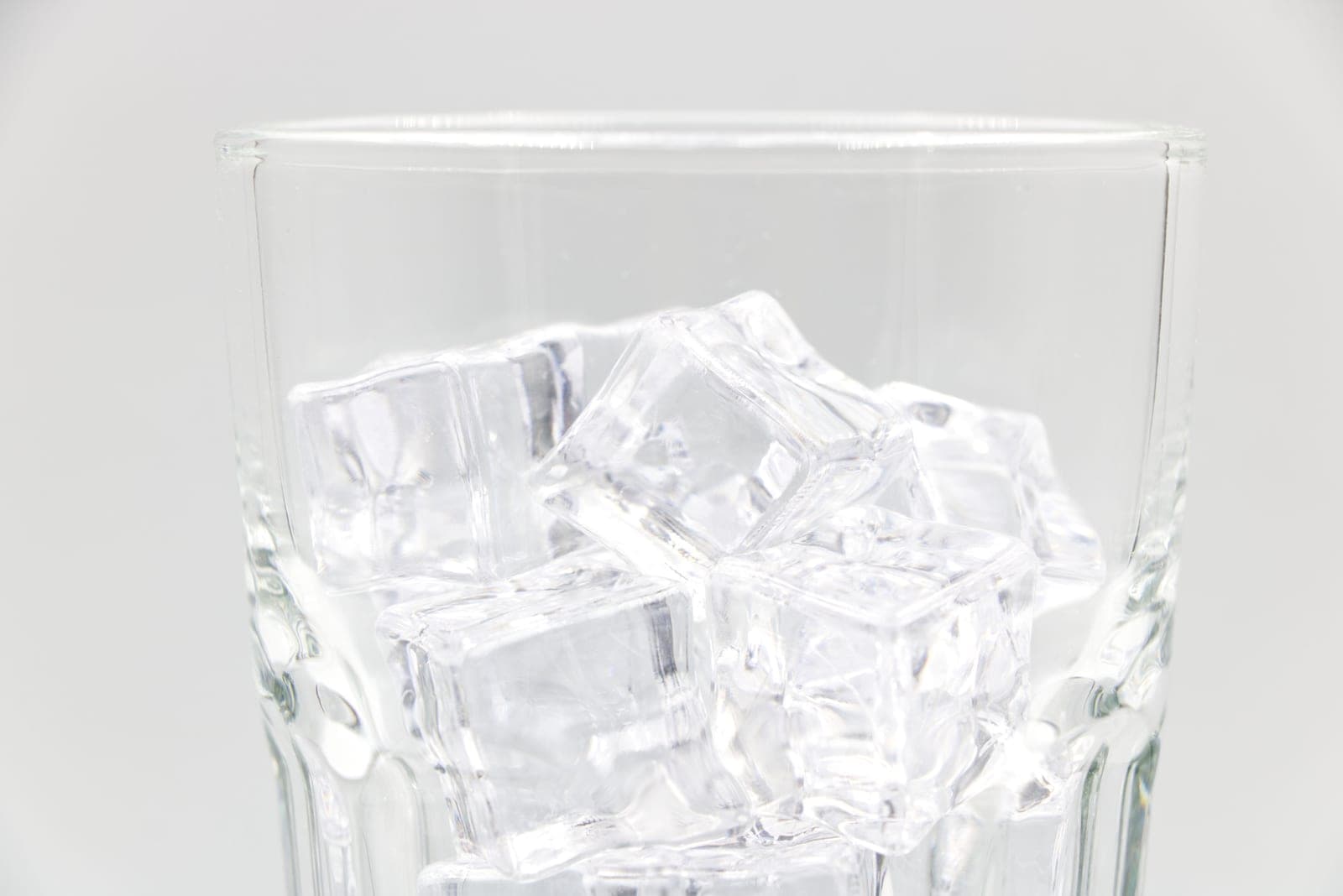
Clear ice is made by freezing water from one direction only. Insulate every face of a container except the top, freeze it slowly, and the dissolved air and minerals get pushed ahead of the freezing front into a sacrificial layer at the bottom that you cut off and discard. A small cooler with the lid off in your freezer does this for free. A purpose-built insulated mold does it in less space and with less cutting.
We earn a commission if you buy through the links on this page, at no extra cost to you. It never changes which product we pick. How we are funded.
Quick picks
| # | Product | Best for | Price |
|---|---|---|---|
| 1 | True Cubes Clear Ice Cube Tray If you want to skip the cutting | First clear-ice upgrade | |
| 2 |  Wintersmiths Ice Chest If you want spheres instead | Four spheres at a time |
Scroll the table sideways on a narrow screen. Prices are set by the retailer and change, so every price link opens the current listing rather than quoting a number here.
The mechanism
Why ordinary ice goes cloudy
Tap water carries dissolved air and dissolved minerals. When water freezes, those dissolved substances are rejected by the growing ice crystal rather than absorbed into it, so they get pushed ahead of the freezing front.
In an ordinary tray, the freezing front advances inward from every surface at once. The rejected air and minerals get squeezed toward the middle from all directions, and when the fronts meet in the center the impurities have nowhere left to go. They freeze in as microscopic bubbles, and a mass of tiny bubbles scatters light - which is what you are looking at when a cube is white in the middle.
That trapped air is also why cloudy ice cracks loudly in a drink and breaks up faster than it should. Every bubble is a void, and every void is a place the ice can fail.
The mechanism
Why directional freezing fixes it
Insulate every face except one and the front can only advance in a single direction. The rejected air and minerals are pushed steadily ahead of it, always toward the last part to freeze, and they end up concentrated there instead of being trapped in the middle.
That last-to-freeze zone becomes your sacrificial layer. Everything you did not want is in it, and you cut it off. The rest is water that froze with nothing left in it to scatter light - glass clear, and dense, with no voids to accelerate the melt.
This is the whole idea, and it is also why the folk advice about boiling water twice is mostly beside the point. Boiling removes some dissolved air and does nothing about the direction of the freeze. A cooler with the lid off beats boiled water in an ordinary tray every time.
Does gear fix this
Does buying something actually help
Here it does, and it is one of the clearer cases on this site. The cooler method genuinely works, and it also involves lifting a heavy block, tempering it, scoring it, splitting it with a mallet, and cutting the results down - every single time you want ice.
An insulated mold replaces all of that with filling a tray and, a day later, popping out four finished pieces. It is not making better ice. It is removing about ten minutes of wet, cold work per batch, and that is the difference between a technique you use twice and a technique you use weekly.
The honest sequence: try the cooler method once, this weekend, for nothing. If you find yourself doing it again the following week, buy a mold. If you find yourself wanting ice you did not plan for, that is the argument for a machine, and molds vs machines is the comparison to read.
Technique
Cutting a block without ruining it
Cutting ice is not difficult, but it does have a correct method and an incorrect one, and the incorrect one produces a lot of small fragments and a bad mood.
- Temper first. Five to ten minutes at room temperature. Cold ice is brittle and shatters; slightly tempered ice splits cleanly along a score.
- Score, then split. Draw a serrated knife along the line you want several times to create a groove, then tap along the groove with the back of a heavy knife. Do not try to cut through in one go.
- Tap, do not chop. The split propagates from the score. Force just makes fragments.
- Work on a towel. It stops the block sliding and it catches the meltwater.
- Keep the offcuts. Anything too small for a rocks glass is ideal shaking ice.
Storage
Keeping clear ice clear
Clear ice you made yesterday can be ruined by Thursday. Ice left uncovered in a freezer sublimates - it turns directly to vapor at the surface - which frosts the outside and rounds the edges. It also absorbs odors, and a cube that tastes faintly of last week's dinner ruins a drink far more effectively than a cloudy one does.
Store finished pieces in a sealed bag or a lidded container. If you are keeping them more than a few days, double-bag. And do not store them in the same drawer as anything strongly aromatic, sealed or not.
Serving is the other half of this. Good ice has to survive the trip from freezer to glass, and an insulated bucket is what makes that possible for a round rather than a single drink - see best bar cart accessories.
The picks in full
Every pick, and who each one is for
01 · If you want to skip the cutting
True Cubes Clear Ice Cube Tray
True Cubes · Entry tier
The cheapest honest route to genuinely clear 2-inch cubes, and the one most people should buy first.
The cooler method works and it involves a knife, a mallet and a towel every time. An insulated tray does the same directional freeze and hands you four finished 2-inch cubes with no cutting at all. This is the upgrade most people make after one weekend of the free version.
The specs that decide it
- Output:
- 4 cubes per cycle
- Cube size:
- roughly 2 in
- Method:
- insulated directional freezing
- Freezer time:
- about 18 to 24 hours
Who it is for
- Directional freezing done properly in an insulated shell, so the cloud collects in the sacrificial base
- Fits a standard freezer shelf without rearranging everything
- Nothing to plug in, nothing to service
Where it gives ground
- One cycle a day, so four cubes is your ceiling unless you buy two
- The base block has to be discarded or crushed each cycle
Skip this one if you routinely host more than two people, or you want ice on demand rather than ice you planned for yesterday.
02 · If you want spheres instead
Wintersmiths Ice Chest
Wintersmiths · Mid tier
The mold that turns an ordinary freezer into a reliable source of four 60mm clear spheres, with no compromise on clarity.
Same principle, shaped for 60mm spheres, four per cycle. You cannot cut a sphere out of a block by hand, so if spheres are what you want, a mold or a press is the only practical route.
The specs that decide it
- Output:
- 4 spheres per cycle
- Sphere size:
- 60 mm (2.36 in)
- Construction:
- EPP foam shell, food-grade silicone molds
- Water:
- ordinary tap water
Who it is for
- Four spheres per cycle is the most usable yield of any home mold at this size
- The foam shell is genuinely insulating rather than decorative, so clarity is consistent cycle to cycle
- Silicone molds release without the warm-water wrestling match cheap trays need
Where it gives ground
- Takes real freezer footprint - measure before you buy
- A full cycle is an overnight commitment, not an afternoon one
Skip this one if your freezer is a small apartment drawer, or you only ever drink one whiskey a week and a single-sphere mold would do.
Questions
Related questions
- Does boiling water make clear ice?
- Barely. Boiling removes some dissolved air, but the cloudiness is caused mainly by the direction of the freeze, not by the air content alone. A cooler with the lid off in an ordinary freezer beats twice-boiled water in a normal tray every time.
- How long does the cooler method take?
- 18 to 24 hours for a partial freeze. You want the top two thirds solid and the bottom still slushy - a fully frozen block has a cloudy core because the impurities had nowhere left to go.
- Why is the bottom of my block cloudy?
- That is the method working correctly. The cloudy zone is where all the rejected air and minerals ended up. Cut it off and keep it for shaking or for a highball.
- Do I need distilled water for clear ice?
- No. Directional freezing handles ordinary tap water. Distilled water is a small refinement on a variable that is not the main one.
- Can I make clear ice in a silicone tray with a lid?
- Not reliably. A lid is not insulation. You need something that genuinely slows heat loss from the sides and base, which is why the working products are foam shells rather than covered trays.
Read next
Related reading
- Clear ice for the home bar
Molds, machines and presses that make ice dense enough to chill a drink without watering it down.
- Best clear ice molds
Insulated molds compared on yield, piece size and the freezer footprint they actually demand.
- Why is my ice cloudy
Six causes of cloudy ice in the order they occur, how to read a cube to diagnose it, and the myths that waste your time.
- Clear ice molds vs ice machines
Cost, yield, space and maintenance compared - and the cheap intermediate step most buyers skip.
- How to shake a cocktail
Sealing, the shake itself, when to stop, and breaking the seal in one motion - plus dry shake and whip.