Guide
Why are ice presses so expensive?
You are buying several pounds of machined aluminum made to a tolerance, for a job a two-dollar mold does more slowly. Whether that is worth it depends on one habit.
By Michael W. · Published October 2026
The short answer
An ice press costs what it does for three reasons, and none of them is branding. First, it is a large solid lump of machined aluminum - the whole working principle is thermal mass, so the metal cannot be thinned out or replaced with plastic without the press ceasing to function. Second, the two halves have to be machined to a close tolerance and aligned, because the sphere you get is the cavity you paid for and a sloppy fit produces a lopsided ball with a seam. Third, the market is tiny: this is a single-purpose object for home bartenders, so there is no volume to spread tooling costs across the way there is for a cocktail shaker. On top of that, a press does not make ice - it reshapes a block you already froze, which means the real cost of ownership includes the mold that makes those blocks and the freezer space to keep them. The Pressice Barware press is the one we would buy because it ships with the mold that makes its blocks, so there is no second purchase to discover. But for most people a directional-freezing sphere mold is the better buy: the Berlinzo mold makes four 2.4-inch clear spheres per cycle with no machining, no plug and no block to plan around.
We earn a commission if you buy through the links on this page, at no extra cost to you. It never changes which product we pick. How we are funded.
Quick picks
| # | Product | Best for | Price |
|---|---|---|---|
| 1 | 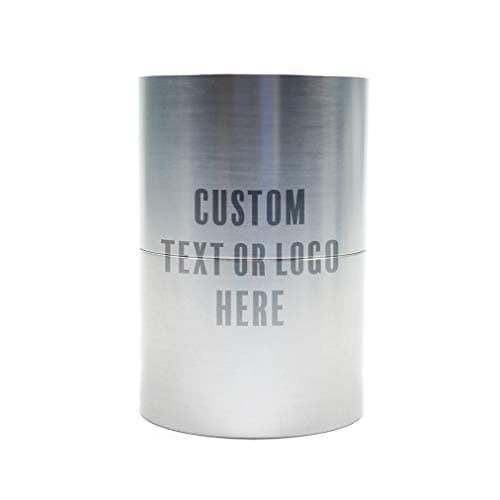 Pressice Barware Ice Ball Press The press to buy if you buy one | Spheres in under a minute | $274.99 View on Amazon #ad how we are funded - price as of October 27, 2026 |
| 2 | 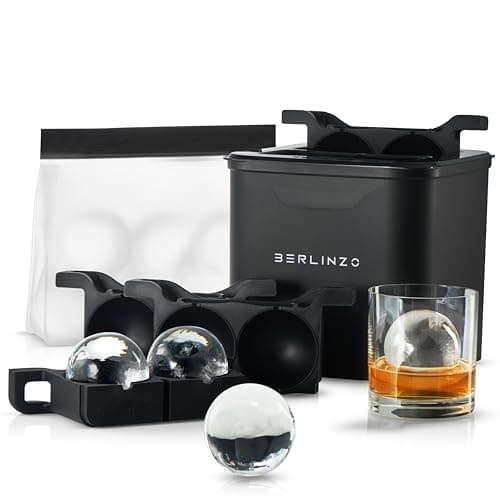 Berlinzo Clear Ice Ball Maker Mold, 4 Spheres The cheaper answer for most people | Four spheres at a time | $59.80 View on Amazon #ad how we are funded - price as of October 27, 2026 |
| 3 | 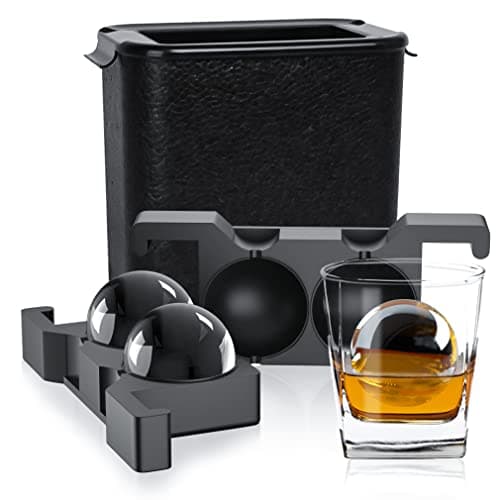 TINANA Clear Ice Ball Maker, 2 Spheres If freezer space is the constraint | Small freezers | $27.98 #ad how we are funded - price as of October 27, 2026 |
| 4 | 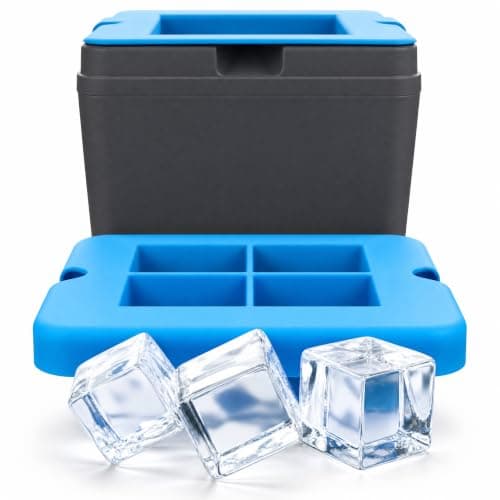 True Cubes Clear Ice Cube Maker If you do not actually need spheres | First clear-ice upgrade | $40.99 View on Amazon #ad how we are funded - price as of October 27, 2026 |
Scroll the table sideways on a narrow screen. Every price in this table comes from Amazon’s own product data, is refreshed daily, and is stamped with the date it was read - and the button opens the current listing, which is always the final word.
Reason one
The mass of metal is the product
An ice press has no motor, no heater and no moving part beyond gravity. It works purely by thermal conduction: aluminum conducts heat far faster than ice does, so when a block of ice is placed between two room-temperature aluminum halves, the metal melts the ice it touches and the upper half sinks under its own weight until the block has been reshaped into the cavity between them.
That mechanism sets a floor under the cost. The press needs enough thermal mass to melt its way through a block without itself dropping to the temperature of the ice, because an aluminum press that has gone cold stops working and has to warm up again. There is no engineering trick that lets a manufacturer use less metal - thinning the walls or replacing the core with plastic does not make a cheaper press, it makes a press that does not press.
Aluminum is also not a cheap input at that mass, and it has to be food-grade and either anodized or left bare and cleanable. So before any machining happens, a press has a raw material cost that a silicone mold - a few ounces of cast rubber - simply does not have. That is the single biggest line item and the reason the category starts where it starts.
This also explains the weight. A press that feels surprisingly heavy in the hand is working as designed; one that feels light is either hollow or small, and both of those compromise the cycle.
Reason two
The sphere you get is the tolerance you paid for
The second cost is machining. The hemispherical cavity in each half has to be cut accurately and the two halves have to stay aligned as the top one descends, because any play between them shows up directly in the finished ice. A press with a loose fit produces a sphere with a visible equatorial seam, or an off-center ball with one flat side - and since the entire reason to buy a press is appearance, a lopsided sphere is a total product failure rather than a minor flaw.
That is a different manufacturing problem from stamping a shaker tin. A tin is formed in one operation and judged on whether it seals; a press is two machined parts judged on how they meet. Machining time, fixturing and inspection all scale with how tight that tolerance has to be, and they are labor costs rather than material costs, which is why they do not fall much with volume.
There is also a drainage requirement people do not think about. The press has to shed the meltwater it creates, or the block floats on a film of its own water and the sphere comes out undersized. Getting a channel or a drain path into a solid aluminum block is more machining, on a part that also has to stay flat and sit stable on a counter.
Reason three
The market is tiny, and the object does one thing
A cocktail shaker sells to anyone who has ever made a drink. An ice press sells to the much smaller group of people who already make clear ice, already own a mold, already drink spirits over a large single rock, and want that rock to be a sphere. Each of those filters removes most of the market, and what is left is a few thousand buyers a year rather than a few million.
Small markets carry their fixed costs differently. Tooling, inspection fixtures, packaging design and listing photography cost roughly the same whether you sell five hundred units or five hundred thousand, and with five hundred the per-unit share of that is substantial. There is also no commodity tier to anchor prices downward: nobody makes a throwaway ice press, because a throwaway ice press would not work.
That is a genuine difference from nugget ice makers, where the price is driven by the mechanism inside rather than by market size. Why are nugget ice makers so expensive works through that one, and it is worth reading alongside this page if you are deciding where to spend in the ice group generally.
The hidden cost
A press does not make ice
This is the part that catches buyers out, and it is the largest real cost of ownership. A press reshapes ice you already have. You need a block of the right size and shape to feed it, which means either a dedicated block mold or a container big enough to freeze one - plus 18 to 36 hours of lead time depending on the method, plus the freezer space to keep blocks on hand.
So the honest price of a press is the press plus the mold plus a permanent allocation of freezer real estate. That is why we picked the Pressice: it ships with the mold that makes its blocks, which removes the second purchase. A press sold bare looks cheaper on the listing and is not cheaper to own.
| Route to a large sphere | What it costs you | Cycle time | Yield per cycle |
|---|---|---|---|
| Aluminum press + block mold | Highest outlay; needs a block kept in the freezer | Under a minute per sphere, once a block exists | One sphere at a time, repeatable |
| Berlinzo 4-sphere directional mold | Low outlay; silicone, no plug | A freeze cycle | 4 spheres at 2.4 in |
| TINANA 2-sphere mold | Lowest sphere outlay; fits a drawer | 30 to 36 hours per the maker | 2 spheres at 2.5 in |
| True Cubes tray (cubes, not spheres) | Lowest outlay for clear ice | About 18 to 24 hours | 4 cubes at 2 in |
Read that table and the press's actual advantage becomes clear, and it is narrower than the price suggests: it is speed on demand. If a block is in the freezer, a press produces a sphere in under a minute, which a mold cannot do at any price. Ice ball press vs mold is the full head-to-head, and best ice ball presses is the category.
The verdict
When the money is justified, and when it is not
A press is worth it if you make spheres regularly and on demand - if you have people over often, if the drink is made in front of them, and if you will genuinely keep blocks frozen as a standing habit. In that situation the press is a tool that does something no mold does, and the aluminum is buying you a sixty-second turnaround rather than a day's planning.
It is not worth it if you drink one or two spirits a week. A directional-freezing sphere mold gives you clear spheres of almost the same size for a fraction of the outlay, and the only thing you give up is immediacy - you have to have decided yesterday. For the great majority of home bars that is not a real constraint, because the drink is not a surprise.
And it is worth asking whether you want a sphere at all. A sphere has the lowest surface-area-to-volume ratio of any shape, so it melts marginally slower than a cube of the same mass - but the difference over the twenty minutes you spend with a drink is small, and a 2-inch cube is easier to make, easier to store and fits more glasses. Best ice for whiskey compares the shapes on what they do in the glass rather than on what they look like.
Whichever route you take, the clarity comes from the freezing method and not from the press. Directional freezing - insulating the mold so it freezes top-down and drives the cloud into a sacrificial base - is what produces clear ice; aluminum only changes the shape afterwards. Directional freezing, explained covers the mechanism and how to make clear ice covers the method. And if you are still mapping the category rather than shopping one shelf of it, types of barware sorts ice equipment into place alongside the tools and the glass.
The picks in full
Every pick, and who each one is for
01 · The press to buy if you buy one
Pressice Barware Ice Ball Press
Pressice Barware · The step up
#ad how we are funded - price as of October 27, 2026
Machined aluminum that turns a rough block into a sphere by conduction alone, in about the time it takes to pour.
Machined aluminum working by gravity and thermal conduction alone, turning a suitable block into a sphere in under a minute, and it includes the ice mold that makes its blocks. That last detail is the one that matters on cost: a press sold without its block mold is an incomplete purchase. Skip it if you are not going to keep a block in the freezer - a press you have to plan around is an ornament.
The specs that decide it
- Material:
- machined aluminum
- Method:
- gravity press, thermal conduction
- Cycle:
- under a minute per sphere from a suitable block
- Includes:
- press plus the ice mold that makes its blocks
Who it is for
- No waiting - you can make a sphere while the guest is still deciding
- Aluminum mass does the work, so there is nothing to break
- The block mold is in the box, so it is a complete system rather than half of one
Where it gives ground
- It is heavy, and it needs somewhere to live
- Made to order and laser engraved, so it is not a next-day impulse buy
Skip this one if you are not going to keep a block in the freezer. A press you have to plan around is an ornament.
02 · The cheaper answer for most people
Berlinzo Clear Ice Ball Maker Mold, 4 Spheres
Berlinzo · Mid tier
#ad how we are funded - price as of October 27, 2026
The mold that turns an ordinary freezer into a reliable source of four 2.4-inch clear spheres, without a machine or a plug.
The Berlinzo mold makes four 2.4-inch clear spheres per cycle in food-grade BPA-free silicone by directional freezing, and includes an XL freezer bag for the finished spheres. No metal, no tolerance, no block to plan. Skip it if your freezer is a small apartment drawer, or if you only drink one whiskey a week and a two-sphere mold would do.
The specs that decide it
- Output:
- 4 spheres per cycle
- Sphere size:
- 2.4 in
- Construction:
- food-grade BPA-free silicone, directional freeze
- Also included:
- XL freezer storage bag for finished spheres
Who it is for
- Four spheres per cycle is the most usable yield of any home mold at this size
- Flexible silicone pushes each sphere out intact instead of cracking it
- The storage bag is the part people forget: you can batch ahead and free the mold again
Where it gives ground
- Takes real freezer footprint - measure before you buy
- A full cycle is an overnight commitment, not an afternoon one
Skip this one if your freezer is a small apartment drawer, or you only ever drink one whiskey a week and a two-sphere mold would do.
03 · If freezer space is the constraint
TINANA Clear Ice Ball Maker, 2 Spheres
TINANA · Entry tier
#ad how we are funded - price as of October 27, 2026
The same directional-freezing idea as a four-sphere mold in a footprint that fits a freezer drawer, at half the yield.
Two 2.5-inch spheres per cycle in premium silicone with a non-stick release, in a footprint that fits a freezer drawer, at 30 to 36 hours per cycle per the maker. Half the yield of a four-sphere mold. Its honest caveat: if you do have the space for four, the price gap does not track the yield gap.
The specs that decide it
- Output:
- 2 spheres per cycle
- Sphere size:
- 2.5 in
- Construction:
- premium silicone, non-stick release
- Freezer time:
- 30 to 36 hours per the maker
Who it is for
- Fits where the four-sphere molds will not
- A 2.5-inch sphere is actually larger than the four-sphere molds produce
- Easier to fill and carry without sloshing
Where it gives ground
- Two spheres per cycle means planning ahead for any company
- A 30 to 36 hour cycle is longer than the four-sphere molds ask for
Skip this one if you have the freezer space for a four-sphere mold - the price gap does not track the yield gap.
04 · If you do not actually need spheres
True Cubes Clear Ice Cube Maker
True Cubes · Entry tier
#ad how we are funded - price as of October 27, 2026
The cheapest honest route to genuinely clear 2-inch cubes, and the one most people should buy first.
Four 2 x 2 x 2 in clear cubes per cycle by insulated directional freezing in about 18 to 24 hours. Worth stating plainly in a page about press prices: a cube chills a drink as well as a sphere of similar mass, and this is the cheapest honest route to clear ice. Skip it if you host more than two people regularly or want ice on demand.
The specs that decide it
- Output:
- 4 cubes per cycle
- Cube size:
- 2 x 2 x 2 in
- Method:
- insulated directional freezing
- Freezer time:
- about 18 to 24 hours
Who it is for
- Directional freezing done properly in an insulated shell, so the cloud collects in the sacrificial base
- Fits a standard freezer shelf without rearranging everything
- Nothing to plug in, nothing to service
Where it gives ground
- One cycle a day, so four cubes is your ceiling unless you buy two
- The base block has to be discarded or crushed each cycle
Skip this one if you routinely host more than two people, or you want ice on demand rather than ice you planned for yesterday.
Questions
Related questions
- Why are ice ball presses so expensive?
- Three reasons: they are a large mass of machined aluminum and the mass is the working principle, so it cannot be reduced; the two halves need a close machining tolerance because the sphere is the cavity; and the market is small, so fixed costs spread across few units. None of the price is branding.
- Does an ice press make ice?
- No. It reshapes a block of ice you already froze, which means the true cost includes a block mold and permanent freezer space. A press sold without its block mold looks cheaper on the listing and is not cheaper to own.
- Is an ice press worth it?
- Worth it if you make spheres on demand in front of guests, because a press turns a block into a sphere in under a minute and a mold cannot. Not worth it if you drink one or two spirits a week - a directional-freezing sphere mold gets you nearly the same ice for a fraction of the outlay.
- Why can't an ice press be made of plastic or thin metal?
- Because it works by thermal conduction, not force. The press needs enough thermal mass to melt through a block without chilling down to the ice's temperature and stalling. Thinner walls or a plastic core do not make a cheaper press; they make one that stops working mid-cycle.
- Is a sphere actually better than a cube?
- Marginally. A sphere has the lowest surface-area-to-volume ratio of any shape, so it melts slightly more slowly than a cube of equal mass - but over the twenty minutes you spend with a drink the difference is small, and a 2-inch cube is easier to make, store and fit in a glass.
- What is the cheapest way to get clear ice spheres?
- A directional-freezing silicone sphere mold. A four-sphere mold yields 2.4-inch spheres per freeze cycle with no metal and no plug, and a two-sphere version fits a freezer drawer. The clarity comes from the freezing method, not from a press.
Read next
Related reading
- Clear ice for the home bar
Molds, machines and presses that make ice dense enough to chill a drink without watering it down.
- Best ice ball presses
Aluminum presses compared on sphere size and cycle speed - and the block problem you have to solve first.
- Ice ball press vs mold
A press reshapes ice, it does not make it - which is why the mold is almost always the first purchase.
- Why are nugget ice makers so expensive?
An auger, a near-continuous duty cycle and a three-pound bin - where the cost of a nugget machine actually sits.
- Directional freezing, explained
The one mechanism behind every clear-ice mold, and why a machine reaches the same result a completely different way.
- Best ice for whiskey
Size, shape and clarity ranked by how much each actually changes a whiskey pour - including when to skip the ice.