Guide
Are whiskey decanters worth it?
A decanter does nothing to the whiskey. That is not an argument against owning one - it is the argument for buying the right one and using it the right way.
By Michael W. · Published October 2026
The short answer
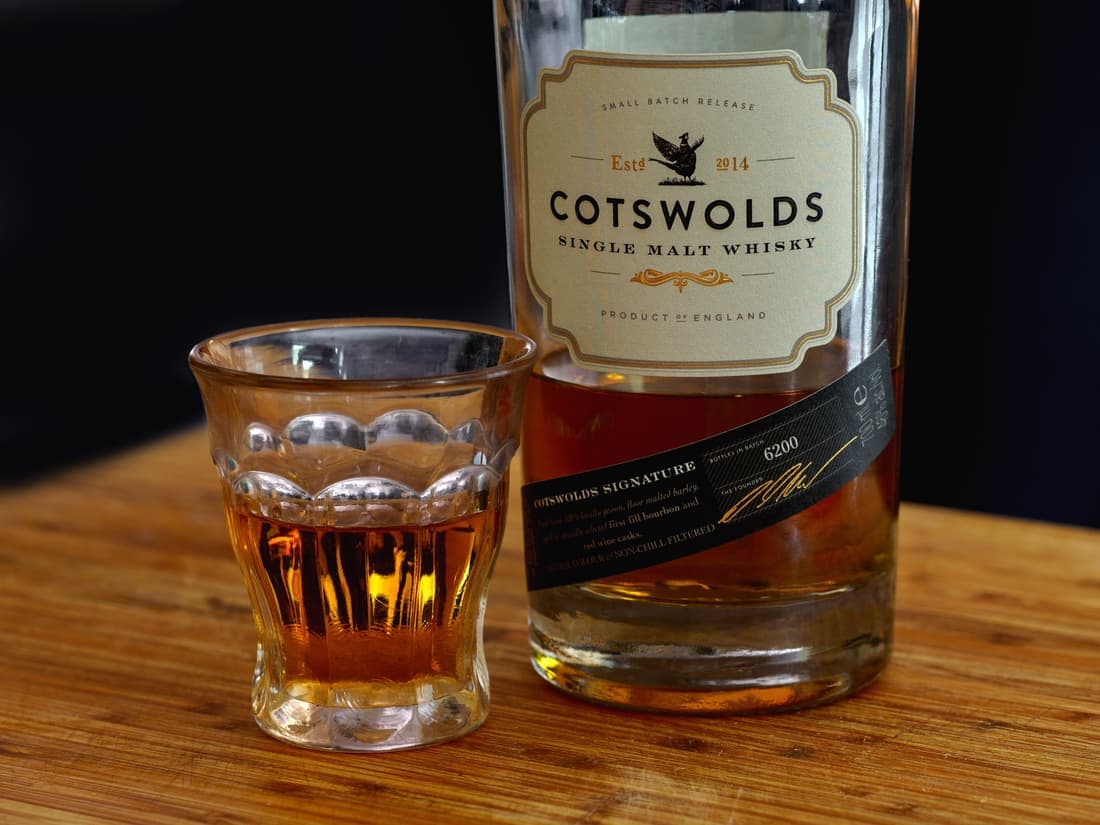
A whiskey decanter is worth it for presentation, pouring and the pleasure of the object - and worth nothing at all for the whiskey itself. Unlike wine, spirits at 40% ABV and up do not improve with aeration, do not need to breathe, and change in a decanter only in ways you do not want. So the honest test is three questions: will it sit somewhere you see it, will you finish the bottle inside a few months, and is the stopper good enough to slow evaporation? If yes to all three, buy one - the Luigi Bormioli Mixology Elixir at 25.25 oz with a stopper its maker calls airtight is the sensible choice, and the Ravenscroft Taylor in mouth-blown lead-free crystal is the one to buy if it is meant to outlast you. If the bottle is a rare one you will open twice a year, leave it in the bottle. And never decant into unmarked vintage crystal: older cut crystal can be leaded, and lead leaches into spirits over months.
We earn a commission if you buy through the links on this page, at no extra cost to you. It never changes which product we pick. How we are funded.
Quick picks
| # | Product | Best for | Price |
|---|---|---|---|
| 1 | 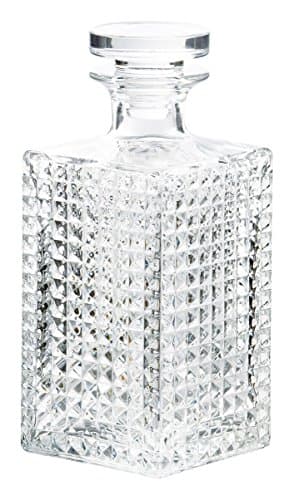 Luigi Bormioli Mixology Elixir Spirits Decanter The one to buy if you are unsure | A decanter you use, not just display | $36.99 View on Amazon #ad how we are funded - price as of October 10, 2026 |
| 2 | 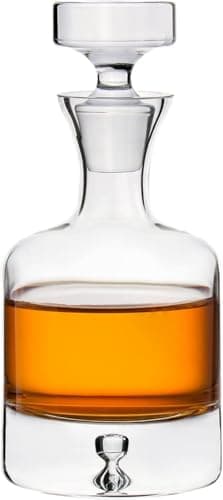 Ravenscroft Crystal Taylor Decanter If it should outlast you | The decanter you keep for twenty years | $79.99 View on Amazon #ad how we are funded - price as of October 10, 2026 |
| 3 | 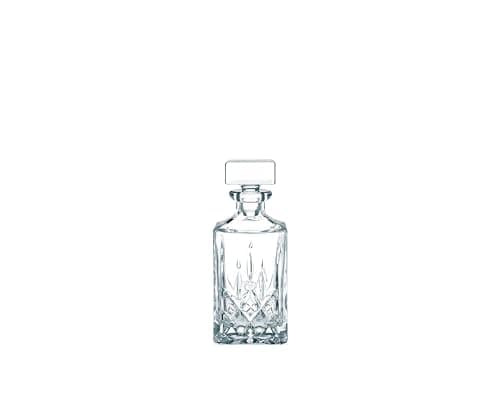 RIEDEL Spey Whisky Decanter If shelf height is the constraint | Exactly one bottle, on a crowded cart | $149.00 View on Amazon #ad how we are funded - price as of October 10, 2026 |
| 4 | 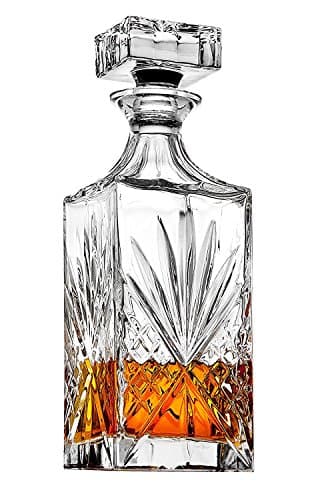 Godinger Dublin Whiskey Decanter If you want to find out cheaply | A cut-glass decanter at bottle money | $29.46 View on Amazon #ad how we are funded - price as of October 10, 2026 |
Scroll the table sideways on a narrow screen. Every price in this table comes from Amazon’s own product data, is refreshed daily, and is stamped with the date it was read - and the button opens the current listing, which is always the final word.
The honest answer
What a decanter does to whiskey: nothing
The case for decanting wine is chemical. A young tannic red opens up with oxygen exposure, and a decanter both aerates it and separates it from sediment. Neither applies to whiskey. Spirits are distilled, filtered and bottled at 40% ABV or higher, there is no sediment to leave behind, and ethanol at that concentration does not soften with a few hours of air the way tannin does. Pouring bourbon into glass does not change what is in the glass.
What air does to whiskey over longer timescales is the opposite of improvement. Oxidation in a part-full bottle or an imperfectly stoppered decanter slowly flattens the aromatic top notes - the bright, volatile compounds that make a dram smell like something - and leaves the heavier, duller ones behind. That takes months rather than hours, and it is a loss, not a development. Evaporation does the same job faster if the seal is poor.
So anyone who tells you a decanter lets whiskey breathe is applying wine logic to a spirit. If you want to open up a dram, the tool is water, a drop at a time, in a nosing glass - not a vessel on a shelf. Best whiskey glasses for neat pours covers the glasses that actually do something to the aroma.
The case for
Three reasons a decanter is still worth owning
First, presentation, and we are not being dismissive about it. A cut or mouth-blown decanter catching light on a cart is one of the few pieces of bar equipment that is genuinely decorative, and a home bar is partly a thing you look at. An object you enjoy seeing every day is a legitimate purchase. It just is not a functional one.
Second, pouring. A decanter with a flared spout and a heavy base pours better than almost any bottle - no dribble down the shoulder, no glug, and weight low enough that you can pour one-handed into a glass you are holding. If you pour whiskey for other people, this is a small daily improvement you feel.
Third, anonymity. A decanter removes the label, which matters in two opposite directions: it stops a cheap bottle looking cheap, and it stops an expensive one inviting comment. Blind pours taste different from pours you have already read the price of, and some people decant for exactly that reason.
A fourth reason people cite - consolidating the last inches of several bottles - is a bad idea. A part-full decanter has a large air volume above a small amount of spirit, which is the fastest oxidation geometry there is. Finish the bottles instead.
The case against
The two real risks, and how long you have
Lead is the serious one. Traditional lead crystal contains lead oxide, which is what gives old cut crystal its weight and sparkle, and lead leaches into acidic and alcoholic liquids over time. For a glass you drink from in twenty minutes that is a negligible exposure. For a decanter where a spirit sits for months, published research on leaded decanters has found lead concentrations rising with storage time. This is why every decanter we pick is specified lead-free, and why an unmarked inherited crystal decanter is the one piece of vintage barware we would not use for storage.
Evaporation and oxidation is the everyday one. Almost every decanter stopper is a friction fit - ground glass sitting in a ground neck - and a friction fit is not a seal. Alcohol is volatile, and over months a friction-fit decanter loses strength and aroma to the air in a way a screw-capped or corked bottle does not. That is why the Luigi Bormioli's airtight-stoppered design is the practical pick here rather than the prettiest one.
The workable rule is to treat a decanter as a serving vessel on a weeks-to-a-few-months clock, not as storage. Decant the bottle you are drinking now, finish it, refill. Do not decant something you intend to keep for years, and do not decant the bottle you open twice a year - that one stays in its own glass with its own cap. Best whiskey decanters covers capacity and stopper design in detail.
Before you buy
Four checks that decide whether yours gets used
- Capacity against the bottle. A 750 ml bottle is 25.4 oz, so a 25 to 27 oz decanter takes one bottle with nothing left behind to go stale. A 35 oz decanter is a bigger, better-looking object that will usually be two-thirds full, which is worse for the whiskey.
- Height against the shelf. Decanters are routinely 10 inches or more and bar cart shelves routinely are not. The 8 inch option exists for exactly this reason - measure before you order.
- Lead-free, stated. Not implied, not assumed from the word crystal. If a listing or a maker does not say lead-free, treat it as leaded for storage purposes.
- Cleaning. A narrow neck plus hand-wash-only is the combination that puts a decanter in a cupboard. A dishwasher rating from the maker is worth real money here.
That fourth point is the one people underrate, and it is why it has its own page: how to clean a whiskey decanter covers the haze, the rice trick that mostly does not work, and the drying problem that is actually the hard part.
If, having read all that, the answer is that you want the object - buy the object, enjoy it, and keep the bottle it came from so you can put the spirit back if you stop using it. If the answer is that you wanted the whiskey to get better, then no decanter on this site will do that, and the money is better spent on a glass that changes what you smell or on glassware for the drinks you actually make.
The picks in full
Every pick, and who each one is for
01 · The one to buy if you are unsure
Luigi Bormioli Mixology Elixir Spirits Decanter
Luigi Bormioli · Mid tier
#ad how we are funded - price as of October 10, 2026
SON.hyx lead-free glass with the only stopper here the maker calls airtight, and a dishwasher rating on top of it.
25.25 oz is one 750 ml bottle with a little to spare, the stopper is described by the maker as airtight, and it is dishwasher safe - which removes the single reason decanters end up unused.
The specs that decide it
- Capacity:
- 25.25 oz (about 750 ml)
- Dimensions:
- 3.5 in diameter by 8 in tall
- Material:
- SON.hyx lead-free crystal glass
- Stopper:
- glass, described by the maker as airtight
- Dishwasher:
- dishwasher safe per the maker
- Made in:
- Italy
Who it is for
- 25.25 oz is one 750 ml bottle with a little to spare, so nothing is left behind to go stale
- An airtight stopper is the difference between a decanter and a slow evaporation experiment
- Dishwasher safe, which removes the single most annoying thing about owning a decanter
Where it gives ground
- Faceted machine glass, not hand-cut - at close range it reads as well made rather than special
- Square shoulders hold a film of residue in the corners that a bottle brush has to reach
Skip this one if you want the heirloom. This is the practical choice and it looks like the practical choice.
02 · If it should outlast you
Ravenscroft Crystal Taylor Decanter
Ravenscroft Crystal · The one worth stretching for
#ad how we are funded - price as of October 10, 2026
Mouth-blown lead-free crystal with a flared spout and a weighted base - the one here that reads as an heirloom rather than a gift box.
Mouth-blown lead-free crystal, 35 oz, a flared spout and a weighted base. The one here that reads as an heirloom rather than a gift box, and lead-free is the specification that matters in a vessel spirits sit in.
The specs that decide it
- Capacity:
- 35 oz
- Dimensions:
- 10.5 in tall by 5 in wide
- Material:
- lead-free crystal, handcrafted in Europe
- Detail:
- mouth-blown bubble in the base
- Care:
- hand wash
Who it is for
- Lead-free crystal, which is the specification that matters most in a vessel spirits sit in for months
- 35 oz swallows a full 750 ml bottle with room left to pour without dribbling
- Flared spout and heavy base make it a genuinely good pourer, not just an object
Where it gives ground
- Hand wash only, and a tall narrow body is awkward to dry inside
- The most expensive pick here by a distance, for a vessel that does nothing to the whiskey
Skip this one if you want one bottle decanted and no ceremony. A 25 oz square decanter does that job for far less.
03 · If shelf height is the constraint
RIEDEL Spey Whisky Decanter
RIEDEL · The step up
#ad how we are funded - price as of October 10, 2026
Cut machine-made crystal sized to 750 ml exactly and only 8 inches tall - the decanter that fits a cart shelf and a dishwasher both.
26.5 oz and only 8 inches tall, so it clears a bar cart shelf that most decanters do not, and RIEDEL lists it as dishwasher safe. Cut crystal that is also practical.
The specs that decide it
- Capacity:
- 26.5 oz
- Height:
- 8.07 in (205 mm)
- Material:
- crystal glass, premium machine-made
- Decoration:
- cut pattern
- Dishwasher:
- dishwasher safe per RIEDEL
Who it is for
- 750 ml exactly, so one bottle goes in and nothing is left behind to go stale
- 8 inches tall clears a cart shelf, which most decanters do not
- Dishwasher safe, which is rare in a decanter and removes the worst chore of owning one
Where it gives ground
- The stopper is a friction fit like every decanter here - this is not airtight long-term storage
- The cut pattern hides the liquid level, so you cannot see at a glance how much is left
Skip this one if you want a mouth-blown heirloom. This is a precise machine-made object and it looks like one.
04 · If you want to find out cheaply
Godinger Dublin Whiskey Decanter
Godinger · Entry tier
#ad how we are funded - price as of October 10, 2026
Holds exactly one bottle and looks like three times the price on a cart, which is most of what a decanter is for.
Holds exactly one 750 ml bottle, throws light like cut glass should, and costs little enough that discovering you do not actually use a decanter is a cheap lesson rather than an expensive one.
The specs that decide it
- Capacity:
- 750 ml (25.4 oz)
- Pattern:
- Dublin cut
- Use:
- decant one bottle, display it
- Stopper:
- glass
Who it is for
- A full 750 ml bottle goes in without a remainder left in the bottle
- The cut pattern throws light the way the point of a decanter requires
- Cheap enough that you do not flinch when a guest pours from it
Where it gives ground
- A ground-glass stopper is not airtight - this is for a bottle you will finish, not store
- Hand wash only in practice, and the narrow neck makes that a job
Skip this one if you want to keep a spirit in it for months. An airtight-stoppered decanter is the right tool for that.
Questions
Related questions
- Does whiskey improve in a decanter?
- No. Unlike a young tannic wine, a distilled spirit at 40% ABV or more does not benefit from aeration and has no sediment to separate. Over months, air exposure in a decanter slowly flattens the lighter aromatic notes, which is a loss rather than an improvement.
- How long can whiskey stay in a decanter?
- Treat it as weeks to a few months, not years. Almost every decanter stopper is a friction fit rather than a seal, so the spirit loses strength and aroma to evaporation and oxidation over time. Decant the bottle you are currently drinking, finish it, and refill.
- Are lead crystal decanters safe for whiskey?
- Not for storage. Traditional lead crystal contains lead oxide, and lead migrates into alcoholic liquids over extended contact - the longer the spirit sits, the higher the concentration. Buy a decanter specified as lead-free, and do not use an unmarked vintage crystal decanter to keep spirits in.
- What size whiskey decanter should you buy?
- Match the bottle. A 750 ml bottle is 25.4 oz, so a 25 to 27 oz decanter takes one bottle exactly with nothing left in the bottle to go stale. Larger decanters look better and spend most of their life part-full, which is worse for the spirit.
- Is it worth decanting cheap whiskey?
- If you like the object, yes - a decanter makes an everyday bottle look considered, and that is a real reason to own one. It will not make the whiskey taste better. The best argument for decanting an inexpensive bottle is that you will finish it quickly, which is exactly how a decanter should be used.
- Should you decant an expensive or rare bottle?
- No. A rare bottle you open occasionally is the worst candidate - it will sit in a friction-fit vessel for months or years, losing aroma and strength, and you lose the label and provenance too. Keep it in its own bottle and decant the one you are drinking this month.
Sources
Read next
Related reading
- Coupes, rocks glasses and the rest
Rocks glasses, coupes and Nick and Noras - the vessel decides temperature, aroma and carry.
- Best whiskey decanters
What a decanter does and does not do, the lead question answered with numbers, and four lead-free picks.
- How to clean a whiskey decanter
Washing it is the easy half. Drying it properly is what stops the haze that never comes out.
- Best whiskey glasses for neat pours
Nosing glasses, snifters and tumblers compared on aroma, ethanol and whether they take ice.
- Glencairn vs snifter
One glass holds the pour as served, the other warms it in your palm - and cask strength is where they split.
- Gifts for whiskey drinkers
Gifts that improve every bottle they own, and why the bottle itself is usually the wrong call.