Roundup
Best glassware sets for a home bar
Three shapes cover almost everything. Buy those in quantity, add a fourth if you drink whiskey neat, and ignore the rest of the catalogue.
By Michael W. · Published October 2026
The short answer
Build a home bar glassware set from three shapes and a maximum of four. Start with the Libbey Signature Kentfield Rocks Glasses in 12 oz - that is the glass most of your drinks go in, and 12 oz is the capacity that accepts a 2-inch cube and a double pour without reaching the rim. Add the Libbey Signature Kentfield Coupe Glasses at 9 oz for everything served up, because a coupe handles a daiquiri, a sidecar, an espresso martini and a sour without spilling the way a V-bowl martini glass does. Add the Libbey Nick and Nora Cocktail Glasses in the 5 to 6 oz class for spirit-forward serves that are smaller than a coupe pour. Then two optional additions depending on how you drink: the Schott Zwiesel Tritan Crystal Tumbler if your glasses go in the dishwasher constantly, and the Glencairn Whisky Glass if you compare whiskies rather than just drink them.
We earn a commission if you buy through the links on this page, at no extra cost to you. It never changes which product we pick. How we are funded.
Quick picks
| # | Product | Best for | Price |
|---|---|---|---|
| 1 | Libbey Signature Kentfield Rocks Glasses Buy these first | Everyday rocks glass | |
| 2 | 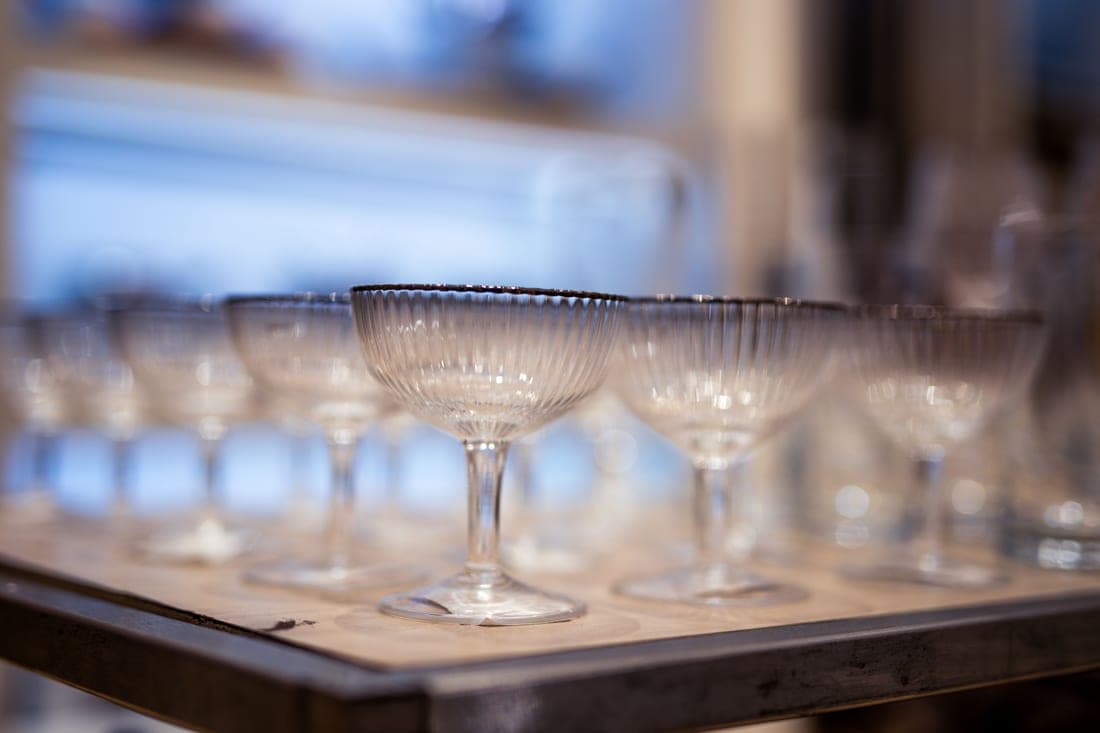 Libbey Signature Kentfield Coupe Glasses Buy these second | Everyday coupe | |
| 3 |  Libbey Nick and Nora Cocktail Glasses The third shape | Nick and Nora on a budget | |
| 4 |  Schott Zwiesel Tritan Crystal Tumbler If the dishwasher is non-negotiable | Crystal that survives a dishwasher | |
| 5 |  Glencairn Whisky Glass The fourth shape, if you taste | Nosing and comparing |
Scroll the table sideways on a narrow screen. Prices are set by the retailer and change, so every price link opens the current listing rather than quoting a number here.
The shortlist
How many glasses a home bar really needs
The honest answer is four rocks, four coupes and four Nick & Noras, and then stop until something breaks. Twelve glasses covers a dinner party, three shapes covers the drinks, and everything beyond that is storage.
| Shape | Capacity | How many | What it covers |
|---|---|---|---|
| Rocks / double old fashioned | 12 oz | 4 to 6 | Old fashioned, whiskey, Negroni, anything on a rock |
| Coupe | 9 oz | 4 | Daiquiri, sidecar, sour, espresso martini, gimlet |
| Nick & Nora | 5 to 6 oz | 4 | Martini, Manhattan, small stirred serves |
| Tasting glass | Small tulip | 2 to 4 | Neat whisky, comparing bottles |
| Highball / Collins | 10 to 12 oz | Optional | Long drinks, soda, iced tea |
Note what is not on the list: the V-bowl martini glass. It is the most recognisable cocktail glass there is and the worst performing one - wide surface area warms the drink, a shallow bowl spills on the walk from the bar, and the capacity is usually far more than a martini should be. A coupe or a Nick & Nora does the same job better, which is the argument coupe vs martini glass makes in full.
The rocks glass
Why 12 oz and not 9
This is the single most consequential sizing decision in a home bar glassware set, and it is the one people get wrong because 9 oz rocks glasses are everywhere. The arithmetic is simple: a 2-inch clear cube displaces roughly 4 oz of volume. Add a 2 oz spirit pour, a bar spoon of syrup and the dilution from stirring and you are at 7 oz of occupied volume in a 9 oz glass - with no freeboard, nothing between the liquid and the rim, and a drink that spills if you set it down briskly.
A 12 oz glass gives you the same drink with an inch of air above it. That is why we specify 12 oz as the default on this site, and why the Kentfield rocks glass is the first thing in the cupboard. Rocks glass size guide has the capacity table, and what glass for an old fashioned works the arithmetic for one specific drink.
The laser-cut rim on the Libbey Signature line is worth a sentence too. A rolled rim is thicker and more durable; a cut rim is thinner and feels better against your mouth. Libbey publish this line as chip-resistant with cut rims, which is the combination you want on a glass that is going to be used rather than displayed.
Up-serves
One coupe does the work of four specialist glasses
A coupe is a shallow, rounded bowl on a stem. Because the bowl curves inward rather than flaring outward, the liquid sits away from the edge, which means you can carry a full one across a room. Because it is on a stem, your hand does not warm the drink. And because 9 oz is roughly double a standard up-serve, there is room for a foam head or a float without the glass looking full.
- Daiquiri, gimlet, sidecar, sour: coupe, straight in.
- Espresso martini: coupe, because the head needs headroom - see best cocktail shaker for an espresso martini.
- Martini, Manhattan, Vesper: Nick & Nora. A 5 to 6 oz bell bowl keeps a stirred drink cold for the whole serve, where a 9 oz coupe lets a small pour spread out and warm up.
- Champagne cocktails: a coupe works, and the historical argument for it is stronger than the flute.
Nick and Nora vs coupe covers the overlap between the two, and best nick and nora glasses covers the field if you want to buy that shape properly.
Material
Soda-lime, Tritan or crystal
For a home bar the material choice is really a dishwasher choice. Ordinary soda-lime glass is what most affordable barware is, and it is fine - it chips at the rim eventually and it clouds over years of hard-water cycles. Libbey's ClearFire composition is their proprietary formulation for this line and is published as chip resistant.
Tritan is a reinforced crystal with titanium and zirconium in the melt rather than lead, and its argument is specifically dishwasher durability over repeated cycles. If you own four glasses and they are washed daily, that is a genuine difference over a decade. If your glasses are hand-washed and live in a cabinet, you are paying for a property you will not use.
Whatever you buy, the glass that improves your drinks most is the one in the freezer. Five minutes of chilling does more for an up-serve than any material upgrade. Note that a double-walled glass like the Norlan should not be put in a freezer or a dishwasher - see Norlan whisky glass review.
Buying order
If you are starting from nothing
- Four 12 oz rocks glasses. More drinks go in this shape than any other. Do not compromise the capacity.
- Four 9 oz coupes. Everything served up, in one shape.
- Four Nick & Noras. Only once the first two are in the cupboard, and only if you drink martinis or Manhattans.
- Two tasting glasses. Only if you compare whiskies rather than drink one.
- Highballs. Last, and a tall kitchen tumbler genuinely does the job in the meantime.
A matched set is worth more than you would think, because mismatched glassware is the thing that makes a good home bar look improvised. Libbey's Signature collection lets you buy rocks and coupes in the same family, which is the cheapest route to a bar that looks deliberate. Cocktail glassware types names every shape if you want the full catalogue, and home bar essentials checklist puts glassware in the context of everything else.
The picks in full
Every pick, and who each one is for
01 · Buy these first
Libbey Signature Kentfield Rocks Glasses
Libbey · Entry tier
Thin-walled, laser-cut rim, US-made and cheap enough to own eight - the sensible default rocks glass.
12 oz, laser-cut rim, sold in fours and eights. The capacity is the point: a 2-inch cube displaces a lot of a 9 oz glass, and 12 oz leaves room for a double pour plus the rock plus somewhere for your mouth to go.
The specs that decide it
- Capacity:
- 12 oz (also sold 9 oz)
- Glass:
- Libbey ClearFire composition
- Rim:
- laser cut, chip resistant
- Sets:
- 4 and 8
Who it is for
- 12 oz is the size that actually fits a 2-inch cube with room for the pour
- Laser-cut rim survives a dishwasher far better than a rolled rim
- Cheap enough that breaking one is an annoyance, not an event
Where it gives ground
- Thin walls warm a neat pour faster than heavy crystal
- Plain enough to be forgettable next to a cut glass
Skip this one if your rocks glass is the centerpiece of the drink. A heavier cut or crystal glass reads better in the hand.
02 · Buy these second
Libbey Signature Kentfield Coupe Glasses
Libbey · Entry tier
A pulled stem and a 9 oz bowl - the sane size for a coupe, at a price that survives a dropped one.
9 oz with a pulled stem and a classic rounded bowl. A coupe is the correct glass for almost everything served up and it does not throw the drink down your wrist the way a wide V bowl does. One shape, most of your up-serves covered.
The specs that decide it
- Capacity:
- 9 oz
- Stem:
- pulled, not joined
- Bowl:
- classic rounded coupe
- Set:
- 4
Who it is for
- A pulled stem has no join to snap, which is where cheap stemware fails
- 9 oz holds a shaken drink plus foam without a full-to-the-rim carry
- US-made and consistently available, so you can replace one in a set
Where it gives ground
- Wide mouth means a shaken drink warms quickly - drink it briskly
- Plain bowl next to a cut or vintage coupe
Skip this one if you want a small 5 oz coupe for spirit-forward serves. This bowl is generous.
03 · The third shape
Libbey Nick and Nora Cocktail Glasses
Libbey · Entry tier
The shape's practical advantages at a price where owning six is reasonable rather than aspirational.
A bell bowl in the 5 to 6 oz class, which is the right size for a stirred, spirit-forward serve that would look lost in a coupe. Sold in fours and larger, so you can match quantity to the rocks glasses.
The specs that decide it
- Shape:
- bell bowl
- Capacity:
- roughly 5 to 6 oz class
- Glass:
- Libbey clear glass
- Sets:
- 4 and larger
Who it is for
- You get the carry-without-spilling benefit for very little money
- Set sizes make a table of six realistic
- Sturdier than crystal for a house with a dishwasher
Where it gives ground
- Thicker rim than crystal, which you notice on the lip
- Less brilliance in the glass under warm light
Skip this one if the glass is the gift and the recipient will notice crystal. Then it is worth the step up.
04 · If the dishwasher is non-negotiable
Schott Zwiesel Tritan Crystal Tumbler
Schott Zwiesel · The one worth stretching for
Titanium-reinforced crystal: the look of fine glassware with break and chip resistance that fine glassware does not have.
Tritan crystal with titanium and zirconium in the melt, rated for repeated dishwasher cycles and lead free. The glass to buy if the alternative is hand-washing four glasses every evening and resenting it.
The specs that decide it
- Material:
- Tritan crystal
- Reinforcement:
- titanium and zirconium in the melt
- Dishwasher:
- rated for repeated cycles
- Lead:
- lead free
Who it is for
- Genuinely dishwasher durable, which almost no crystal is
- Clarity and ring are crystal, not pressed glass
- Rims resist chipping, which is where glasses actually die
Where it gives ground
- Costs several times a Libbey tumbler
- Still glass - durable is not indestructible
Skip this one if you are buying eight glasses for a party. Buy Libbey and keep these for the pour that matters.
05 · The fourth shape, if you taste
Glencairn Whisky Glass
Glencairn · Entry tier
The standard nosing glass, and the cheapest way to find out how much of a whisky you have been missing.
A tulip with a tapered mouth, sold in twos, fours and sixes. It concentrates aroma for neat comparison, and it takes no ice at all - the bowl is too narrow. A tasting instrument rather than a drinking glass.
The specs that decide it
- Shape:
- tulip with a tapered mouth
- Use:
- neat tasting and comparison
- Ice:
- none - the bowl is too narrow
- Sets:
- 2, 4 and 6
Who it is for
- The taper genuinely concentrates aroma, which is most of flavor
- Cheap enough to own six and pour side by side
- Short stem keeps your palm off the bowl
Where it gives ground
- It is a tasting glass, not a drinking glass - nobody wants a two-hour Manhattan in one
- Tips easily on a soft surface
Skip this one if you want one glass for everything. This does one job extremely well and nothing else.
Honest limits
What we could not verify
We have not run drop, dishwasher-cycle or thermal tests on these glasses. Capacities, rim construction, glass composition, dishwasher ratings and set sizes are as published by Libbey, Schott Zwiesel and Glencairn. Where we describe how a shape behaves in the hand, that reflects the geometry and widely documented bartending practice rather than instrumented testing. No prices are quoted - this site has no live price data.
We do not run a test lab and we have not personally used every product here. Where a judgment rests on published specifications or on what owners report rather than on our own hands, we say so. Read the full method.
Questions
Related questions
- What glassware do you need for a home bar?
- Three shapes cover almost everything: a 12 oz rocks glass, a 9 oz coupe and a 5 to 6 oz Nick & Nora. Four of each is enough for a dinner party. Add a small tasting tulip only if you compare whiskies neat, and treat highballs as optional.
- How many cocktail glasses should I buy?
- Four of each shape you actually use - twelve glasses in total across rocks, coupe and Nick & Nora. Four is enough for guests, matches most set sizes, and leaves room in a normal cupboard, which a fifteen-shape collection does not.
- What size rocks glass is best for a home bar?
- 12 oz. A 2-inch clear cube displaces roughly 4 oz, so a 9 oz glass is already at the rim once a double pour and dilution are in it. 12 oz gives the same drink about an inch of freeboard.
- Do I need a martini glass?
- No. The V-bowl martini glass warms the drink through a wide surface area and spills on the walk from the bar. A coupe or a Nick & Nora serves the same drinks better, which is why neither of them is on any bartender's list of things to replace.
- Is crystal glassware worth it for a home bar?
- Only for a specific reason. Reinforced crystal like Tritan is worth it if your glasses are dishwashed constantly, because that is the property it is engineered for. If you hand-wash, ordinary chip-resistant glass performs the same in the hand and costs less.
Sources
Read next
Related reading
- Coupes, rocks glasses and the rest
Rocks glasses, coupes and Nick and Noras - the vessel decides temperature, aroma and carry.
- Best rocks glasses
Capacity, rim and wall thickness compared - starting with whether your ice actually fits.
- Best coupe glasses
Bowl size, stem construction and the one thing a coupe is genuinely bad at.
- Cocktail glassware types
Every glass shape in one table, plus the three you actually need and the order to buy them.
- Coupe glass size guide
Nine ounces for a home bar, and the twice-the-finished-volume rule that explains why.
- Home bar essentials checklist
Five tools, three glass shapes, one ice solution, six bottles - and the order worth buying them in.