Roundup
Best highball glasses
The tall glass that carries two thirds of what most people actually drink at home - and the one glassware size most home bars get wrong.
By Michael W. · Published October 2026
The short answer
The RIEDEL Drink Specific Highball is the glass to own if you take a highball seriously: a 10.93 oz crystal column with a molded 2 oz fill marker, sized around a full ice charge rather than around the pour. For stocking a house rather than a pair, the Libbey Modern Bar Essentials 12 oz set of six is the honest answer, and the 16 oz Libbey Hobstar is the one that looks like something on a cart. If you want crystal you can put through a dishwasher without flinching, the Schott Zwiesel Convention Tritan longdrink is the only pick here that genuinely survives that. The size question matters more than the brand: 12 oz is a short highball and 16 oz is a long one, and they are not interchangeable drinks.
We earn a commission if you buy through the links on this page, at no extra cost to you. It never changes which product we pick. How we are funded.
Quick picks
| # | Product | Best for | Price |
|---|---|---|---|
| 1 |  RIEDEL Drink Specific Glassware Highball Glass Best overall | The highball you build a Japanese-style drink in | |
| 2 |  Libbey Modern Bar Essentials Highball Glasses Best value | Six glasses you are not precious about | |
| 3 | 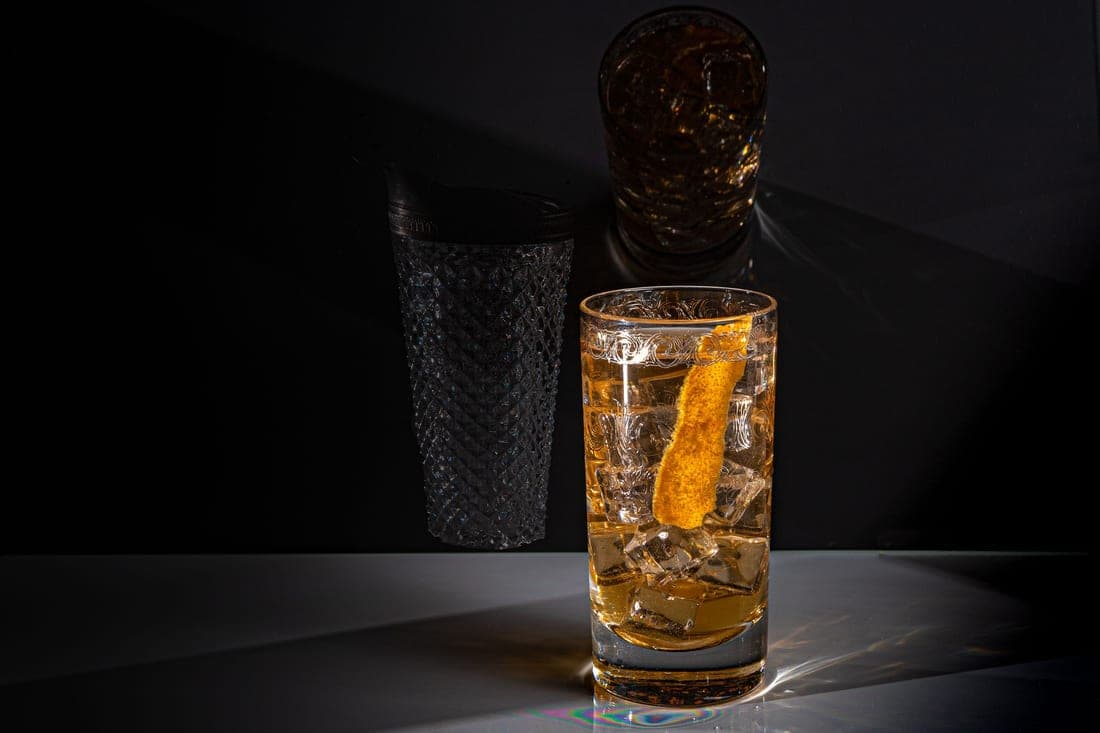 Libbey Hobstar Cooler Glasses Best looking for the money | A tall glass that looks like something | |
| 4 |  Schott Zwiesel Convention Longdrink Glasses Crystal that survives real life | Crystal in a house with a dishwasher |
Scroll the table sideways on a narrow screen. Prices are set by the retailer and change, so every price link opens the current listing rather than quoting a number here.
The shape
What actually makes a glass a highball
A highball glass is a straight-sided column, usually between 10 and 16 oz, tall enough to hold a vertical stack of ice with the drink poured through it. That is the whole specification, and every property that matters follows from the proportion rather than from the decoration.
- The column keeps the drink cold without diluting it fast. A tall narrow glass exposes less surface area per ounce than a wide tumbler, so a drink you nurse for twenty minutes loses less carbonation and less temperature.
- Straight sides let ice stack. Ice resting on ice melts slower than ice spread across a base. A tapered or waisted glass breaks the stack and you lose the advantage.
- Height sets the ratio. A 2 oz pour in a 12 oz glass is a different drink from the same pour in a 16 oz glass. The glass is doing portion control whether you intend it to or not.
The failure mode in most home bars is not buying a bad highball glass. It is not owning one at all, and serving tall drinks in a rocks glass - which is why the drink is warm and flat halfway down. If you are still working out which shapes you actually need, cocktail glassware types maps the whole set.
How we picked
How we picked these
These are selections on published specification, glass composition and proportion - not on test results. We have not timed how long a gin and tonic holds its carbonation in each of these. How we pick sets out the method and what we never claim.
- Capacity, stated honestly. We only list capacities the maker publishes. A glass sold as 16 oz is a filled-to-the-brim number, and the working volume is always lower.
- Height-to-diameter ratio. The taller and narrower the column at a given capacity, the better it holds cold and carbonation. A 16 oz glass that got there by being wide is a tumbler wearing a highball's name.
- Rim and base construction. Tall glasses die at the rim and chip at the base. Laser-cut, reinforced or thickened edges are worth more than wall decoration.
- Set size you can actually buy. A glass sold only in pairs is a different purchase from one sold in sixes, and that difference matters more than most spec sheets.
- Dishwasher reality. Not what the box says is possible, but what the maker and its retailers actually recommend.
What we deliberately did not weight: brand prestige, and anything that depends on claiming we drank out of all four.
Buying guide
12 oz or 16 oz - the decision that matters
Most people buy a highball glass by brand and then discover the size was the real decision. The two common capacities serve different drinks, and owning the wrong one quietly makes your drinks worse.
| Capacity | Working pour | What it suits | Where it falls down |
|---|---|---|---|
| 10 to 12 oz | 2 oz spirit, 4 to 5 oz mixer, full ice | Highballs you drink briskly - whisky soda, gin and tonic, Cuba libre | No headroom; topping up means fishing out ice |
| 14 to 16 oz | 2 oz spirit, 6 to 8 oz mixer, full ice | Long drinks you sit with - Collins, Mojito, Paloma, anything with soda to add | A 2 oz pour can read thin; the drink looks under-filled if you measure strictly |
| Over 16 oz | Double pours, or no measuring at all | Tiki, Zombies, pitcher drinks served tall | Hard to stock, hard to store, and it encourages a bigger drink than you planned |
The reasonable position for a home bar that already has rocks glasses: six at 12 oz for everyday tall drinks, and four at 16 oz for the ones you actually sit down with. That is the same split that works for rocks glasses, and for the same reason - a glass that is slightly too big is forgiving, and one that is slightly too small is not.
Published capacities are brim-full figures. A 12 oz highball holds roughly 8 to 9 oz of actual drink once a proper ice charge is in it. Plan the recipe around the working volume, not the number on the box.
Buying guide
Crystal, Tritan or pressed glass
Crystal is glass with metal oxides added to the melt. It refracts more light, rings when tapped, and can be drawn thinner at the rim without becoming fragile in the hand. On a 6-inch column that thinness is the most noticeable difference between a $12 glass and a $30 one.
Pressed glass is thicker, duller under warm light, and considerably harder to kill. In a kitchen with a dishwasher, a tile floor and guests who are two drinks in, that is a specification rather than a compromise.
Tritan is the third option and the least understood. Schott Zwiesel replaces lead with zirconium for brilliance and adds titanium for strength, which produces a crystal rated for repeated dishwasher cycles. You are paying for the rim surviving five years of racking, not for a difference you can taste.
Our position: pressed glass by the six for everyday tall drinks, and either crystal or Tritan for the two glasses you reach for when the drink matters. Buying one material for both jobs means overpaying for the party glasses or under-buying for the good ones. Glassware sets for a home bar covers how that splits across the rest of the shapes.
Practical
The ice column is most of the technique
A highball is the one category where ice quality changes the drink more than the glass does. The drink is mostly mixer, it is served without stirring to temperature, and it sits in your hand for twenty minutes - so every compromise in the ice shows up in the last third of the glass.
- Chill the glass first. Ten minutes in the freezer, or fill it with ice and water while you get the bottles out.
- Fill it with ice - properly full, to the rim. A half-filled glass melts faster than a full one, which is the opposite of what most people assume.
- Pour the spirit over the ice, measured. A 2 oz pour in a 12 oz glass and the same pour in a 16 oz glass are different drinks; see how to use a jigger if you are still free-pouring.
- Add the mixer down the side of the glass rather than onto the ice, which preserves carbonation.
- Stir once, gently, with a bar spoon. One rotation is enough - any more and you have knocked the bubbles out of a drink you just built around them.
Large clear cubes are worth more here than anywhere else on the bar, because they melt slowest and they are the visible part of a tall clear drink. How to make clear ice is the method, and best clear ice molds is the shortcut.
One honest caveat: a 2-inch cube designed for a rocks glass is often too wide for a 3.25-inch highball to stack neatly. Collins spears and 1.25-inch cubes stack better in a column, which is a case where the glass should dictate the mold rather than the other way round.
Reference
Highball, Collins or cooler - are they different glasses
These names are used interchangeably by retailers and are not quite interchangeable in practice. The distinctions are real but softer than the catalogs suggest.
| Name | Typical capacity | Proportion | In practice |
|---|---|---|---|
| Highball | 8 to 12 oz | Short, straight column | The default tall glass; whisky soda, gin and tonic |
| Collins | 10 to 14 oz | Taller and narrower than a highball | Tom Collins, Mojito, anything built with soda on top |
| Cooler | 15 to 18 oz | Tallest and widest | Long iced drinks, Palomas, iced tea; what most 16 oz 'highballs' actually are |
| Zombie / chimney | 13 to 16 oz | Very narrow for its height | Tiki service; a specialist buy, not a first glass |
If you are buying one tall glass, buy something in the 12 to 16 oz range with straight sides and stop worrying about which word the retailer used. The Libbey Hobstar in this list is sold as a cooler and is a perfectly good highball; the Schott Zwiesel is sold as a longdrink and is the same thing again.
Drinks
Which drinks belong in one
| Drink | Glass | Why |
|---|---|---|
| Whisky soda / highball | 12 oz | Two parts spirit to four of soda; brisk drinking, no top-ups |
| Gin and tonic | 12 to 16 oz | Wants room for a full ice charge and a generous tonic pour |
| Tom Collins | 14 to 16 oz | Built with soda on top; needs the headroom |
| Mojito | 16 oz | Mint, lime and crushed ice take up volume before the drink does |
| Paloma | 16 oz | Long, salty, grapefruit-heavy; a short glass makes it syrupy |
| Old Fashioned | No - use a rocks glass | A stirred, undiluted drink wants a wide base and a big cube |
| Negroni | No - rocks or up | Three ounces of spirit; a column makes it look lost |
The dividing line is dilution. A highball is designed to be diluted by its mixer and kept cold by volume; a rocks drink is designed to be sipped near full strength. That is also why double old fashioned vs old fashioned glass is a separate decision and not a smaller version of this one.
Practical
How many to buy, and what breaks first
Six is the number for a household that has people over, and it is not because six people turn up. It is because glasses go into the dishwasher mid-evening and because you will break two over five years. Four is enough only if the glasses are a display pair plus spares.
Tall glasses fail at the rim, not the base. They go into a dishwasher rack at an angle, touch the glass next to them, and chip where you drink from. The fixes are unglamorous and they work: load tall glasses in the back row, never nest them, and replace a chipped glass rather than keeping it for guests.
If you want one set that handles everything, buy the 16 oz option. It serves a short drink badly in the sense that the pour looks small, and it serves a long drink properly - and looking small is the cheaper mistake.
The picks in full
Every pick, and who each one is for
01 · Best overall
RIEDEL Drink Specific Glassware Highball Glass
RIEDEL · The one worth stretching for
A crystal column sized and marked for a two-ounce pour over a full ice charge, which is exactly what a highball is supposed to be.
10.93 oz of machine-made crystal at 6.06 inches tall, developed with spirits specialist Zane Harris as part of Riedel's Drink Specific line. The detail that justifies it is the molded 2 oz marker inside the glass: a highball is a spirit-to-mixer ratio, and this is the only glass here that tells you where the spirit stops. Sold in pairs, which is the catch.
The specs that decide it
- Capacity:
- 10.93 oz
- Height:
- 6.06 in
- Material:
- machine-made crystal
- Sold as:
- set of 2
- Detail:
- 2 oz / 60 ml fill marker
Who it is for
- Developed with spirits specialist Zane Harris as part of the Drink Specific line, and sized around ice rather than around the pour
- The molded 2 oz marker turns a free-poured highball into a repeatable one without reaching for a jigger
- Crystal wall is thinner at the lip than any pressed glass at this height
Where it gives ground
- Sold in pairs, so a table of six is three purchases at crystal money
- Riedel lists it as dishwasher safe, but hand washing is what the retailers recommend
Skip this one if you are stocking a party. Buy pressed glass by the six and keep a pair of these for the drink you are paying attention to.
02 · Best value
Libbey Modern Bar Essentials Highball Glasses
Libbey · Entry tier
The sensible default: an angular 12 oz highball, heavy enough in the base to feel deliberate, cheap enough to own six.
12 oz, 5.5 inches tall, six in a box, dishwasher safe. The angular facets and the weighted base keep it from reading as a juice glass, and at this money a breakage is an annoyance rather than an event. The honest limit is height - a full ice column plus a 2 oz pour fills it with no headroom.
The specs that decide it
- Capacity:
- 12 oz
- Dimensions:
- 3.25 in diameter by 5.5 in tall
- Sold as:
- set of 6
- Dishwasher:
- dishwasher safe
Who it is for
- A set of six at pressed-glass money, which is the only honest way to stock a highball glass
- Angular facets and a weighted base read as intentional rather than as a juice glass
- Libbey clarity and a rim that tolerates a dishwasher rack
Where it gives ground
- At 5.5 in it is a short highball - a long ice column plus a 2 oz pour fills it with no headroom
- Thicker at the lip than crystal, which you notice on a sipping drink
Skip this one if you drink tall drinks slowly and want the ice column a 16 oz glass allows. Go up a size instead.
03 · Best looking for the money
Libbey Hobstar Cooler Glasses
Libbey · Mid tier
Libbey's hob-and-star cut pattern on a 16 oz column: the best-looking highball you can buy for pressed-glass money.
16 oz, 6 inches tall, four in a box, carrying Libbey's hob-and-star pattern from its cut-glass archive. This is the pick if the glass is part of the drink: pressed pattern, not cut, but it catches light the way a cut glass does at a fraction of cut-crystal cost. The extra four ounces are the practical argument - 16 oz is the size that takes a long ice column and still has room for soda.
The specs that decide it
- Capacity:
- 16 oz
- Dimensions:
- 3.25 in diameter by 6 in tall
- Sold as:
- set of 4
- Pattern:
- pressed hobstar cut, from Libbey's cut-glass archive
Who it is for
- 16 oz is the size that takes a full ice column and still leaves headroom for soda
- The hobstar pattern catches light the way a cut glass is supposed to, at a fraction of cut-crystal cost
- Dishwasher safe and specified for bar and restaurant use, which is the durability claim that matters
Where it gives ground
- Pressed pattern means a textured grip, not a cut one - under a close look it is molded
- A patterned glass fights a drink you want to look at, which is the argument for a plain glass
Skip this one if you serve clear drinks you want seen. The pattern distorts the ice column you worked to make.
04 · Crystal that survives real life
Schott Zwiesel Convention Longdrink Glasses
Schott Zwiesel · The step up
Tritan crystal longdrinks with a thick base and a break-resistant rim: the set to buy if you want crystal you are not nervous about.
12.5 oz Tritan crystal, six in a box, made in Germany, with titanium and zirconium in the melt that reinforce the rim and base. It is the only crystal in this category rated for repeated dishwasher cycles, which is the entire reason to pay the step up. It is also plain to the point of anonymous, because it was designed for restaurants.
The specs that decide it
- Capacity:
- 12.5 oz
- Material:
- Tritan crystal, titanium and zirconium reinforced
- Sold as:
- set of 6
- Made in:
- Germany
- Dishwasher:
- rated for repeated cycles
Who it is for
- The only crystal in this category you can genuinely put through a dishwasher repeatedly
- Rim and base are the reinforced parts, which is where tall glasses actually fail
- Sold by the six, so it is a real stocking option rather than a display pair
Where it gives ground
- Costs several times the Libbey set for a difference you feel at the lip, not in the drink
- Plain to the point of anonymous - this is a restaurant glass, by design
Skip this one if the glass is part of the show. A cut pattern does more for a cart than Tritan does.
Honest limits
What we could not verify
We have not handled all four of these glasses and have not measured how long a carbonated drink holds its fizz in each. Capacities, dimensions, materials and dishwasher guidance are as published by RIEDEL, Libbey and Schott Zwiesel or by their retailers. Published capacities for tall glasses are brim-full figures and vary between versions of the same named glass, and finishes and set sizes change between production runs - check the listing before you buy.
We do not run a test lab and we have not personally used every product here. Where a judgment rests on published specifications or on what owners report rather than on our own hands, we say so. Read the full method.
Questions
Related questions
- What size is a highball glass?
- Usually 8 to 12 oz for a true highball, and 14 to 16 oz for what is sold as a cooler or longdrink. Both are brim-full figures - a 12 oz highball holds roughly 8 to 9 oz of drink once it has a full ice charge.
- What is the difference between a highball and a Collins glass?
- A Collins glass is taller and narrower than a highball at a similar or slightly larger capacity. The practical effect is a longer ice column and a drink that holds carbonation slightly better. Retailers use the names interchangeably.
- Can I use a highball glass for an Old Fashioned?
- You can, but it works against the drink. An Old Fashioned is stirred, barely diluted and sipped - it wants a wide base and one large cube, not a column. Use a rocks glass.
- Should a highball glass be thick or thin?
- Thin at the rim, heavier at the base. A thin lip is more pleasant to drink from and is what crystal buys you; a weighted base is what stops a tall glass tipping. A uniformly thick glass is cheap to make and feels like it.
- How full should I fill the ice?
- To the rim. A full glass of ice melts more slowly than a half-full one, because the ice chills the ice. Under-filling is the single most common reason a home highball goes watery.
Sources
Read next
Related reading
- Coupes, rocks glasses and the rest
Rocks glasses, coupes and Nick and Noras - the vessel decides temperature, aroma and carry.
- Best rocks glasses
Capacity, rim and wall thickness compared - starting with whether your ice actually fits.
- Cocktail glassware types
Every glass shape in one table, plus the three you actually need and the order to buy them.
- Best glassware sets for a home bar
Three shapes, four of each, and the 12 oz rocks glass first - how to buy glassware once instead of three times.
- Best clear ice molds
Insulated molds compared on yield, piece size and the freezer footprint they actually demand.
- Best ice buckets for a home bar
Double walls are standard, drainage is not - and drainage is what keeps stored cubes from fusing into a block.