Guide
How to use a jigger
Fill to the brim, hold it low, pour once. Three habits that take a measuring tool from approximately right to actually accurate.
By Michael W. · Published September 2026
The short answer
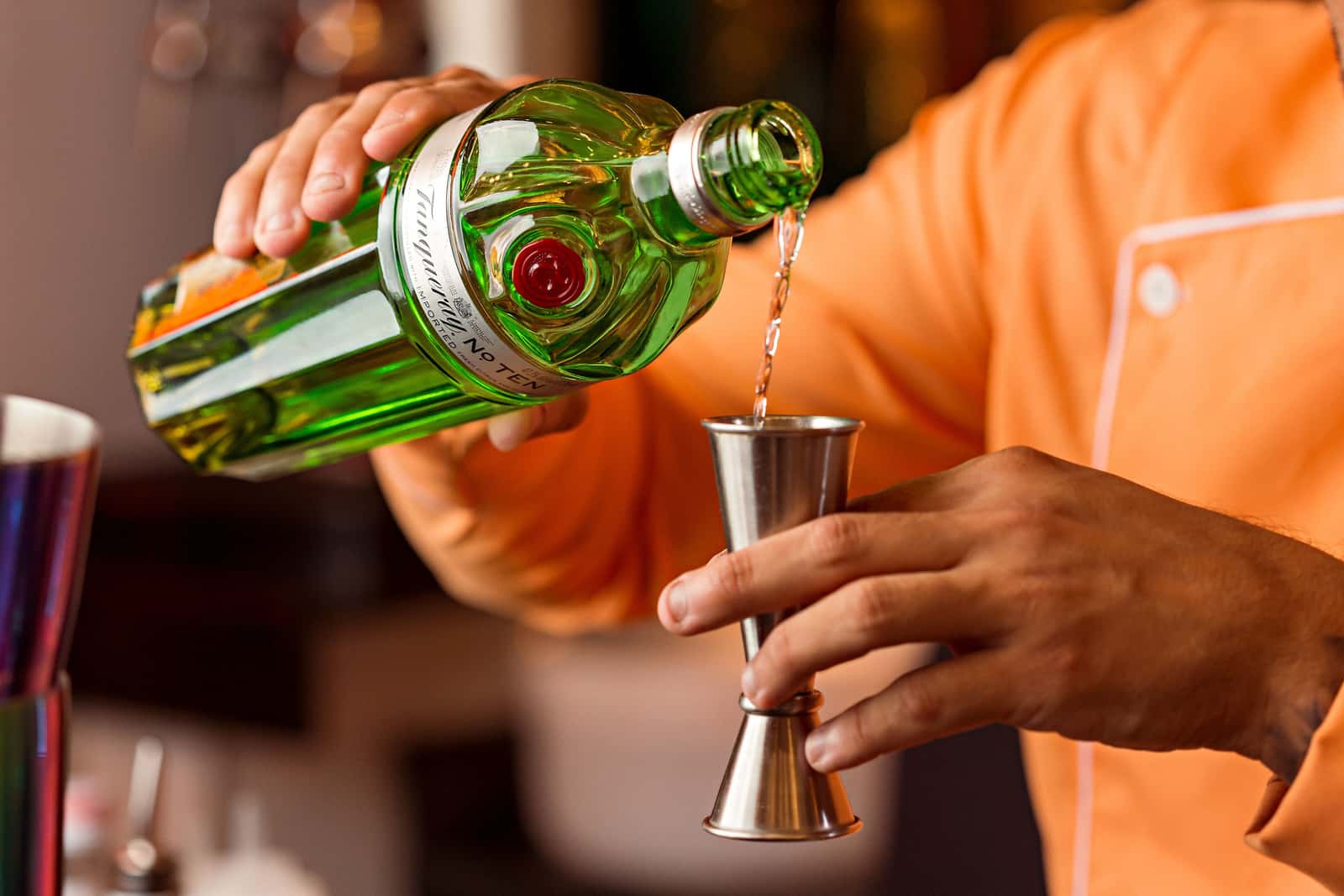
Hold the jigger low and close to the tin, fill it to the very brim rather than to a line you are eyeballing, and pour in one continuous motion without hesitating. Measure cheap ingredients before expensive ones and clear ones before colored ones, so you rarely need to rinse. The single biggest accuracy gain is filling to the brim: a full cone has an unambiguous edge, and a half-full one has a judgment call.
We earn a commission if you buy through the links on this page, at no extra cost to you. It never changes which product we pick. How we are funded.
Quick picks
| # | Product | Best for | Price |
|---|---|---|---|
| 1 | Cocktail Kingdom Japanese Style Jigger The jigger this technique assumes | Accuracy | |
| 2 | 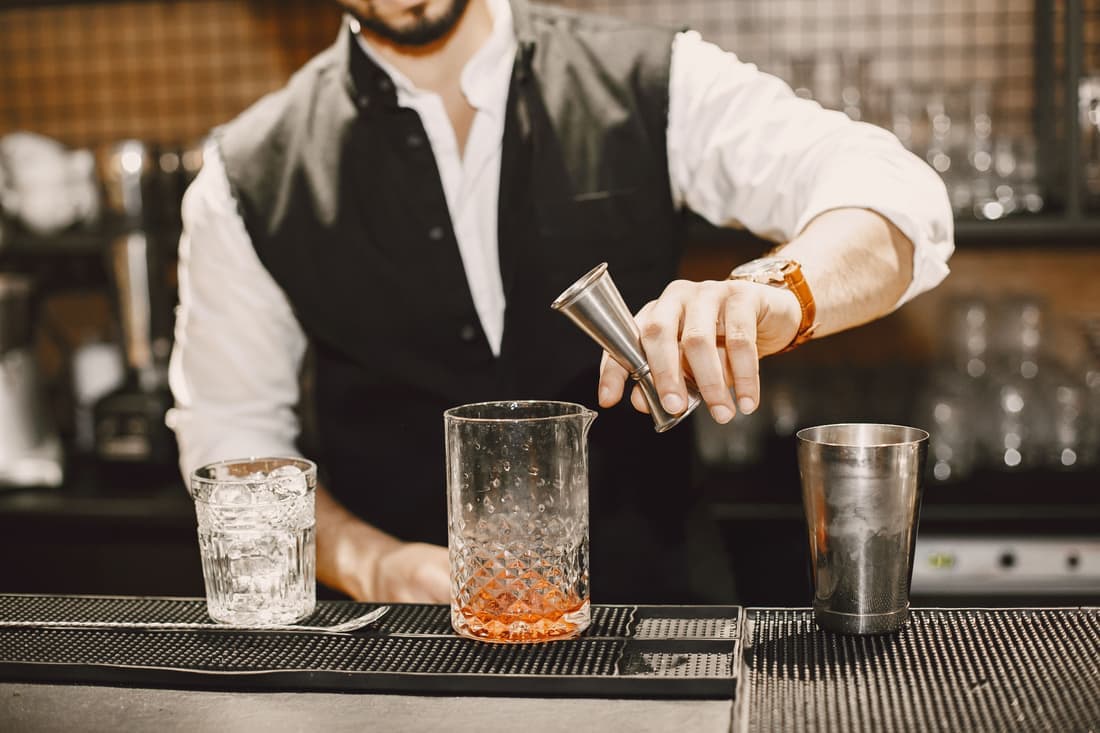 OXO Steel Double Jigger If reading from above is your problem | Reading the pour from above |
Scroll the table sideways on a narrow screen. Prices are set by the retailer and change, so every price link opens the current listing rather than quoting a number here.
The mechanism
Why filling to the brim is more accurate
The hardest part of measuring by eye is deciding where the surface is relative to a line. Liquid has a meniscus, your eye is above the level of the liquid, and small parallax errors turn into real volume errors.
A brim-full cone removes all of that. The rim is a physical edge, the surface either meets it or it does not, and you do not need to be at eye level to tell. That is why a jigger's headline volumes are more reliable than anything you measure against an interior line.
When you do need a fraction, bring your eye down to the level of the liquid rather than looking down into the cone. Looking down compresses the apparent distance between lines and makes over-pouring almost invisible.
Technique
The lost-volume problem
A measured ounce is only an ounce if all of it reaches the tin. Two things cost you volume and both are fixable.
The first is clinging. Any liquid that is thicker than a spirit - a syrup, a cream liqueur, a thick juice - leaves a film on the cone. For those, pour slowly and give the jigger a moment to drain, or rinse the jigger into the tin with a splash of the next clear ingredient.
The second is hesitation. A stop-start pour leaves liquid running back down the outside, which is both lost volume and a wet bottle. One continuous motion into the tin, and no recovery attempt if it starts running - let it go and be slightly under rather than chasing it.
Speed
The order that means you rarely rinse
Rinsing between every ingredient is the reason people give up on jiggering. It is also almost always avoidable with an order of operations.
- Syrups and sugars first. They are the stickiest, and the next ingredient rinses the cone for you.
- Then citrus. Acidic and clear, and it cuts the syrup film.
- Then clear spirits. Gin, vodka, blanco tequila.
- Then dark spirits and liqueurs. Whiskey, rum, amaro - anything that will tint the next measure.
- Bitters last, and not in the jigger. Dashes go straight in.
Done in that order you can build most drinks with one rinse or none. Owning a second jigger removes even that, and jiggers are cheap enough that this is a reasonable thing to do - see best Japanese jiggers.
Technique
Where the jigger goes while you work
A small habit that makes jiggering feel fast rather than fussy: give the jigger a home on the counter and always put it back there. Hunting for a wet cone among bottles is most of what makes measuring feel slow, and it is entirely self-inflicted.
Put it on a bar mat beside the tin, narrow end down, on the side of your dominant hand. Everything you pour comes from the bottle in one hand into the jigger held in the other, and then into the tin - so the jigger only touches the counter between ingredients, and it should touch the same spot every time.
The related habit is emptying it completely. A jigger with a few drops of the last ingredient in it is a jigger that has quietly contaminated the next measure, and with syrups that residue is more than a few drops. One motion in, one motion out, and set it down empty.
If you build drinks on an open cart rather than a kitchen counter, this matters more rather than less - there is less surface and more to knock over. How to stock a bar cart covers keeping a clear working area, which is the same idea at a larger scale.
Does gear fix this
When the problem is not your technique
Sometimes the honest answer is that the jigger is wrong rather than the pour. An unmarked stamped cone gives you two volumes and nothing in between, and if every recipe you make needs three quarters of an ounce, no technique rescues it.
A wide shallow cone is also genuinely harder to read at fractions, for geometric reasons covered in Japanese vs American jigger. If you are fighting the tool at every fractional measure, a narrower cone with lines is the fix.
But if your drinks are inconsistent and you are not jiggering at all, no jigger purchase is needed to find that out - measure the next six drinks with a marked measuring spoon and see whether they improve. If they do, buy the jigger.
The picks in full
Every pick, and who each one is for
01 · The jigger this technique assumes
Cocktail Kingdom Japanese Style Jigger
Cocktail Kingdom · Mid tier
Tall, narrow and internally marked, which is the combination that makes a half-ounce pour repeatable.
Tall and narrow with interior lines, so filling to the brim and reading a fraction are both unambiguous. A wide shallow cone makes the brim harder to judge and the lines crowd together.
The specs that decide it
- Sizes:
- 1 oz / 2 oz
- Profile:
- tall and narrow
- Markings:
- interior lines for fractional pours
- Material:
- stainless steel
Who it is for
- A narrow cone makes a given volume a taller column, so a small error is visible before you pour it
- Interior lines mean you are not guessing at three quarters of an ounce
- Balanced enough to hold one-handed while the other hand pours
Where it gives ground
- Tall profile tips more easily on a crowded counter
- No handle, so it gets cold and slippery when you work fast
Skip this one if you free-pour by count and are happy with the results. This tool exists to fix a problem you do not have.
02 · If reading from above is your problem
OXO Steel Double Jigger
OXO · Entry tier
Angled interior markings you can read while pouring, which removes the bend-down-and-squint step entirely.
Angled interior markings mean you can read a measure from a standing position. If step three above is where you struggle, this is the tool that fixes it rather than a technique adjustment.
The specs that decide it
- Sizes:
- dual-sided, multiple interior marks
- Markings:
- angled for top-down reading
- Material:
- stainless steel
- Dishwasher:
- yes
Who it is for
- Angled markings genuinely work - you stop lowering your head to check a pour
- Wide base is very hard to tip
- Cheap enough to be the jigger you leave out
Where it gives ground
- Bulkier than a Japanese jigger, so it is slower into a tin
- Markings will fade with years of dishwasher cycles
Skip this one if you want the classic tall silhouette on an open bar. This is a working tool, not a display piece.
Questions
Related questions
- Should you fill a jigger to the top?
- Yes, for the headline volumes. A brim-full cone has an unambiguous physical edge, while a line requires you to judge a meniscus from above - which is where most measuring error comes from.
- Do you have to rinse a jigger between ingredients?
- Rarely, if you measure in the right order: syrups first, then citrus, then clear spirits, then dark spirits. Bitters go straight in and never through the jigger.
- Why does my measured drink still taste inconsistent?
- Usually lost volume - liquid clinging to the cone on thick ingredients, or a hesitant pour that runs down the outside. Pour in one continuous motion and let syrups drain fully.
- Can you use a jigger for bitters?
- Not usefully. A dash is around a milliliter, which is too small to read in a cone. Dash straight into the tin from the bottle and use the same bottle consistently.
Read next
Related reading
- Jiggers, bar spoons and mixing glasses
Jiggers, spoons and mixing glasses - the half of the bar that decides whether a drink is repeatable.
- Jigger sizes explained
A full conversion table, what a shot actually measures, and which double-jigger pairing to buy.
- Best Japanese jiggers
Why a narrow bore reads more accurately, which size pairing to buy, and the precision-stability trade-off.
- Japanese vs American jigger
Narrow against wide on accuracy, stability and speed - and the middle option that recovers both.
- How to shake a cocktail
Sealing, the shake itself, when to stop, and breaking the seal in one motion - plus dry shake and whip.