Roundup
Best Japanese jiggers
Tall, narrow and internally marked - the profile that makes a three-quarter-ounce pour repeatable, compared against the jiggers that trade accuracy for stability.
By Michael W. · Published September 2026

The short answer
The Cocktail Kingdom Japanese Style Jigger in 1oz/2oz is the pick. A tall narrow cone turns a given volume into a taller column of liquid, so a small error is visible before you pour it, and the interior lines mean you are not estimating fractions. Buy the OXO Steel double jigger instead if you want markings you can read from above without lowering your head, and the Leopold jigger if stability on a crowded counter matters more to you than the last eighth of an ounce.
We earn a commission if you buy through the links on this page, at no extra cost to you. It never changes which product we pick. How we are funded.
Quick picks
| # | Product | Best for | Price |
|---|---|---|---|
| 1 | 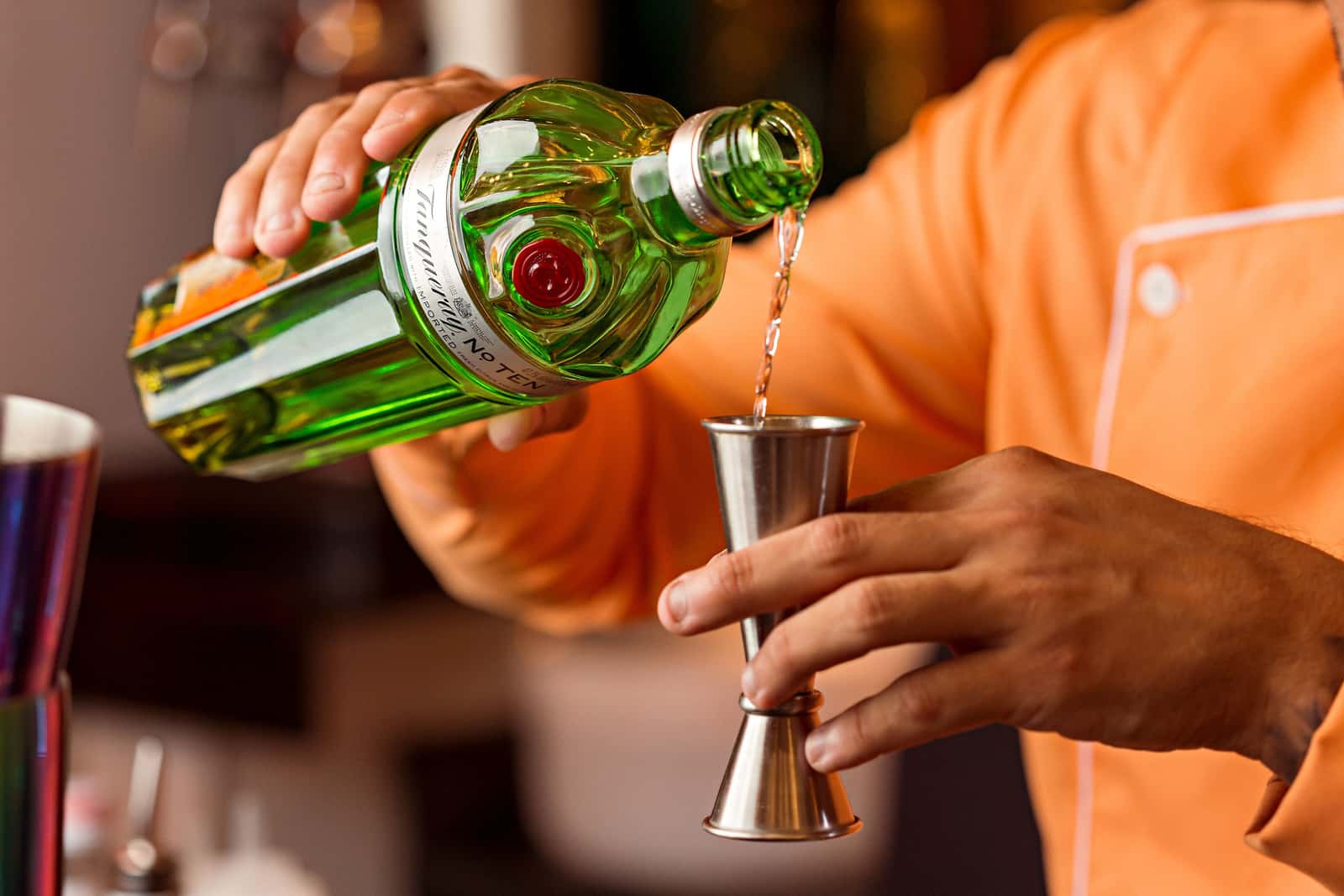 Cocktail Kingdom Japanese Style Jigger Best overall | Accuracy | |
| 2 | 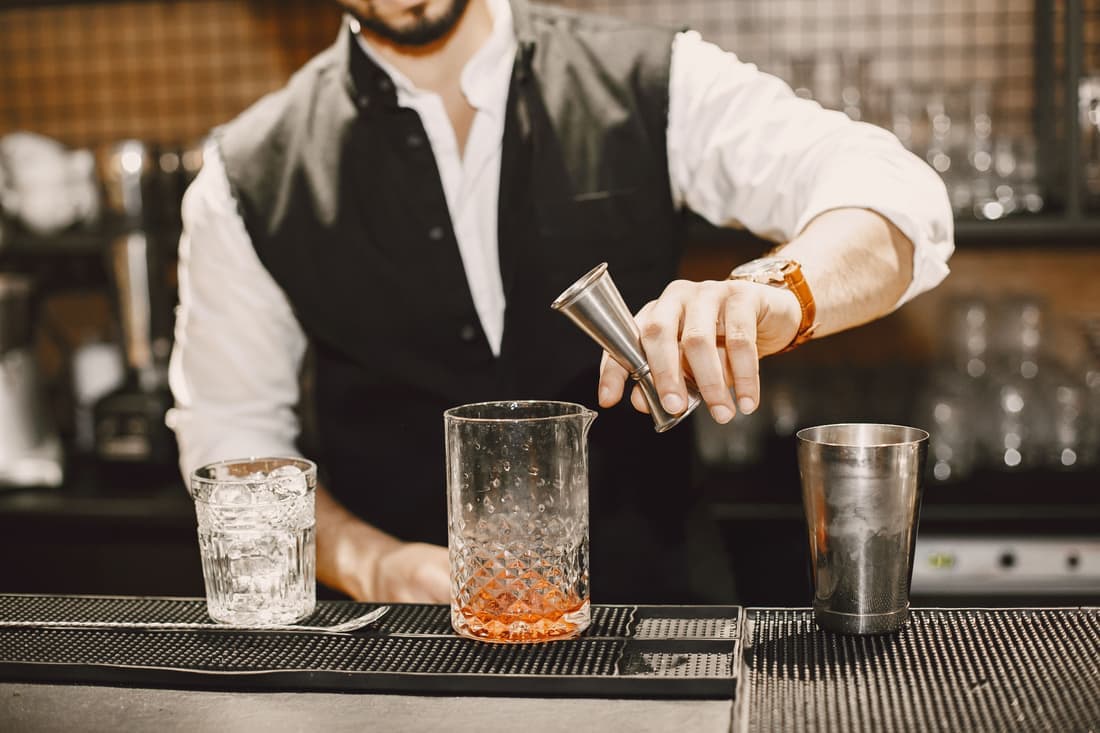 OXO Steel Double Jigger Best markings | Reading the pour from above | |
| 3 |  Cocktail Kingdom Leopold Jigger Best for a crowded counter | A jigger that stays put | |
| 4 |  Viski Stainless Steel Mixology Bartender Kit Best if you need the rest too | Stirred-drink setups |
Scroll the table sideways on a narrow screen. Prices are set by the retailer and change, so every price link opens the current listing rather than quoting a number here.
The mechanism
Why a narrow cone is more accurate
A jigger's accuracy is not about the manufacturing tolerance of its total volume. It is about how visible a small error is while you are pouring, because that is the moment you can still correct it.
In a wide, shallow cone, one ounce forms a broad disc. A sixteenth of an inch of extra depth across that disc is a surprisingly large volume, and it looks like almost nothing. In a tall, narrow cone the same ounce forms a column, and a sixteenth of an inch of extra height is a much smaller volume - and far more obvious to the eye.
That is the whole design rationale for the Japanese profile, and it is why the shape is standard behind good bars. It is not about tradition or aesthetics; it is a readability argument.
How we picked
How we picked these
We have not filled and weighed these jiggers, and we do not present these as test results. We compared published dimensions, marking schemes, materials and what owners consistently report. Our criteria, in order:
- Bore profile. Narrow enough that a fractional pour is readable as a height rather than guessed as a depth.
- Interior markings. Lines you can see with liquid in the cone, for the fractions you actually use - half, three quarters, quarter.
- Stability. A jigger tips when full, and a tipped jigger is a wasted measure and a wet counter.
- Balance in the hand. You hold a jigger one-handed while the other hand pours from a bottle. It needs to sit in the fingers, not balance on them.
- Rim finish. A crisp rim is what stops a pour running down the outside, which is a surprisingly common annoyance on cheap jiggers.
The full method is on how we pick.
Buying guide
Which size pairing to buy
Jiggers are sold as double-ended cones, and the pairing decides which drinks are easy and which involve arithmetic.
| Pairing | Covers | Best for |
|---|---|---|
| 1 oz / 2 oz | 0.5, 0.75, 1, 1.5, 2 with lines | The default. Most modern recipes. |
| 0.75 oz / 1.5 oz | 0.25, 0.5, 0.75, 1, 1.5 | Classic recipes built in three-quarters |
| 1 oz / 1.5 oz | Limited without lines | Avoid - awkward pairing |
| 30 ml / 60 ml | Metric equivalents of 1/2 oz | If your recipes are metric |
The 1oz/2oz pairing with interior lines is the most useful single purchase because the lines make the second size redundant for most fractions. Jigger sizes explained has the full conversion table, including the tablespoon and bar spoon equivalents for tiny measures.
Buying guide
The trade-off nobody names: precision against stability
A tall narrow jigger is more accurate and more likely to tip. That is not a coincidence - the same geometry causes both. A high center of gravity on a small base is exactly what makes a full jigger vulnerable to a knocked elbow.
A wider profile reverses both. It is harder to read fractions in and it sits solidly among a crowd of bottles on a bar cart. Which you should want depends on where you work: a clear kitchen counter favors the Japanese profile, a crowded cart favors the wider one.
The compromise option is a wide-based jigger with angled markings, which is what the OXO does. It is bulkier and slower into a tin, and it is very hard to tip and very easy to read. Japanese vs American jigger works through the full comparison.
Buying guide
What not to buy
- Unmarked stamped cones. Two volumes, no lines, and usually inaccurate at both. These are the jiggers in cheap kits and they are the reason people conclude jiggers do not help.
- Jigger caps built into shaker lids. Too small, poorly calibrated, and they add a part that can leak.
- Plastic measures. They stain, they scratch, and the markings wear off.
- Anything that only measures in 'shots'. A shot is not a unit. Buy something marked in ounces or milliliters.
Once you have a jigger, the technique is worth two minutes of attention: how to use a jigger covers filling to the brim rather than to the line, and why holding it low is more accurate than holding it up.
The picks in full
Every pick, and who each one is for
01 · Best overall
Cocktail Kingdom Japanese Style Jigger
Cocktail Kingdom · Mid tier
Tall, narrow and internally marked, which is the combination that makes a half-ounce pour repeatable.
The narrow bore is the entire argument. Pour an ounce into a wide cone and it is a shallow disc where a sixteenth of an inch of depth is a meaningful volume error; pour it into a narrow one and the same volume is a tall column where that error is obvious. Interior lines for fractional pours turn it from a two-measurement tool into a five-measurement one.
The specs that decide it
- Sizes:
- 1 oz / 2 oz
- Profile:
- tall and narrow
- Markings:
- interior lines for fractional pours
- Material:
- stainless steel
Who it is for
- A narrow cone makes a given volume a taller column, so a small error is visible before you pour it
- Interior lines mean you are not guessing at three quarters of an ounce
- Balanced enough to hold one-handed while the other hand pours
Where it gives ground
- Tall profile tips more easily on a crowded counter
- No handle, so it gets cold and slippery when you work fast
Skip this one if you free-pour by count and are happy with the results. This tool exists to fix a problem you do not have.
02 · Best markings
OXO Steel Double Jigger
OXO · Entry tier
Angled interior markings you can read while pouring, which removes the bend-down-and-squint step entirely.
Angled interior markings you can read while pouring, which removes the bend-down-and-squint step from every measurement. Combined with a wide base that is very hard to tip, it is the jigger to leave out on the counter. Bulkier than a Japanese jigger, so it is a little slower into a tin.
The specs that decide it
- Sizes:
- dual-sided, multiple interior marks
- Markings:
- angled for top-down reading
- Material:
- stainless steel
- Dishwasher:
- yes
Who it is for
- Angled markings genuinely work - you stop lowering your head to check a pour
- Wide base is very hard to tip
- Cheap enough to be the jigger you leave out
Where it gives ground
- Bulkier than a Japanese jigger, so it is slower into a tin
- Markings will fade with years of dishwasher cycles
Skip this one if you want the classic tall silhouette on an open bar. This is a working tool, not a display piece.
03 · Best for a crowded counter
Cocktail Kingdom Leopold Jigger
Cocktail Kingdom · The step up
A lower, wider cone with a deco waist - less precise than the tall Japanese profile and much harder to knock over.
A lower, wider cone with a deco waist. It gives up precision at fractional volumes and it is dramatically harder to knock over when full, which on a busy bar cart is not a small thing. The waist is a real grip rather than decoration - your fingers find it wet.
The specs that decide it
- Profile:
- wider, lower center of gravity
- Styling:
- art deco fluting
- Grip:
- waisted middle
- Material:
- stainless steel
Who it is for
- Far more stable set down full than a tall Japanese jigger
- The waist is a real grip, not decoration - it finds your fingers wet
- Reads as an object rather than as equipment on an open cart
Where it gives ground
- Wider bore makes a fractional pour harder to eyeball precisely
- Interior markings are less useful in a shallow cone
Skip this one if your pours drift and you are buying a jigger to fix that. The tall profile does that job better.
04 · Best if you need the rest too
Viski Stainless Steel Mixology Bartender Kit
Viski · Mid tier
The rare kit built around a mixing glass rather than a shaker, which suits a Manhattan drinker better than any shaker set.
Includes a Japanese-style double jigger alongside a mixing glass, Hawthorne and weighted bar spoon. If you are buying a jigger because you have decided to start measuring, and you also do not own a mixing glass, the bundle maths works in your favor here.
The specs that decide it
- Contents:
- mixing glass, Hawthorne strainer, double jigger, weighted bar spoon
- Mixing glass:
- lead-free crystal, 800 ml class
- Spoon:
- weighted, teardrop or trident depending on set
- Material:
- 18/8 stainless steel tools
Who it is for
- The mixing glass is the expensive part, and including it changes the value calculation
- Japanese-style double jigger rather than the usual stamped cone
- Genuinely presentable on an open cart
Where it gives ground
- No shaking tins, so it is half a bar on its own
- Crystal mixing glass is a breakable object in a kit that invites handling
Skip this one if you mostly shake. This set will leave you buying tins immediately afterwards.
Honest limits
What we could not verify
We have not filled and weighed these jiggers to verify their marked volumes, so accuracy claims rest on the geometry of the profile and on what owners consistently report rather than on our own measurement. Dimensions, markings and materials are as published by each maker.
We do not run a test lab and we have not personally used every product here. Where a judgment rests on published specifications or on what owners report rather than on our own hands, we say so. Read the full method.
Questions
Related questions
- Why are Japanese jiggers more accurate?
- Because a narrow bore turns a given volume into a taller column of liquid, so a small error in depth is a smaller error in volume and far more visible while you are still pouring.
- What size jigger should I buy?
- 1oz and 2oz with interior lines. The lines cover the half, three-quarter and quarter measures that most recipes use, which makes the pairing far more versatile than the two headline numbers suggest.
- Do I really need a jigger?
- If the same drink tastes different every time you make it, yes - free-pouring drifts by a quarter ounce in either direction, and in a three-ingredient drink that is the difference between balance and a mistake.
- Are jiggers with handles better?
- They are more stable and slower. A handled jigger is harder to tip and harder to pour from into a narrow tin opening. Most people prefer a handle-less cone once they are used to it.
Sources
Read next
Related reading
- Jiggers, bar spoons and mixing glasses
Jiggers, spoons and mixing glasses - the half of the bar that decides whether a drink is repeatable.
- Japanese vs American jigger
Narrow against wide on accuracy, stability and speed - and the middle option that recovers both.
- Jigger sizes explained
A full conversion table, what a shot actually measures, and which double-jigger pairing to buy.
- Leopold vs Japanese jigger
Deco styling and stability against a narrow bore and interior lines, from the same maker.
- How to use a jigger
Fill to the brim, hold it low, pour once - and the measuring order that means you rarely rinse.
- Best cocktail shakers
Tins against cobblers on seal, capacity and chilling - and which one suits who is actually shaking.