Roundup
Best cocktail jiggers
A jigger is three different tools wearing the same name. Tall and narrow, low and wide, or marked so you can read it while pouring - and each one fixes a different problem.
By Michael W. · Published November 2026
The short answer
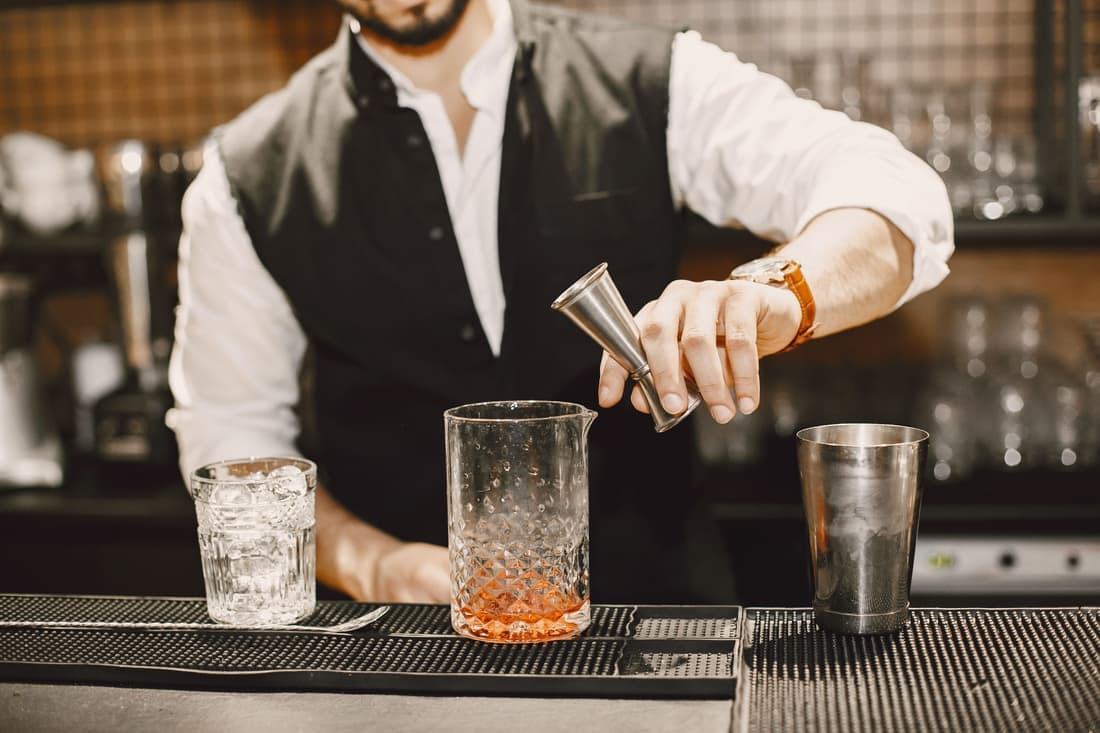
The best cocktail jigger for most people is the Cocktail Kingdom Japanese Style Jigger in 1 oz and 2 oz: tall, narrow and marked on the inside for fractional pours, which is the combination that makes a half-ounce measurement repeatable rather than approximate. The budget pick is the OXO Steel Double Jigger, the cheapest jigger here and the one with the cleverest idea on the page - interior markings angled so you read the fill line from above while you are still pouring, instead of bending down to eye level. If your problem is not accuracy but knocked-over jiggers and spilled measures, the Cocktail Kingdom Leopold Jigger is the answer: a lower, wider cone with a waisted grip and a much lower center of gravity, less precise than the tall profile and far harder to tip. All three are stainless steel and all three measure the same volumes - what differs is geometry, and the geometry is the purchase. Work out which of those three sentences describes your pours before you choose.
We earn a commission if you buy through the links on this page, at no extra cost to you. It never changes which product we pick. How we are funded.
Quick picks
| # | Product | Best for | Price |
|---|---|---|---|
| 1 | 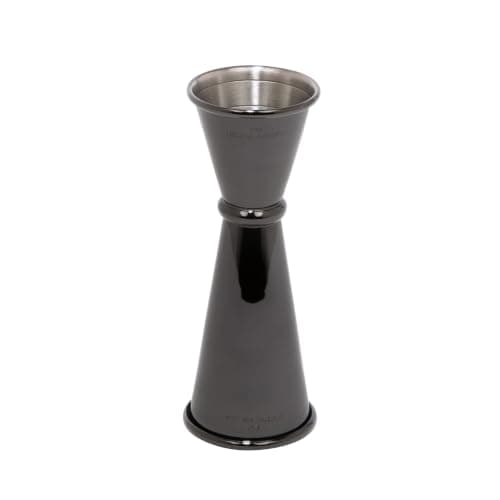 Cocktail Kingdom Japanese Style Jigger, 1oz/2oz Best overall | Accuracy | $32.99 View on Amazon #ad how we are funded - price as of November 22, 2026 |
| 2 | 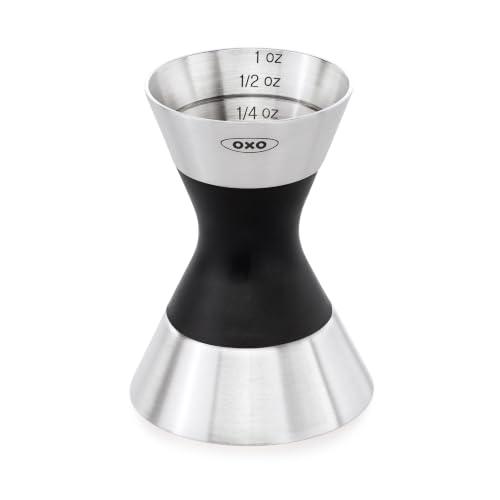 OXO Steel Double Jigger Best on a budget, and the budget pick | Reading the pour from above | $13.99 View on Amazon #ad how we are funded - price as of November 22, 2026 |
| 3 | 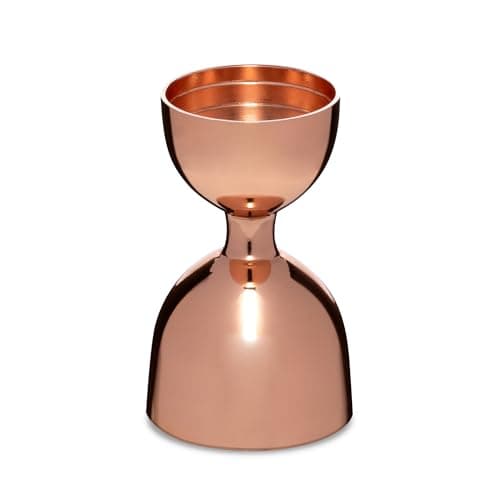 Cocktail Kingdom Leopold Jigger Best if you knock things over | A jigger that stays put | $44.99 View on Amazon #ad how we are funded - price as of November 22, 2026 |
Scroll the table sideways on a narrow screen. Every price in this table comes from Amazon’s own product data, is refreshed daily, and is stamped with the date it was read - and the button opens the current listing, which is always the final word.
Geometry first
Why the shape of the cone is the specification
Every jigger here measures the same ounces. What differs is how the volume is distributed, and that decides both how accurately you can read a partial pour and how easily the thing tips over.
Volume in a cone grows with the square of the radius. Make the cone narrower and the same half-ounce has to occupy much more vertical height; make it wider and it collapses into a shallow film near the bottom. That is the entire reason the Japanese profile became the bartender's default: at a narrow diameter, the difference between a half ounce and five-eighths is a band you can see, not a judgment you make. In a wide shallow cone it is a millimeter or two of depth, and nobody reads that reliably across a bar shift or a dinner party.
The cost of a narrow cone is stability. The same volume sitting higher up means a higher center of gravity, and a full jigger that goes over wastes an ounce of spirit and takes the drink with it. The Leopold profile trades read accuracy for not doing that, and the OXO sidesteps the trade differently by angling the marks so you never have to set the jigger down and look at it from the side at all.
| Jigger | Profile | Sizes and marks | Material | Reads from above |
|---|---|---|---|---|
| Cocktail Kingdom Japanese Style | Tall and narrow | 1 oz / 2 oz, interior lines for fractions | Stainless steel, gunmetal black finish | Not stated on the listing |
| OXO Steel Double Jigger | Double-sided cones | Multiple interior marks, angled | Stainless steel, dishwasher safe | Yes - the marks are angled for it |
| Cocktail Kingdom Leopold | Wider, lower, waisted grip | Not stated on the listing | Stainless steel, deco fluting | Not stated on the listing |
Profiles, sizes, markings, materials and care guidance are as published by the maker or as listed in Amazon's catalog data; where a listing does not state a figure the table says so rather than estimating it. The geometry argument is arithmetic about cones, not a measurement of these three tools, and we have not poured calibrated volumes through any of them.
How we picked
What earns credit in a measuring tool
- Interior markings. A jigger with only two sizes forces you to pour 1.5 oz as a full small cone plus a guess. Interior lines turn one tool into five measurements, and they are the single most useful feature in the category.
- Readability while pouring. Marks you can see from above rather than from the side remove a step from every drink. Only one pick here publishes that as a design intent, and it is the cheapest one.
- Stability under a sleeve. A measuring tool that tips is a measuring tool that costs you spirit. Center of gravity is a real criterion and it pulls in the opposite direction from read accuracy.
- Rim and finish practicality. A rolled or beaded rim pours cleanly; a finish on a tool that lives in citrus will wear at the contact points. Plain steel stays looking new longest, and the page says which picks are finished.
What got no credit: engraved logos, gift boxes and set counts that include tools you did not want. If you specifically want the tall Japanese profile compared across brands, best japanese jiggers is that page; japanese vs american jigger compares the two traditions, and leopold vs japanese jigger is the head-to-head between two of the picks here.
Using it
The habits that make a jigger worth owning
Three, and they take about a week to become automatic.
Fill to the rim, not to near it. A jigger is designed to be read at the brim - a meniscus standing slightly proud of the rim is a full measure, and stopping a few millimeters short is how a drink quietly loses a sixth of its spirit. This is also why rim shape matters: a clean rim lets you pour off without the last drops running down the outside.
Pour the cheap ingredient first when you are reusing the same cone - syrup, then citrus, then spirit - so you are not rinsing between every measure. And measure into the tin rather than into the glass, which lets you see the total build before anything is committed. How to use a jigger covers the grip and the pour, and jigger sizes explained decodes the markings you will find inside these cones.
Whether you need one at all is a fair question with a real answer: jigger vs free pouring goes through where free-pouring holds up and where it does not, which is mostly in low-ABV and ratio-sensitive drinks. And if there is no jigger in the house tonight, how to measure cocktails without a jigger has the kitchen substitutes that are close enough.
Prices on these three move independently and two of them carry finishes that are sold at a premium. The live price on each card, with its as-of date, is the authority - we never print a price in prose.
The picks in full
Every pick, and who each one is for
01 · Best overall
Cocktail Kingdom Japanese Style Jigger, 1oz/2oz
Cocktail Kingdom · Mid tier
#ad how we are funded - price as of November 22, 2026
Tall, narrow and internally marked, which is the combination that makes a half-ounce pour repeatable.
A 1 oz / 2 oz jigger in a tall, narrow profile with interior lines for fractional pours, in stainless steel with a gunmetal black finish. The geometry is the whole argument: in a tall narrow cone, a given volume occupies more vertical height than it does in a wide shallow one, so a quarter-ounce is a visible band rather than a sliver, and the interior lines give you three-quarters and a half without a second tool. If your pours drift and you want them to stop, this is the shape that fixes it. Honest cons: tall and narrow means a high center of gravity, so it tips more readily than the Leopold, and it holds less margin for a shaky hand; and if you free-pour by count and are happy with the drinks, it solves a problem you do not have.
The specs that decide it
- Sizes:
- 1 oz / 2 oz
- Profile:
- tall and narrow
- Markings:
- interior lines for fractional pours
- Material:
- stainless steel, gunmetal black finish
Who it is for
- A narrow cone makes a given volume a taller column, so a small error is visible before you pour it
- Interior lines mean you are not guessing at three quarters of an ounce
- Balanced enough to hold one-handed while the other hand pours
Where it gives ground
- Tall profile tips more easily on a crowded counter
- No handle, so it gets cold and slippery when you work fast
Skip this one if you free-pour by count and are happy with the results. This tool exists to fix a problem you do not have.
02 · Best on a budget, and the budget pick
OXO Steel Double Jigger
OXO · Entry tier
#ad how we are funded - price as of November 22, 2026
Angled interior markings you can read while pouring, which removes the bend-down-and-squint step entirely.
The cheapest jigger here and the most practical for anyone who has ever bent down to check a fill line. Both cones carry multiple interior marks angled so they can be read from above - which removes an entire step from every measured pour, because you watch the line come up instead of pouring, stopping, crouching and correcting. Stainless steel and dishwasher safe. Honest cons: it is unmistakably a working tool rather than a display piece, so it looks plain on an open bar next to the other two; and multiple marks in one cone take a few drinks to read confidently in low light.
The specs that decide it
- Sizes:
- dual-sided, multiple interior marks
- Markings:
- angled for top-down reading
- Material:
- stainless steel
- Dishwasher:
- yes
Who it is for
- Angled markings genuinely work - you stop lowering your head to check a pour
- Wide base is very hard to tip
- Cheap enough to be the jigger you leave out
Where it gives ground
- Bulkier than a Japanese jigger, so it is slower into a tin
- Markings will fade with years of dishwasher cycles
Skip this one if you want the classic tall silhouette on an open bar. This is a working tool, not a display piece.
03 · Best if you knock things over
Cocktail Kingdom Leopold Jigger
Cocktail Kingdom · The step up
#ad how we are funded - price as of November 22, 2026
A lower, wider cone with a deco waist - less precise than the tall Japanese profile and much harder to knock over.
A wider, lower cone with art-deco fluting and a waisted middle to grip, which gives it the lowest center of gravity of the three. That is a real functional advantage rather than a styling note: a jigger holding 2 oz of spirit on a crowded bar top gets caught by a sleeve, and a low wide cone tolerates that where a tall narrow one does not. The waist also means you hold it without your fingers crossing the rim. Honest cons: a wide shallow cone spreads a given volume across less height, so fractional pours are harder to judge accurately - if your pours drift, the tall profile is the better fix; and it is the most expensive jigger here, partly for the deco styling.
The specs that decide it
- Profile:
- wider, lower center of gravity
- Styling:
- art deco fluting
- Grip:
- waisted middle
- Material:
- stainless steel
Who it is for
- Far more stable set down full than a tall Japanese jigger
- The waist is a real grip, not decoration - it finds your fingers wet
- Reads as an object rather than as equipment on an open cart
Where it gives ground
- Wider bore makes a fractional pour harder to eyeball precisely
- Interior markings are less useful in a shallow cone
Skip this one if your pours drift and you are buying a jigger to fix that. The tall profile does that job better.
Honest limits
What we could not verify
We have not poured calibrated volumes through these three and no accuracy claim here is a measurement of ours. Profiles, sizes, markings, materials, finishes and care guidance are as published by the maker or as listed in Amazon's catalog data; two listings do not publish their full marking sets and the table says so rather than inventing them. The argument about cone geometry and read accuracy is arithmetic about the shape of a cone, not a test result, and nobody in this category publishes a tolerance figure. We assign no scores.
We do not run a test lab and we have not personally used every product here. Where a judgment rests on published specifications or on what owners report rather than on our own hands, we say so. Read the full method.
Questions
Related questions
- What jigger sizes do I actually need?
- A 1 oz / 2 oz pair covers almost everything, provided the cones carry interior lines for halves and three-quarters - which is why interior markings matter more than the headline sizes. Without them you will be guessing at 1.5 oz, which is the most common measurement in classic cocktails.
- Is a Japanese jigger really more accurate?
- The shape makes a partial measure easier to read, which in practice means more accurate pours. In a tall narrow cone a given volume occupies more vertical height than in a wide shallow one, so a quarter-ounce band is visible rather than marginal. That is geometry rather than craftsmanship, and it is why the profile became standard behind bars.
- Why would I buy the wider Leopold shape then?
- Because it does not tip. A tall jigger full of spirit on a crowded bar top is genuinely easy to knock over, and the Leopold's lower, wider cone and waisted grip exist to stop that. You trade some read accuracy for it, which is the right trade if your pours are already consistent and your bar top is busy.
- Does a jigger go in the dishwasher?
- One of these three publishes a dishwasher rating and the other two do not, so the page does not claim one for them. In practice a finished jigger - gunmetal, black or gold - lasts longer washed by hand, because dishwasher detergent is hard on applied finishes at the points where the tool rubs against a rack.
Read next
Related reading
- Jiggers, bar spoons and mixing glasses
Jiggers, spoons and mixing glasses - the half of the bar that decides whether a drink is repeatable.
- Best Japanese jiggers
Why a narrow bore reads more accurately, which size pairing to buy, and the precision-stability trade-off.
- Jigger sizes explained
A full conversion table, what a shot actually measures, and which double-jigger pairing to buy.
- How to use a jigger
Fill to the brim, hold it low, pour once - and the measuring order that means you rarely rinse.
- Jigger vs free pouring
Free pouring is a count against a calibrated spout - which is exactly what a home bar does not have.
- Best bar tools under $25
Ten bar tools under $25, one per job, from the companies that supply working bars - plus the one tool the ceiling genuinely cannot buy, and what to do about it.