Roundup
Best bar tools under $25
Most of a professional bar kit costs under $25 a piece, bought one tool at a time from the companies that supply actual bars. Here are ten, and the one thing the ceiling cannot buy.
By Michael W. · Published November 2026
The short answer
Bar tools are the one category in a home bar where a low ceiling costs you almost nothing, because the companies that supply working bars - Barfly by Mercer, Cocktail Kingdom, OXO - price individual tools for people buying them by the dozen. Under $25 you can have a stainless Hawthorne strainer with a dense removable coil, a fine mesh strainer for double straining, a julep strainer for stirred drinks, a weighted teardrop bar spoon, a double jigger with angled interior markings you can read while pouring, a nine-inch stainless muddler, a citrus squeezer, and a canvas Lewis bag with a wood mallet that makes better crushed ice than any blender. The cheapest pick here is the Barfly 30 cm bar spoon and it is a genuinely good spoon, not a concession. The one real gap is the shaker: nothing in this category that we would recommend comes in under $25, and the honest answer is to buy nine tools here and save a little longer for the tins. Buy to cover the jobs you actually do - measure, stir, strain, muddle, juice, crush - rather than buying a boxed kit that bundles a strainer you will replace with the two you should have bought instead.
We earn a commission if you buy through the links on this page, at no extra cost to you. It never changes which product we pick. How we are funded.
Quick picks
| # | Product | Best for | Price |
|---|---|---|---|
| 1 | 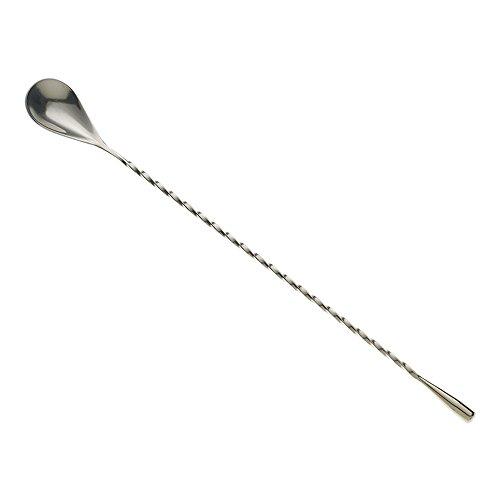 Barfly Teardrop Bar Spoon, 30 cm Best under $15, and the budget pick | A weighted spoon that fits a 500 ml glass | $10.49 #ad how we are funded - price as of November 22, 2026 |
| 2 | 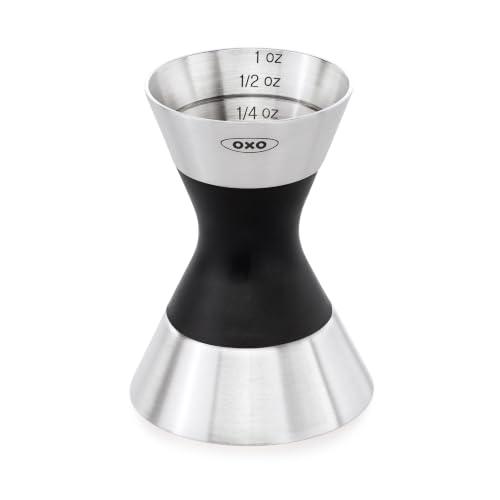 OXO Steel Double Jigger Best jigger under $25 | Reading the pour from above | $13.99 View on Amazon #ad how we are funded - price as of November 22, 2026 |
| 3 | 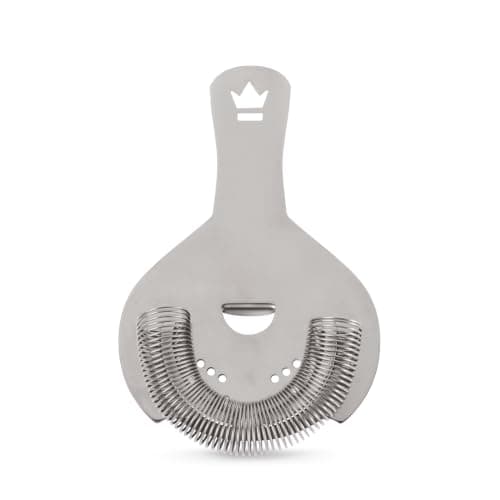 Cocktail Kingdom Koriko Hawthorne Strainer Best Hawthorne strainer, at the ceiling | Shaken drinks | $24.99 View on Amazon #ad how we are funded - price as of November 22, 2026 |
| 4 | 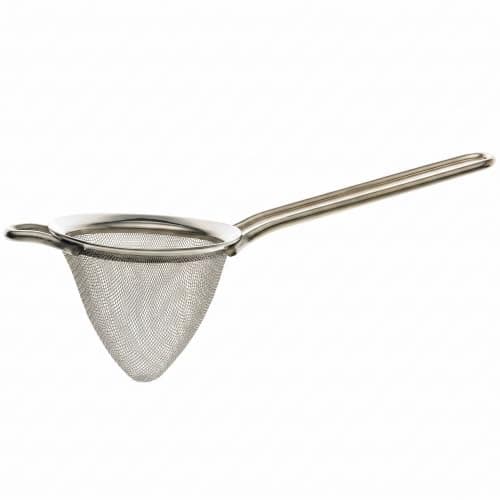 Barfly Fine Mesh Cocktail Strainer Biggest improvement per dollar | Double straining | $11.99 View on Amazon #ad how we are funded - price as of November 22, 2026 |
| 5 | 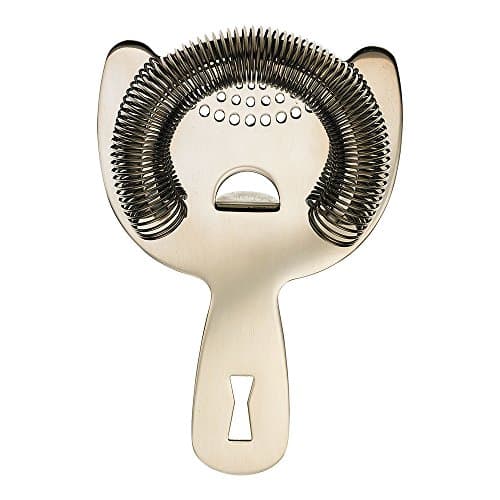 Barfly Heavy-Duty Spring Bar Strainer Best if you are matching a finish | Matching an existing set | $17.49 #ad how we are funded - price as of November 22, 2026 |
| 6 | 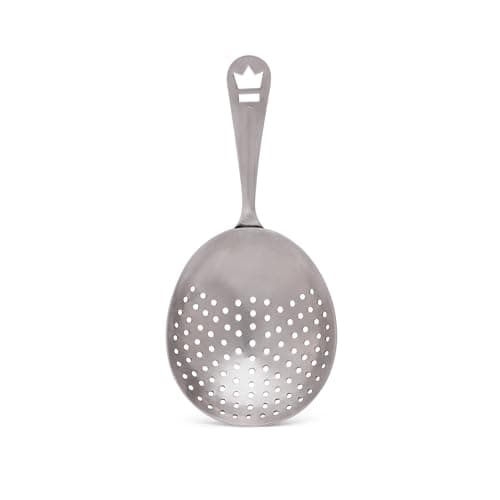 Cocktail Kingdom Premium Julep Strainer Best strainer for stirred drinks | Stirred drinks | $16.99 View on Amazon #ad how we are funded - price as of November 22, 2026 |
| 7 | 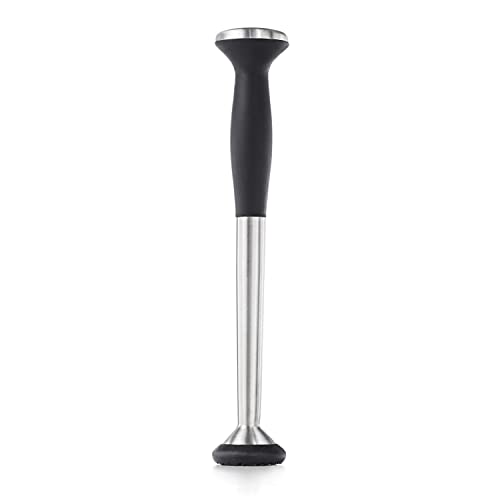 OXO SteeL Cocktail Muddler Best muddler under $25 | A first muddler you will not replace | $19.92 View on Amazon #ad how we are funded - price as of November 22, 2026 |
| 8 | 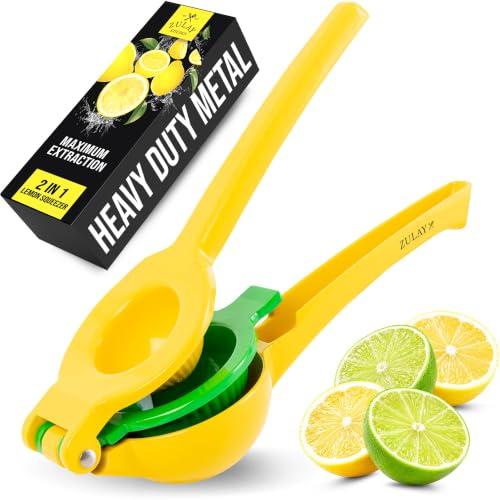 Zulay Kitchen Metal 2-in-1 Lemon Lime Squeezer Best citrus squeezer for mixed fruit | Limes and lemons from one tool | $12.34 #ad how we are funded - price as of November 22, 2026 |
| 9 | 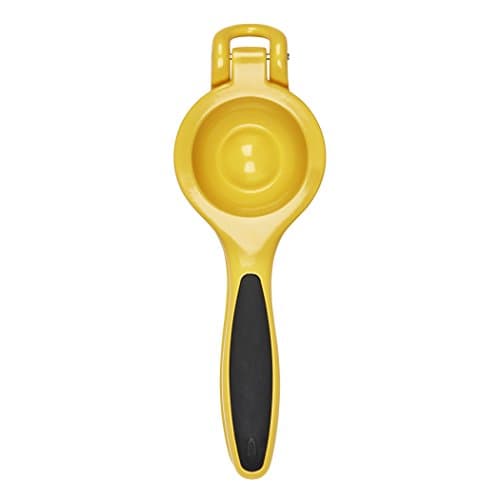 OXO Good Grips Citrus Squeezer Most comfortable to use | Comfort, and a dishwasher | $17.59 #ad how we are funded - price as of November 22, 2026 |
| 10 | 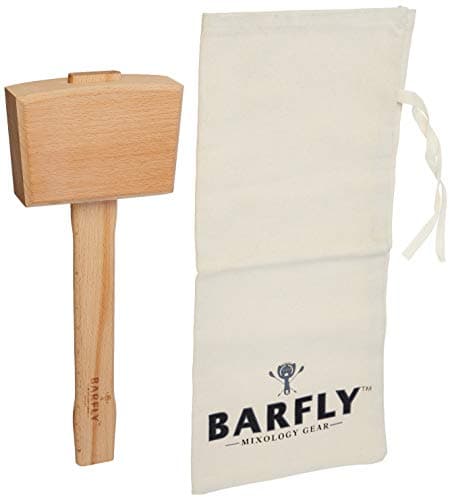 Barfly Wood Ice Mallet with Lewis Canvas Bag Best ice tool under $25 | Dry crushed ice at home | $19.99 #ad how we are funded - price as of November 22, 2026 |
Scroll the table sideways on a narrow screen. Every price in this table comes from Amazon’s own product data, is refreshed daily, and is stamped with the date it was read - and the button opens the current listing, which is always the final word.
Why the ceiling works
Why $25 is not a compromise in bar tools
In most home bar categories a low price ceiling costs you something real. In bar tools it mostly does not, and the reason is who the tools are made for.
Barfly by Mercer, Cocktail Kingdom and OXO all sell individual tools into working bars, where a strainer is a consumable bought by the dozen and a bar spoon gets lost every few months. That pricing pressure is why a stainless Hawthorne with a dense removable coil costs less than a decent bottle of gin, and why the gap between a $17 strainer and a $40 one is finish and provenance rather than function.
There is a second reason, which is that bar tools are simple. A jigger is a measured steel cup. A bar spoon is a twisted shaft with a weight on the end. A julep strainer is a perforated bowl. None of them has a motor, a seal, a coating that degrades, or a tolerance that is expensive to hold. The engineering content is low, so price tracks branding and material finish far more than it tracks whether the tool does its job.
Where money does buy function in this category, we say so on the card. The Cocktail Kingdom Hawthorne sits at the ceiling rather than the floor because a dense coil and a body that sits down properly in the tin are genuinely better than a loose coil in a thin body, and a loose Hawthorne is the most annoying tool failure in a home bar. That is the one place on this page we would spend the extra ten dollars.
How we picked these
The criteria, in the order they matter
One tool per job, and the job list comes from what making a drink actually requires rather than from what a boxed kit contains. Within each job we ranked on four things.
- Does it do the job without fighting you. A Hawthorne that sits loose in the tin, a jigger you have to bend down to read, a muddler that slips when wet - these are the failures that make people stop making drinks, and they are all avoidable at this price.
- One-piece or serviceable construction. A one-piece stainless bar spoon has nothing to come apart. A removable coil on a strainer can be cleaned and replaced. Glued handles and riveted assemblies are where cheap tools actually fail.
- Material honesty. Stainless steel where it touches citrus. Coated or die-cast aluminum is fine for a squeezer and we name the trade - coatings chip and bare aluminum discolors where acid pools. Nothing here is plated steel pretending to be solid.
- Dishwasher tolerance. Not a luxury - the tool you can put in a machine is the tool that gets used on a weeknight. Where a pick is hand-wash-only or where markings will fade in a machine, the card says so.
| Job | Pick | Material | Why this one | Honest limitation |
|---|---|---|---|---|
| Measure | OXO Steel double jigger | Stainless | Angled interior marks readable while pouring | Bulkier and slower into a tin than a Japanese jigger |
| Stir | Barfly 30 cm teardrop spoon | One-piece stainless | Weighted end balances a long stir | Too short for a 750 ml mixing glass |
| Strain (shaken) | Cocktail Kingdom Koriko Hawthorne | Stainless | Dense removable coil; seats in 18 and 28 oz tins | Small gate tab for large hands |
| Double strain | Barfly fine mesh | Stainless | Biggest texture change per dollar on the page | A second thing to wash every drink |
| Strain (stirred) | Cocktail Kingdom julep | Stainless | Correct tool for a mixing glass | Holes far too large for citrus drinks |
| Muddle | OXO SteeL muddler | Stainless, nylon head | Grip stays put wet; dishwasher safe | Nylon has no bite on mint; short for a collins |
| Juice | Zulay 2-in-1 squeezer | Coated aluminum | Two nested bowls take lime, lemon or small orange | Coating chips; less leverage than a geared press |
| Crush ice | Barfly Lewis bag and mallet | Canvas and wood | Canvas wicks meltwater, so flakes stay dry | Manual work; bag must dry fully |
| Shake | Nothing under $25 | - | - | See the next section - this is the real gap |
What we did not rank on: matched finishes, gift boxes, and the number of pieces. A ten-piece kit at this money is ten compromises, and the strainer is almost always the piece that gives. Types of barware sorts the whole category into functional groups if you want the map before the shopping list.
The gap
The one tool you cannot buy under $25
A price-ceiling page is only honest if it says what the ceiling excludes, and here there is exactly one real exclusion: the shaker. Nothing we would recommend comes in under $25, and we are not going to pad the list with a cobbler shaker that seizes shut.
The cheapest shaking setups we would actually tell someone to buy sit just above this ceiling - a weighted two-piece tin set, or a single-piece stainless shaker for someone who wants simplicity over speed. Both are a small step up rather than a different budget, which is why the recommendation is to buy the nine tools on this page now and the tins next month rather than to buy a cheap shaker today and replace it.
The reason tins cost more is that a shaker has a tolerance the other tools do not. Two tins have to seal against each other under thermal contraction and then come apart again, and that is a dimensional relationship, not a shape. Cheap tins either leak because the fit is loose or weld themselves shut because the fit is wrong, and both failures are permanent features of the set rather than technique problems. Why shaker tins stick and leak explains the mechanism, best weighted shaking tins ranks the sets, and best cocktail shakers covers the whole class including cobblers.
Every pick here was under $25 as sold when this page was written. Tool prices move less than glassware prices do, but they do move - the live price on each card is the authority rather than the number in the headline, and we never print a price in our prose for that reason.
Buying order
Which of these to buy first
You do not need ten tools. Four of these cover the overwhelming majority of drinks, and the order is dictated by what a drink physically requires rather than by preference.
- First: the jigger. Measurement is the single biggest difference between a home drink and a bar drink, and it costs the least to fix. Nothing else on this list improves a drink as much as not guessing. How to use a jigger covers reading it properly.
- Second: the Hawthorne strainer. You cannot serve a shaken drink without one, and the loose-coil failure is the most common reason a cheap kit frustrates people.
- Third: the bar spoon. Stirred drinks are half of what a decent home bar makes, and a weighted spoon of the right length turns stirring from a chore into the easiest technique in cocktails. How to stir a cocktail is the technique.
- Fourth: the fine mesh strainer. The cheapest texture upgrade available. It is the difference between a gritty daiquiri and a silky one, and it costs less than the citrus you will put through it this month. When to double strain a cocktail covers when it is worth the extra step.
- Then, by what you drink: a citrus squeezer if you make sours, a muddler if you make juleps and mojitos, a julep strainer if you stir more than you shake, and the Lewis bag if you want genuinely dry crushed ice.
The argument against a boxed kit is this list. A kit prices breadth you may not need, and the piece it economizes on is almost always the strainer - which is the one piece where the extra ten dollars buys real function. Buying four good tools individually beats a ten-piece set at the same total price, and you can tell which four you need from the list above. Best barware sets covers the kits honestly if you would still rather buy one box, and best bartender kits ranks them.
The glass side of the same question runs to a slightly higher ceiling: best cocktail glasses under $40 picks one glass per shape at full-set prices. If you are starting from genuinely nothing and want the whole sequence rather than a shopping list, how to build a home bar on a budget is the order to buy tools, glass and bottles in, and home bar essentials checklist is what belongs on the shelf once you have them.
The honest part
What we did not verify
We have not run these ten tools against their more expensive equivalents in a controlled way, and nothing here rests on our own bench testing. Lengths, diameters, materials, finishes and dishwasher guidance are as published by the maker or as listed in Amazon's catalog data for that product.
The central argument of the page - that price in bar tools tracks finish and branding more than function - is a judgment from how these tools are built and who they are sold to, not a measurement. It is also the argument we are least uncertain about: there is no mechanism by which a $40 julep strainer strains better than a $17 one, because a perforated bowl is a perforated bowl. Where we think money does buy function, which is the Hawthorne's coil density and body fit, the card says so and we picked the more expensive one.
Two specific things we could not confirm. Barfly's Hawthorne is sold in both two-prong and four-prong versions and the listing does not always make clear which is shipping, so check before ordering if the prong layout matters to you. And coated-aluminum squeezers vary in coating quality between production runs in a way no maker publishes - our note that coatings chip at the bowl edge is the consistent owner report for the class rather than a durability figure for this unit. For the strainer half of that list in more detail - Hawthorne, julep and fine mesh, and which two you actually need - best cocktail strainers under $25 covers the category at this same ceiling.
The picks in full
Every pick, and who each one is for
01 · Best under $15, and the budget pick
Barfly Teardrop Bar Spoon, 30 cm
Barfly by Mercer · Entry tier
#ad how we are funded - price as of November 22, 2026
A one-piece stainless spoon at the length a 500 ml mixing glass actually wants, with a weighted end doing the balancing.
A one-piece stainless spoon with a twisted shaft and a weighted teardrop end, 30 cm long - the length a 500 ml mixing glass actually wants. The weighted end does the balancing, which is what makes a long stir feel controlled rather than clumsy. Honest cons: 30 cm is short for a 750 ml glass, so size the spoon to the glass you own, and this listing is plain stainless only, so there is no finish to match a copper set. Skip it if you stir in a tall 750 ml glass - buy the 40 cm version of the same spoon.
The specs that decide it
- Length:
- 11 13/16 in (30 cm)
- Material:
- one-piece stainless steel core
- End:
- weighted teardrop
- Shaft:
- twisted
Who it is for
- One-piece construction is why it does not loosen at the bowl the way glued spoons do
- The weighted end balances the spoon so your fingers only guide it
- Shaft twist is well cut, so it spins cleanly
Where it gives ground
- 30 cm is short for a 750 ml glass - size the spoon to the glass you own
- Plain stainless only in this listing, so there is no finish to match a copper set
Skip this one if you stir in a tall 750 ml glass. Buy the 40 cm version of the same spoon instead.
02 · Best jigger under $25
OXO Steel Double Jigger
OXO · Entry tier
#ad how we are funded - price as of November 22, 2026
Angled interior markings you can read while pouring, which removes the bend-down-and-squint step entirely.
A dual-sided stainless jigger whose interior markings are angled so you can read them from above while you pour, which removes the bend-down-and-squint step entirely. Dishwasher safe. Honest cons: it is bulkier than a Japanese jigger, so it is slower into a tin, and the markings will fade after years of dishwasher cycles. Skip it if you want the classic tall Japanese silhouette on an open bar - this is a working tool rather than a display piece. [Japanese vs American jigger](/jiggers-and-mixing/japanese-vs-american-jigger) covers that trade.
The specs that decide it
- Sizes:
- dual-sided, multiple interior marks
- Markings:
- angled for top-down reading
- Material:
- stainless steel
- Dishwasher:
- yes
Who it is for
- Angled markings genuinely work - you stop lowering your head to check a pour
- Wide base is very hard to tip
- Cheap enough to be the jigger you leave out
Where it gives ground
- Bulkier than a Japanese jigger, so it is slower into a tin
- Markings will fade with years of dishwasher cycles
Skip this one if you want the classic tall silhouette on an open bar. This is a working tool, not a display piece.
03 · Best Hawthorne strainer, at the ceiling
Cocktail Kingdom Koriko Hawthorne Strainer
Cocktail Kingdom · Mid tier
#ad how we are funded - price as of November 22, 2026
A tight spring and a body that actually sits down in the tin, which is the whole job of a Hawthorne.
A dense removable coil and a body that genuinely sits down in the tin, which is the entire job of a Hawthorne, and it seats in both 18 oz and 28 oz tins. The most predictable strainer here. Honest cons: it is still not a substitute for a fine mesh when you want a silky texture, and the gate tab is small if you have large hands. Skip it if you only stir - a julep strainer is the better and cheaper tool for a mixing glass.
The specs that decide it
- Type:
- Hawthorne
- Spring:
- dense coil, removable
- Fit:
- seats in both 18 oz and 28 oz tins
- Material:
- stainless steel
Who it is for
- The spring is dense enough to hold back shaken citrus pulp without a second strainer
- Gate control is precise, so you can open it up for a shaken drink and close it for a stirred one
- Spring comes out for cleaning, which cheap strainers do not allow
Where it gives ground
- Still not a substitute for a fine mesh when you want a genuinely silky texture
- The gate tab is small if you have large hands
Skip this one if you only stir. A julep strainer is the better and cheaper tool for a mixing glass.
04 · Biggest improvement per dollar
Barfly Fine Mesh Cocktail Strainer
Barfly by Mercer · Entry tier
#ad how we are funded - price as of November 22, 2026
The second strainer that turns a gritty home shaken drink into a silky one, for very little money.
A conical fine mesh bowl about 3.5 inches across, held under the pour alongside a Hawthorne. This is the cheapest thing on the page and the one that most changes how a drink feels in the mouth - it catches the ice shards and citrus pulp that make a home shaken drink gritty. Honest cons: it is a second object and a second thing to wash on every drink, and the mesh clogs with muddled herbs and wants rinsing immediately rather than later. Skip it if you only stir.
The specs that decide it
- Type:
- fine mesh, conical bowl
- Diameter:
- about 3.5 in
- Material:
- stainless steel
- Used with:
- held under the pour, alongside a Hawthorne
Who it is for
- Catches the ice fines and citrus pulp a Hawthorne spring lets through - the single biggest texture upgrade in a shaken drink
- A conical bowl drains faster than a flat one and does not trap liquid in the corners
- Small enough to hold in one hand while you pour with the other
Where it gives ground
- It is a second object and a second thing to wash, every single drink
- Mesh clogs with muddled herbs and wants rinsing immediately rather than later
Skip this one if you only stir. There is nothing in a stirred drink for a fine mesh to catch, and the extra step chills nothing.
05 · Best if you are matching a finish
Barfly Heavy-Duty Spring Bar Strainer
Barfly by Mercer · Mid tier
#ad how we are funded - price as of November 22, 2026
A thick, heavy-gauge Hawthorne with a tight coil, sold in more finishes than anyone else offers.
A thick heavy-gauge Hawthorne with a tight coil, 18/8 stainless, sold in more finishes than anyone else offers - stainless, matte black, vintage and antique gold among them. The pick if your tools are a set rather than an assortment. Honest cons: plated finishes are a wear item and will mark where the gate rubs, and the prong layout varies between two-prong and four-prong versions, so check which one the listing is. Skip it if your tools are plain steel and you just want the most predictable seat.
The specs that decide it
- Type:
- Hawthorne
- Length:
- about 6 in
- Material:
- 18/8 stainless steel
- Finishes:
- stainless, matte black, vintage and antique gold among others
Who it is for
- Heavy-gauge build that does not flex when you press the gate against a tin
- The coil is dense enough to hold back shaken citrus pulp without a second strainer
- The only Hawthorne you can realistically match to a copper, black or gold tool set
Where it gives ground
- Plated finishes are a wear item and will mark where the gate rubs
- Prong layout varies between the two-prong and four-prong versions - check which one the listing is
Skip this one if your tools are plain steel and you only want the most predictable seat in a tin. The Koriko is the safer default there.
06 · Best strainer for stirred drinks
Cocktail Kingdom Premium Julep Strainer
Cocktail Kingdom · Entry tier
#ad how we are funded - price as of November 22, 2026
The right strainer for a mixing glass, and the one most home bars skip and then wonder why stirring feels awkward.
A perforated stainless bowl with large holes and no spring, which seats inside a mixing glass at an angle - the right tool for a stirred drink and the one most home bars skip before wondering why stirring feels awkward. Honest cons: it is useless for shaken citrus drinks because the holes are far too large, and the fit varies with glass diameter, so check it against your mixing glass. Skip it if you shake nine drinks out of ten. [Hawthorne vs julep strainer](/shakers/hawthorne-vs-julep-strainer) is the full comparison.
The specs that decide it
- Type:
- julep
- Fit:
- seats inside a mixing glass at an angle
- Perforation:
- large holes - no spring
- Material:
- stainless steel
Who it is for
- Sits inside the glass instead of on the rim, so the pour is controlled by wrist angle
- Nothing to clean but a bowl - no spring to trap citrus
- Costs very little and lasts indefinitely
Where it gives ground
- Useless for shaken citrus drinks - the holes are far too large
- Fit varies with glass diameter, so check it against your mixing glass
Skip this one if you shake nine drinks out of ten. Buy a Hawthorne first and come back to this.
07 · Best muddler under $25
OXO SteeL Cocktail Muddler
OXO · Entry tier
#ad how we are funded - price as of November 22, 2026
Nine inches of stainless with a non-scratch nylon head and a grip that stays put wet - the muddler to own if you only own one.
About nine inches of stainless steel with a non-scratch nylon head and a grip that stays put when wet - the muddler to own if you only own one, and it will not need replacing. Honest cons: nylon has no bite on mint, so it bruises by pressure rather than by grip, and nine inches is short for a tall collins glass. Skip it if you muddle mostly mint - a textured wood head grips leaves better and is gentler about it. [How to muddle](/shakers/how-to-muddle) covers the technique that matters more than the tool.
The specs that decide it
- Length:
- about 9 in
- Head:
- non-scratch nylon
- Body:
- stainless steel
- Care:
- dishwasher safe
Who it is for
- A nylon head is the difference between muddling in your good glass and muddling in a glass you do not mind scarring
- The soft non-slip grip is the feature you notice on the fourth mojito, not the first
- Dishwasher safe, which no wooden muddler can claim
Where it gives ground
- Nylon has no bite on mint, so it bruises by pressure rather than by grip
- Nine inches is short for a tall collins glass
Skip this one if you muddle mostly mint. A textured wood head grips leaves better and is gentler about it.
08 · Best citrus squeezer for mixed fruit
Zulay Kitchen Metal 2-in-1 Lemon Lime Squeezer
Zulay Kitchen · Entry tier
#ad how we are funded - price as of November 22, 2026
Two nested bowls in one coated-aluminum body, so the same squeezer takes a lime, a lemon or a small orange - the sensible default for a home bar.
Two nested bowls in one coated-aluminum body, so the same tool takes a lime, a lemon or a small orange, with a perforated base that holds back seeds and pulp. Dishwasher safe per the maker. The sensible default for a home bar that uses more than one citrus. Honest cons: coated aluminum chips at the bowl edge with hard use and the coating is what holds off discoloration, and it has less mechanical advantage than a geared press, so a bag of limes is still work. Skip it if you make drinks for a crowd.
The specs that decide it
- Material:
- aluminum with a food-grade coating
- Bowls:
- two nested sizes
- Size:
- 8.7 in by 3 in by 2 in, about 0.75 lb
- Dishwasher:
- dishwasher safe per the maker
- Filter:
- perforated base holds back seeds and pulp
Who it is for
- The nested bowl is a real answer to the one-size problem, not a marketing feature
- Light enough to live in a drawer rather than on the counter
- The cheapest meaningful upgrade over squeezing by hand into a shaker
Where it gives ground
- Coated aluminum chips at the bowl edge with hard use, and the coating is what holds off discoloration
- Less mechanical advantage than a geared press, so a bag of limes is still work
Skip this one if you make drinks for a crowd. Volume is where a geared press or a lever press pays for itself.
09 · Most comfortable to use
OXO Good Grips Citrus Squeezer
OXO · Entry tier
#ad how we are funded - price as of November 22, 2026
Die-cast aluminum with cushioned handles that spread the load across your palm, and the pick here you can put in a dishwasher without thinking about it.
Die-cast aluminum with cushioned handles that spread the load across your palm instead of concentrating it in your fingers, and dishwasher safe without thinking about it. The one to buy if hand comfort is the deciding factor. Honest cons: one bowl size, so a small lime rattles and a large lemon has to be forced, and aluminum dulls and can discolor where acid pools - cosmetic, but visible. Skip it if you want one tool for limes and lemons both. [Best citrus juicers for cocktails](/shakers/best-citrus-juicers-for-cocktails) ranks the whole class.
The specs that decide it
- Material:
- die-cast aluminum
- Length:
- about 10 1/2 in
- Dishwasher:
- dishwasher safe
- Fits:
- lemon and lime halves
Who it is for
- The soft handles are the feature: pressure lands on your palm rather than on two metal edges
- Dishwasher safe, so citrus acid never sits on it overnight
- One-piece casting with nothing to work loose
Where it gives ground
- One bowl size, so a small lime rattles and a large lemon has to be forced
- Aluminum dulls and can discolor where acid pools, which is cosmetic but visible
Skip this one if you want one tool for limes and lemons both. A nested two-size bowl handles the range better.
10 · Best ice tool under $25
Barfly Wood Ice Mallet with Lewis Canvas Bag
Barfly by Mercer · Entry tier
#ad how we are funded - price as of November 22, 2026
A canvas bag and a wood mallet make better crushed ice than any blender, because the canvas wicks the meltwater away while you work.
A canvas bag around 17.75 by 8.25 inches and a wood mallet around 13.5 inches, and together they make better crushed ice than any blender - the canvas wicks meltwater away while you work, so you get dry flakes rather than slush. The bag is machine washable. Honest cons: it is manual work and a full julep's worth is a real minute of hitting a bag, and the bag has to dry fully between uses or it will start to smell. Skip it if you want chewable ice on tap - that is a nugget machine. [How to make crushed ice](/ice/how-to-make-crushed-ice) has the method.
The specs that decide it
- Bag:
- canvas, around 17.75 x 8.25 in
- Mallet:
- wood, around 13.5 in
- Care:
- bag is machine washable
- Output:
- cracked to flaked, by how long you hit it
Who it is for
- Canvas absorbs meltwater, so the ice leaves the bag dry rather than as slush
- You control the grade - a few strikes for cracked ice, thirty seconds for a julep pack
- Nothing to break, nothing to plug in, and it stores flat in a drawer
Where it gives ground
- It is manual work, and a full julep's worth is a real minute of hitting a bag
- The bag has to dry fully between uses or it will start to smell
Skip this one if you want chewable ice on tap. That is a nugget machine, not a bag and a mallet.
Honest limits
What we could not verify
We have not bench-tested these ten against more expensive equivalents. Lengths, diameters, materials, finishes and dishwasher guidance are as published by the maker or as listed in Amazon's catalog data. The page's central argument - that price in bar tools tracks finish and branding more than function - is a judgment from construction and distribution, not a measurement. Barfly's Hawthorne ships in both two-prong and four-prong versions and the listing does not always say which, so check before ordering. Our note that squeezer coatings chip at the bowl edge is the consistent owner report for coated aluminum rather than a durability figure for this unit. Every pick was under $25 as sold at the time of writing; the live price on each card is the authority.
We do not run a test lab and we have not personally used every product here. Where a judgment rests on published specifications or on what owners report rather than on our own hands, we say so. Read the full method.
Questions
Related questions
- What bar tools can you get under $25?
- Almost all of them: a double jigger, a weighted bar spoon, a Hawthorne strainer, a fine mesh strainer, a julep strainer, a stainless muddler, a citrus squeezer and a Lewis bag with a mallet. The one exception is the shaker - nothing in tins we would recommend comes in under $25.
- Are cheap bar tools worth buying?
- In this category, yes, as long as they come from a company that supplies working bars. Bar tools have low engineering content - a jigger is a measured steel cup - so price mostly tracks finish and branding. The exception is the Hawthorne strainer, where coil density and how the body sits in the tin are real function worth paying a little more for.
- Which bar tool should I buy first?
- The jigger. Measuring instead of guessing is the single biggest difference between a home drink and a bar drink, and it is the cheapest thing on the list to fix. Then a Hawthorne strainer, then a bar spoon, then a fine mesh strainer.
- Is a bar tool kit better than buying tools individually?
- Individually, usually. A kit prices breadth you may not need, and the piece it economizes on is almost always the strainer - the one piece where spending a little more buys real function. Four good tools bought separately beat a ten-piece set at the same total price.
- Why is there no shaker under $25?
- Because a shaker has a dimensional tolerance the other tools do not. Two tins must seal against each other under thermal contraction and then come apart again, and cheap tins either leak from a loose fit or weld shut from a wrong one. Both are permanent features of the set rather than technique problems.
- Do I need two strainers?
- If you shake, yes. A Hawthorne holds back ice and large debris; a fine mesh held under the pour catches the shards and citrus pulp that make a home shaken drink gritty. If you only stir, you want a julep strainer instead and neither of the other two.
- Are stainless steel bar tools dishwasher safe?
- Generally yes, and it matters more than it sounds - the tool you can put in a machine is the tool that gets used on a weeknight. Two caveats: jigger markings fade after years of cycles, and coated or bare aluminum squeezers dull and can discolor where acid pools.
- What length bar spoon should I buy?
- Match it to your mixing glass. A 30 cm spoon suits a 500 ml glass; a 750 ml glass wants about 40 cm so the bowl still reaches the bottom with your hand clear of the rim. A spoon that is too short is the most common reason stirring feels awkward.
Read next
Related reading
- Types of barware
Four functional groups, not forty products: measuring and mixing, straining, ice and glassware - plus the buying order that follows from them.
- Best barware sets
What good sets contain, what every set leaves out, and when buying separately wins.
- How to build a home bar on a budget
Five tools, three glass shapes and a tray - the buying order that means nothing gets replaced later.
- Best cocktail strainers
Hawthorne, julep and fine mesh compared on spring density, fit and gate control - and what double straining fixes.
- Best bar spoons
Length, twist and end weight compared - and why measuring your glass matters more than picking a brand.
- Best weighted shaking tins
Two-piece tins compared on seal behavior, capacity pairing, balance and edge finish.