Roundup
Best cocktail strainers
Hawthorne, julep and fine mesh do three different jobs. Compared on the one specification that decides a shaken drink's texture - how dense the spring is.
By Michael W. · Published October 2026

The short answer
Buy the Cocktail Kingdom Koriko Hawthorne first. Its coil is dense enough to hold back shaken citrus pulp on its own, which is the whole job, and it seats in both an 18oz and a 28oz tin. Add a Barfly fine mesh second - held under the pour it catches what the spring misses, and it is the biggest texture difference between a home shaken sour and a bar's. Add a julep third, and only if you stir. Owning only a julep does not work: the holes are far too large for anything shaken.
We earn a commission if you buy through the links on this page, at no extra cost to you. It never changes which product we pick. How we are funded.
Quick picks
| # | Product | Best for | Price |
|---|---|---|---|
| 1 |  Cocktail Kingdom Koriko Hawthorne Strainer Best overall | Shaken drinks | |
| 2 | 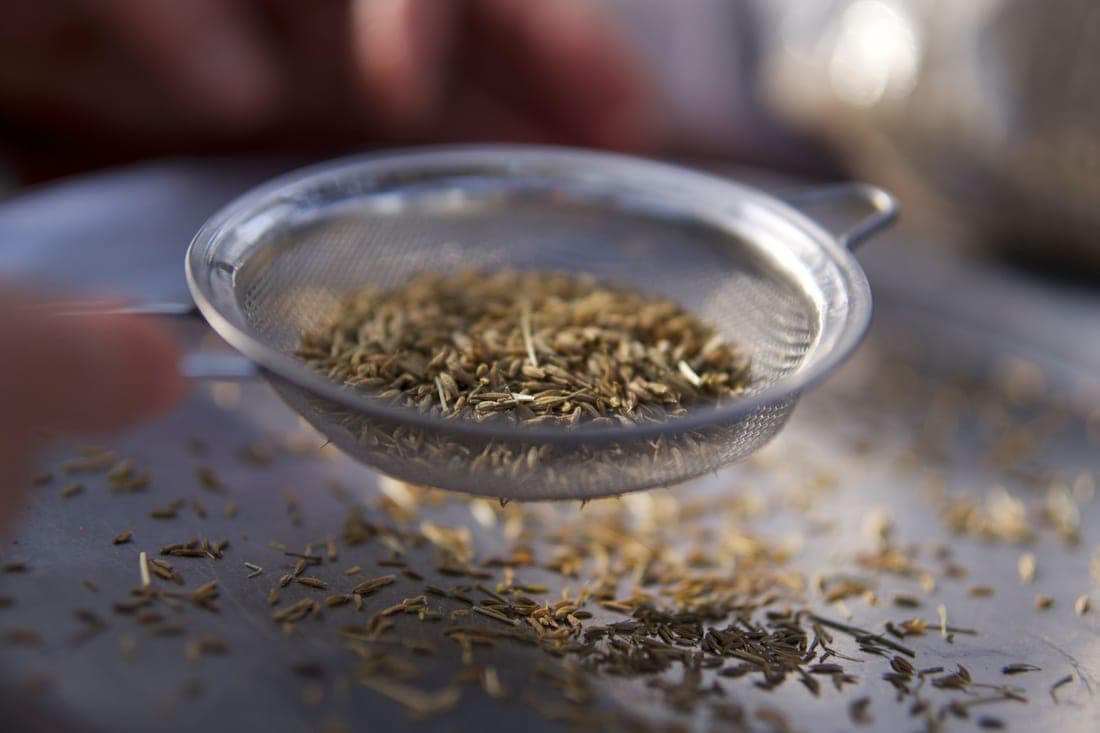 Barfly Fine Mesh Strainer Best second strainer | Double straining | |
| 3 |  OXO Steel Cocktail Strainer Best first Hawthorne | A first Hawthorne | |
| 4 |  Cocktail Kingdom Julep Strainer Best for stirred drinks | Stirred drinks | |
| 5 |  Barfly Heavy-Duty Spring Bar Strainer Best for matching a tool set | Matching an existing set |
Scroll the table sideways on a narrow screen. Prices are set by the retailer and change, so every price link opens the current listing rather than quoting a number here.
The mechanism
What a strainer is actually holding back
A shaken drink arrives at the strainer carrying three things you do not want in the glass: chips broken off the ice by the violence of the shake, pulp and membrane from citrus, and - if you muddled anything - flecks of herb. A stirred drink carries essentially none of that, which is why the two situations need different tools.
A Hawthorne works by filling the gap between a flat plate and the wall of the tin with a coiled spring. The liquid passes between the coils; anything larger than the gap does not. That is the entire mechanism, and it means the single specification that matters is how tightly the spring is wound.
A julep has no spring at all. It is a perforated bowl that sits inside a mixing glass and holds back ice cubes, which is all a stirred drink needs. A fine mesh is a sieve with openings far smaller than any spring gap, used as a second pass under the pour. Hawthorne vs julep strainer covers the two-way choice in more depth.
How we picked
The criteria, in the order we weighted them
We have not used every strainer here and we do not present these as test results. We compared published specification, construction and materials, what owners consistently report after long use, and - where it exists - published testing by outlets that do run a test kitchen. The axes, in order of weight:
- Spring density. The one specification that decides whether a shaken drink arrives clean. A loose coil leaves a gritty texture that no amount of technique fixes.
- Whether the spring comes out. Citrus pulp lodges in the coil. A spring you cannot remove is a spring that never gets properly clean, and that is a hygiene issue rather than an aesthetic one.
- Fit across vessels. A strainer cut for one tin and loose in another is a strainer you will fight. The good ones seat in both an 18oz and a 28oz tin and sit sensibly on a mixing glass.
- Gate control. A gate you can open and close with one thumb lets the same tool serve a shaken drink and a stirred one.
- Build and finish. Enough gauge that the plate does not flex when you press it down, and a finish that survives the gate rubbing against it.
Our full method, including what we deliberately never claim, is on how we pick.
Buying guide
Three types, and which you actually need
| Strainer | Sits | Holds back | Buy it when |
|---|---|---|---|
| Hawthorne | On the rim of a tin | Ice chips, most pulp | First. It covers shaken drinks, and works on a mixing glass at a pinch. |
| Fine mesh | Held under the pour | Everything the spring missed | Second, if you shake citrus drinks and want them silky. |
| Julep | Inside a mixing glass | Ice cubes only | Third, and only if you stir regularly. |
The order matters more than the brands. Most home bars own a Hawthorne and stop, which is a reasonable place to stop - but the fine mesh is the cheaper of the two remaining purchases and makes the larger difference to the drink.
The one combination that does not work is owning only a julep. The holes are sized for ice cubes, so a shaken sour pours through carrying everything it picked up in the tin.
Buying guide
Spring density is the whole product
Everything separating a good Hawthorne from a bad one is the coil. Wound tightly, it closes the gap between plate and tin wall to something small enough to stop pulp. Wound loosely, it leaves gaps, and everything you were straining out arrives in the glass.
This is the specification bundled tool kits compromise on, because a strainer looks identical at a glance whether or not the spring is dense. If you have ever wondered why a home-made daiquiri has a faintly gritty texture and a bar's does not, check the strainer before you blame the shake. It is also why upgrading the strainer is the single highest-value swap you can make to a kit - see best bartender kits.
A simple check on a strainer you already own: hold it up to a light with the spring seated. If you can see daylight between the coils, that gap is what is reaching your glass.
A removable spring matters for a second reason. Pulp works its way into the coil and stays there, and a spring that is welded in place cannot be cleaned properly however long you run it under a tap.
Technique
Double straining, the five-second habit
Double straining means pouring through two strainers at once: the Hawthorne does the primary work on the tin, and a fine mesh held in your other hand catches what gets past the spring. It is the technique most home bars have never tried and it costs about five seconds.
- Seat the Hawthorne on the large tin as normal, spring down, thumb on the gate.
- Hold the fine mesh over the glass in your other hand, an inch or two above the rim so you can see the pour land.
- Pour steadily through both. Do not rush it - a fast pour overwhelms the mesh and backs up.
- Tap the mesh once against your hand, not against the glass, to clear it.
- Rinse the mesh immediately. Pulp dries into the weave and is then genuinely annoying to remove.
Do not double strain a stirred drink. There is nothing in it to catch, the extra step chills nothing, and you are just adding an object to wash. How to shake a cocktail covers where this fits in the wider sequence.
The honest section
What not to buy
- Any strainer with a welded-in spring. You cannot clean the coil, and the coil is where pulp collects.
- Flat sieve-style 'cocktail strainers' with punched holes and no spring. They are julep strainers wearing the wrong name, and they will not hold back shaken citrus.
- A strainer sold only as part of a twelve-piece boxed set. The piece count is the marketing, and the strainer is reliably the part the budget came out of.
- Novelty-shaped strainers. Anything where the plate is a shape rather than a circle fits one vessel and rattles in every other.
- A second Hawthorne, if you already own one. The useful second strainer is a fine mesh, not a duplicate.
And one thing worth spending on instead: if your tins leak or stick, that is a bigger daily irritation than strainer texture and no strainer fixes it. Best weighted shaking tins is the page for that, and why shaker tins stick and leak diagnoses it for free first.
The picks in full
Every pick, and who each one is for
01 · Best overall
Cocktail Kingdom Koriko Hawthorne Strainer
Cocktail Kingdom · Mid tier
A tight spring and a body that actually sits down in the tin, which is the whole job of a Hawthorne.
The spring is the product, and this one is coiled tightly enough that a hard-shaken sour comes through clean without a second strainer. The gate gives real control - open it up for a shaken drink, close it down to hold back ice on a stirred one - and the spring lifts out, which is the difference between a strainer you can actually clean and one that quietly collects citrus pulp in the coil.
The specs that decide it
- Type:
- Hawthorne
- Spring:
- dense coil, removable
- Fit:
- seats in both 18 oz and 28 oz tins
- Material:
- stainless steel
Who it is for
- The spring is dense enough to hold back shaken citrus pulp without a second strainer
- Gate control is precise, so you can open it up for a shaken drink and close it for a stirred one
- Spring comes out for cleaning, which cheap strainers do not allow
Where it gives ground
- Still not a substitute for a fine mesh when you want a genuinely silky texture
- The gate tab is small if you have large hands
Skip this one if you only stir. A julep strainer is the better and cheaper tool for a mixing glass.
02 · Best second strainer
Barfly Fine Mesh Strainer
Barfly by Mercer · Entry tier
The second strainer that turns a gritty home shaken drink into a silky one, for very little money.
This is the cheapest meaningful upgrade on the whole site. Hold it under the pour while the Hawthorne does the primary work and the ice fines and pulp that any spring lets through stay behind. The conical bowl drains faster than a flat sieve and does not hold liquid in the corners. It is a second object to wash every drink, which is the honest cost.
The specs that decide it
- Type:
- fine mesh, conical bowl
- Diameter:
- about 3.5 in
- Material:
- stainless steel
- Used with:
- held under the pour, alongside a Hawthorne
Who it is for
- Catches the ice fines and citrus pulp a Hawthorne spring lets through - the single biggest texture upgrade in a shaken drink
- A conical bowl drains faster than a flat one and does not trap liquid in the corners
- Small enough to hold in one hand while you pour with the other
Where it gives ground
- It is a second object and a second thing to wash, every single drink
- Mesh clogs with muddled herbs and wants rinsing immediately rather than later
Skip this one if you only stir. There is nothing in a stirred drink for a fine mesh to catch, and the extra step chills nothing.
03 · Best first Hawthorne
OXO Steel Cocktail Strainer
OXO · Entry tier
A dependable Hawthorne with a non-slip finger rest, and the easiest one to hand to somebody who has never used one.
The non-slip finger rest is the detail that makes this the forgiving one - your thumb lands where it should without anyone explaining the grip, which matters if drinks sometimes get made by somebody else. It is dishwasher tolerant, which bare-spring strainers often are not in practice. The coil is looser than the Koriko's, so a hard-shaken sour still wants double straining.
The specs that decide it
- Type:
- Hawthorne
- Material:
- 304 stainless steel
- Grip:
- non-slip finger rest
- Dishwasher:
- yes
Who it is for
- The finger rest is the detail that makes it forgiving - your thumb lands in the right place without being taught
- Fits snugly across most shaker tins and mixing glasses rather than being cut for one vessel
- Genuinely dishwasher tolerant, which bare-spring strainers often are not in practice
Where it gives ground
- The coil is not as dense as a Koriko, so fine pulp still gets through on a hard-shaken sour
- Plain enough that it reads as kitchen equipment on an open cart
Skip this one if you want the tightest spring available and you are willing to learn the grip. That is the Koriko.
04 · Best for stirred drinks
Cocktail Kingdom Julep Strainer
Cocktail Kingdom · Entry tier
The right strainer for a mixing glass, and the one most home bars skip and then wonder why stirring feels awkward.
A perforated bowl that seats inside a mixing glass at an angle, so the pour is controlled by your wrist rather than by a thumb holding a gate down on a rim. Faster and far more comfortable than balancing a Hawthorne on a mixing glass, costs very little, and has nothing to clean but a bowl. Completely useless for anything shaken.
The specs that decide it
- Type:
- julep
- Fit:
- seats inside a mixing glass at an angle
- Perforation:
- large holes - no spring
- Material:
- stainless steel
Who it is for
- Sits inside the glass instead of on the rim, so the pour is controlled by wrist angle
- Nothing to clean but a bowl - no spring to trap citrus
- Costs very little and lasts indefinitely
Where it gives ground
- Useless for shaken citrus drinks - the holes are far too large
- Fit varies with glass diameter, so check it against your mixing glass
Skip this one if you shake nine drinks out of ten. Buy a Hawthorne first and come back to this.
05 · Best for matching a tool set
Barfly Heavy-Duty Spring Bar Strainer
Barfly by Mercer · Mid tier
A thick, heavy-gauge Hawthorne with a tight coil, sold in more finishes than anyone else offers.
Heavy-gauge steel with a tight coil, and the only Hawthorne you can realistically get in copper, matte black, vintage or antique gold to match an existing set. That is the reason to choose it - performance sits close to the Koriko. Plated finishes wear where the gate rubs, which is the trade for the look.
The specs that decide it
- Type:
- Hawthorne
- Length:
- about 6 in
- Material:
- 18/8 stainless steel
- Finishes:
- stainless, matte black, vintage and antique gold among others
Who it is for
- Heavy-gauge build that does not flex when you press the gate against a tin
- The coil is dense enough to hold back shaken citrus pulp without a second strainer
- The only Hawthorne you can realistically match to a copper, black or gold tool set
Where it gives ground
- Plated finishes are a wear item and will mark where the gate rubs
- Prong layout varies between the two-prong and four-prong versions - check which one the listing is
Skip this one if your tools are plain steel and you only want the most predictable seat in a tin. The Koriko is the safer default there.
Honest limits
What we could not verify
We have not shaken with every strainer here, so we cannot tell you how each coil behaves after a year of use or how the plated finishes wear in practice. Materials, dimensions and construction are as published by each maker. Where we describe spring density we are comparing published construction and what owners and published equipment testing consistently report - America's Test Kitchen is the one outlet in this category that documents a real method, and we have cited them rather than implying the testing is ours.
We do not run a test lab and we have not personally used every product here. Where a judgment rests on published specifications or on what owners report rather than on our own hands, we say so. Read the full method.
Questions
Related questions
- Which cocktail strainer should I buy first?
- A Hawthorne. It covers shaken drinks, which is most of what people shake, and it works on a mixing glass at a pinch. Add a fine mesh second and a julep third, and only if you stir.
- What is the difference between a Hawthorne and a julep strainer?
- A Hawthorne has a coiled spring and sits on the rim of a shaking tin, holding back ice chips and citrus pulp. A julep is a perforated bowl with no spring that sits inside a mixing glass and holds back ice cubes only. Hawthorne vs julep strainer has the full comparison.
- Do I need a fine mesh strainer?
- If you shake citrus drinks and want them silky rather than faintly gritty, yes - it is the biggest texture difference between a home shaken sour and a bar's, and it costs very little. If you only stir, no: there is nothing for it to catch.
- Why does my shaken cocktail have bits in it?
- Almost always a loose spring. Hold the strainer up to a light with the spring seated - if you can see daylight between the coils, that gap is what is reaching the glass. Either upgrade the strainer or double strain through a fine mesh.
- Can you put a cocktail strainer in the dishwasher?
- Plain stainless strainers generally yes, and it is worth taking the spring out first so the coil actually gets cleaned. Plated finishes are better hand-washed - the plating wears fastest where the gate rubs.
Sources
Read next
Related reading
- Shakers and strainers
Weighted tins, cobblers and strainers, ranked on the thing that actually matters: whether the seal behaves.
- Hawthorne vs julep strainer
Which strainer for shaken, which for stirred, why the spring is the product, and what double straining fixes.
- Best cocktail shakers
Tins against cobblers on seal, capacity and chilling - and which one suits who is actually shaking.
- Best weighted shaking tins
Two-piece tins compared on seal behavior, capacity pairing, balance and edge finish.
- How to shake a cocktail
Sealing, the shake itself, when to stop, and breaking the seal in one motion - plus dry shake and whip.
- Best mixing glasses
Capacity, mass, seam and spout compared - and why a pint glass is worse at every part of the job.