Guide
When to double strain a cocktail
Double straining is not a quality setting you turn up. It removes specific things from specific drinks, and on the wrong drink it takes out the part you wanted.
By Michael W. · Published October 2026
The short answer
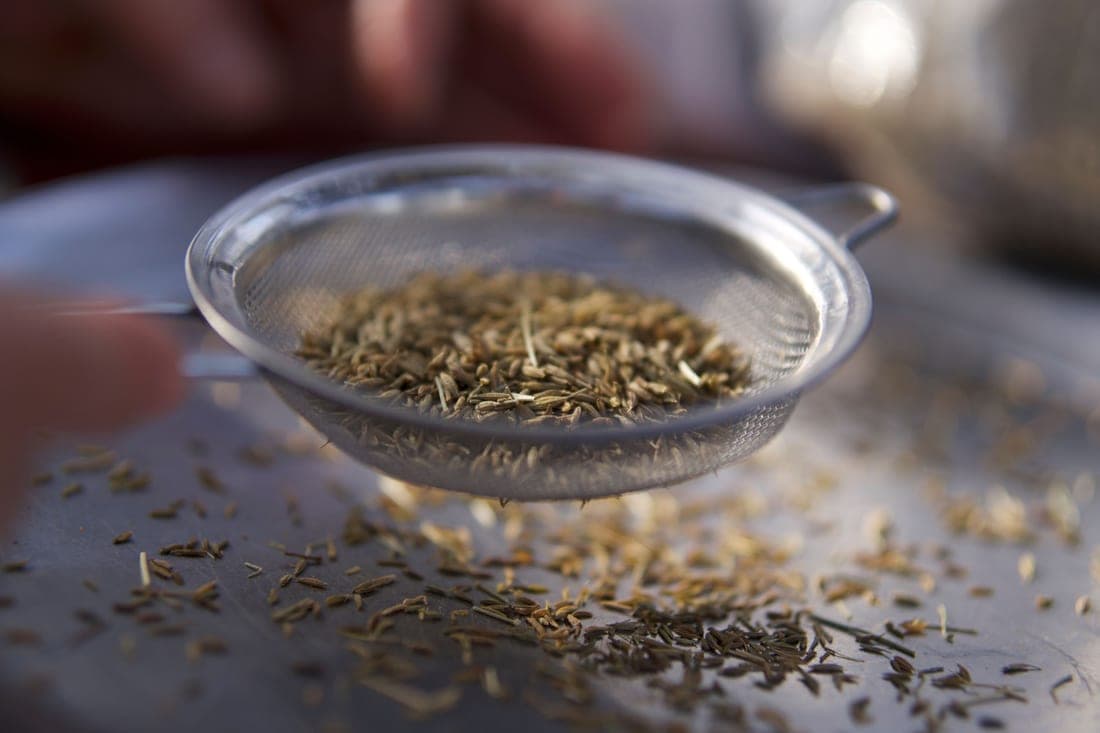
Double strain any shaken drink that contains fresh citrus, fruit, herbs, egg white or anything muddled - and any drink served up in a glass where a shard of ice would float. Double straining means pouring through the Hawthorne in the tin and a fine mesh strainer held under it, so the mesh catches what the Hawthorne lets past: pulp, seed fragments, herb flecks and the fine ice shards a hard shake produces. Do not double strain a stirred drink, because there is nothing in it to catch and you will only warm it on the way. Do not double strain a drink served over ice unless it is full of pulp, since a shard or two is invisible in a glass that already has ice in it. And do not double strain a drink whose texture you want: a heavily shaken sour with egg white can lose some of its foam through a tight mesh, which is why some bartenders pour those through a coarser one or skip it.
We earn a commission if you buy through the links on this page, at no extra cost to you. It never changes which product we pick. How we are funded.
Quick picks
| # | Product | Best for | Price |
|---|---|---|---|
| 1 | Barfly Fine Mesh Strainer The mesh to buy | Double straining | |
| 2 | 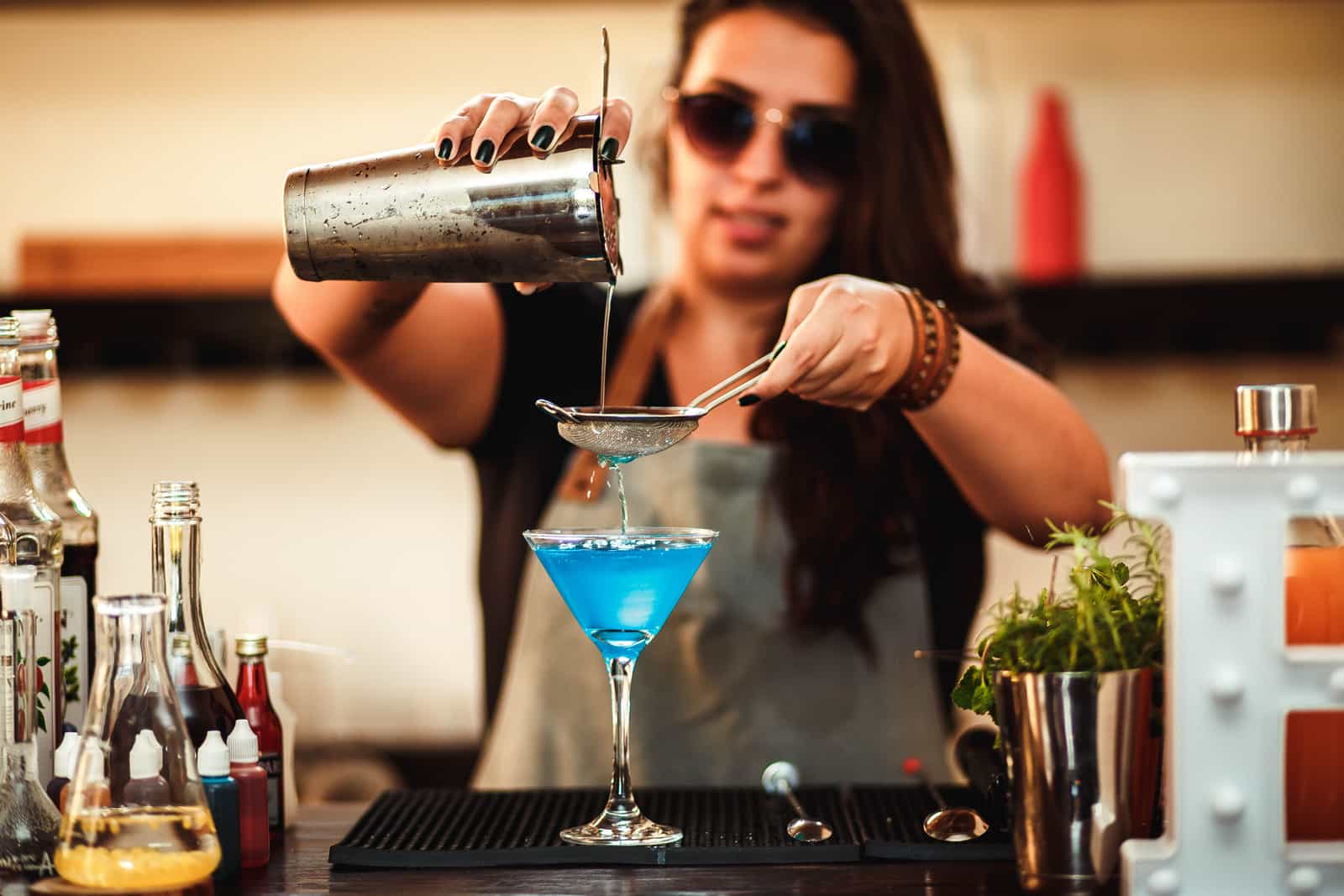 Cocktail Kingdom Koriko Hawthorne Strainer The first strainer | Shaken drinks | |
| 3 |  Barfly Heavy-Duty Spring Bar Strainer If you want it to match | Matching an existing set |
Scroll the table sideways on a narrow screen. Prices are set by the retailer and change, so every price link opens the current listing rather than quoting a number here.
The mechanism
What each strainer actually stops
The two strainers in a double strain are not redundant. They have different aperture sizes and they are catching different things.
| Hawthorne | Fine mesh | |
|---|---|---|
| Stops | Ice cubes, large solids, fruit | Pulp, seeds, herb flecks, ice shards |
| Aperture | A few millimeters at the coil | Well under a millimeter |
| Position | Seated in the shaking tin | Held between tin and glass |
| Flow rate | Fast | Slower - it is a restriction |
| Also does | Lets you gate the flow by sliding the gate | Nothing else |
That aperture gap is the whole point. A Hawthorne's spring is designed to hold back ice, and a lime pip is far smaller than an ice cube. So is a mint fleck, and so are the hundreds of tiny ice shards that come off cubes during a hard ten-second shake. In a glass with no ice in it, those shards float, melt visibly and make an otherwise clear drink look like it has something wrong with it.
Hawthorne vs julep strainer covers the first-strainer choice, and how to use a Hawthorne strainer covers the grip and the gate.
The rule
Drink by drink
| Drink | Double strain? | Why |
|---|---|---|
| Daiquiri | Yes | Fresh lime pulp, served up, nothing to hide a shard |
| Margarita served up | Yes | Lime pulp and seed fragments |
| Whiskey sour | Yes, usually | Citrus pulp; use a coarser mesh if you want more foam |
| Espresso martini | Yes | Coffee grounds and fines, plus ice shards in a clear foam |
| Mojito | Yes | Muddled mint shreds - the classic case |
| Margarita on the rocks | Only for pulp | Ice in the glass hides shards anyway |
| Manhattan | No | Stirred - nothing to catch, and the mesh warms it |
| Martini | No | Same; a julep strainer alone is the traditional pour |
| Old fashioned | No | Built in the glass over ice |
| Gin and tonic | No | Built in the glass |
| Shaken drink with muddled fruit | Yes | This is what the mesh is for |
The pattern is simple enough to remember without the table: shaken, with something in it, served up means double strain. Everything else is a judgment call that defaults to no.
The technique
Doing it without making a mess
- Seat the Hawthorne in the large tin with the coil against the tin wall and the gate where your index finger can reach it.
- Hold the mesh in your other hand, over the glass, an inch or two above the rim rather than resting on it. Resting it on the rim is how you knock a stemmed glass over.
- Pour in one controlled motion through the Hawthorne, into the mesh, into the glass. Do not pour fast - the mesh is a restriction and it will back up and overflow.
- Tap, do not push. If the mesh clogs with pulp, tap the handle against your wrist rather than pressing the solids through with a spoon. Pressing is how pulp ends up in the glass anyway.
- Rinse the mesh immediately. Dried pulp in a fine mesh is genuinely hard to remove and it is the reason most home mesh strainers end up unused in a drawer.
Hold the mesh over the glass, not over the counter beside it. The single most common beginner error is a slow pour through a clogged mesh that then floods sideways, and the fix is a steady medium pour rather than a cautious trickle.
A tea strainer works. It is not as good as a bar mesh - usually too small and too shallow, so it overflows - but if you want to find out whether double straining changes your daiquiri before buying anything, the one in your kitchen will answer the question tonight.
When not to
Three times double straining makes the drink worse
1. Stirred drinks
A stirred Manhattan has no pulp, no herbs and no shards, because stirring does not fracture ice the way shaking does. Pouring it through a mesh adds ten seconds of contact with room-temperature metal for no benefit at all. Strain it with a julep strainer and get it into the glass. Mixing glass vs shaker covers which drinks belong in which vessel.
2. Foam you want to keep
A whisky sour or a pisco sour builds its texture from egg white, and that foam is a structure. Forcing it through a very fine mesh breaks some of the bubbles and leaves a thinner head. Bartenders differ on this - many double strain anyway and accept it, others use a coarser mesh for egg drinks specifically. If your sours have a disappointing head, this is one of the variables worth changing.
3. Drinks served over ice, with nothing in them
A shaken drink going over fresh cubes does not need shards removed - the glass is full of ice. Double strain that one only if it has pulp or herbs in it. Otherwise it is work with no visible result.
The honest summary
Is it worth the extra object
A fine mesh strainer is one of the few bar tools that costs very little and changes something you can see. Pour two daiquiris, one double strained and one not, side by side: one is uniformly pale and still, the other has visible flecks and a scatter of melting shards on top. That is the whole argument, and it takes ten seconds to prove.
It is also the tool most likely to end up unused, for one reason: nobody rinses it immediately and dried pulp in fine mesh is miserable to clean. Rinse it the moment the drink is poured and it stays a tool rather than becoming a drawer object. How to clean bar tools covers the rest of the station, and best cocktail strainers covers the full category.
The picks in full
Every pick, and who each one is for
01 · The mesh to buy
Barfly Fine Mesh Strainer
Barfly by Mercer · Entry tier
The second strainer that turns a gritty home shaken drink into a silky one, for very little money.
A conical fine mesh sized to sit over a coupe without balancing on the rim. This is the second strainer in a double strain and the cheapest tool on the station that visibly changes a drink.
The specs that decide it
- Type:
- fine mesh, conical bowl
- Diameter:
- about 3.5 in
- Material:
- stainless steel
- Used with:
- held under the pour, alongside a Hawthorne
Who it is for
- Catches the ice fines and citrus pulp a Hawthorne spring lets through - the single biggest texture upgrade in a shaken drink
- A conical bowl drains faster than a flat one and does not trap liquid in the corners
- Small enough to hold in one hand while you pour with the other
Where it gives ground
- It is a second object and a second thing to wash, every single drink
- Mesh clogs with muddled herbs and wants rinsing immediately rather than later
Skip this one if you only stir. There is nothing in a stirred drink for a fine mesh to catch, and the extra step chills nothing.
02 · The first strainer
Cocktail Kingdom Koriko Hawthorne Strainer
Cocktail Kingdom · Mid tier
A tight spring and a body that actually sits down in the tin, which is the whole job of a Hawthorne.
The Hawthorne that seats in a 28 oz tin and holds the spring tight enough to gate ice without letting the coil wander. Double straining starts here - the mesh only works if the first strainer is doing its job.
The specs that decide it
- Type:
- Hawthorne
- Spring:
- dense coil, removable
- Fit:
- seats in both 18 oz and 28 oz tins
- Material:
- stainless steel
Who it is for
- The spring is dense enough to hold back shaken citrus pulp without a second strainer
- Gate control is precise, so you can open it up for a shaken drink and close it for a stirred one
- Spring comes out for cleaning, which cheap strainers do not allow
Where it gives ground
- Still not a substitute for a fine mesh when you want a genuinely silky texture
- The gate tab is small if you have large hands
Skip this one if you only stir. A julep strainer is the better and cheaper tool for a mixing glass.
03 · If you want it to match
Barfly Heavy-Duty Spring Bar Strainer
Barfly by Mercer · Mid tier
A thick, heavy-gauge Hawthorne with a tight coil, sold in more finishes than anyone else offers.
A heavy-gauge Hawthorne in the same finish range as Barfly's tins. Functionally equivalent for straining, and the right pick if the station lives in the open and you care that it matches.
The specs that decide it
- Type:
- Hawthorne
- Length:
- about 6 in
- Material:
- 18/8 stainless steel
- Finishes:
- stainless, matte black, vintage and antique gold among others
Who it is for
- Heavy-gauge build that does not flex when you press the gate against a tin
- The coil is dense enough to hold back shaken citrus pulp without a second strainer
- The only Hawthorne you can realistically match to a copper, black or gold tool set
Where it gives ground
- Plated finishes are a wear item and will mark where the gate rubs
- Prong layout varies between the two-prong and four-prong versions - check which one the listing is
Skip this one if your tools are plain steel and you only want the most predictable seat in a tin. The Koriko is the safer default there.
Honest limits
What we could not verify
The aperture figures here are approximate rather than measured - strainer manufacturers do not publish mesh counts or coil gaps consistently, and the gap varies across models of both strainer types. The effect of a fine mesh on egg-white foam is widely reported by bartenders rather than something we have quantified, and practice genuinely differs on it.
We do not run a test lab and we have not personally used every product here. Where a judgment rests on published specifications or on what owners report rather than on our own hands, we say so. Read the full method.
Questions
Related questions
- What does double straining a cocktail mean?
- Pouring the drink through two strainers at once: the Hawthorne seated in the shaking tin, and a fine mesh strainer held between the tin and the glass. The Hawthorne stops ice and large solids; the mesh catches what it lets past - pulp, seeds, herb flecks and fine ice shards.
- When should you double strain a cocktail?
- Any shaken drink that contains fresh citrus, fruit, herbs or anything muddled, and any drink served up where a floating ice shard would be visible. Daiquiris, margaritas up, mojitos, espresso martinis and sours all qualify. Stirred drinks and drinks built over ice generally do not.
- Do you double strain a Manhattan or a martini?
- No. Stirring does not fracture ice the way shaking does, and there is no pulp or herb matter in either drink, so there is nothing for a mesh to catch. A julep strainer alone is the traditional pour, and skipping the mesh keeps the drink colder.
- Does double straining ruin egg white foam?
- It can thin it. A very fine mesh breaks some of the bubbles a hard shake built, so a sour poured through one often has a slightly flatter head. Bartenders differ: many accept it, others use a coarser mesh for egg drinks. If your sours lack a head, this is a variable worth changing.
- Can you use a tea strainer to double strain?
- Yes, as a test. It will usually be too small and too shallow, so it overflows if you pour at normal speed, but it will tell you tonight whether double straining visibly improves your daiquiri before you buy a bar mesh.
Read next
Related reading
- Shakers and strainers
Weighted tins, cobblers and strainers, ranked on the thing that actually matters: whether the seal behaves.
- Best cocktail strainers
Hawthorne, julep and fine mesh compared on spring density, fit and gate control - and what double straining fixes.
- Hawthorne vs julep strainer
Which strainer for shaken, which for stirred, why the spring is the product, and what double straining fixes.
- How to use a Hawthorne strainer
Coil toward the ice, finger on the gate, one controlled pour - and the spring is the part that eventually dies.
- How to shake a cocktail
Sealing, the shake itself, when to stop, and breaking the seal in one motion - plus dry shake and whip.
- Best cocktail shakers for margaritas
Two drinks a shake, pulp through a fine mesh, and the citrus press that matters more than any tin.