Roundup
Best bar spoons
Length is the specification and the brand is a footnote. Compared on shaft twist, end weight and the glass each one is actually built for.
By Michael W. · Published September 2026
The short answer
The Cocktail Kingdom Hoffman is the pick if you want the smoothest stir: the teardrop counterweight carries momentum through the rotation and irons the jerk out of the motion. Choose the Barfly spoon instead if you need a specific length or a finish to match existing tools, and the Viski weighted spoon if your mixing glass is deep and you want one long spoon that covers it and a tall collins. Measure your glass before you choose a brand - a spoon that is wrong for your glass is wrong regardless of who made it.
We earn a commission if you buy through the links on this page, at no extra cost to you. It never changes which product we pick. How we are funded.
Quick picks
| # | Product | Best for | Price |
|---|---|---|---|
| 1 | Cocktail Kingdom Hoffman Barspoon Best overall | Smooth stirring | |
| 2 | 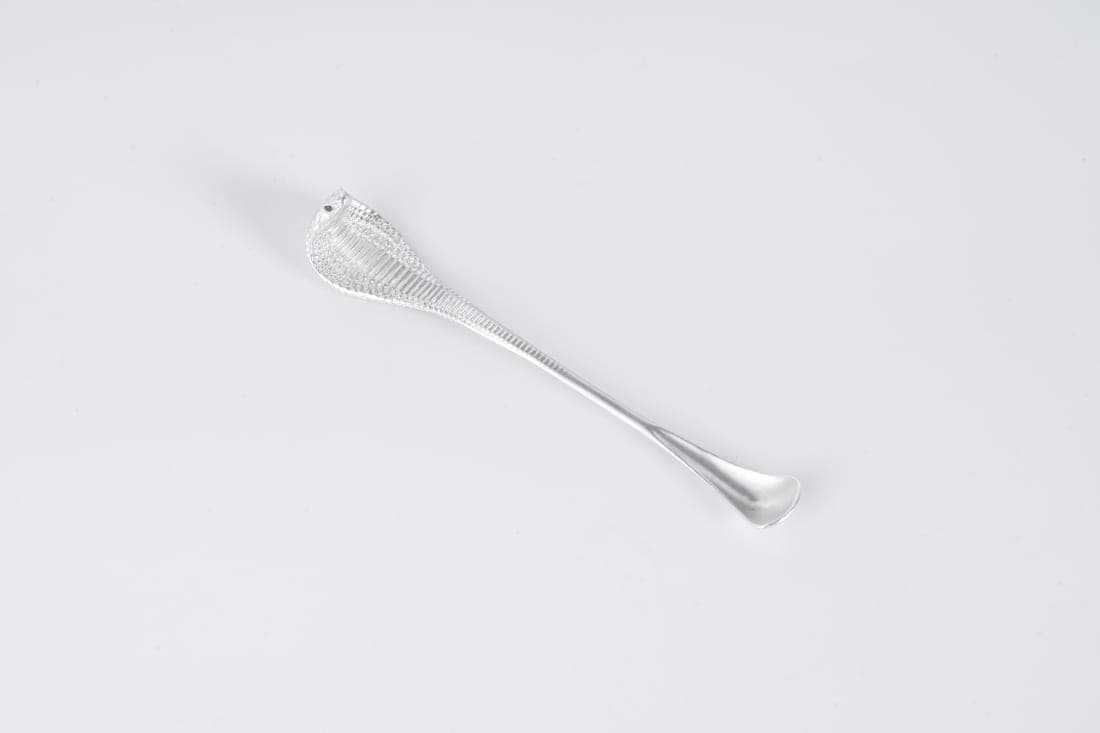 Barfly Stainless Steel Bar Spoon Best length and finish range | Length and finish choice | |
| 3 |  Viski Professional Weighted Bar Spoon Best for deep glasses | A long-glass stir | |
| 4 |  Cocktail Kingdom Yarai Mixing Glass 500ml What to measure against | The default mixing glass |
Scroll the table sideways on a narrow screen. Prices are set by the retailer and change, so every price link opens the current listing rather than quoting a number here.
The mechanism
What the parts of a bar spoon do
A bar spoon is three components and each has a job that is easy to miss.
- The bowl sits against the base and wall of the glass and pushes the ice column around. A rounded bowl tracks the curve of the glass; a flat disc can scrape.
- The twisted shaft is a bearing. Held lightly between thumb and two fingers, the spiral lets the shaft rotate in place while the bowl travels around the wall - which is the entire stirring motion.
- The weighted end is a counterweight. Mass at the far end carries momentum through each revolution and smooths out the jerk when your fingers change direction.
Understanding the shaft as a bearing is the thing that turns stirring from a chore into a motion. If you are holding the spoon in a fist and pushing, the twist is doing nothing for you - how to stir a cocktail covers the grip.
How we picked
How we picked these
These are selections on published specification and construction rather than test results. The criteria, in order:
- Length options. The specification that matters most, and the one that makes brand secondary.
- Shaft twist quality. A well-cut spiral spins cleanly between the fingers. A shallow twist binds.
- End mass. Weighted ends smooth the rotation. Unweighted ones are lighter and jerkier.
- Bowl shape. Rounded bowls track the glass wall. Flat discs scrape and can chip a rim over time.
- Finish durability. Plated finishes wear at the twist first, because that is where fingers sit.
Buying guide
Length: measure the glass, then buy
A spoon should clear the rim of your glass by roughly two inches with the bowl resting on the base. Too short and your knuckles end up in the drink; too long and the spoon fences with the rim on every revolution and the leverage feels wrong.
| Vessel | Spoon length | Notes |
|---|---|---|
| 500 ml mixing glass | About 11 to 13 in | The common home-bar case |
| 675 ml mixing glass | About 13 to 16 in | Wants the longer end of the range |
| Tall collins glass | About 13 to 16 in | Same reach as a large mixing glass |
| Rocks glass for building | About 11 in | Short is fine; long is awkward |
If you own both a small mixing glass and a tall collins, the honest answer is two spoons - they cost very little and one spoon that compromises between them is worse at both.
Buying guide
End styles, and what they are actually for
The end of the shaft comes in three broad styles and the differences are practical as well as aesthetic.
- Teardrop. A smooth weight. Best counterweight of the three, and usable as a light muddle for a sugar cube. The default recommendation.
- Disc or flat muddler. A small flat pad for crushing. Worse counterweight, better muddle. Reasonable if you make old fashioneds with sugar cubes regularly.
- Trident or fork. A small fork for spearing a cherry or an olive. Genuinely useful for garnish, a poor counterweight, and it is the style most likely to snag on a strainer spring.
Unweighted spoons exist and they are cheap. They work, and the stir is noticeably more effortful because nothing is carrying momentum for you. At the prices involved there is no strong argument for one.
Practical
Things a bar spoon is not for
Two habits shorten a spoon's life and both are common. The first is using it as a measure: a bar spoon holds roughly a teaspoon, which is a useful approximation for a dash of syrup and a bad way to measure anything you care about. A weighted spoon is also top-heavy in that role and drips.
The second is using it as a crowbar - prying a stuck tin, levering ice out of a mold. A twisted shaft is thin steel and it bends. It never bends back.
For measuring, use a jigger with interior lines: jigger sizes explained includes the bar spoon and teaspoon equivalents for small measures. For a stuck tin, the fix is a palm strike, covered in why shaker tins stick and leak.
The picks in full
Every pick, and who each one is for
01 · Best overall
Cocktail Kingdom Hoffman Barspoon
Cocktail Kingdom · Mid tier
The teardrop counterweight is the whole argument: it carries momentum and irons the jerk out of your stir.
The teardrop counterweight is the whole argument. Momentum from the weighted end smooths the rotation, which is what makes a genuinely quiet stir possible, and the twisted shaft lets the spoon spin between your fingers rather than being gripped in your fist. The teardrop also doubles as a passable muddle for a sugar cube.
The specs that decide it
- End:
- teardrop counterweight
- Shaft:
- twisted
- Lengths:
- multiple, choose to match your mixing glass
- Material:
- stainless steel
Who it is for
- Momentum from the weighted end smooths the rotation, which is what makes a quiet stir possible
- Twisted shaft lets the spoon spin between your fingers rather than in your fist
- The teardrop doubles as a passable muddle for a sugar cube
Where it gives ground
- Too long for a short mixing glass and it will fence with the rim
- The weighted end makes it top-heavy if you try to use it as a measuring spoon
Skip this one if your mixing glass is short. Match spoon length to glass height first, brand second.
02 · Best length and finish range
Barfly Stainless Steel Bar Spoon
Barfly by Mercer · Entry tier
The easiest way to get the exact spoon length your glass wants, in the finish your other tools already are.
Several lengths and four or more finishes, which is the real feature: you can match the spoon to your glass rather than compromise, and match the finish to your other tools. The shaft twist is well cut so it spins cleanly. Lighter end than the Hoffman, so less momentum assistance on a long stir.
The specs that decide it
- Material:
- 18/8 stainless steel
- Lengths:
- several, commonly around 11 to 15 in
- Finishes:
- steel, copper, gold, black
- End:
- varies by model - disc, teardrop or trident
Who it is for
- The length range is the real feature - you can match the spoon to the glass rather than compromise
- Finish matching across a whole tool set is genuinely satisfying on an open cart
- Shaft twist is well cut, so it spins cleanly
Where it gives ground
- Plated finishes will wear at the twist first
- Lighter end than a Hoffman, so less momentum help on a long stir
Skip this one if you want maximum stirring smoothness above all. A weighted teardrop does that better.
03 · Best for deep glasses
Viski Professional Weighted Bar Spoon
Viski · Entry tier
A long weighted spoon with a rounded head, aimed squarely at deep mixing glasses and tall collinses.
About 15.75 inches with a rounded head and a classic teardrop end - long enough for a 675ml mixing glass or a tall collins without your knuckles in the drink. The rounded head does not scrape the glass wall the way a flat disc can. One length only, so it is overlong for a small 500ml glass.
The specs that decide it
- Length:
- about 15.75 in
- Head:
- rounded bowl
- End:
- classic teardrop
- Material:
- 18/8 stainless steel
Who it is for
- Long enough for a 675 ml mixing glass or a tall collins without knuckles in the drink
- Rounded head does not scrape the glass wall the way a flat disc can
- Weighted end gives most of the Hoffman's momentum benefit
Where it gives ground
- Overlong for a small 500 ml glass
- One length only - no short option
Skip this one if your only mixing vessel is a pint glass. You want something shorter.
04 · What to measure against
Cocktail Kingdom Yarai Mixing Glass 500ml
Cocktail Kingdom · Mid tier
The industry workhorse: heavy, cut, and sized for one or two drinks without a wall of leftover dilution.
Spoon length is decided by glass height, so if you do not yet own a mixing glass, buy it first. A 500ml Yarai suits a spoon around 11 to 13 inches; the 675ml wants something longer.
The specs that decide it
- Capacity:
- 500 ml (about 17 oz)
- Capacity in drinks:
- 1 to 2
- Pattern:
- Yarai cut
- Base:
- heavy, weighted
Who it is for
- Mass is the point - a heavy glass does not travel across the counter while you stir
- The cut gives grip that a smooth beaker does not
- Spout pours clean, which sounds trivial until you use one that does not
Where it gives ground
- Glass, on a counter, near ice - it is a breakable in a wet environment
- 500 ml gets tight with two drinks and a full ice charge
Skip this one if you regularly build three or four stirred drinks at once. Step up to the 675 ml seamless.
Honest limits
What we could not verify
We have not stirred with all of these spoons, so comparisons of twist quality and how much the weighted end actually helps rest on construction and on what owners consistently report rather than on our own handling. Lengths, materials and end styles are as published by each maker, and lengths vary between versions of the same named product.
We do not run a test lab and we have not personally used every product here. Where a judgment rests on published specifications or on what owners report rather than on our own hands, we say so. Read the full method.
Questions
Related questions
- What length bar spoon do I need?
- Enough to clear your glass rim by about two inches with the bowl on the base. That is roughly 11 to 13 inches for a 500ml mixing glass and 13 to 16 inches for a 675ml glass or a tall collins.
- Why are bar spoons twisted?
- The spiral acts as a bearing. Held lightly between thumb and two fingers, it lets the shaft rotate in place while the bowl travels around the wall of the glass - which is the whole stirring motion.
- Are weighted bar spoons better?
- Yes, noticeably. Mass at the far end carries momentum through each revolution and smooths the jerk when your fingers change direction, which is what makes a quiet stir possible.
- How much is a bar spoon of liquid?
- Roughly a teaspoon, which is about 5ml or a sixth of an ounce. It is a fine approximation for a dash of syrup and a poor way to measure anything you care about - use a jigger with interior lines.
Sources
Read next
Related reading
- Jiggers, bar spoons and mixing glasses
Jiggers, spoons and mixing glasses - the half of the bar that decides whether a drink is repeatable.
- Best mixing glasses
Capacity, mass, seam and spout compared - and why a pint glass is worse at every part of the job.
- How to stir a cocktail
The finger grip that turns the spoon into a bearing, how long to stir, and why silence is the goal.
- Mixing glass vs shaker
Which drinks to stir, which to shake, and what each method actually does to texture and clarity.
- Best bartender kits
Which kits contain real tools, what every kit leaves out, and when buying separately is better.