Guide
Bar spoon length guide
Length is set by the vessel, not by preference. Match the spoon to the tallest thing you stir in, and the stir stops fighting you.
By Michael W. · Published October 2026
The short answer
Buy an 11 to 12 inch bar spoon for a standard 500ml mixing glass, and a 15 to 16 inch spoon if you stir in a 675ml or larger glass or in a tall Collins. The rule is that the spoon should clear the rim by two to three inches when the bowl is on the bottom - enough for your fingers to work above the glass without reaching down into it. As a measure, one bar spoon is conventionally treated as one teaspoon, which is about 0.17 oz or 5 ml, though actual bowl volumes vary between makers and no standard governs them. If you own one spoon and one glass, 11 to 12 inches on a 500ml Yarai is the pairing that covers almost everything.
We earn a commission if you buy through the links on this page, at no extra cost to you. It never changes which product we pick. How we are funded.
Quick picks
| # | Product | Best for | Price |
|---|---|---|---|
| 1 | Cocktail Kingdom Hoffman Barspoon Best overall | Smooth stirring | |
| 2 | 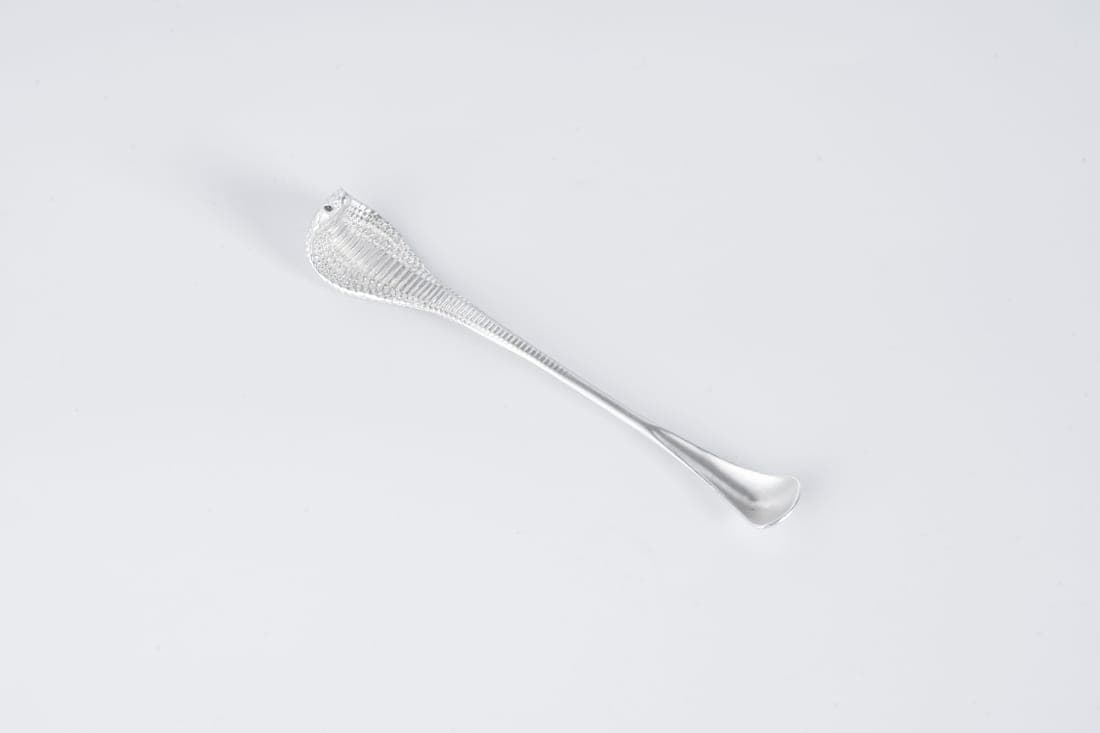 Barfly Stainless Steel Bar Spoon Best for choosing a length and finish | Length and finish choice | |
| 3 | 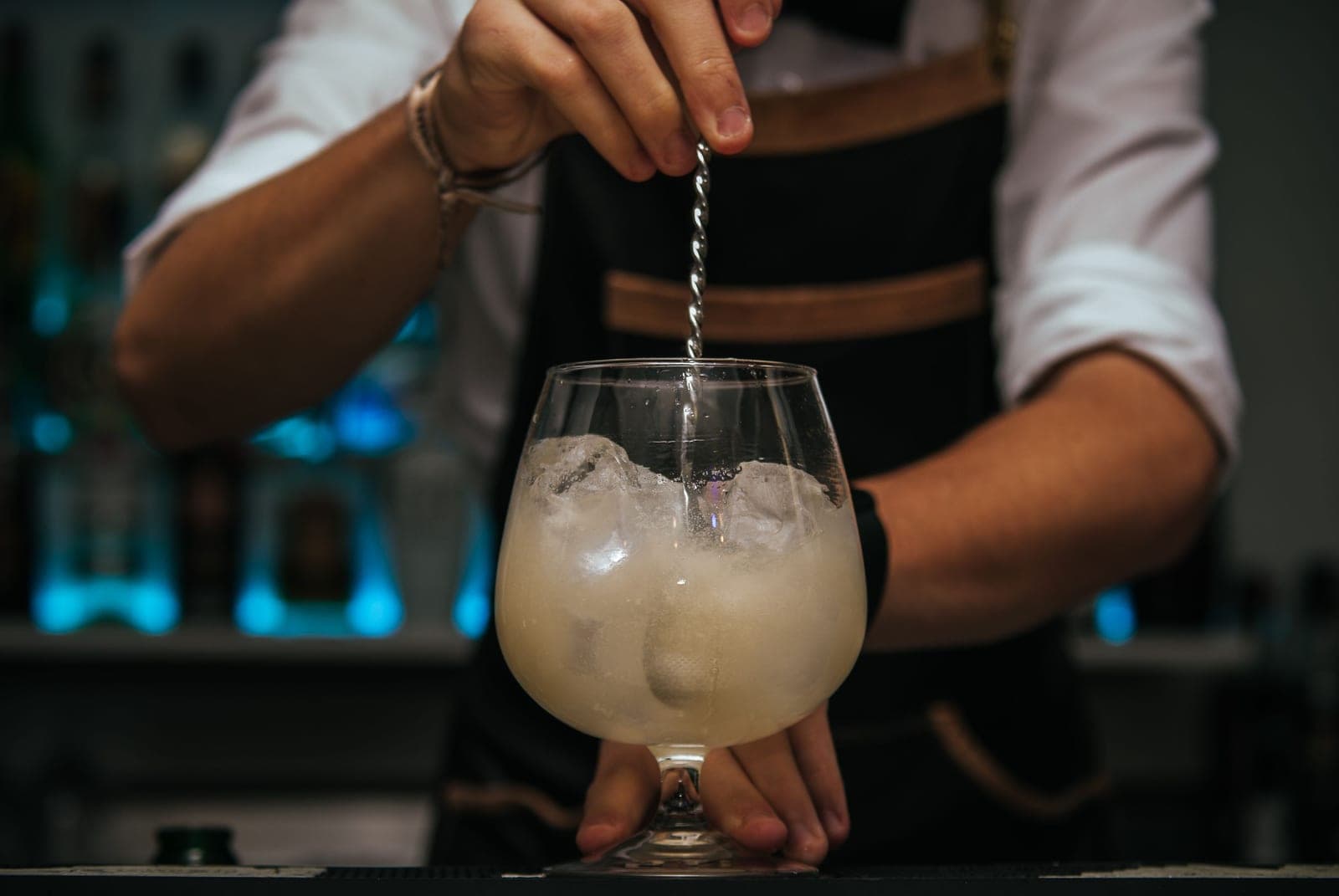 Viski Professional Weighted Bar Spoon Best for tall glasses | A long-glass stir |
Scroll the table sideways on a narrow screen. Prices are set by the retailer and change, so every price link opens the current listing rather than quoting a number here.
The sizes
Standard bar spoon lengths and what they fit
There is no governing standard for bar spoon length, so these are the bands the market has settled into rather than defined sizes.
| Length | Fits | Use case |
|---|---|---|
| About 9 to 10 in | Rocks glass, small vessels | Building and stirring in the glass |
| About 11 to 12 in | 500 ml mixing glass | The home bar default |
| About 13 to 14 in | 675 ml mixing glass | Larger glass, batching two or three drinks |
| About 15 to 16 in | Large mixing glass, Collins | Tall vessels, layering, reaching the bottom |
| Over 16 in | Pitchers, display | Specialist - unwieldy in a normal glass |
The two-to-three-inch clearance rule is what these bands encode. With the bowl flat on the bottom of the vessel, you want the top of the shaft two to three inches clear of the rim: that is where your fingers sit, and if the shaft ends at the rim your hand has to go inside the glass to control it.
The pairing
Match the spoon to the glass, not to your hand
This is the mistake worth avoiding: people buy a bar spoon on looks and then buy a mixing glass separately, and discover the two do not work together. A short spoon in a tall glass means stirring from the wrist with your fingers over the ice. A very long spoon in a small glass means a foot of steel waving above the bar while you try to control the bowl.
- 500 ml Yarai (about 17 oz), one to two drinks: 11 to 12 in. The standard home bar pairing - see best mixing glasses.
- 675 ml seamless (about 23 oz), two to three drinks: 13 to 16 in. The taller glass is the reason to size up.
- Stirring in a rocks glass: 9 to 11 in is plenty, and a longer spoon still works - you just hold it lower.
- A Collins or highball: 15 to 16 in, because the vessel is narrow and deep and you cannot angle the spoon.
If you are buying both at once, buy the glass first and the spoon to match it. What size mixing glass covers that decision, and how to stir a cocktail covers what the pairing is for.
As a measure
Bar spoon to oz, tsp and ml
Recipes call for a bar spoon of something - rich syrup, absinthe, maraschino - and the convention is that one bar spoon equals one teaspoon. Taken literally that is 1/6 fl oz, roughly 0.17 oz or about 5 ml.
| Amount | Teaspoons | Fluid oz | Millilitres |
|---|---|---|---|
| 1 bar spoon | 1 tsp | About 0.17 oz | About 5 ml |
| 2 bar spoons | 2 tsp | About 0.33 oz | About 10 ml |
| 3 bar spoons | 1 tbsp | 0.5 oz | About 15 ml |
| 1/4 oz | About 1.5 tsp | 0.25 oz | About 7.5 ml |
Treat that table as a convention rather than a specification. Actual bowl volumes differ between makers and nobody publishes a tolerance, so a bar spoon of syrup from one spoon is not the same as from another. When a quarter ounce actually matters to the balance of a drink, measure it with a jigger - jigger sizes explained covers the graduations worth having.
Beyond length
The three features that change how a spoon stirs
- The twist. A twisted shaft is not decoration. It gives your middle finger a helical track to sit in, so the spoon rotates in place while your hand barely moves. A smooth-shafted spoon has to be pushed around the glass, which is what knocks ice against the walls and clouds a stirred drink.
- The counterweight. A teardrop, disc or trident on the far end balances the spoon so the bowl stays down on the bottom without you pressing. A disc end can also be used to pack crushed ice or muddle gently; a trident is mostly decorative.
- The bowl. A rounded bowl displaces the least liquid and glides best around a glass. A flatter bowl measures slightly more consistently but drags. For stirring, rounded wins.
Material is simpler: 18/8 stainless steel is the correct answer, because it does not taint and it survives being dropped. Plated finishes - copper, gold, black - are cosmetic and they wear at the point where your fingers grip. If the spoon is on display with a matched set, that may be a trade you want. Best bar spoons covers the field.
Practical
If you only own one spoon
Buy 11 to 12 inches, twisted, with a teardrop end, in plain stainless. It handles a 500ml mixing glass properly, works in a rocks glass if you hold it lower, and is only awkward in a Collins - which you can stir with a long spoon borrowed from the kitchen until you care enough to buy one.
A second spoon is genuinely useful if you make long drinks, because the reach problem is real and a 15 to 16 inch spoon solves it outright. Beyond two, you are collecting rather than equipping. Mixing glass vs shaker covers which drinks need a spoon at all.
The picks in full
Every pick, and who each one is for
01 · Best overall
Cocktail Kingdom Hoffman Barspoon
Cocktail Kingdom · Mid tier
The teardrop counterweight is the whole argument: it carries momentum and irons the jerk out of your stir.
A twisted shaft with a teardrop counterweight, sold in multiple lengths so you can match it to your mixing glass. The twist is the functional part - it is what lets the spoon rotate smoothly between your fingers rather than being pushed around the glass.
The specs that decide it
- End:
- teardrop counterweight
- Shaft:
- twisted
- Lengths:
- multiple, choose to match your mixing glass
- Material:
- stainless steel
Who it is for
- Momentum from the weighted end smooths the rotation, which is what makes a quiet stir possible
- Twisted shaft lets the spoon spin between your fingers rather than in your fist
- The teardrop doubles as a passable muddle for a sugar cube
Where it gives ground
- Too long for a short mixing glass and it will fence with the rim
- The weighted end makes it top-heavy if you try to use it as a measuring spoon
Skip this one if your mixing glass is short. Match spoon length to glass height first, brand second.
02 · Best for choosing a length and finish
Barfly Stainless Steel Bar Spoon
Barfly by Mercer · Entry tier
The easiest way to get the exact spoon length your glass wants, in the finish your other tools already are.
18/8 stainless in several lengths, commonly around 11 to 15 inches, and in steel, copper, gold and black. If you need a specific length to suit a specific glass, this is the line most likely to have it.
The specs that decide it
- Material:
- 18/8 stainless steel
- Lengths:
- several, commonly around 11 to 15 in
- Finishes:
- steel, copper, gold, black
- End:
- varies by model - disc, teardrop or trident
Who it is for
- The length range is the real feature - you can match the spoon to the glass rather than compromise
- Finish matching across a whole tool set is genuinely satisfying on an open cart
- Shaft twist is well cut, so it spins cleanly
Where it gives ground
- Plated finishes will wear at the twist first
- Lighter end than a Hoffman, so less momentum help on a long stir
Skip this one if you want maximum stirring smoothness above all. A weighted teardrop does that better.
03 · Best for tall glasses
Viski Professional Weighted Bar Spoon
Viski · Entry tier
A long weighted spoon with a rounded head, aimed squarely at deep mixing glasses and tall collinses.
About 15.75 inches with a rounded bowl and a classic teardrop end. The length to reach the bottom of a large mixing glass or a Collins without your knuckles going in with it.
The specs that decide it
- Length:
- about 15.75 in
- Head:
- rounded bowl
- End:
- classic teardrop
- Material:
- 18/8 stainless steel
Who it is for
- Long enough for a 675 ml mixing glass or a tall collins without knuckles in the drink
- Rounded head does not scrape the glass wall the way a flat disc can
- Weighted end gives most of the Hoffman's momentum benefit
Where it gives ground
- Overlong for a small 500 ml glass
- One length only - no short option
Skip this one if your only mixing vessel is a pint glass. You want something shorter.
Questions
Related questions
- What length bar spoon should I buy?
- 11 to 12 inches for a standard 500ml mixing glass, and 15 to 16 inches for a larger glass or a tall Collins. The rule is that the shaft should clear the rim by two to three inches with the bowl on the bottom, so your fingers work above the glass rather than inside it.
- What is the standard bar spoon length?
- There is no governing standard. In practice the market clusters around 11 to 12 inches as the general-purpose length and 15 to 16 inches for tall vessels, with shorter 9 to 10 inch spoons sold for stirring in a rocks glass.
- How much is a bar spoon in oz?
- By convention one bar spoon is one teaspoon - about 0.17 fl oz or 5 ml. Treat that as a convention rather than a specification: bowl volumes vary between makers and nobody publishes a tolerance, so measure with a jigger when a quarter ounce matters.
- How many bar spoons in a tablespoon?
- Three, on the one-bar-spoon-equals-one-teaspoon convention. That is 0.5 fl oz or about 15 ml. Again, actual bowl sizes differ, so this is a working rule rather than a measurement.
- Why are bar spoons twisted?
- So the spoon can rotate in place. The helical shaft gives your middle finger a track to sit in, which lets the bowl travel smoothly around the inside of the glass while your hand barely moves. A smooth shaft has to be pushed, which knocks the ice and clouds a stirred drink.
- What is the weight on the end of a bar spoon for?
- Balance. A teardrop, disc or trident counterweight keeps the bowl down on the bottom of the glass without you pressing on it. A disc end doubles as a tool for packing crushed ice or gently crushing a garnish.
Read next
Related reading
- Jiggers, bar spoons and mixing glasses
Jiggers, spoons and mixing glasses - the half of the bar that decides whether a drink is repeatable.
- Best bar spoons
Length, twist and end weight compared - and why measuring your glass matters more than picking a brand.
- What size mixing glass do you need?
Five hundred millilitres for one or two drinks - and why the capacity question is really about ice.
- How to stir a cocktail
The finger grip that turns the spoon into a bearing, how long to stir, and why silence is the goal.
- Best mixing glasses
Capacity, mass, seam and spout compared - and why a pint glass is worse at every part of the job.
- Jigger sizes explained
A full conversion table, what a shot actually measures, and which double-jigger pairing to buy.