Guide
Jigger vs free pouring
Free pouring is a trained skill with a measurable error rate, not a shortcut. Here is what that error does to a cocktail, and the drinks where it genuinely does not matter.
By Michael W. · Published October 2026
The short answer
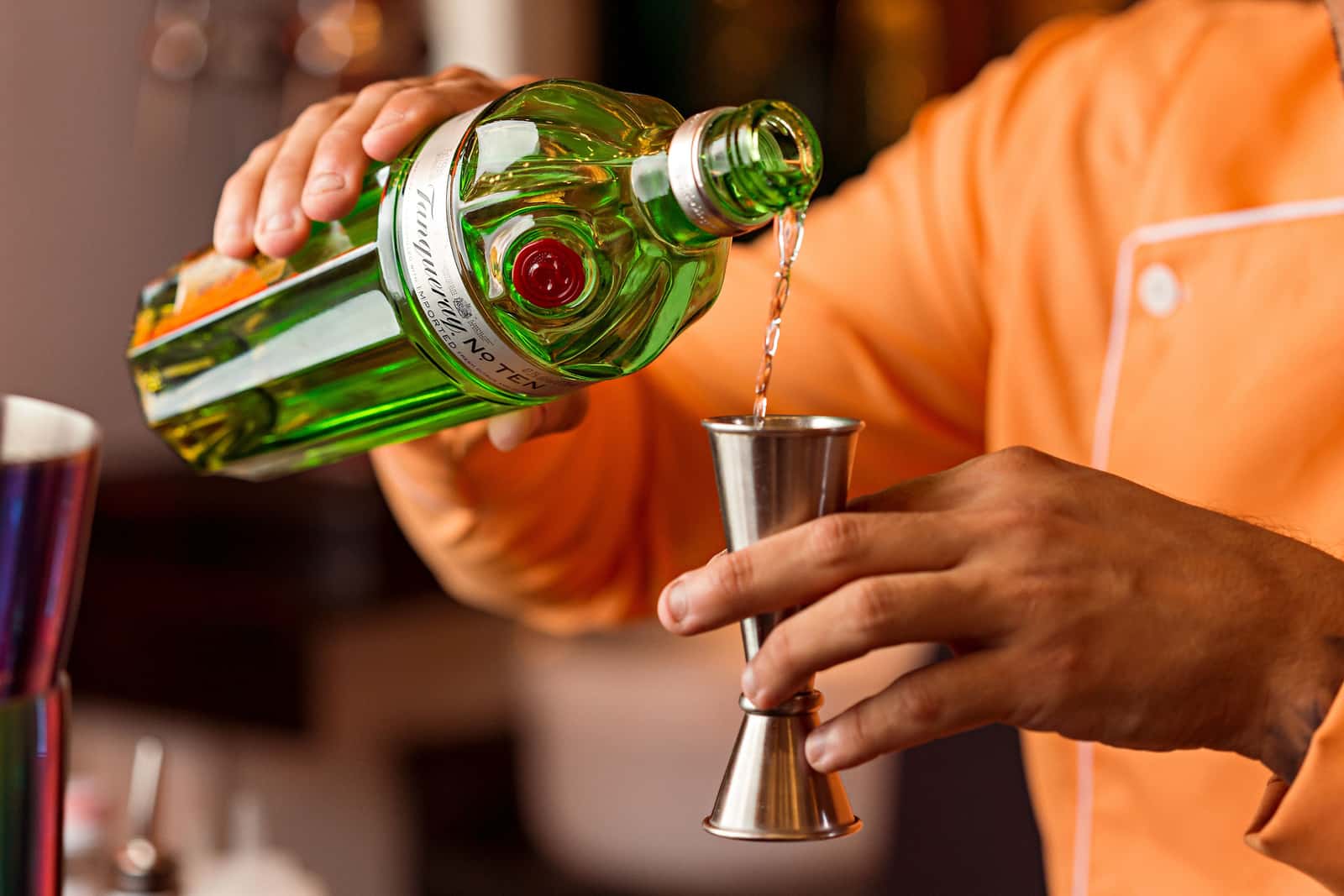
Measure with a jigger. For a home bar it is more accurate, it is barely slower once you stop looking at it, and it removes the one variable that makes home cocktails inconsistent. Free pouring is a real skill - a trained bartender counting against a calibrated spout hits a target within a few percent - but it depends on three things a home bar does not have: a speed pourer fitted to every bottle, a bottle emptied often enough that the flow rate stays familiar, and hundreds of reps a week to keep the count honest. Without those, free pouring at home means pouring from a sealed bottle neck with an unknown flow rate, which is guessing with a rhythm. Where free pouring genuinely wins is topping up with soda, building long drinks straight in the glass, and anything where a quarter ounce is invisible. For a stirred drink of three ingredients, measure.
We earn a commission if you buy through the links on this page, at no extra cost to you. It never changes which product we pick. How we are funded.
Quick picks
| # | Product | Best for | Price |
|---|---|---|---|
| 1 | Cocktail Kingdom Japanese Style Jigger The one that makes measuring fast | Accuracy | |
| 2 |  Cocktail Kingdom Leopold Jigger If you pour one-handed over a tin | A jigger that stays put | |
| 3 | 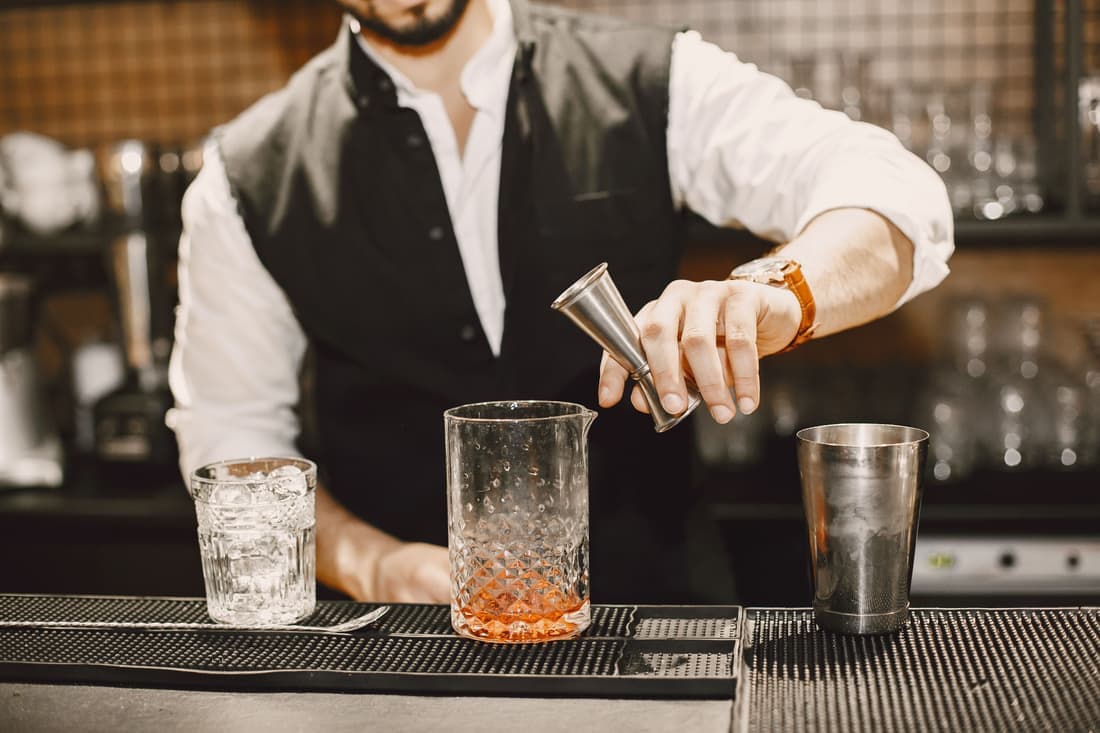 OXO Steel Double Jigger The cheap honest answer | Reading the pour from above |
Scroll the table sideways on a narrow screen. Prices are set by the retailer and change, so every price link opens the current listing rather than quoting a number here.
The mechanism
What free pouring actually is
Free pouring is not pouring by eye. It is pouring by time. A speed pourer - the metal or plastic spout fitted into a bottle neck in a bar - delivers a roughly constant flow rate because the vent hole controls how fast air can replace the liquid. Given constant flow, volume is just flow multiplied by time, so a bartender counts.
That counting is trained against a specific spout at a specific flow rate, and it is checked and re-checked in practice. It works, and the error in trained hands is small. But notice how much of the accuracy lives in the equipment rather than the person: without a calibrated spout there is no constant flow, and without constant flow a count measures nothing at all.
This is the part most home bars miss. Pouring from an unspouted bottle gives you a flow rate that depends on how full the bottle is, the shape of the neck, the viscosity of the liquid, the angle of your wrist and whether the bottle glugs. Counting against that is not free pouring - it is guessing with a rhythm.
Accuracy
What a quarter ounce does to a drink
The question that matters is not whether free pouring is less accurate, it is whether the error changes the drink. That depends entirely on the drink.
| Drink | A 0.25 oz error means | Forgiving? |
|---|---|---|
| Gin and tonic | A slightly stronger or weaker drink | Very - free pour it |
| Highball | Barely detectable in 6 oz of soda | Yes |
| Negroni (equal parts) | The balance shifts, but all three are assertive | Fairly |
| Old fashioned | Noticeably sweeter or drier | Not really |
| Daiquiri | The lime-to-sugar ratio is the drink | No - measure |
| Martini | Changes the whole character | No - measure |
| Anything with 0.25 oz of an ingredient | A 100% error on that ingredient | No |
The last row is the one worth internalizing. Modern cocktail recipes routinely call for a quarter ounce of something - a liqueur, a syrup, an amaro. There is no free pour short enough to deliver a quarter ounce reliably, which is why even bartenders who free pour spirits reach for a jigger for small volumes.
Speed
The argument that does not survive scrutiny at home
Free pouring exists because of speed. In a busy bar, a bartender making four drinks with eight ingredients saves real seconds by not picking up and rinsing a jigger, and over a shift that is the difference between keeping up and not.
At home you are making one or two drinks. The time saved is a few seconds and the cost is consistency. Worse, the home version of free pouring tends to be slower than people expect, because without a spout you end up pouring cautiously and then correcting - which is slower than filling a jigger to a line.
A jigger is also faster than it looks once you stop treating it as a measuring cup. A Japanese jigger is tall and narrow precisely so that the liquid level moves a long way for a small change in volume, which means you can fill it to the line in your peripheral vision rather than looking at it. How to use a jigger covers the technique that makes it quick, and jigger sizes explained covers which graduations you actually need.
The hybrid
What most good home bartenders actually do
In practice almost nobody is purely one or the other. The useful split is by what the ingredient is doing in the drink.
- Jigger: base spirits, citrus, syrups, vermouth, anything under half an ounce, anything in a drink with three or more ingredients.
- Free pour: soda water, tonic, ginger beer, topping up a highball, a float of something on the surface.
- Either: a single-spirit build over ice where the only question is how strong you want it.
- Neither - weigh it: batching. If you are making a bottled Negroni for six, a kitchen scale beats both, because syrups and liqueurs are easier to weigh accurately than to pour.
That last point is underused at home. Batching a stirred drink and keeping it in the fridge removes the measuring question from service entirely, which is the real speed answer for hosting rather than free pouring under pressure.
If you want to learn it
How to free pour properly
There is a legitimate case for learning, mostly for the pleasure of it. If you want to, do it properly rather than approximately.
- Fit speed pourers to the bottles you pour from. Without a calibrated spout none of this works. This is the step people skip and it is the one that makes the rest possible.
- Calibrate with water and a jigger. Pour into a jigger counting at a steady rhythm, check the level, adjust the count. Repeat until the count and the line agree.
- Count the same way every time. Most people use a four-count for 1.5 oz, meaning four beats of a consistent tempo. The tempo is personal; the consistency is not.
- Re-calibrate per bottle. Different spouts and different liquid viscosities flow at different rates. A syrup does not pour like a gin.
- Check yourself weekly. Free pouring drifts. Bartenders re-test against a jigger regularly, and a home bartender who never does is simply pouring badly with confidence.
If that sounds like more work than measuring, that is the honest conclusion of this page. Free pouring is a skill worth having in a bar and a hobby at home.
The other variable
Measuring is not the only thing making your drinks inconsistent
It is worth saying plainly: if your cocktails vary and you already measure, the jigger is not the problem. The three bigger variables in a home bar are ice quality, dilution time and temperature - and all three move around far more than a quarter ounce of gin.
Wet freezer-tray ice dilutes from the first second, a stir of twenty seconds and a stir of forty-five are different drinks, and a warm glass undoes both. How to stir a cocktail and what size ice for a cocktail shaker cover those, and best ice for whiskey covers the glass side.
The picks in full
Every pick, and who each one is for
01 · The one that makes measuring fast
Cocktail Kingdom Japanese Style Jigger
Cocktail Kingdom · Mid tier
Tall, narrow and internally marked, which is the combination that makes a half-ounce pour repeatable.
A tall narrow Japanese profile with interior graduations, so a three-quarter-ounce pour is a line you fill to rather than a judgment. Narrow means the meniscus moves a long way for a small volume, which is why this shape is the accurate one.
The specs that decide it
- Sizes:
- 1 oz / 2 oz
- Profile:
- tall and narrow
- Markings:
- interior lines for fractional pours
- Material:
- stainless steel
Who it is for
- A narrow cone makes a given volume a taller column, so a small error is visible before you pour it
- Interior lines mean you are not guessing at three quarters of an ounce
- Balanced enough to hold one-handed while the other hand pours
Where it gives ground
- Tall profile tips more easily on a crowded counter
- No handle, so it gets cold and slippery when you work fast
Skip this one if you free-pour by count and are happy with the results. This tool exists to fix a problem you do not have.
02 · If you pour one-handed over a tin
Cocktail Kingdom Leopold Jigger
Cocktail Kingdom · The step up
A lower, wider cone with a deco waist - less precise than the tall Japanese profile and much harder to knock over.
A wider, more stable profile that will not tip if you set it down half full on a wet counter. Slightly less precise than a tall Japanese jigger, noticeably harder to spill.
The specs that decide it
- Profile:
- wider, lower center of gravity
- Styling:
- art deco fluting
- Grip:
- waisted middle
- Material:
- stainless steel
Who it is for
- Far more stable set down full than a tall Japanese jigger
- The waist is a real grip, not decoration - it finds your fingers wet
- Reads as an object rather than as equipment on an open cart
Where it gives ground
- Wider bore makes a fractional pour harder to eyeball precisely
- Interior markings are less useful in a shallow cone
Skip this one if your pours drift and you are buying a jigger to fix that. The tall profile does that job better.
03 · The cheap honest answer
OXO Steel Double Jigger
OXO · Entry tier
Angled interior markings you can read while pouring, which removes the bend-down-and-squint step entirely.
A plain double-ended jigger with interior markings. Not the most precise tool here, but vastly more accurate than a free pour from an unspouted bottle, and the right first purchase.
The specs that decide it
- Sizes:
- dual-sided, multiple interior marks
- Markings:
- angled for top-down reading
- Material:
- stainless steel
- Dishwasher:
- yes
Who it is for
- Angled markings genuinely work - you stop lowering your head to check a pour
- Wide base is very hard to tip
- Cheap enough to be the jigger you leave out
Where it gives ground
- Bulkier than a Japanese jigger, so it is slower into a tin
- Markings will fade with years of dishwasher cycles
Skip this one if you want the classic tall silhouette on an open bar. This is a working tool, not a display piece.
Honest limits
What we could not verify
We have not run our own accuracy trial comparing jiggered and free-poured volumes, so no error percentage appears on this page. The mechanism - constant flow through a calibrated spout making volume a function of time - is how speed pourers work; how accurate any individual is depends entirely on their practice and equipment. The four-count figure is the common bar convention rather than a specification.
We do not run a test lab and we have not personally used every product here. Where a judgment rests on published specifications or on what owners report rather than on our own hands, we say so. Read the full method.
Questions
Related questions
- Is a jigger more accurate than free pouring?
- At home, substantially. Free pouring depends on a calibrated speed pourer giving a constant flow rate so a count translates to a volume. Without a spout, flow depends on how full the bottle is, the neck shape, the liquid's viscosity and your wrist angle, and a count measures nothing reliable.
- Do professional bartenders use jiggers?
- Many do, and most of the ones who free pour spirits still reach for a jigger for anything under half an ounce - because no free pour is short enough to deliver a quarter ounce reliably. Free pouring is a speed technique for volume service rather than a mark of skill.
- How do you learn to free pour?
- Fit speed pourers to your bottles, then calibrate with water against a jigger: pour to a steady count, check the level, adjust, repeat. Use the same tempo every time, re-calibrate for each spout and each liquid, and re-test yourself regularly because free pouring drifts.
- What is a four-count pour?
- A rhythm of four beats at a consistent tempo, which through a calibrated speed pourer delivers roughly 1.5 oz. The count is only meaningful for the specific spout and liquid it was calibrated against - it is not a universal measurement.
- Which drinks can you free pour safely?
- Anything where a quarter ounce is invisible: soda water, tonic, ginger beer, topping up a highball, a surface float. Stirred and shaken drinks with three or more measured ingredients should be jiggered, and anything calling for a quarter ounce of something must be.
- Is free pouring faster?
- In a busy bar, yes, and that is why it exists. At home, making one or two drinks, it saves a few seconds and costs consistency - and without a speed pourer most people pour cautiously and then correct, which is slower than filling a tall jigger to a line.
Read next
Related reading
- Jiggers, bar spoons and mixing glasses
Jiggers, spoons and mixing glasses - the half of the bar that decides whether a drink is repeatable.
- How to use a jigger
Fill to the brim, hold it low, pour once - and the measuring order that means you rarely rinse.
- Jigger sizes explained
A full conversion table, what a shot actually measures, and which double-jigger pairing to buy.
- Best Japanese jiggers
Why a narrow bore reads more accurately, which size pairing to buy, and the precision-stability trade-off.
- Japanese vs American jigger
Narrow against wide on accuracy, stability and speed - and the middle option that recovers both.
- Yarai mixing glass review
Five hundred milliliters for almost everyone - and what the mold seam costs you on a stir.