Roundup
Best coupe glasses
Wide, shallow and made for a drink with foam on it. Compared on bowl capacity, stem construction and the one thing a coupe is genuinely bad at.
By Michael W. · Published September 2026
The short answer
The Libbey Signature Kentfield coupe at 9oz is the right default: a pulled stem with no join to snap, a bowl generous enough for a shaken sour and its head, and a price that survives a dropped one. If your regular drink is spirit-forward and stirred, buy a Nick and Nora instead - the coupe's wide mouth is exactly wrong for a drink you want to stay cold and aromatic. Many home bars want both, and they are not interchangeable.
We earn a commission if you buy through the links on this page, at no extra cost to you. It never changes which product we pick. How we are funded.
Quick picks
| # | Product | Best for | Price |
|---|---|---|---|
| 1 | Libbey Signature Kentfield Coupe Glasses Best overall | Everyday coupe | |
| 2 |  RIEDEL Drink Specific Glassware Nick & Nora Glass The better glass for stirred drinks | Spirit-forward serves | |
| 3 |  Libbey Nick and Nora Cocktail Glasses The same shape for less | Nick and Nora on a budget | |
| 4 |  Schott Zwiesel Tritan Crystal Tumbler If the glass is the gift | Crystal that survives a dishwasher |
Scroll the table sideways on a narrow screen. Prices are set by the retailer and change, so every price link opens the current listing rather than quoting a number here.
The shape
What a coupe is for, and what it is bad at
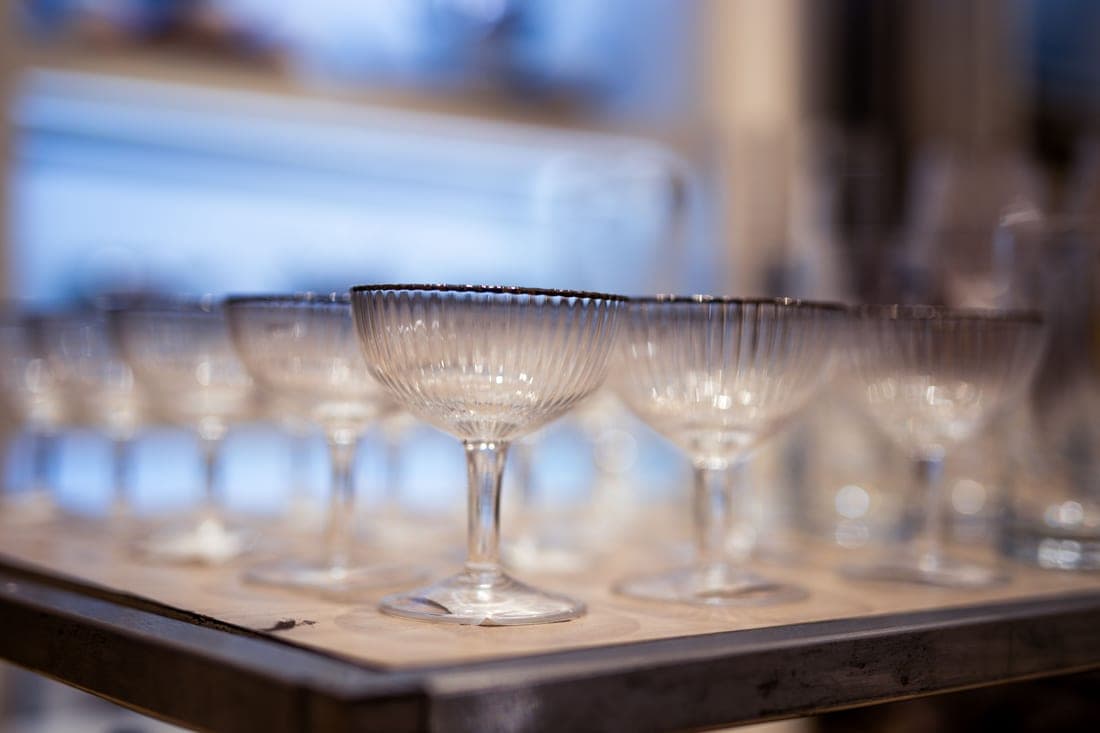
A coupe is a wide, shallow bowl on a stem. That geometry does two useful things: it gives foam somewhere to sit, and it presents a large surface of the drink to your nose as you lift it. Both suit a shaken drink - a daiquiri, a sour, anything with a head.
The same geometry does two unhelpful things. A large surface exposed to the room warms fast, so a coupe is a poor vessel for a drink you intend to sip slowly. And the wide mouth means a full one is very easy to spill - the classic sacrificial sip before you dare walk anywhere.
So the coupe is a fast-drink glass. Shaken, bright, finished in fifteen minutes. For a Manhattan you will nurse for forty, the bell-shaped Nick and Nora is a better tool - covered in Nick and Nora vs coupe.
How we picked
How we picked these
Selections on published specification and construction, not on test results. Our criteria:
- Bowl capacity. Too small and a shaken drink with foam overflows; too large and it looks under-filled and warms faster. Around 7 to 9oz is the working range.
- Stem construction. A pulled stem is drawn from the same piece of glass. A joined stem is welded, and the join is where cheap stemware breaks.
- Rim. Laser-cut where available, for feel and chip resistance.
- Base diameter. Stemware tips. A wider foot is a meaningful stability improvement.
- Replaceability. Sold in ongoing production so a breakage is one glass, not a set.
Buying guide
Pulled stems and why they matter
There are two ways to attach a stem to a bowl. In a pulled stem, the glass is drawn out from the bowl itself in one continuous piece. In a joined stem, the bowl and stem are made separately and welded together while hot.
Both are legitimate, and joined stems are used on plenty of expensive glassware. But the join is a discontinuity, and on cheaper glassware it is the point that fails - typically when someone grips the bowl and twists while washing it.
For a glass you intend to use rather than display, a pulled stem is the more forgiving construction. It is also the reason the Libbey lines keep appearing on this site: they are machine-made to a specification that includes it.
Practical
Chilling the glass, and why it matters more here
Every drink served up benefits from a chilled glass, and a coupe benefits most because it warms fastest. A room-temperature coupe measurably shortens the window in which the drink is at its best.
The fastest method is the freezer: leave the glasses in for ten minutes and they come out frosted. If freezer space is scarce - and if you are also making clear ice, it will be - fill the glass with ice and cold water while you build the drink, then dump it just before straining.
Do not chill crystal in a freezer and then pour something at room temperature into it. Thermal shock is a real way to crack a glass, and it happens most often with thin-walled fine glassware.
Practical
How many coupes to own
Four is the working minimum and six is the number that lets you serve a table without washing between rounds. Stemware also breaks more often than tumblers do, which argues for buying from an ongoing production line rather than a one-off set - a broken glass should be a replacement, not a reason to rebuy four.
The other reason to prefer a staple line: coupes are the glass most likely to be used for something other than cocktails. Sparkling wine, dessert, a float of cream on top of something - they get pressed into service, which means they see more use and more washing than the specification suggests.
Practical
Washing stemware without breaking it
- Hold the bowl, not the stem, while washing. Most stem breakages happen in a sink, from a twisting force applied to the stem.
- Never twist a cloth inside the bowl. That is the other classic sink breakage. Push the cloth in gently and rotate the glass, not the cloth.
- Dishwasher: stems up and not touching. Glass-on-glass contact during a cycle is what chips rims.
- Air dry upright on a rack. Upside down on a towel traps moisture and leaves a stale smell in the bowl.
- Do not stack coupes. They nest just enough to jam, and freeing them cracks them.
The picks in full
Every pick, and who each one is for
01 · Best overall
Libbey Signature Kentfield Coupe Glasses
Libbey · Entry tier
A pulled stem and a 9 oz bowl - the sane size for a coupe, at a price that survives a dropped one.
9oz is the sane size for a coupe - room for a shaken drink plus foam without a full-to-the-rim carry across a room. The stem is pulled rather than joined, which matters because a join is where cheap stemware snaps. US-made and in ongoing production, so you can replace one.
The specs that decide it
- Capacity:
- 9 oz
- Stem:
- pulled, not joined
- Bowl:
- classic rounded coupe
- Set:
- 4
Who it is for
- A pulled stem has no join to snap, which is where cheap stemware fails
- 9 oz holds a shaken drink plus foam without a full-to-the-rim carry
- US-made and consistently available, so you can replace one in a set
Where it gives ground
- Wide mouth means a shaken drink warms quickly - drink it briskly
- Plain bowl next to a cut or vintage coupe
Skip this one if you want a small 5 oz coupe for spirit-forward serves. This bowl is generous.
02 · The better glass for stirred drinks
RIEDEL Drink Specific Glassware Nick & Nora Glass
RIEDEL · The one worth stretching for
The bell bowl that made this shape mainstream again, and the safest carry of any stemmed cocktail glass.
The shape people actually want when they think they want a coupe. The narrow bell mouth keeps a stirred drink cold to the last mouthful and holds aroma the way a wide bowl cannot - and it is the only stemmed cocktail glass you can carry full without concentrating.
The specs that decide it
- Shape:
- bell bowl, small mouth
- Capacity:
- small, spirit-forward serve size
- Line:
- Drink Specific Glassware
- Sold as:
- pairs
Who it is for
- The narrow mouth is why you can carry a full one across a room without a sacrificial sip
- Small bowl keeps a stirred drink cold to the last mouthful
- Holds aroma much better than a wide coupe
Where it gives ground
- Too small for anything long, shaken and foamy
- Machine-made crystal at a real price step over Libbey
Skip this one if your regular drink is a 6 oz shaken sour. It will not fit.
03 · The same shape for less
Libbey Nick and Nora Cocktail Glasses
Libbey · Entry tier
The shape's practical advantages at a price where owning six is reasonable rather than aspirational.
The carry-without-spilling and stay-cold advantages of the Nick and Nora at a price where owning six is reasonable. Thicker rim than crystal, less brilliance under warm light, and considerably sturdier in a house with a dishwasher.
The specs that decide it
- Shape:
- bell bowl
- Capacity:
- roughly 5 to 6 oz class
- Glass:
- Libbey clear glass
- Sets:
- 4 and larger
Who it is for
- You get the carry-without-spilling benefit for very little money
- Set sizes make a table of six realistic
- Sturdier than crystal for a house with a dishwasher
Where it gives ground
- Thicker rim than crystal, which you notice on the lip
- Less brilliance in the glass under warm light
Skip this one if the glass is the gift and the recipient will notice crystal. Then it is worth the step up.
04 · If the glass is the gift
Schott Zwiesel Tritan Crystal Tumbler
Schott Zwiesel · The one worth stretching for
Titanium-reinforced crystal: the look of fine glassware with break and chip resistance that fine glassware does not have.
Not a coupe, but the right answer to a related question: when someone wants glassware that reads as a serious present, titanium-reinforced crystal delivers the clarity and ring of fine glass with durability fine glass does not have.
The specs that decide it
- Material:
- Tritan crystal
- Reinforcement:
- titanium and zirconium in the melt
- Dishwasher:
- rated for repeated cycles
- Lead:
- lead free
Who it is for
- Genuinely dishwasher durable, which almost no crystal is
- Clarity and ring are crystal, not pressed glass
- Rims resist chipping, which is where glasses actually die
Where it gives ground
- Costs several times a Libbey tumbler
- Still glass - durable is not indestructible
Skip this one if you are buying eight glasses for a party. Buy Libbey and keep these for the pour that matters.
Honest limits
What we could not verify
We have not handled every glass here and have not tested stem strength or thermal behavior. Capacities, stem construction and glass composition are as published by each maker. Comments on warming rates describe the geometry rather than measurements we took.
We do not run a test lab and we have not personally used every product here. Where a judgment rests on published specifications or on what owners report rather than on our own hands, we say so. Read the full method.
Questions
Related questions
- What size coupe glass should I buy?
- Around 7 to 9oz. Smaller than that and a shaken drink with foam overflows; much larger and it looks under-filled and warms faster.
- Can you serve a martini in a coupe?
- Yes, and many people prefer it to a V-shaped martini glass because it is far less prone to spilling. A Nick and Nora is better again if you want the drink to stay cold.
- Are pulled stems stronger than joined stems?
- On cheaper glassware, generally yes. A joined stem is a discontinuity and it is where breakage tends to occur, usually from a twisting force applied while washing.
- Why does my coupe warm up so fast?
- The wide, shallow bowl presents a large surface to the room. It is inherent to the shape - chill the glass first, and use a narrower bell shape for drinks you will sip slowly.
Sources
Read next
Related reading
- Coupes, rocks glasses and the rest
Rocks glasses, coupes and Nick and Noras - the vessel decides temperature, aroma and carry.
- Coupe vs martini glass
Why the V-shaped glass spills, what it costs you in aroma, and the one thing it still wins on.
- Best Nick and Nora glasses
The bell shape that holds aroma, stays cold and survives the walk from the kitchen.
- Cocktail glassware types
Every glass shape in one table, plus the three you actually need and the order to buy them.
- Nick and Nora vs coupe
Small bell against wide bowl - aroma, temperature and why foam decides it.
- Best cocktail shakers
Tins against cobblers on seal, capacity and chilling - and which one suits who is actually shaking.