Guide
How to make crushed ice at home
A canvas bag and a wood mallet make drier, better-packed crushed ice than any blender, in about forty seconds, with nothing to plug in.
By Michael W. · Published October 2026
The short answer
Put hard cubes in a canvas Lewis bag, fold the end under, and strike the bag through a towel with a wood mallet - working from the middle outward - for twenty to forty seconds. The canvas wicks the meltwater out as you work, which is the entire reason the result is dry, packable crushed ice rather than the slush a blender produces. A bag and mallet set costs less than a round of drinks and lives in a drawer. A blender will do it in an emergency; a tea towel and a rolling pin will too.
We earn a commission if you buy through the links on this page, at no extra cost to you. It never changes which product we pick. How we are funded.
Quick picks
| # | Product | Best for | Price |
|---|---|---|---|
| 1 | Barfly Wood Ice Mallet with Lewis Canvas Bag The right tool | Dry crushed ice at home | |
| 2 |  Wintersmiths Ice Chest Where the ice comes from | Four spheres at a time | |
| 3 |  Viski Insulated Ice Bucket with Tongs Where it goes next | Serving a round |
Scroll the table sideways on a narrow screen. Prices are set by the retailer and change, so every price link opens the current listing rather than quoting a number here.
Why canvas
Why a Lewis bag beats a blender
A blender makes ice chips suspended in water. That is not pedantry - it is the actual physical difference, and it is why a blender-crushed julep collapses into a watery drink in four minutes. The blade generates heat and shears the ice, meltwater has nowhere to go, and what you scoop out is wet.
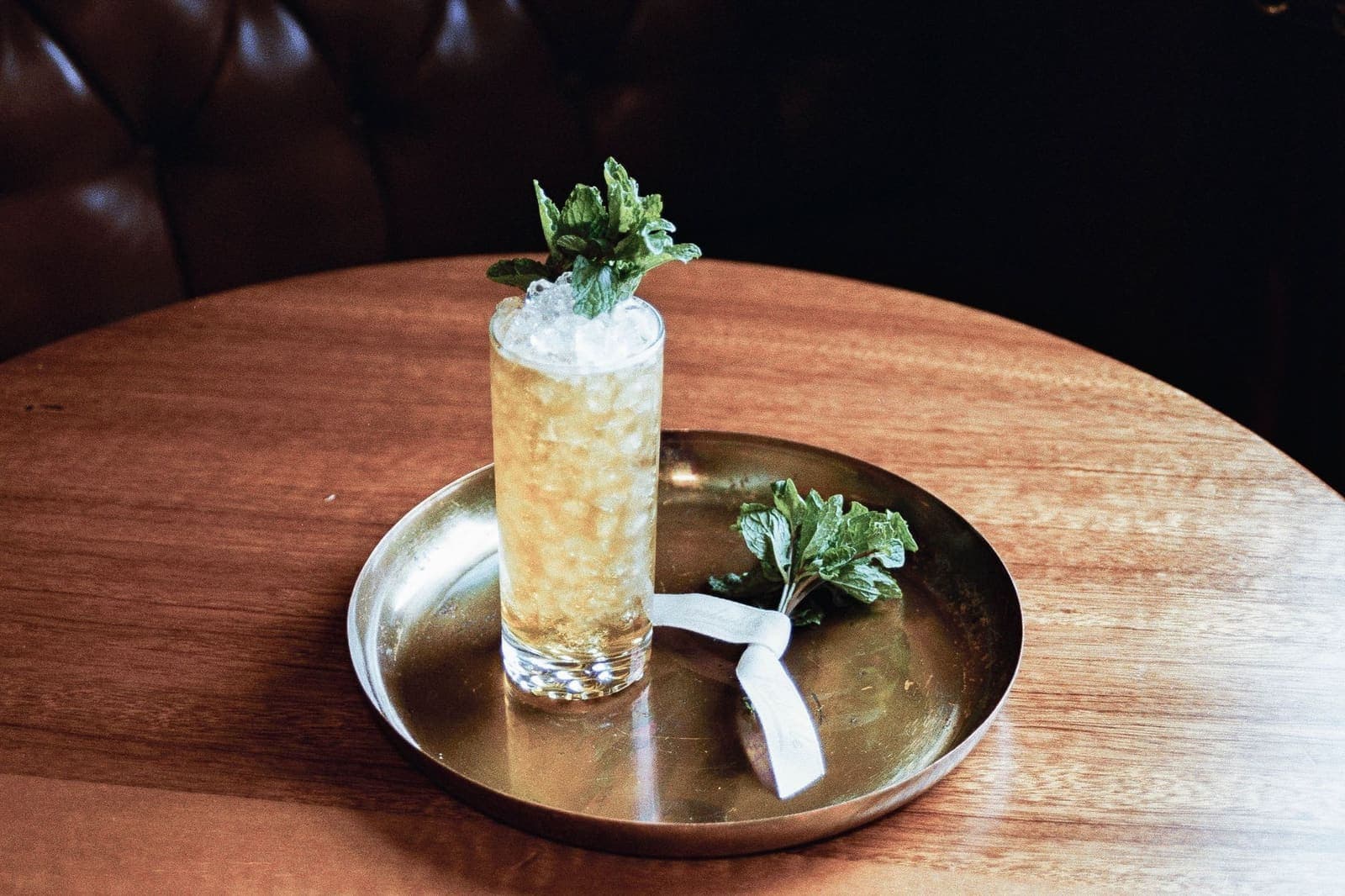
Canvas does the one thing a blender jar cannot: it absorbs. As the mallet fractures the cubes, the film of water on every new surface wicks into the fabric instead of pooling. What tips out of the bag is cold, dry and slightly sticky, so it packs into a dome above the rim of a julep cup and holds there. That packing behavior is the difference between a drink that looks like a bar made it and one that looks like a cooler.
The mallet matters less than the bag. Wood is traditional because it does not dent the bag's seams and it has enough mass to break ice without a full swing, but the function lives in the canvas.
What you need
What you need, and what you can skip
- A canvas Lewis bag. The functional component. Any heavy untreated canvas works; a purpose-made bag is sized so a folded end stays shut under impact.
- A mallet. Wood, around 13 inches. A meat mallet works. A hammer works and will eventually mark the bag.
- Hard cubes. Freezer-tray ice is too small and too soft; it turns to powder. Large cubes from a mold are ideal, and the cloudy sacrificial block from a directional mold is the best free source there is.
- A towel. Not for the ice - for the counter. You are hitting a stone surface repeatedly and a folded towel underneath saves both the counter and the noise.
What you can skip: an electric ice crusher, which is loud, large and produces the same wet result as a blender; and a specialist ice pick, which is for carving a block into cubes rather than for crushing. If you are making cubes from a block instead, how to make clear ice covers that step.
The method
The method, step by step
Forty seconds of work, and the only skill in it is knowing when to stop.
Wet the bag and wring it out before the first use of the day. A bone-dry canvas bag absorbs less than a damp one, which is counter-intuitive and makes a visible difference to the first batch.
Grades
Cracked, crushed, flaked - pick the grade the drink wants
Crushing is not one output. How long you hit the bag decides the grade, and the grade decides the drink. This is the part that a machine takes away from you, and it is worth having.
| Grade | Time in the bag | What it is for |
|---|---|---|
| Cracked | 3 to 5 strikes | Swizzles, anything built in the glass where you want visible shards |
| Coarse crushed | 10 to 15 seconds | Mojito, Tom Collins, anything long and stirred in the glass |
| Fine crushed | 20 to 40 seconds | Mint julep, tiki drinks - the grade that packs into a dome |
| Flaked | 60 seconds or more | Chilling a glass fast, bedding oysters. Too far for a drink |
Overshooting is the common error. Past about forty seconds you are making snow, and snow melts into the drink almost on contact. If the pile will not hold a shape when you press it with the back of a spoon, you went too far.
No bag
If you have no bag tonight
Three substitutes, in order of how close they get:
- A folded tea towel and a rolling pin. Closest to the real thing, because cotton wicks. Fold the towel into a pouch, put the ice in the fold, and roll and press rather than striking - a rolling pin has no mass behind a swing.
- A zip bag inside a tea towel. The plastic stops the wicking, so expect a wetter result, but the towel protects the bag and your counter. Leave the bag open a crack or it will burst.
- A blender, pulsed, then drained. Pulse four or five times, tip the whole lot into a strainer and let it drain for thirty seconds. You lose the dry-pack quality but you get a usable drink.
What does not work: a food processor, which polishes the ice into water; and crushing ice directly in your good glassware with a muddler, which is a reliable way to find out how strong the base of a rocks glass is. If you need to press ingredients rather than ice, best muddlers covers the right tool.
After
Storing it, and why you mostly should not
Crushed ice is a made-to-order ingredient. Left in a freezer it refreezes into a single lump within an hour or two, because every piece is wet on the surface and those surfaces bond. You can break the lump up again, but you will have lost the dry quality and you are starting over.
If you are making a round, crush into a pre-chilled insulated bucket and use it within fifteen or twenty minutes. If you are making one drink, crush for that drink. The whole appeal of the bag is that forty seconds of work is not worth planning around.
And if you find yourself wanting chewable ice on demand rather than crushed ice on request, that is a different tool entirely - see best nugget ice makers.
The picks in full
Every pick, and who each one is for
01 · The right tool
Barfly Wood Ice Mallet with Lewis Canvas Bag
Barfly by Mercer · Entry tier
A canvas bag and a wood mallet make better crushed ice than any blender, because the canvas wicks the meltwater away while you work.
A canvas bag and a wood mallet together, which is the whole kit. The canvas is the functional part - it absorbs the meltwater that otherwise turns crushed ice into slush - and it is machine washable, which matters because a damp canvas bag left folded in a drawer will smell.
The specs that decide it
- Bag:
- canvas, around 17.75 x 8.25 in
- Mallet:
- wood, around 13.5 in
- Care:
- bag is machine washable
- Output:
- cracked to flaked, by how long you hit it
Who it is for
- Canvas absorbs meltwater, so the ice leaves the bag dry rather than as slush
- You control the grade - a few strikes for cracked ice, thirty seconds for a julep pack
- Nothing to break, nothing to plug in, and it stores flat in a drawer
Where it gives ground
- It is manual work, and a full julep's worth is a real minute of hitting a bag
- The bag has to dry fully between uses or it will start to smell
Skip this one if you want chewable ice on tap. That is a nugget machine, not a bag and a mallet.
02 · Where the ice comes from
Wintersmiths Ice Chest
Wintersmiths · Mid tier
The mold that turns an ordinary freezer into a reliable source of four 60mm clear spheres, with no compromise on clarity.
Crushed ice is only as good as the cube you started with, and the sacrificial cloudy block every directional mold produces is ideal crush fodder. It is dense, it is free, and clarity is irrelevant once the ice is in pieces. This is the most useful thing to do with the block most owners throw away.
The specs that decide it
- Output:
- 4 spheres per cycle
- Sphere size:
- 60 mm (2.36 in)
- Construction:
- EPP foam shell, food-grade silicone molds
- Water:
- ordinary tap water
Who it is for
- Four spheres per cycle is the most usable yield of any home mold at this size
- The foam shell is genuinely insulating rather than decorative, so clarity is consistent cycle to cycle
- Silicone molds release without the warm-water wrestling match cheap trays need
Where it gives ground
- Takes real freezer footprint - measure before you buy
- A full cycle is an overnight commitment, not an afternoon one
Skip this one if your freezer is a small apartment drawer, or you only ever drink one whiskey a week and a single-sphere mold would do.
03 · Where it goes next
Viski Insulated Ice Bucket with Tongs
Viski · Mid tier
An insulated bucket is what lets your good ice survive from the freezer to the second drink.
Crushed ice melts fast by design, so if you are making a round rather than one drink, it needs somewhere insulated to wait. A double-walled bucket buys you the fifteen minutes between crushing and the second drink.
The specs that decide it
- Construction:
- double-wall insulated stainless
- Includes:
- tongs
- Lid:
- model dependent
- Capacity:
- a round's worth of large cubes
Who it is for
- Double walls genuinely slow the melt, which matters when your ice took 24 hours to make
- Tongs keep hands out of a shared bucket
- Stops the freezer trip mid-round, which is where hosting momentum dies
Where it gives ground
- Even insulated, it is a holding vessel and not a freezer
- Condensation on the outside will mark an unprotected wood shelf
Skip this one if you make one drink at a time and the freezer is six feet away.
Questions
Related questions
- What is a Lewis bag?
- A heavy canvas bag made for crushing ice with a mallet. The canvas is the functional part: it absorbs the meltwater released as the ice fractures, so the crushed ice comes out dry enough to pack into a dome rather than as slush.
- Can you make crushed ice in a blender?
- Yes, badly. A blender shears the ice and the meltwater has nowhere to go, so you get chips suspended in water. Pulse rather than run it, then drain the result in a strainer for thirty seconds, and the drink will be acceptable rather than good.
- How long does it take to crush ice in a Lewis bag?
- Coarse crushed ice takes about 10 to 15 seconds of striking. Fine, packable crushed ice for a julep takes 20 to 40 seconds. Past about a minute you are making snow, which melts into the drink almost on contact.
- Can you store crushed ice in the freezer?
- Not usefully. Every piece is wet on the surface, so within an hour or two those surfaces bond and you have one lump. Crush to order, or crush into a pre-chilled insulated bucket and use it inside twenty minutes.
- Does crushed ice water down a drink?
- Yes, and in the drinks it belongs in that is the point. A julep or a mojito is built to dilute as you drink it. For anything spirit-forward served over ice you want the opposite - one large, dense, clear cube.
Read next
Related reading
- Clear ice for the home bar
Molds, machines and presses that make ice dense enough to chill a drink without watering it down.
- Best nugget ice makers
Countertop nugget machines compared on output, bin size, noise and the maintenance nobody budgets for.
- How to make clear ice at home
Directional freezing explained, plus the free cooler method step by step and when to buy a mold instead.
- Best ice for whiskey
Size, shape and clarity ranked by how much each actually changes a whiskey pour - including when to skip the ice.
- Best clear ice molds
Insulated molds compared on yield, piece size and the freezer footprint they actually demand.
- Best muddlers for cocktails
Nylon, wood and flat steel heads compared - which muddler bruises mint and which one breaks ice.