Roundup
Best muddlers for cocktails
Three muddlers, three different jobs. Head material and length decide whether you bruise mint or shred it, and whether you can reach the bottom of a collins glass at all.
By Michael W. · Published October 2026
The short answer
For most home bars the OXO SteeL Cocktail Muddler is the right buy: nine inches of stainless with a non-scratch nylon head, so you can muddle in a glass you care about, and it goes in the dishwasher. If your drinks are mint-led - mojitos, juleps, smashes - the 12-inch Barfly Deluxe Wood Muddler is the better tool, because wood grips leaves instead of sliding across them and the extra length reaches the bottom of a tall glass. If you are breaking ice and firm citrus rather than herbs, the Cocktail Kingdom French Press Muddler has the mass to do it in fewer strokes. One muddler covers a home bar; the choice is about which drinks you make most.
We earn a commission if you buy through the links on this page, at no extra cost to you. It never changes which product we pick. How we are funded.
Quick picks
| # | Product | Best for | Price |
|---|---|---|---|
| 1 | OXO SteeL Cocktail Muddler Best overall | A first muddler you will not replace | |
| 2 |  Barfly Deluxe Wood Muddler, 12 in Best for mint | Mint and tall glasses | |
| 3 | Cocktail Kingdom French Press Muddler Best for ice and firm fruit | Crushing, not bruising |
Scroll the table sideways on a narrow screen. Prices are set by the retailer and change, so every price link opens the current listing rather than quoting a number here.
The mechanism
What muddling is actually for
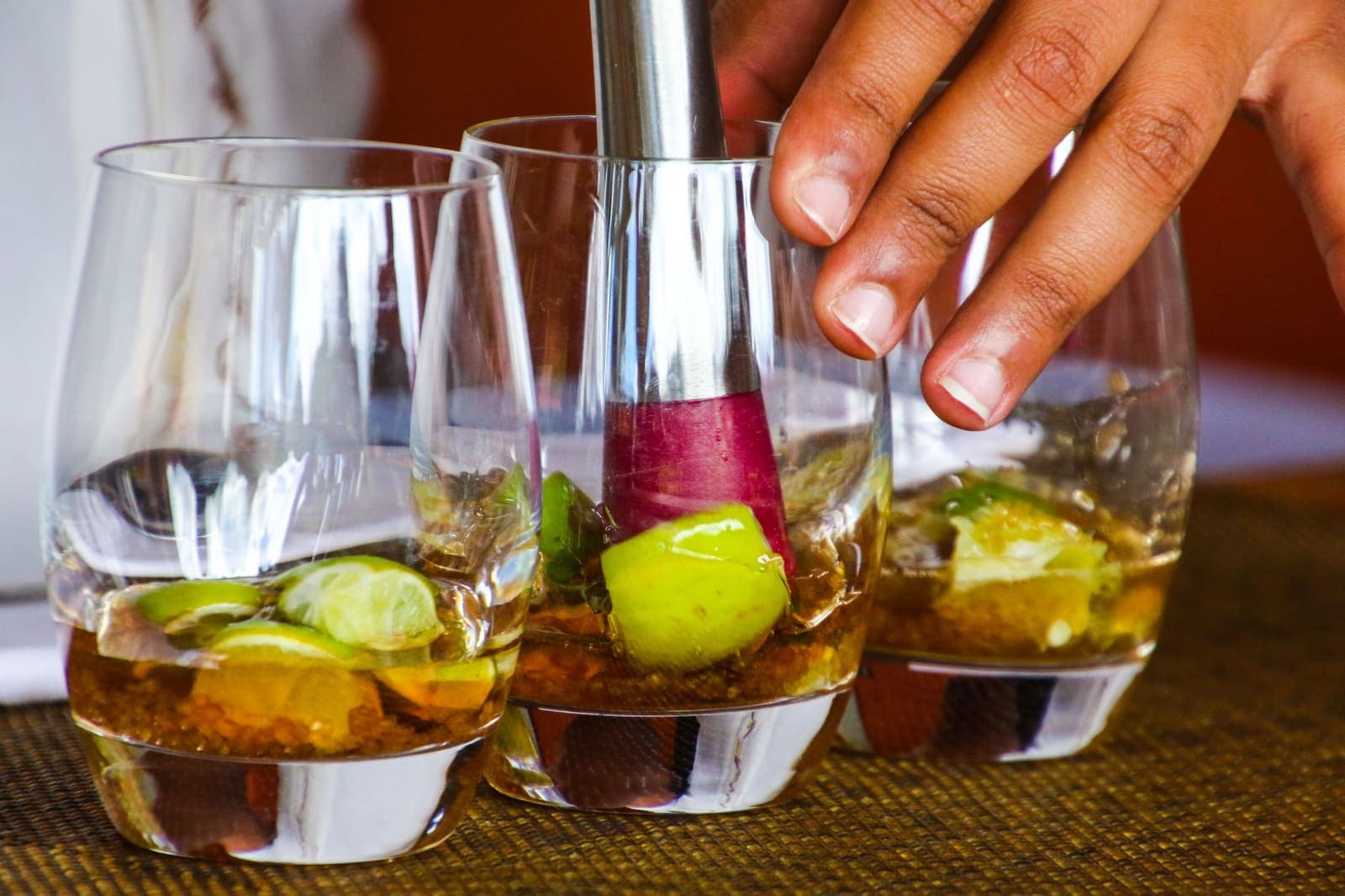
Muddling is pressure, not grinding. The aromatic compounds in mint and basil sit in oil glands on the surface of the leaf, and the job is to rupture those glands and nothing else. Grind the leaf and you break the cell walls as well, which releases chlorophyll and the vegetal, bitter notes that make a home mojito taste like a salad.
Fruit is the opposite problem. A lime wheel or a sugared orange slice needs real force to give up its juice and oil, and the thing you are avoiding there is the pith - the white layer under the peel, which is where the bitterness lives. The technique for fruit is a few heavy presses, not many light ones, because every additional press works more pith into the drink.
So the two jobs want opposite tools. A few firm presses with a wide, textured face for herbs. Fewer, heavier presses with mass behind them for fruit and ice. The practical compromise most home bars land on is a mid-length muddler with a smooth non-scratch head, used with a light hand on herbs - and that is why the OXO leads this page rather than the heaviest option.
How we picked
How we picked these
We do not run a test lab, and this is a selection rather than a test result. We compared published specification, head and shaft materials, length, grip construction and what owners consistently report after long use. The criteria, weighted in this order:
- Head material and face. Nylon, smooth wood and flat steel each do a different job, and a toothed head does none of them well in glassware.
- Length against the glass. A muddler has to reach the bottom of the tallest glass you build in without your hand going in after it.
- Whether it is safe in your glassware. Most home muddling happens in the serving glass. A head that scores glass is a problem, not a feature.
- Grip when wet. Muddling happens with wet hands. A polished steel handle with no grip is where the slips come from.
- Care. Wood needs hand washing and immediate drying. That is fine if you know it going in and a disappointment if you do not.
Our full method, including what we deliberately do not claim, is on how we pick.
Buying guide
Head material is the whole decision
| Head | Good at | Bad at | Glassware risk |
|---|---|---|---|
| Nylon, smooth | Herbs, soft fruit, general use | Gripping mint; breaking ice | None |
| Nylon, toothed | Firm citrus | Herbs - it tears them | Scores soft glass |
| Wood, smooth | Mint and herbs | Ice; anything needing mass | None |
| Steel, flat press | Ice, firm citrus, sugar cubes | Delicate herbs | High in thin glass |
The toothed nylon head deserves singling out, because it is the most common head on cheap boxed muddlers and it is the worst choice for the thing most people bought it for. Teeth tear mint. They also abrade the inside of a soft pressed-glass tumbler over time, which shows as a cloudy ring at the base that no amount of washing removes.
If you already own a toothed muddler, you are not stuck. Muddle in a shaker tin instead of in the glass, and use three firm presses rather than a twisting grind.
Buying guide
Length: measure the tallest glass you build in
A muddler needs to reach the bottom of the glass with a couple of inches of handle still above the rim, so your hand stays out of the drink and you can put weight over the top of it. That is a simple measurement and almost nobody takes it before buying.
- Rocks glass or a shaker tin only: 8 to 9 inches is plenty.
- Collins or highball glass: 10 to 12 inches, or you will be fishing.
- Mixing glass: 9 inches works, but you should rarely be muddling in one - it is a stirring vessel and the base is not meant to take impact.
There is a related mistake worth naming: muddling in a Yarai-style mixing glass. The cut pattern and the thin walls of a good mixing glass are not built for vertical impact, and that is a genuinely expensive way to learn. Muddle in a tin, then transfer. Best mixing glasses explains what that glass is actually built for.
Buying guide
Where a muddler is the wrong tool
Three jobs people reach for a muddler for, and what to use instead:
- Crushing ice in a glass. Even a heavy press muddler is working against the base of your glassware. Use a canvas bag and a mallet - how to make crushed ice covers it - and keep the muddler for ingredients.
- Juicing citrus. A muddler extracts some juice and a lot of pith. A hand press takes thirty seconds and tastes better.
- Dissolving sugar. A muddler will not dissolve granulated sugar in cold liquid, and the grinding you do trying is what tears the herbs sitting underneath it. Use simple syrup.
And the honest limit of the category: a muddler is a cheap tool that fixes a specific thing. If your drinks are mostly stirred or shaken rather than built in the glass, it is not the upgrade to make first. The home bar upgrade guide works through what is actually letting a drink down.
The picks in full
Every pick, and who each one is for
01 · Best overall
OXO SteeL Cocktail Muddler
OXO · Entry tier
Nine inches of stainless with a non-scratch nylon head and a grip that stays put wet - the muddler to own if you only own one.
The nylon head is the reason. Most muddling at home happens in the glass the drink will be served in, and a nylon face will not score the inside of a rocks glass the way a steel or toothed head will. Nine inches is enough for a rocks glass or a shaker tin, the grip stays put when your hands are wet, and it is the only one of the three you can put in the dishwasher. It bruises mint by pressure rather than by grip, which is the trade.
The specs that decide it
- Length:
- about 9 in
- Head:
- non-scratch nylon
- Body:
- stainless steel
- Care:
- dishwasher safe
Who it is for
- A nylon head is the difference between muddling in your good glass and muddling in a glass you do not mind scarring
- The soft non-slip grip is the feature you notice on the fourth mojito, not the first
- Dishwasher safe, which no wooden muddler can claim
Where it gives ground
- Nylon has no bite on mint, so it bruises by pressure rather than by grip
- Nine inches is short for a tall collins glass
Skip this one if you muddle mostly mint. A textured wood head grips leaves better and is gentler about it.
02 · Best for mint
Barfly Deluxe Wood Muddler, 12 in
Barfly by Mercer · Mid tier
Twelve inches of wood answers the two things that beat short steel muddlers: a collins glass, and mint that shreds.
Twelve inches, smooth wood face. Wood has enough surface texture to hold a mint leaf in place under a press, which is what bruises it rather than tearing it - and torn mint is where the bitter, grassy flavor comes from. The length is the other half: a mojito is built in a tall glass, and a nine-inch muddler puts your knuckles in the drink. The cost is care, because it has to be hand washed and dried straight away.
The specs that decide it
- Length:
- about 12 in
- Material:
- wood
- Head:
- smooth wood face
- Care:
- hand wash, dry immediately
Who it is for
- Length reaches the bottom of a tall glass without your knuckles going in with it
- Wood grips leaves instead of sliding off them, so a press bruises rather than tears
- A smooth face is safe in a glass that cost more than the muddler
Where it gives ground
- Hand wash and dry immediately or it will dry out and check along the grain
- Untreated wood picks up strong aromatics over time - one for herbs, not for everything
Skip this one if you want one tool for ice and herbs. Wood is not the tool for breaking ice.
03 · Best for ice and firm fruit
Cocktail Kingdom French Press Muddler
Cocktail Kingdom · Mid tier
A heavyweight stainless shaft with a thick flat press head, built for ice and hard fruit where mass does the work instead of your forearm.
A heavyweight stainless shaft with a thick flat press head, so the mass does the work and you need fewer strokes. That matters more than it sounds: fewer, heavier presses extract less of the bitter pith from a citrus wheel than twenty light ones. Use it in a tin or a thick-walled glass rather than your good crystal, because steel on glass is unforgiving.
The specs that decide it
- Head:
- flat stainless press
- Shaft:
- heavyweight stainless, about 7 in
- Grip:
- soft-touch silicone
- Care:
- hand wash recommended
Who it is for
- Mass means fewer strokes, and fewer strokes is what keeps a muddled drink from going bitter
- A flat steel face breaks ice and firm citrus in a way a nylon dome cannot
- The silicone grip absorbs the shock that makes a long muddling session unpleasant
Where it gives ground
- Steel on glass is unforgiving - use a tin or a thick-walled glass, not your crystal
- Too aggressive for mint if you are not paying attention
Skip this one if your muddling is herbs and soft berries. This is the wrong amount of force for both.
Honest limits
What we could not verify
We have not muddled the same bunch of mint with all three of these and tasted the results blind, so the head-material judgments here rest on how each material behaves mechanically plus consistent owner reports, not on our own side-by-side tasting. Lengths and materials are as published by each maker. Nothing on this page was tested in a lab.
We do not run a test lab and we have not personally used every product here. Where a judgment rests on published specifications or on what owners report rather than on our own hands, we say so. Read the full method.
Questions
Related questions
- What is the best muddler for mint?
- A long, smooth wood muddler. Wood has enough surface texture to hold a mint leaf still under a press, so the oil glands rupture while the leaf stays intact. Nylon and steel heads slide across leaves, so you end up pressing harder and tearing them, which releases the bitter, grassy flavors.
- Should a muddler be wood or stainless steel?
- Wood for herbs, steel for ice and firm fruit, and nylon-headed steel if you only want one. The deciding factor for most home bars is glassware: nylon and smooth wood are safe in a glass you care about, and a flat steel press head is not.
- How long should a cocktail muddler be?
- Long enough to reach the bottom of your tallest glass with two inches of handle still showing. Eight to nine inches is fine for rocks glasses and shaker tins; a collins or highball glass wants 10 to 12 inches.
- Can you muddle in a mixing glass?
- You should not. A cut-pattern mixing glass has thin walls and is built for stirring rather than vertical impact. Muddle in a shaker tin and transfer, or muddle in the rocks glass the drink will be served in.
- Do you need a muddler at all?
- Only if you build drinks in the glass - mojitos, caipirinhas, old fashioneds made with a sugar cube, smashes. If your drinks are mostly shaken or stirred, a muddler is not the first upgrade to make. The back of a bar spoon handles the occasional sugar cube.
Sources
Read next
Related reading
- Shakers and strainers
Weighted tins, cobblers and strainers, ranked on the thing that actually matters: whether the seal behaves.
- How to muddle mint and fruit
Pressure, not grinding: six presses on mint, three on citrus, and why over-muddling is behind most bitter mojitos.
- Best bartender kits
Which kits contain real tools, what every kit leaves out, and when buying separately is better.
- Best cocktail shakers
Tins against cobblers on seal, capacity and chilling - and which one suits who is actually shaking.
- How to make crushed ice at home
A canvas bag, a wood mallet and forty seconds make drier, better-packing crushed ice than any blender.
- Best mixing glasses
Capacity, mass, seam and spout compared - and why a pint glass is worse at every part of the job.