Guide
Bar cart ideas for small spaces
Five arrangements that work in a small room, ranked by how little floor they need - starting with the one that needs none.
By Michael W. · Published September 2026

The short answer
If you have a gap, buy a narrow three-tier cart - vertical space is how you get capacity without floor area. If you have no gap at all, a tray on an existing surface plus a wall shelf for glassware does almost everything a cart does and takes no floor. The thing that makes any of these work is the same rule as a full cart: everything needed to build a drink has to be reachable without walking away.
We earn a commission if you buy through the links on this page, at no extra cost to you. It never changes which product we pick. How we are funded.
Quick picks
| # | Product | Best for | Price |
|---|---|---|---|
| 1 | Yaheetech 3-Tier Rolling Bar Cart If you have a gap | Narrow gaps | |
| 2 |  Silicone Bar Service Mat Defines a tray bar | Protecting the cart top | |
| 3 | 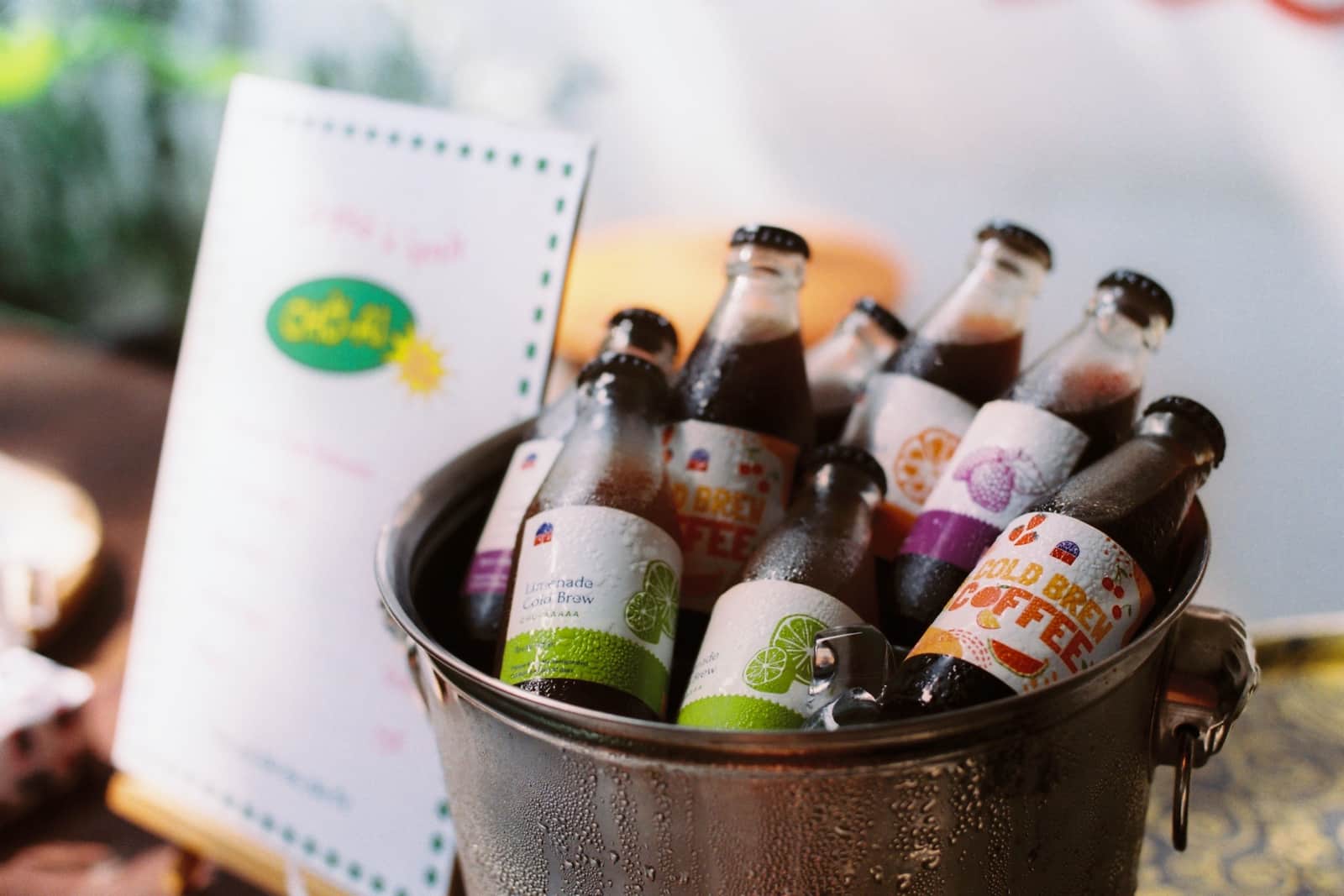 Viski Insulated Ice Bucket with Tongs Makes a small setup work | Serving a round | |
| 4 |  Absorbent Stone Coaster Set For a room with no spare surfaces | The cart's finish |
Scroll the table sideways on a narrow screen. Prices are set by the retailer and change, so every price link opens the current listing rather than quoting a number here.
The arrangements
Five setups, least floor area first
1. A tray on an existing surface
Zero floor area. A tray on a sideboard, a bookshelf or a deep windowsill holds four bottles, a jigger, a strainer and a spoon. It can be carried to where people are and put away entirely. For a studio or a shared room this is frequently the best answer, and nobody markets it because there is nothing to sell.
2. A wall shelf plus a tray
Still no floor area. A single shelf at eye level holds glassware and frees the tray entirely for bottles and tools. Glass on a shelf is also the most attractive thing in most home bars, so this is a rare case where the practical answer is also the good-looking one.
3. A narrow three-tier cart
A small footprint, usually well under two feet wide. Three shelves gives you real capacity, and being light means it moves out of the way. This is the answer when you have a gap rather than a corner.
4. A corner cabinet
More floor, and it closes - which solves dust and sunlight, and lets the bar stop being a feature in a room that has to do other jobs. In a bright small room this is often the right call rather than the cautious one.
5. A kitchen corner
Not furniture at all. A foot of counter, a drawer for tools and a cupboard for bottles. Least attractive, most functional, and closest to the ice and the tap - which matters more than anything else on this list.
The principle
Vertical space is the resource you have
In a small room the floor is spoken for and the walls usually are not. Almost every good small-space bar solution is a way of converting wall or height into storage.
A shelf above a tray. A three-tier cart instead of a two-tier one. A tall narrow cabinet rather than a low wide one. Each takes the same floor area as its alternative and holds considerably more.
The limit is weight and reach. A shelf full of bottles needs proper fixing, and anything above about shoulder height is storage rather than working space. Glassware up high, bottles at chest height, and the working surface at hip height is the arrangement that actually functions.
Practical
What a small bar should not try to be
- Comprehensive. Six bottles you use beats twelve you might. A small bar that is curated reads as deliberate; a small bar that is crowded reads as a storage problem.
- Permanent. In a shared room, the ability to put it away is a feature rather than a compromise.
- Far from the ice. The single biggest predictor of whether a home bar gets used is how far it is from a freezer and a tap.
- In direct sunlight. The free space in a small room is often a window, and that is the worst place for open bottles. Vermouth belongs in the fridge regardless.
- Stocked with glassware. Four glasses maximum on display. The rest belongs in a cupboard where it does not eat the surface.
Home bar essentials checklist is the shortest honest list of what earns a place, and it is shorter than most people expect.
Does gear fix this
When buying a cart is the wrong move
If the room genuinely has no spare floor, a cart will end up somewhere inconvenient and you will stop using it. That is a common and expensive outcome, and the tray route avoids it entirely.
If the issue is storage rather than workspace - too many bottles, nowhere to put them - a cart makes it worse by putting everything on display. That is a cupboard problem, or a cabinet problem.
Where a small cart genuinely helps: when you have a gap, want everything in one place, and want to be able to roll it to where people are. That is a real use case and best bar carts for small spaces covers the options.
The picks in full
Every pick, and who each one is for
01 · If you have a gap
Yaheetech 3-Tier Rolling Bar Cart
Yaheetech · Entry tier
Three shelves in a narrow metal frame - the cart to buy when the space you have is a gap, not a corner.
Three shelves in a narrow metal frame, which buys capacity out of height rather than floor area. Light enough to move out of the way when people are over, which is a real advantage in a small room.
The specs that decide it
- Tiers:
- 3
- Frame:
- metal
- Footprint:
- narrow
- Mobility:
- casters, often with locks
Who it is for
- A third shelf buys real capacity without buying floor area
- Metal frame is easier to wipe down than an open wood shelf
- Light enough to move with one hand
Where it gives ground
- Open shelving means everything is on show, dust included
- Lighter build than a furniture-grade cart - do not load the top tier with bottles
Skip this one if the cart is a centerpiece. This is a working cart, and it looks like one.
02 · Defines a tray bar
Silicone Bar Service Mat
Barfly by Mercer · Entry tier
The cheapest thing on the site that visibly changes how a bar cart ages, and the first accessory to buy.
On a tray setup the mat is the bar - it marks the working area, catches drips, and stops bottles sliding when you carry the tray to where people are.
The specs that decide it
- Material:
- silicone or rubber
- Function:
- catches drips, stops bottle slide
- Care:
- rinse or dishwasher depending on model
- Sizes:
- multiple
Who it is for
- Stops a rolling cart turning a small pour error into a ring in the finish
- Bottles stop sliding on a glass top the moment you lay one down
- It is the difference between wiping a mat and refinishing a shelf
Where it gives ground
- Looks utilitarian on a decorative cart
- Needs actual washing - a neglected bar mat is worse than none
Skip this one if your cart top is already a sacrificial surface you do not mind marking.
03 · Makes a small setup work
Viski Insulated Ice Bucket with Tongs
Viski · Mid tier
An insulated bucket is what lets your good ice survive from the freezer to the second drink.
Small-space bars are usually further from a working surface, so the trip to the freezer is more disruptive. A bucket that covers a round keeps you where the people are.
The specs that decide it
- Construction:
- double-wall insulated stainless
- Includes:
- tongs
- Lid:
- model dependent
- Capacity:
- a round's worth of large cubes
Who it is for
- Double walls genuinely slow the melt, which matters when your ice took 24 hours to make
- Tongs keep hands out of a shared bucket
- Stops the freezer trip mid-round, which is where hosting momentum dies
Where it gives ground
- Even insulated, it is a holding vessel and not a freezer
- Condensation on the outside will mark an unprotected wood shelf
Skip this one if you make one drink at a time and the freezer is six feet away.
04 · For a room with no spare surfaces
Absorbent Stone Coaster Set
Viski · Entry tier
Absorbent stone beats cork or felt for a drink that sits sweating for twenty minutes, which is most of them.
In a small room drinks end up on side tables, windowsills and books. Absorbent stone handles twenty minutes of condensation better than cork or felt.
The specs that decide it
- Material:
- absorbent stone
- Backing:
- cork
- Care:
- air dry between uses
- Set:
- commonly 4 to 6
Who it is for
- Absorbs condensation rather than pooling it, which cork does not do well
- Heavy enough that the glass does not lift the coaster with it
- Cork backing protects the shelf underneath
Where it gives ground
- Stains from anything with color in it - treat them as consumables
- Needs to dry fully or it will stay damp
Skip this one if you want coasters that look new in five years. These wear visibly.
Questions
Related questions
- How do you make a home bar in a small apartment?
- A tray on an existing surface plus a wall shelf for glassware takes no floor area and does most of what a cart does. If you have a gap, a narrow three-tier cart converts height into capacity.
- What is the best bar cart for a tiny space?
- A narrow three-tier metal cart. Three shelves in a small footprint, light enough to move out of the way, and easy to wipe down.
- Can you use a tray as a bar?
- Yes, and in a genuinely small room it is often better. It can be carried to where people are and put away entirely, which a cart cannot.
- Where should a small home bar go?
- As close to the freezer and the tap as you can manage. Proximity to ice and water is the best predictor of whether a home bar gets used.
Read next
Related reading
- Bar carts and bar storage
Carts, cabinets and the accessories that stop a bar cart turning into a sticky shelf.
- Best bar carts for small spaces
Narrow and three-tier carts compared on footprint, shelf clearance and whether a surface survives.
- How to stock a bar cart
Six bottles, four tools and the layout rule that decides whether a cart gets used or ignored.
- Best home bar cabinets
Enclosed capacity, serving surface and what doors actually protect - plus when a cart wins.
- Home bar essentials checklist
Five tools, three glass shapes, one ice solution, six bottles - and the order worth buying them in.