Guide
Bar cart dimensions guide
Most bar carts are 30 to 34 inches tall and 30 to 36 inches wide. The measurement that actually decides whether yours works is the one nobody checks: shelf clearance.
By Michael W. · Published October 2026
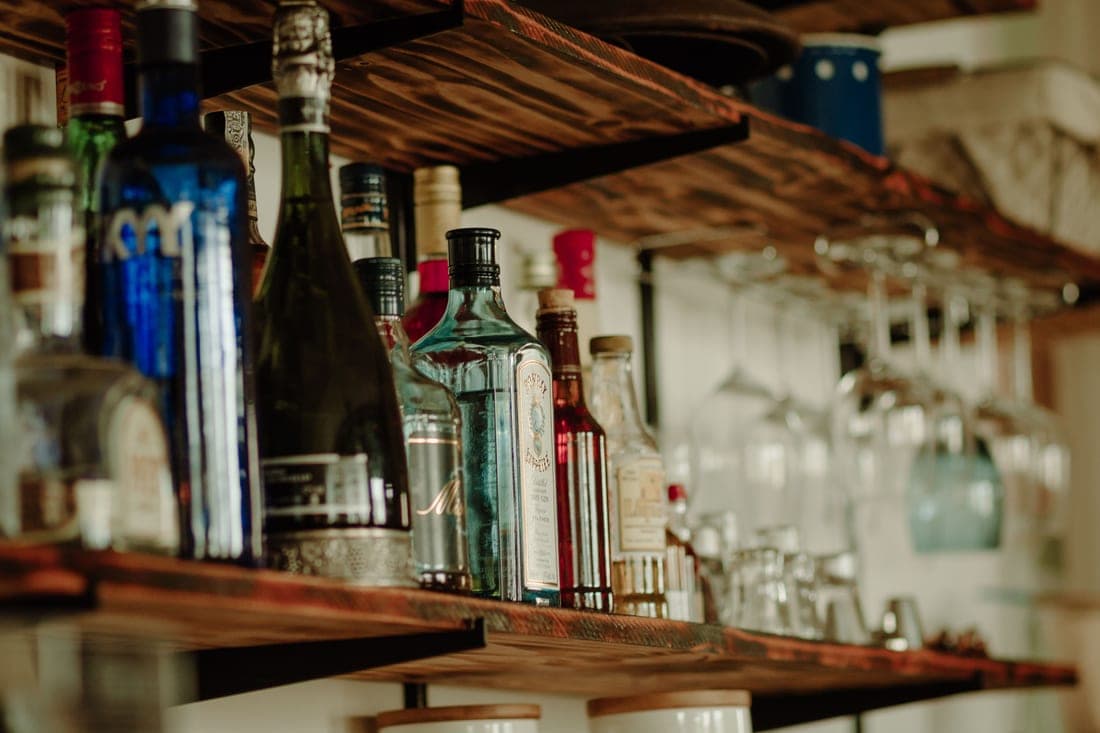
The short answer
A standard bar cart is 30 to 34 inches tall, 30 to 36 inches wide and 16 to 20 inches deep, which puts the top surface at roughly kitchen-counter height so you can build a drink on it standing up. Those are the numbers to compare listings against. The dimension that decides whether a cart is usable, though, is the vertical clearance between shelves: a standard 750ml spirit bottle stands about 11 to 12 inches, and many decorative carts leave only 10 inches between tiers, which means the bottles have to lie down or live on the top. Measure three things before you buy - the floor footprint plus six inches of working room, the shelf clearance against your tallest bottle, and every doorway and turn between the front door and where the cart will live.
We earn a commission if you buy through the links on this page, at no extra cost to you. It never changes which product we pick. How we are funded.
Quick picks
| # | Product | Best for | Price |
|---|---|---|---|
| 1 | Nathan James Carter Rolling Bar Cart The standard-dimensions pick | Most home bars | |
| 2 |  Yaheetech 3-Tier Rolling Bar Cart When the space is a gap, not a corner | Narrow gaps | |
| 3 |  Crosley LaFayette Sliding Top Bar Cabinet If the footprint can be furniture | Closing the bar |
Scroll the table sideways on a narrow screen. Prices are set by the retailer and change, so every price link opens the current listing rather than quoting a number here.
The numbers
Standard bar cart dimensions
There is no governing standard, so these are the ranges the market clusters into. Compare any listing against them.
| Dimension | Typical range | Why it matters |
|---|---|---|
| Height | 30 to 34 in | Counter height - you build a drink standing up |
| Width | 30 to 36 in | Fits two tiers of bottles and a working area |
| Depth | 16 to 20 in | Deep enough for a bottle, shallow enough to pass a doorway |
| Shelf clearance | 11 to 14 in | A 750 ml bottle is 11 to 12 in tall |
| Caster diameter | 2 to 4 in | Larger wheels roll on rugs; small ones do not |
| Narrow / gap carts | 16 to 24 in wide | Three tiers, less width, tighter clearance |
Height is the least variable of these because it is set by use: a cart top below about 30 inches means stooping to make a drink, and above 34 inches it stops reading as a cart and starts reading as a console. The 30 to 34 inch band is where almost everything sits.
The one people miss
Shelf clearance versus bottle height
This is the measurement that causes returns. A standard 750ml spirit bottle stands roughly 11 to 12 inches tall. Some bottles are much taller - gin in a tall column, certain whiskies, anything in a decanter-shaped bottle can reach 13 or 14 inches.
- Measure your tallest bottle, not an average one. The cart has to accommodate the worst case or that bottle lives somewhere else permanently.
- Check the clearance figure, not the shelf count. A three-tier cart of the same overall height has less room per tier by definition. Three shelves in 32 inches is about 10 inches each after the shelf thickness.
- Decide what goes where. Bottles on the shelf with the most clearance, glassware and mixers above or below. A cart where every shelf has to hold bottles is over-specified.
- Account for the rail. A railed top is a feature, but the rail height eats into usable clearance if you stand bottles on the top tier.
The practical consequence: a two-tier cart usually beats a three-tier cart for actual bottle storage, even though it has fewer shelves, because a three-tier cart often cannot stand a bottle upright on more than one of them. Bar cart vs bar cabinet covers the bigger version of the same trade.
Measuring your room
Footprint, clearance and the route in
Measure the floor space and then add. A cart needs working room in front of it - roughly 24 to 30 inches so you can stand and make a drink - and that is on top of the cart's own depth.
- Floor footprint: cart depth plus 24 to 30 inches of standing room. A 20 inch deep cart really needs about 45 inches of floor.
- Width clearance: six inches either side if it sits between furniture, so you can get a hand down the side to roll it.
- Door and hall width: a 36 inch wide cart will not turn a tight corner in a 30 inch hallway. Measure the route, not just the destination.
- Floor type: small casters on deep carpet are hard work. If the cart has to cross a rug regularly, larger wheels are worth hunting for.
- Wall fixtures: radiators, skirting boards and power sockets all push a cart further into the room than you planned.
If the answer to all this is that nothing fits, the honest options are a narrow three-tier cart in a gap or a wall-mounted shelf arrangement. Bar cart ideas for small spaces and best bar carts for small spaces cover both.
Capacity
What the dimensions translate to in bottles
Dimensions are abstract until you convert them into how much bar you can actually keep. A 750ml bottle occupies roughly a 3.5 inch square of shelf, so a 32 inch wide shelf fits about eight bottles in a single row if you can reach the back ones - and in practice you cannot, so six is the usable number.
| Cart | Usable bottle storage | Working surface |
|---|---|---|
| Narrow 3-tier, 16 to 24 in wide | 4 to 6, mostly on one shelf | Small - the top tier |
| Standard 2-tier, 30 to 36 in wide | Around 10 across two tiers | The full railed top |
| Bar cabinet with leaves | 15-plus, plus wine storage | Up to about 64.5 in when open |
The published figure for the Nathan James Carter is a bottom shelf that holds around ten bottles, which is a genuine bar rather than four bottles arranged for a photograph. That is the practical test of a cart's dimensions - not its overall size but what it holds while leaving you somewhere to work. How to stock a bar cart covers what should go on it.
Surface
The top is the dimension you use most
Everything you actually do happens on the top surface: measuring, stirring, straining, resting a glass. So the usable area of that top matters more than the cart's total volume, and a railed top that is 30 inches wide but cluttered with bottles gives you nothing to work on.
Keep the top as a working surface and put the bottles on the shelf below. A bar mat on the top protects a glass surface from rings and gives you a defined station - which on a cart this size is the difference between a bar and a shelf of bottles. Best bar cart accessories covers the mat, the ice bucket and the coasters, and bar stool height guide covers the seating heights that pair with a 30 to 34 inch top.
The picks in full
Every pick, and who each one is for
01 · The standard-dimensions pick
Nathan James Carter Rolling Bar Cart
Nathan James · Mid tier
A railed glass top, a bottom shelf that holds a real bottle load, and a price that does not ask you to commit.
A two-tier cart with a railed glass top and a bottom shelf that carries around ten bottles. Two tiers rather than three is what gives it the clearance a 750ml bottle needs, and the top rail is what stops a glass walking off while you roll it.
The specs that decide it
- Tiers:
- 2
- Top:
- railed, glass
- Bottom shelf:
- holds around 10 bottles
- Mobility:
- casters
Who it is for
- The top rail is the feature people underrate - it is what stops a glass walking off while you roll
- Bottom shelf carries a genuine bottle load rather than four for the photo
- Assembles in an evening with the supplied hardware
Where it gives ground
- Glass top shows every ring, so you will want a coaster habit
- Casters on deep carpet are hard work
Skip this one if your bottles need to be out of sight or out of reach. A cart is an open, rolling display by design.
02 · When the space is a gap, not a corner
Yaheetech 3-Tier Rolling Bar Cart
Yaheetech · Entry tier
Three shelves in a narrow metal frame - the cart to buy when the space you have is a gap, not a corner.
Three shelves in a narrow metal frame. The third shelf buys capacity without buying floor area, and the honest trade is tighter vertical clearance per tier - fine for glassware and mixers, tight for tall bottles.
The specs that decide it
- Tiers:
- 3
- Frame:
- metal
- Footprint:
- narrow
- Mobility:
- casters, often with locks
Who it is for
- A third shelf buys real capacity without buying floor area
- Metal frame is easier to wipe down than an open wood shelf
- Light enough to move with one hand
Where it gives ground
- Open shelving means everything is on show, dust included
- Lighter build than a furniture-grade cart - do not load the top tier with bottles
Skip this one if the cart is a centerpiece. This is a working cart, and it looks like one.
03 · If the footprint can be furniture
Crosley LaFayette Sliding Top Bar Cabinet
Crosley · The one worth stretching for
A cabinet that hides the bottles and then doubles its serving surface when you want it open.
An enclosed cabinet with sliding top leaves that extend to about 64.5 inches of surface when open, plus storage for around fifteen wine bottles. A completely different dimensional proposition: more floor area, far more capacity, and doors.
The specs that decide it
- Type:
- enclosed bar cabinet
- Top:
- sliding extension leaves
- Open width:
- about 64.5 in with leaves extended
- Wine rack:
- around 15 bottles
Who it is for
- Doors matter more than people expect - dust and sunlight are both bad for an open bottle collection
- The sliding top nearly doubles usable surface for the twenty minutes you actually need it
- Integrated wine storage removes a separate rack from the room
Where it gives ground
- Heavy, and not a thing you reposition on a whim
- Takes a real wall - this is furniture, not an accessory
Skip this one if you like the bottles on show. Half the point of a bar cart is the display, and a cabinet is the opposite argument.
Questions
Related questions
- How tall should a bar cart be?
- 30 to 34 inches, which puts the top at roughly kitchen-counter height so you can build a drink standing up. Below 30 inches you stoop; above 34 inches it stops behaving like a cart and starts behaving like a console table.
- What are standard bar cart dimensions?
- Roughly 30 to 34 inches tall, 30 to 36 inches wide and 16 to 20 inches deep. Narrow gap carts run 16 to 24 inches wide with three tiers instead of two. There is no governing standard, so compare any listing against those ranges.
- How much clearance do you need between bar cart shelves?
- At least 11 to 12 inches for a standard 750ml bottle, and 13 to 14 inches if you own tall gin or decanter-shaped bottles. This is the measurement most people skip and the most common reason a cart disappoints - a three-tier cart often has only about 10 inches per tier.
- How many bottles does a bar cart hold?
- A standard two-tier cart holds around ten bottles across both tiers. A narrow three-tier cart realistically holds four to six, because only one shelf usually has the clearance for upright bottles. A bar cabinet with wine storage holds fifteen or more.
- How much space do you need around a bar cart?
- Add 24 to 30 inches in front for standing and working, plus about six inches either side if it sits between furniture so you can get a hand down to roll it. A 20 inch deep cart therefore needs about 45 inches of floor depth in practice.
- Will a bar cart fit through a doorway?
- Measure the route, not the destination. A 36 inch wide cart will not turn a tight corner in a 30 inch hallway even if it fits the door frame. Most carts ship flat-packed, which solves the problem on the way in but not when you move house.
Read next
Related reading
- Bar carts and bar storage
Carts, cabinets and the accessories that stop a bar cart turning into a sticky shelf.
- Best bar carts
Bottle capacity, usable surface, rails and casters - the four things that decide whether a cart gets used.
- Best bar carts for small spaces
Narrow and three-tier carts compared on footprint, shelf clearance and whether a surface survives.
- Bar cart vs bar cabinet
Open display against doors: capacity, dust, sunlight and how the room is actually used.
- How to stock a bar cart
Six bottles, four tools and the layout rule that decides whether a cart gets used or ignored.
- Best bar stools for a kitchen island
A 36 inch island wants a 24 to 27 inch seat - three picks, and the measuring method that prevents a return.