Guide
Home bar ideas that work in a real room
Organized by the space you have rather than by style. Each idea with the clearance it needs, the gear that makes it function, and the way it usually fails.
By Michael W. · Published October 2026
The short answer
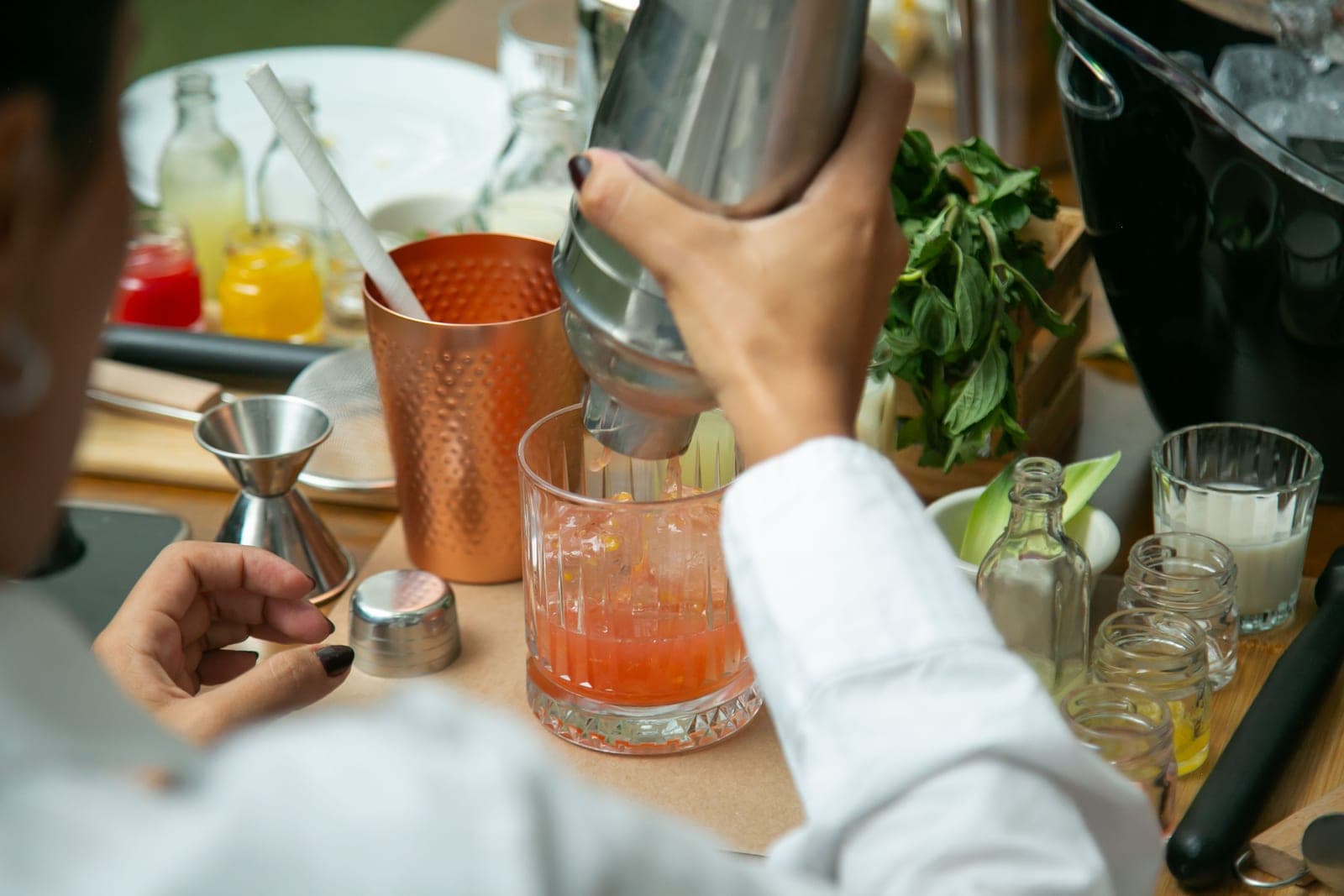
Every home bar that works is the same three things within arm's reach: ice, tools, glass. Everything else is furniture. So pick the idea that matches your actual square footage - a 24 to 30 inch run of clear counter for a corner station, a rolling cart if you rent, a closed cabinet if you have a wall and dust, a closet conversion if you have a hallway you resent, stools if you already have a counter to sit at - and then spend on the station rather than the styling. A silicone service mat and an insulated ice bucket do more for a home bar than any amount of brass, and a cart with no ice plan is a sideboard with wheels.
We earn a commission if you buy through the links on this page, at no extra cost to you. It never changes which product we pick. How we are funded.
Quick picks
| # | Product | Best for | Price |
|---|---|---|---|
| 1 | 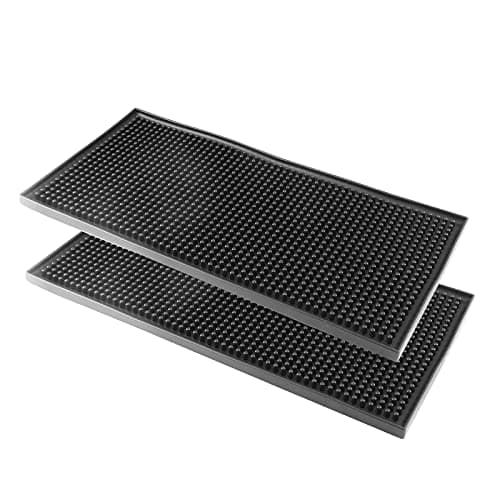 Bonsicoky Silicone Bar Service Mat The cheapest idea that actually works | Protecting the cart top | $10.99 View on Amazon #ad how we are funded - price as of October 13, 2026 |
| 2 | 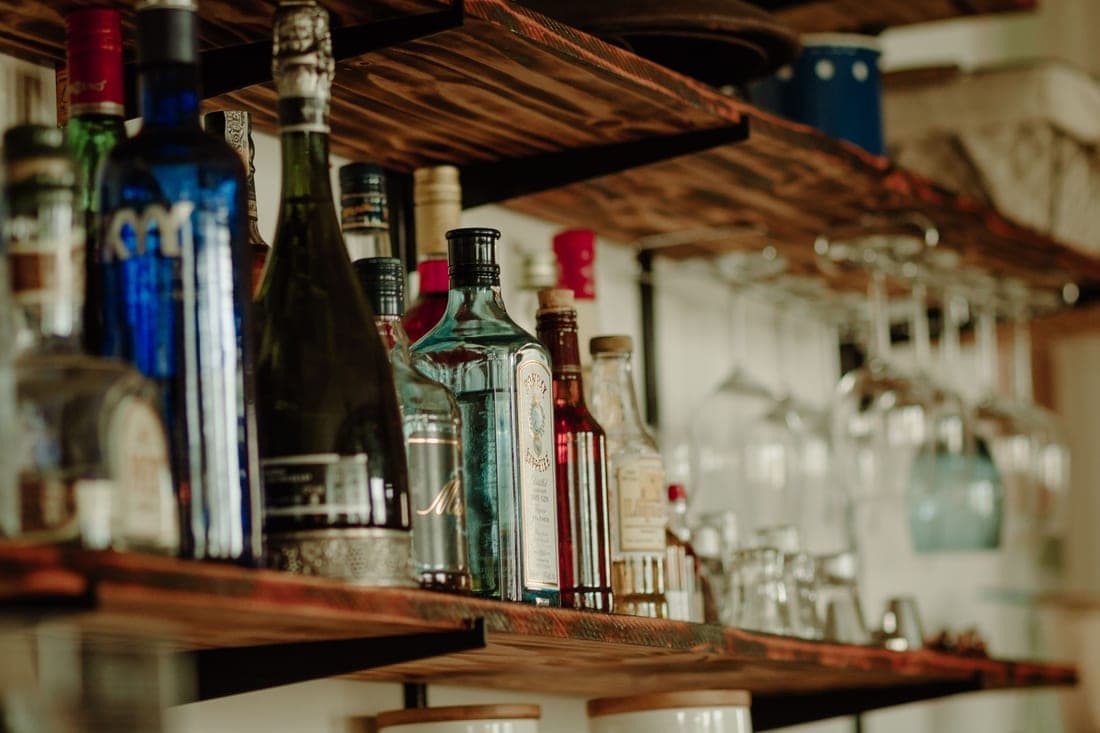 Nathan James Carter Rolling Bar Cart Best idea for a renter | Most home bars | |
| 3 | 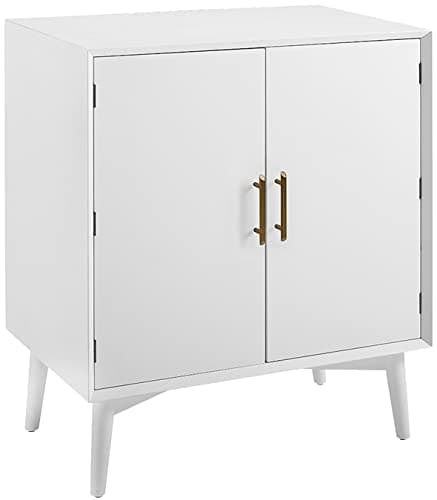 Crosley Landon Bar Cabinet Best idea if you have a wall | Closing the bar | $257.80 View on Amazon #ad how we are funded - price as of October 13, 2026 |
| 4 | 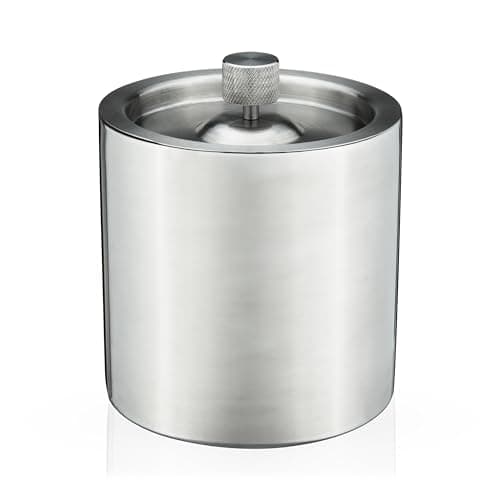 Viski Harrison Insulated Ice Bucket The piece that makes any of these function | Serving a round | $41.49 View on Amazon #ad how we are funded - price as of October 13, 2026 |
| 5 | 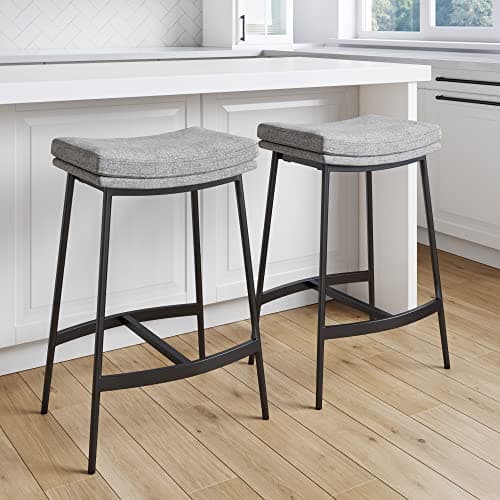 Nathan James Arlo Backless Saddle Bar Stool, Set of 2 If the bar is a counter you already own | Tucking under an island | $137.68 #ad how we are funded - price as of October 13, 2026 |
Scroll the table sideways on a narrow screen. Every price in this table comes from Amazon’s own product data, is refreshed daily, and is stamped with the date it was read - and the button opens the current listing, which is always the final word.
Start here
A home bar is a station, not a piece of furniture
The single most useful idea on this page is not an idea for a room, it is a test. Stand where you would make a drink and reach. If ice, tools and a glass are all inside that reach, you have a home bar. If any one of them is in another room, you have a display of bottles - and after a fortnight you will be making drinks in the kitchen again regardless of what the cart cost.
That test is why the ideas below are organized by space rather than by style. Style decides whether you enjoy looking at it; clearance decides whether you use it. The number to know before you shop is 24 to 30 inches of clear working surface - enough to set down a mixing glass, a jigger, a tin and the glass you are building into, without stacking them.
- Ice within reach. Either a bucket you fill once or a machine on the same surface. Walking to the freezer between drinks is the most common reason a beautiful bar stops getting used.
- Tools on the surface, not in a drawer. A jigger, a shaker, a strainer and a bar spoon standing in something is a station. The same four in a kitchen drawer is a kitchen.
- Glass you can see. Six matched glasses in view is also the decoration. Shoved in a cupboard, they stop being part of the bar.
Idea 1
The counter corner, for about two square feet
The cheapest and most-used home bar in this country is 24 inches of kitchen counter with a mat on it. It costs almost nothing, it does not need a lease conversation, and because it is where you already stand, it gets used on a Tuesday rather than only when people come over.
What makes it read as a bar rather than as clutter is the edge. A silicone service mat gives the zone a visible boundary, catches the inevitable drips and keeps bottles from sliding when you grab one. Behind it, a small tray or a tool caddy holds the four tools upright. That is the whole build.
Where it fails: it is in the kitchen, so it competes with cooking, and the first time you need the counter for a roasting tray the bar goes in a cupboard. If that happens twice, build somewhere else. Our home bar essentials checklist is the right companion to this idea - it is the shortest list of gear that still makes a drink.
Idea 2
The cart, for a room you do not own
A cart is the only home bar with wheels, and that is the whole argument for it. It moves to the patio in summer, into a corner when the room has to host something else, and into a different apartment when the lease ends. For renters and for people who rearrange rooms, it is the right answer and the other ideas on this page are not.
Use the tiers as zones and the cart stops being a shelf unit: bottles on top where they are the display, tools and glassware in the middle where your hands are, ice bucket and the heavy or ugly things on the bottom. A cart loaded in that order looks arranged whether or not you arranged it.
The two measurements that decide it: a 20 inch deep cart still needs at least 24 inches of standing room in front of it to work as a station, and 30 to 36 is better, and the top shelf needs about 10 to 12 inches of vertical clearance for a bottle to stand up. Bar cart dimensions guide has the rest, and where to put a bar cart covers the placement decision - which is more consequential than the cart.
Where it fails: wheels on carpet, and tops too small to work on. If your cart's top shelf is 16 by 12 inches, it is a display surface and your working surface is still the kitchen. Best bar carts has the field, and best bar carts for small spaces is the version of that list for a corner.
Idea 3
The cabinet, for a wall and a dust problem
A cabinet is a cart that grew up: closed storage, a working top at a fixed height, and no visible clutter. It is the right idea if your bar lives in a living or dining room where it has to look finished, or if your glassware has been collecting dust on open shelves - which it has, and which is the second most common complaint after ice.
The advantage people underrate is editorial: a cabinet lets you show six bottles and store twelve. A cart shows everything you own whether or not you are proud of it. The advantage people overrate is capacity - bottle storage is almost never the binding constraint in a home bar, working surface is.
Where it fails: cabinets are heavy, so this is the idea you cannot undo on a whim, and a cabinet without a clear top is a sideboard. Check the top is deep enough to work on - a 14 inch deep surface will not take a mixing glass, a tin and a glass side by side. Bar cart vs bar cabinet is the direct comparison, and best home bar cabinets is the field.
Idea 4
The closet dry bar, for a hallway you resent
Converting a shallow closet or an alcove is the best value idea in this list, because the structure already exists and the doors give you the same editorial advantage a cabinet does. Pull the hanging rail, add two or three shelves, put a working surface at about 36 inches - standard counter height - and you have a bar that disappears when it is closed.
Three details decide whether it works. Shelf depth: 10 to 12 inches takes bottles standing up and nothing deeper is needed. Light: a closet is dark and you are pouring measured amounts, so a battery puck or strip light is not decorative here. And the surface has to be something you can wipe - a laminate or sealed wood top, never bare MDF, because citrus and syrup will find it.
Where it fails: no drainage and no sink, which is true of almost every idea here, so the mat and the trash plan matter more. Keep a small bin for spent citrus within reach or you will be walking across a room with a handful of lime husks, which is the small friction that eventually kills the habit.
Idea 5
The counter with stools, for a bar you already own
If you have a kitchen island or a peninsula, the cheapest home bar idea is seating. You already have the surface, the water and the power; what you do not have is anywhere for anyone to sit while you make the drink, which is the actual social function of a bar.
The arithmetic is simple and almost always got wrong. Measure the finished counter height, subtract 10 to 12 inches of clearance for legs, and that is your seat height - a 34 to 36 inch kitchen counter takes a 24 to 26 inch counter stool, and a 42 inch raised bar takes a 29 to 32 inch stool. Then allow 26 to 30 inches of counter run per stool, measured center to center, and round down rather than squeezing in one more seat.
Where it fails: buying by photograph rather than by measurement, which is how a kitchen ends up with stools an inch and a half too tall. Bar stool height guide has the full arithmetic including overhang depth, how many bar stools for an island covers the spacing, and best bar stools for a kitchen island is the shortlist.
All five
What every one of these needs before it needs anything pretty
Whichever idea you pick, the same four things turn it from a display into a working bar. They are unglamorous and they are the reason some bars get used and some get photographed once.
- An ice plan. Either a bucket you fill from the freezer or a machine on the surface. Ice is the largest ingredient by volume in most drinks and the only one most people never buy deliberately - best ice buckets covers the cheap route, and best clear ice molds covers the ice itself.
- A mat or tray. Drips, noise, sliding bottles, and a visible edge that stops the zone being annexed by the rest of the room.
- Light you can work under. A bar in a dark corner is a bar where you cannot read a jigger. This is the detail that separates a closet conversion that works from one that gets abandoned.
- Somewhere to put rubbish. Citrus husks, used straws, a wet towel. Nobody plans for this and everybody needs it within reach.
Then, and only then, the gear on the surface. Home bar essentials checklist is the buying order, how to stock a bar cart is the arrangement, and the home bar upgrade guide is the diagnostic version if you already have a bar and something about it annoys you.
Avoid
Four ideas that photograph well and fail in use
- Open floating shelves in a kitchen. Beautiful, and your glassware will be greasy and dusted within a month. Keep glass behind a door if it lives anywhere near a stove - or buy glasses you are happy to rinse every time, which is a real option covered in best everyday drinking glasses.
- A bar in a room with no clear surface. A cart with a 16 inch top and no counter beside it means you are still building drinks in the kitchen. The surface is the bar; the furniture is storage.
- Bottles arranged by color. It looks superb and it means you reach for the wrong bottle in low light. Arrange by how often you pour, which also puts the good stuff at eye level.
- A mirrored or glass tray as the working surface. It shows every ring and every drip, it is slippery when wet, and a shaker tin set down hard on glass is a story you tell once.
The common thread: all four optimize for a photograph of a bar nobody has made a drink at. A bar you use looks slightly in-use, which is a different and better-looking thing.
Decide
Pick the idea that matches your square footage
- I have 2 ft of kitchen counter. Counter corner: a silicone service mat, a tool caddy, six glasses in view.
- I rent, or the room changes. A cart, loaded in three zones, with at least two feet of standing room in front of it.
- I have a wall and the bar has to look finished. A cabinet with a top deep enough to work on.
- I have a closet or alcove I do not use. Convert it: shelves at 10 to 12 inches deep, a wipeable surface at counter height, and a light.
- I already have an island. Buy stools by arithmetic, not by photograph - seat height is counter height minus 10 to 12 inches.
If the budget is the constraint rather than the space, how to build a home bar on a budget sequences the same purchases by what each one changes about the drink, and bar cart ideas for small spaces is this page's small-room sibling.
The picks in full
Every pick, and who each one is for
01 · The cheapest idea that actually works
Bonsicoky Silicone Bar Service Mat
Bonsicoky · Entry tier
#ad how we are funded - price as of October 13, 2026
The cheapest thing on the site that visibly changes how a bar cart ages, and the first accessory to buy.
A silicone service mat turns any 2 ft of counter into a station: it catches drips, stops bottles sliding, muffles the noise of tins and gives the area a visible edge so it stops being general kitchen surface. It is the first thing to buy for a counter-corner bar and the thing most people buy last.
The specs that decide it
- Material:
- silicone
- Size:
- 6 x 12 in
- Set:
- 2
- Function:
- catches drips, stops bottle slide
Who it is for
- Stops a rolling cart turning a small pour error into a ring in the finish
- Bottles stop sliding on a glass top the moment you lay one down
- Two mats means one on the cart and one by the sink
Where it gives ground
- 6 by 12 inches is a service strip, not a cover for a whole cart top
- Needs actual washing - a neglected bar mat is worse than none
Skip this one if your cart top is already a sacrificial surface you do not mind marking.
02 · Best idea for a renter
Nathan James Carter Rolling Bar Cart
Nathan James · Mid tier
A railed glass top, a bottom shelf that holds a real bottle load, and a price that does not ask you to commit.
A cart is the only home bar you can move, which matters if the room gets rearranged, the lease ends, or the party moves to the patio. Two or three tiers give you the three zones a station needs - bottles up, tools and glass in the middle, ice and the bucket on the bottom.
The specs that decide it
- Tiers:
- 2
- Top:
- railed, glass
- Bottom shelf:
- holds around 10 bottles
- Mobility:
- casters
Who it is for
- The top rail is the feature people underrate - it is what stops a glass walking off while you roll
- Bottom shelf carries a genuine bottle load rather than four for the photo
- Assembles in an evening with the supplied hardware
Where it gives ground
- Glass top shows every ring, so you will want a coaster habit
- Casters on deep carpet are hard work
Skip this one if your bottles need to be out of sight or out of reach. A cart is an open, rolling display by design.
03 · Best idea if you have a wall
Crosley Landon Bar Cabinet
Crosley · The one worth stretching for
#ad how we are funded - price as of October 13, 2026
A cabinet that hides the bottles behind doors and still hangs your glasses where you can reach them.
Closed storage is the difference between a bar that looks intentional and one that looks like a project. A cabinet keeps dust off glassware, hides the bottles you are not proud of, and gives you a working surface at a sensible height rather than a tray you have to lean over.
The specs that decide it
- Type:
- enclosed bar cabinet, mid-century
- Wine storage:
- seven compartments plus four hanging glass slots
- Bottle storage:
- two deep door shelves and two interior shelves
- Top:
- rated to 100 lb
Who it is for
- Doors matter more than people expect - dust and sunlight are both bad for an open bottle collection
- Hanging stem slots keep glassware out of a cupboard and off the top surface
- Magnetic closures mean the doors stay shut on a floor that is not quite level
Where it gives ground
- Heavy, and not a thing you reposition on a whim
- Takes a real wall - this is furniture, not an accessory
Skip this one if you like the bottles on show. Half the point of a bar cart is the display, and a cabinet is the opposite argument.
04 · The piece that makes any of these function
Viski Harrison Insulated Ice Bucket
Viski · Mid tier
#ad how we are funded - price as of October 13, 2026
An insulated bucket is what lets your good ice survive from the freezer to the second drink.
No home bar idea survives without an ice plan, and an insulated bucket is the cheapest one. It means you walk to the freezer once, not five times, and it keeps the ice you went to the trouble of making from turning into a puddle on the second drink.
The specs that decide it
- Construction:
- double-wall insulated stainless steel
- Capacity:
- 2 L
- Includes:
- lid
- Care:
- dishwasher safe
Who it is for
- Double walls genuinely slow the melt, which matters when your ice took 24 hours to make
- The lid is the other half of that - an open bucket loses ice to room air
- Stops the freezer trip mid-round, which is where hosting momentum dies
Where it gives ground
- No tongs in the box, so that is a separate buy
- Even insulated, it is a holding vessel and not a freezer
Skip this one if you make one drink at a time and the freezer is six feet away.
05 · If the bar is a counter you already own
Nathan James Arlo Backless Saddle Bar Stool, Set of 2
Nathan James · Entry tier
#ad how we are funded - price as of October 13, 2026
Backless and low enough to disappear under the counter when nobody is sitting on it, which is the whole argument for a saddle stool.
Backless stools are the honest choice for a kitchen island, because they tuck fully under the overhang and give the room back when nobody is sitting there. The trade is comfort over long evenings - a back is the difference between a twenty-minute stool and a two-hour one.
The specs that decide it
- Height:
- counter height
- Seat:
- double-layered upholstered saddle
- Base:
- black metal
- Set:
- 2
Who it is for
- Slides fully under an island, so the kitchen reads as a kitchen again
- A double-layered saddle seat is more comfortable than a flat backless pad
- Sold as a pair at counter height, which is what most islands actually need
Where it gives ground
- No back, so nobody is settling in for an hour
- Counter height only - this is not the stool for a 42-inch bar
Skip this one if people sit at your bar for a whole evening. Buy a stool with a back and accept that it will not tuck away.
Questions
Related questions
- What do you actually need for a home bar?
- Ice, tools and glass within arm's reach of one clear surface. In gear terms: a jigger, a shaker, a strainer, a bar spoon, six glasses, a mat and an ice bucket. Furniture is optional - 24 to 30 inches of clear counter does the job.
- How much space does a home bar need?
- About two square feet of working surface is the practical minimum, and 24 to 30 inches of clear run is the number to aim for. A cart adds its own footprint plus the standing room in front of it, so a 20 inch deep cart really wants about four feet of floor.
- Is a bar cart or a bar cabinet better?
- A cart if you rent or rearrange rooms - it is the only home bar you can move. A cabinet if the bar lives in a living room, has to look finished, or your glassware is collecting dust. Working-surface depth decides more than storage capacity either way.
- How do I turn a closet into a home bar?
- Remove the rail, add shelves 10 to 12 inches deep, put a wipeable working surface at about 36 inches, and add a light. The doors do the same job a cabinet's doors do: they let you show six bottles and store twelve.
- What height stools do I need for a kitchen island?
- Counter height minus 10 to 12 inches of leg clearance. A 34 to 36 inch counter takes a 24 to 26 inch seat; a 42 inch raised bar takes a 29 to 32 inch seat. Allow 26 to 30 inches of counter per stool, center to center, and round down.
- What is the first thing to buy for a home bar?
- A mat and an ice plan, before any furniture. The mat makes a zone out of a counter and the bucket means you walk to the freezer once per round instead of once per drink - those two changes decide whether the bar gets used on an ordinary evening.
Sources
Read next
Related reading
- The home bar upgrade guide
Find your weak link by symptom rather than by category - and the two cases where gear is not the answer.
- Bar carts and bar storage
Carts, cabinets and the accessories that stop a bar cart turning into a sticky shelf.
- Best bar carts
Bottle capacity, usable surface, rails and casters - the four things that decide whether a cart gets used.
- Bar cart vs bar cabinet
Open display against doors: capacity, dust, sunlight and how the room is actually used.
- Bar stool height guide
Surface height minus eleven inches equals seat height - plus the two things that break the arithmetic.
- Home bar essentials checklist
Five tools, three glass shapes, one ice solution, six bottles - and the order worth buying them in.
- Best everyday drinking glasses
The four or six glasses that do every drink in between, picked on rim treatment, tempering and replaceability rather than looks.