Guide
Where to put a bar cart
A cart earns its floor space in the room where people stand, not the room where you cook. Everything after that is clearance and sunlight.
By Michael W. · Published October 2026
The short answer
Put the bar cart in the room where people gather and stand - for most homes that is the living room, against a wall between two pieces of furniture, out of the main walking line. A cart works because making a drink becomes something that happens where the company is rather than in the kitchen with your back to everyone, and the moment you put it in the kitchen it is a trolley competing with a counter you already own. Four placement rules decide whether it works: leave 30 to 36 inches of clear walking space in front of it, keep it out of direct sunlight because sunlight degrades open spirits and fades labels, keep it away from a radiator or a heating vent, and keep it off deep carpet because casters and pile do not get along. The entryway, the dining room and a wide hallway are all good second choices. A bedroom or a bathroom is not - not for propriety, but because neither has the traffic to justify the floor.
We earn a commission if you buy through the links on this page, at no extra cost to you. It never changes which product we pick. How we are funded.
Quick picks
| # | Product | Best for | Price |
|---|---|---|---|
| 1 | Nathan James Carter Rolling Bar Cart Best for a living room wall | Most home bars | |
| 2 | 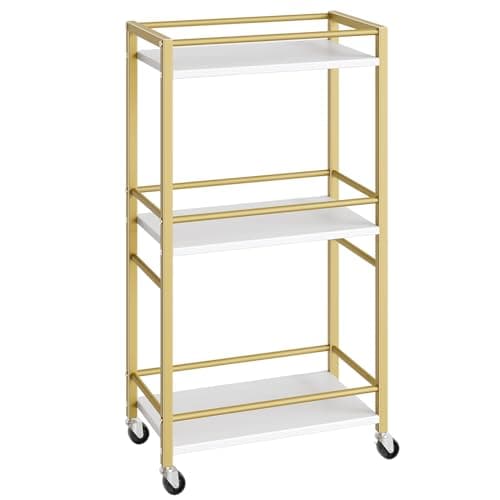 MAHANCRIS 3-Tier Rolling Bar Cart Best for a narrow gap | Narrow gaps | $45.99 #ad how we are funded - price as of October 10, 2026 |
| 3 | 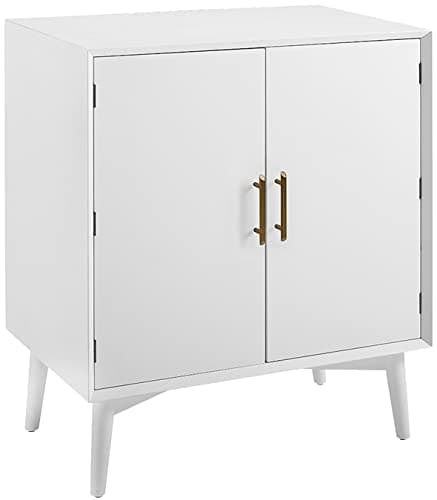 Crosley Landon Bar Cabinet If the room is where sunlight is | Closing the bar | $257.10 View on Amazon #ad how we are funded - price as of October 10, 2026 |
| 4 | 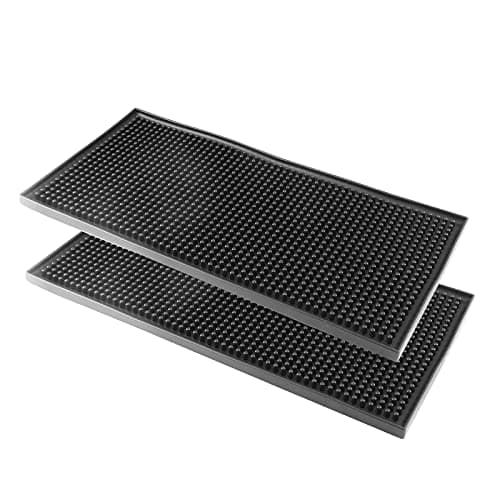 Bonsicoky Silicone Bar Service Mat Whatever surface it lands on | Protecting the cart top | $10.99 View on Amazon #ad how we are funded - price as of October 10, 2026 |
Scroll the table sideways on a narrow screen. Every price in this table comes from Amazon’s own product data, is refreshed daily, and is stamped with the date it was read - and the button opens the current listing, which is always the final word.
The placements
Five locations, best first
A bar cart is a piece of furniture whose whole purpose is social. Put it where the people are and it gets used every week; put it somewhere sensible and out of the way and it becomes a dusty shelf you keep meaning to tidy. Here are the placements in the order we would choose them.
| Placement | Why it works | Watch for |
|---|---|---|
| Living room, against a wall between two pieces of furniture | Where people stand; the cart is reachable from the seating without crossing the room | Sunlight from a window on that wall; walking line to the sofa |
| Living room corner, angled slightly out | Uses dead floor, and an angled cart is reachable from two sides | Corners collect dust and are usually the darkest spot - a lamp helps |
| Dining room, beside the table against a wall | Perfect for pre-dinner and after-dinner drinks without leaving the table | Chair pull-out clearance behind it |
| Entryway or wide hallway | A greeting point - a drink handed over at the door | Narrow halls: a cart plus a coat is not a route |
| Beside a sideboard or console, in a gap | A narrow cart turns a nine-inch gap into useful storage | Needs a cart under about 10 in deep |
| Kitchen | Rarely the right answer - you already have counters | A cart in a kitchen is a trolley in the way |
The last row is the one we would argue hardest. A kitchen already has a work surface, a sink, a fridge and good lighting, so a cart there adds nothing but obstruction. The exception is a kitchen that genuinely functions as the gathering room, in which case put it along the wall furthest from the cooking zone and treat it as living-room placement.
Clearance
The measurements that decide if it fits
A cart does not just need its own footprint. It needs standing room in front of it, because somebody has to stand there with their back to the room and build a drink with both hands. Thirty to thirty-six inches of clear floor in front of the cart is the working figure - that is enough for a person plus the swing of a cabinet door or the pull of a drawer somewhere behind them.
Then check the walking line. The commonest placement mistake is putting a cart in the shortest route between a doorway and the sofa, which means it gets knocked past every time somebody crosses the room, and a knocked cart with bottles on its top tier is a nervous object. Walk the route before you commit, with a chalk outline or a couple of boxes standing in.
Height matters against what is behind it. Most carts are around 32 inches tall, which clears a standard window sill and sits below the bottom of most hung art, but a wall-mounted radiator or a low shelf will stop the top tier being loadable. And check the door frames on the way in - a cart that assembles in a living room is not the problem; a cart that cannot be rolled out of it later is. Bar cart dimensions guide has the standard sizes.
Casters and deep carpet do not mix. Hard casters sink into pile, the cart stops rolling and starts dragging, and a dragged cart tips. On carpet, either accept that the cart is stationary furniture and place it accordingly, or put it on a hard mat or a rug with a tight low weave.
The environment
Sunlight, heat and the two things that ruin bottles
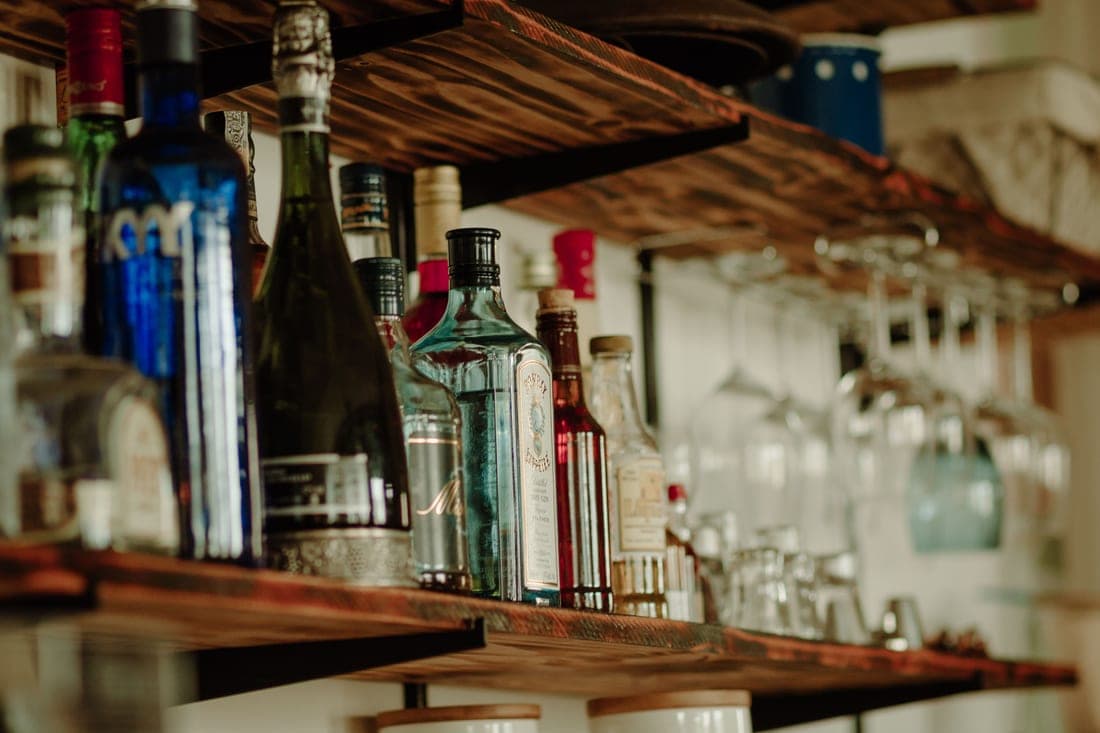
A bar cart is open storage, which means whatever is on it lives in the room's light and temperature. Direct sunlight is the one to take seriously: ultraviolet light degrades the compounds in an open spirit over months and bleaches labels much faster than that, so a cart in a sunny bay window will visibly fade a collection within a season. A south-facing window is the single worst wall in the house for a cart.
Heat is the second. A radiator, a heating vent or the top of a floor-standing appliance all cycle the temperature of whatever sits nearby, and temperature cycling accelerates everything bad that happens to an open bottle. The practical rule is simple: if you would not leave a bowl of fruit there, do not leave bottles there either.
If the room you actually want the bar in is a bright one, that is the case for a cabinet instead of a cart. Doors solve sunlight and dust in one move, and an enclosed bar cabinet does everything a cart does except roll. Bar cart vs bar cabinet is that decision in full, and best home bar cabinets is the cabinet category.
One more environmental note: vermouth, sherry and most amari belong in the fridge once opened, not on the cart, whatever the cart looks like with them on it. Open fortified wine goes off in weeks at room temperature. Put the bottle on the cart when guests arrive and return it afterwards.
Making it work
What to put where, once it is placed
Placement and loading are the same problem from two directions. The top tier is the working surface, so it gets the things you touch while making a drink: a mat, the jigger, the tins, a few glasses, and no more bottles than the ones currently in use. The bottom tier is storage - the bottle load, the ice bucket, anything heavy enough to lower the centre of gravity, which also makes the cart safer to roll.
Keep the top clear enough to actually work on. The most common loading mistake is treating the top as display, which leaves no space to set a glass down and build a drink, and a bar you cannot work on is a sideboard with wheels. If everything you own will not fit, the cart is too small or the collection needs editing. How to stock a bar cart is the full loading argument and best bar cart accessories covers the mat, the bucket and the coasters.
And add light if the spot needs it. The corners and alcoves that have spare floor area are usually the darkest parts of a room, and measuring a pour in the dark is how a drink goes wrong. A small table lamp on the cart or a picture light above it turns a dim corner into a usable bar and makes the cart read as deliberate rather than parked. Bar cart ideas for small spaces covers the arrangements when floor area is the binding constraint.
The picks in full
Every pick, and who each one is for
01 · Best for a living room wall
Nathan James Carter Rolling Bar Cart
Nathan James · Mid tier
A railed glass top, a bottom shelf that holds a real bottle load, and a price that does not ask you to commit.
A railed glass top that stops a glass walking off while you roll it, and a bottom shelf that holds around ten bottles. A two-tier cart is the right proportion against a wall between two chairs.
The specs that decide it
- Tiers:
- 2
- Top:
- railed, glass
- Bottom shelf:
- holds around 10 bottles
- Mobility:
- casters
Who it is for
- The top rail is the feature people underrate - it is what stops a glass walking off while you roll
- Bottom shelf carries a genuine bottle load rather than four for the photo
- Assembles in an evening with the supplied hardware
Where it gives ground
- Glass top shows every ring, so you will want a coaster habit
- Casters on deep carpet are hard work
Skip this one if your bottles need to be out of sight or out of reach. A cart is an open, rolling display by design.
02 · Best for a narrow gap
MAHANCRIS 3-Tier Rolling Bar Cart
MAHANCRIS · Entry tier
#ad how we are funded - price as of October 10, 2026
Three shelves in a frame under ten inches deep - the cart to buy when the space you have is a gap, not a corner.
16.9 inches wide and only 9.4 inches deep, 32.3 inches tall - the cart to buy when the space you have is a gap beside a sideboard rather than a stretch of wall. Three shelves buy capacity out of height.
The specs that decide it
- Tiers:
- 3
- Dimensions:
- 16.9 in wide, 9.4 in deep, 32.3 in tall
- Frame:
- metal
- Mobility:
- casters
Who it is for
- A third shelf buys real capacity without buying floor area
- Under ten inches deep, so it fits a gap most carts cannot
- Light enough to move with one hand
Where it gives ground
- Open shelving means everything is on show, dust included
- Lighter build than a furniture-grade cart - do not load the top tier with bottles
Skip this one if the cart is a centerpiece. This is a working cart, and it looks like one.
03 · If the room is where sunlight is
Crosley Landon Bar Cabinet
Crosley · The one worth stretching for
#ad how we are funded - price as of October 10, 2026
A cabinet that hides the bottles behind doors and still hangs your glasses where you can reach them.
Doors, which matter more than people expect - they keep dust and daylight off an open bottle collection. Seven wine compartments, four hanging stem slots, and a top rated to 100 lb. Furniture, not an accessory.
The specs that decide it
- Type:
- enclosed bar cabinet, mid-century
- Wine storage:
- seven compartments plus four hanging glass slots
- Bottle storage:
- two deep door shelves and two interior shelves
- Top:
- rated to 100 lb
Who it is for
- Doors matter more than people expect - dust and sunlight are both bad for an open bottle collection
- Hanging stem slots keep glassware out of a cupboard and off the top surface
- Magnetic closures mean the doors stay shut on a floor that is not quite level
Where it gives ground
- Heavy, and not a thing you reposition on a whim
- Takes a real wall - this is furniture, not an accessory
Skip this one if you like the bottles on show. Half the point of a bar cart is the display, and a cabinet is the opposite argument.
04 · Whatever surface it lands on
Bonsicoky Silicone Bar Service Mat
Bonsicoky · Entry tier
#ad how we are funded - price as of October 10, 2026
The cheapest thing on the site that visibly changes how a bar cart ages, and the first accessory to buy.
A mat marks the working area, catches drips and stops bottles sliding when you roll the cart. On a glass-topped cart it is also what saves you from a top that shows every ring.
The specs that decide it
- Material:
- silicone
- Size:
- 6 x 12 in
- Set:
- 2
- Function:
- catches drips, stops bottle slide
Who it is for
- Stops a rolling cart turning a small pour error into a ring in the finish
- Bottles stop sliding on a glass top the moment you lay one down
- Two mats means one on the cart and one by the sink
Where it gives ground
- 6 by 12 inches is a service strip, not a cover for a whole cart top
- Needs actual washing - a neglected bar mat is worse than none
Skip this one if your cart top is already a sacrificial surface you do not mind marking.
Questions
Related questions
- Where is the best place to put a bar cart?
- In the room where people gather and stand - usually the living room, against a wall between two pieces of furniture and out of the main walking line. A cart works because making a drink happens near the company; in a kitchen it competes with a counter you already have.
- How much space do you need for a bar cart?
- Its own footprint plus 30 to 36 inches of clear floor in front of it, so somebody can stand there and build a drink with both hands. Also check the walking line - a cart in the shortest route between the door and the sofa gets knocked every time anyone crosses the room.
- Can you put a bar cart in the kitchen?
- You can, and it is usually the weakest option, because a kitchen already has work surface, a sink and good light. The exception is a kitchen that genuinely is the gathering room, in which case place it along the wall furthest from the cooking zone and treat it like living-room placement.
- Should a bar cart be in direct sunlight?
- No. Ultraviolet light degrades open spirits over months and fades labels much faster, so a sunny bay window is the worst wall in the house for an open cart. If the room you want the bar in is bright, buy an enclosed cabinet with doors instead.
- Can a bar cart go on carpet?
- Only as stationary furniture. Hard casters sink into deep pile, so the cart drags rather than rolls, and a dragged cart loaded with bottles tips. On carpet, place it where it will stay and do not plan on wheeling it, or put it on a hard mat or a tight low-weave rug.
- Where should a bar cart go in a small apartment?
- In a gap rather than on a wall - beside a sideboard, a console or a bookcase. A narrow three-tier cart under about ten inches deep fits gaps a standard cart cannot, and buys capacity out of height instead of floor area. An entryway or a wide hallway is the other good option.
Read next
Related reading
- Bar carts and bar storage
Carts, cabinets and the accessories that stop a bar cart turning into a sticky shelf.
- Best bar carts
Bottle capacity, usable surface, rails and casters - the four things that decide whether a cart gets used.
- How to stock a bar cart
Six bottles, four tools and the layout rule that decides whether a cart gets used or ignored.
- Bar cart dimensions guide
Thirty to thirty-four inches tall, and the shelf-clearance number that decides whether your bottles stand up.
- Bar cart ideas for small spaces
Five setups ranked by floor area needed, starting with the one that needs none.
- Bar cart vs bar cabinet
Open display against doors: capacity, dust, sunlight and how the room is actually used.