Guide
How to get clear ice from an ice maker
The honest answer is that you cannot - not from the ice maker in a refrigerator door. Here is why the machine is built that way, what the four available adjustments really buy you, and what to do instead.
By Michael W. · Published October 2026
The short answer
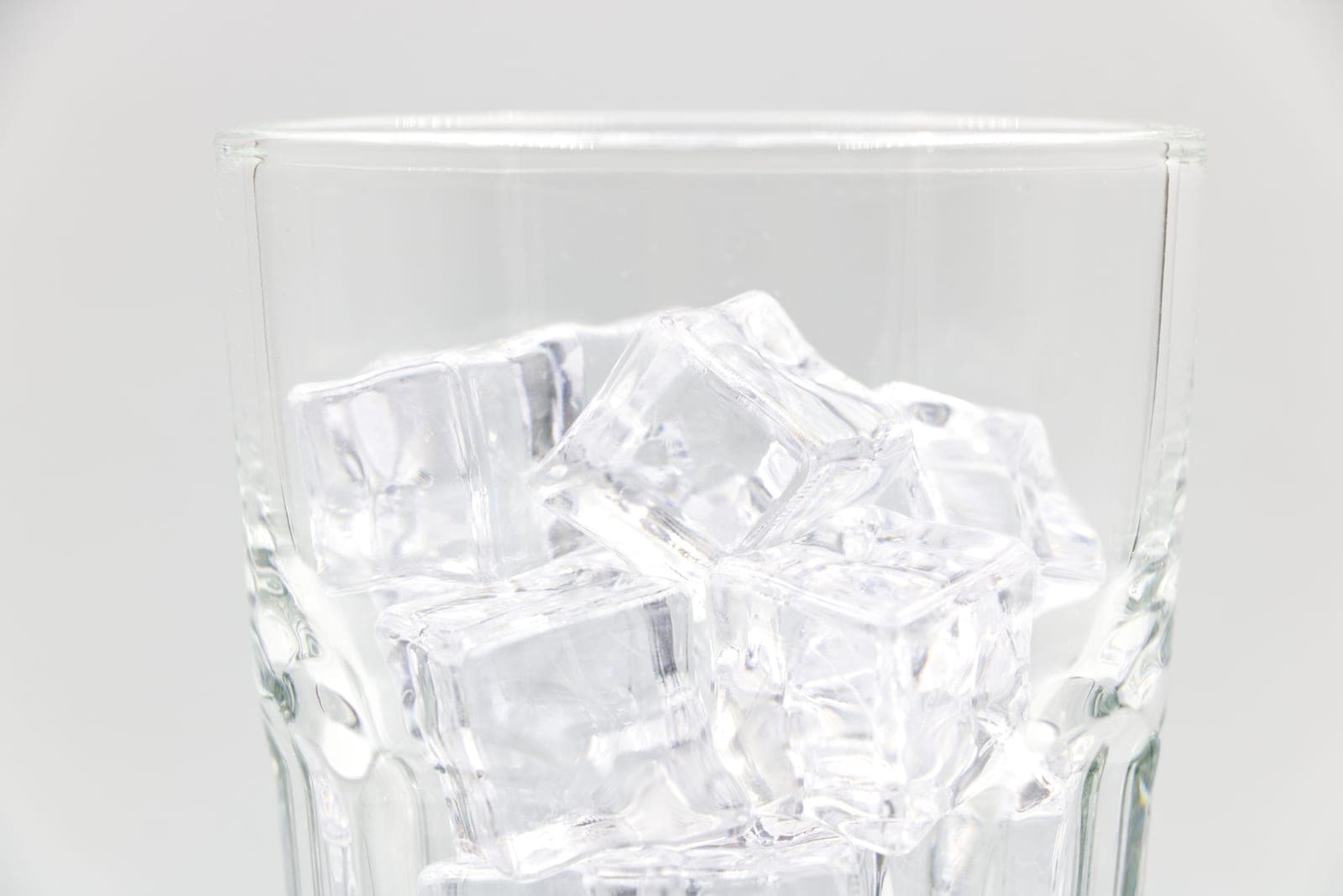
A refrigerator ice maker cannot produce clear ice, and no setting on it will change that. It fills a chilled metal mold with water and freezes it quickly from every chilled face at once, which traps dissolved air and minerals inside the cube - Samsung's own support documentation says cloudy ice is caused by dissolved minerals and trapped air and is completely normal rather than a fault. Four adjustments are genuinely worth making: fit or replace the water filter, feed the machine lower-mineral water if your supply is hard, descale the ice maker if the cubes have also got smaller, and clean the bin so the ice does not pick up freezer smells. Together those get you cleaner-tasting, slightly less milky ice. They do not get you clear ice. For that there are only two routes, and both change the direction or the rate of the freeze rather than the water: an insulated directional mold like the True Cubes tray, which makes four clear 2-inch cubes from the same tap water for the price of a bottle of gin, or a countertop machine built for clarity, such as the NewAir ClearIce40, which cascades water over a supercooled tray so it freezes in layers and the air escapes before it is trapped. The mold is the right first purchase for almost everyone.
We earn a commission if you buy through the links on this page, at no extra cost to you. It never changes which product we pick. How we are funded.
Quick picks
| # | Product | Best for | Price |
|---|---|---|---|
| 1 | 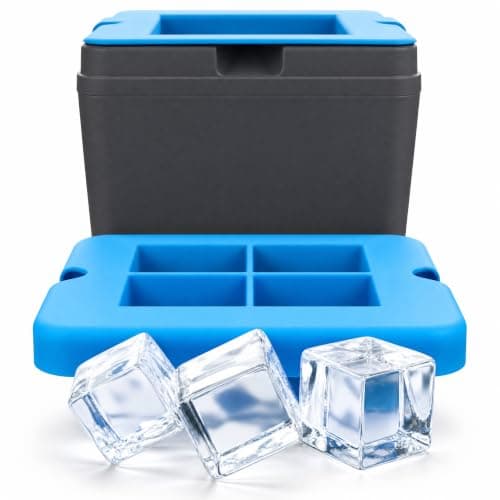 True Cubes Clear Ice Cube Maker The fix almost everyone should buy first | First clear-ice upgrade | $40.99 View on Amazon #ad how we are funded - price as of October 29, 2026 |
| 2 | 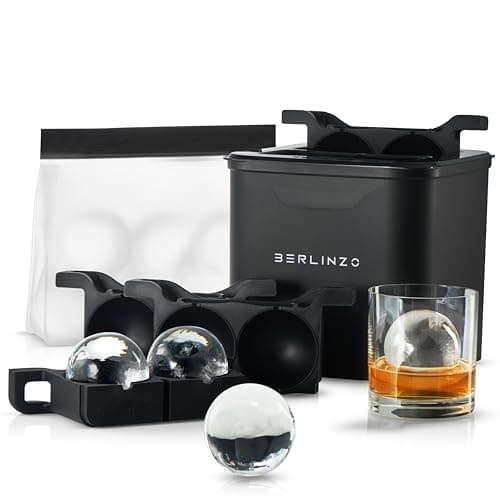 Berlinzo Clear Ice Ball Maker Mold, 4 Spheres Best yield if you want spheres | Four spheres at a time | $59.80 View on Amazon #ad how we are funded - price as of October 29, 2026 |
| 3 | 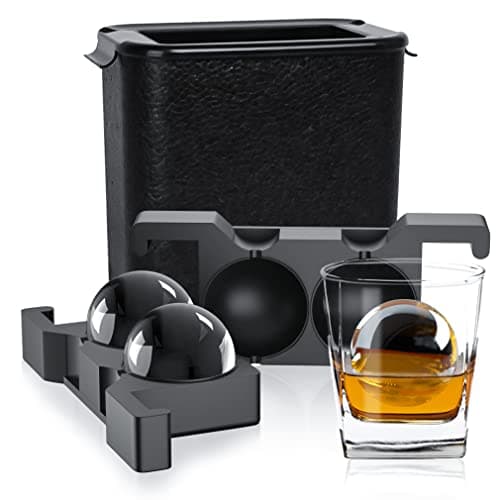 TINANA Clear Ice Ball Maker, 2 Spheres Best if the freezer is a drawer | Small freezers | $27.98 #ad how we are funded - price as of October 29, 2026 |
| 4 |  NewAir ClearIce40 Countertop Clear Ice Maker Best machine if you want clear ice on demand | Daily volume | |
| 5 |  Wintersmiths Phantom Ice Maker Best clarity-first machine | Clear ice without the freezer wait |
Scroll the table sideways on a narrow screen. Every price in this table comes from Amazon’s own product data, is refreshed daily, and is stamped with the date it was read - and the button opens the current listing, which is always the final word.
The mechanism
Why an ice maker makes cloudy ice by design
The ice maker in a refrigerator is a small, fast, unattended appliance, and every design decision in it works against clarity. A valve admits a measured shot of water into a metal mold that is already cold. The mold is chilled from below and around, so the water freezes quickly from several faces at once. When the cube is solid, a heater briefly warms the mold and a rake or a twist ejects the ice into the bin, and the cycle starts again. The whole point is throughput with no human involved.
Clear ice needs the opposite of all of that. It needs a freeze that advances in one direction only, and slowly, so that the dissolved air and minerals which a growing ice crystal rejects get pushed ahead of the front into a part of the block you can throw away. Freeze from several faces at once and those impurities have nowhere to go: they meet in the middle, stay there as microscopic bubbles, and scatter light. That white core is the signature.
Manufacturers say so themselves. Samsung's support documentation attributes cloudy cubes to dissolved minerals and trapped air, notes that minerals such as calcium and magnesium are caught as the water solidifies, and states plainly that cloudy ice is completely normal and is not a sign of any malfunction. If you are troubleshooting a fault, there is no fault here to find.
Two details make a fridge ice maker worse than an ordinary tray rather than better: the cubes are small, so they have a lot of surface area for their mass and dilute fast, and the ice sits in an open bin in a freezer full of food, where it sublimates and picks up smells. Why is my ice cloudy has the full list of causes and how to read a cube to identify which one you have.
What you can change
Four adjustments that are actually worth making
None of these produces clear ice. All four are still worth doing, because they change how the ice tastes and how fast it fails, which is a different and more achievable goal.
- Fit the water filter, and replace it on schedule. A refrigerator filter removes particles and chlorine taste; it does not remove dissolved minerals, so it will not clear the ice. What it does fix is the stale, slightly chemical flavor that cheap ice puts into a drink, and that is worth more in a glass than clarity is. Most manufacturers specify a replacement interval of around six months.
- Feed it lower-mineral water if your supply is hard. Samsung specifically suggests filtered or distilled water as a way to improve clarity, because fewer dissolved minerals means less mineral haze. On a plumbed-in fridge this is only practical with a whole-house softener or an under-sink system, which is a plumbing decision rather than an ice decision. On a portable countertop machine you fill by hand, it is free to try.
- Descale the ice maker if the cubes have got smaller as well as duller. Scale builds up on the chilled surfaces and insulates them, so cycles run longer and produce thinner, hazier, more fragile ice. This is the one case where cloudy ice really is a maintenance symptom. How to clean a countertop ice maker is the descaling routine and the schedule it needs.
- Empty and wash the bin, and stop storing ice open. Ice in an open bin sublimates at the surface and develops a white frost that looks like cloudiness but rinses off in a second, and it absorbs whatever is in the freezer. Dump the first batch after any long absence. How to store clear ice covers keeping good ice separate from appliance ice.
There is a fifth adjustment often suggested and we are not going to recommend it. Samsung notes that ice frozen at around minus 18 degrees Celsius freezes rapidly and traps more air, and that a slightly warmer setting of about minus 15 may let it freeze more slowly. That is a real effect, but minus 18 Celsius is 0 degrees Fahrenheit, which is the freezer temperature US food-safety guidance asks you to hold. Trading your freezer's food-safety setting for marginally less milky ice is a bad trade, and the improvement is small because the direction of the freeze is the dominant cause, not the rate.
The ceiling
What those changes actually get you
Set expectations honestly before you spend an afternoon on this. Here is what each lever moves and what it does not.
| Change | What it improves | Effect on clarity | Cost |
|---|---|---|---|
| New or correctly fitted water filter | Taste and smell - the big win | None to slight | Low, recurring |
| Softened or distilled supply water | Mineral haze and scale | Slight | Free by hand; plumbing work if plumbed in |
| Descaling the ice maker | Cube size, cycle time, fragility | Slight to moderate if scale was bad | Low |
| Washing the bin, closed storage | Smell, surface frost | Cosmetic only | Free |
| Warmer freezer setting | Marginally slower freeze | Slight | Not recommended - gives up the 0 F food-safety setting |
| Insulated directional mold | Genuine clarity, large cube size | Complete | The price of a decent bottle |
| Clear-ice countertop machine | Clarity plus volume and no waiting | Complete | Appliance money and counter space |
The pattern is obvious once it is laid out: everything you can do to the appliance affects taste, cleanliness and cube integrity, and nothing you can do to the appliance affects clarity. Clarity is decided by the geometry of the freeze, and that is a property of the device, not of the water or the settings.
The two routes
The only two things that genuinely produce clear ice at home
Both work by controlling the freeze rather than by purifying the water, which is why they succeed where filters and boiling routines do not.
Directional freezing in an insulated mold
An insulated shell leaves one face exposed to the cold and slows heat loss through the others, so the ice grows from that single face downward. The rejected air and minerals are pushed ahead of the front into the bottom of the mold, which becomes a cloudy sacrificial block you cut off or crush. The result is genuinely clear ice from ordinary tap water, in a freezer you already own, with nothing to plug in. How to make clear ice walks through the method - including a free cooler version that proves the mechanism in a day before you buy anything - and directional freezing explained covers why a growing crystal rejects impurities in the first place.
The trade is time and yield. A cycle is 18 to 24 hours for most cube molds and longer for some sphere molds, and the yield is two to four pieces per cycle. That is a planning commitment rather than a cost, and it is the single most common reason people give up on molds - not the ice, the forgetting. Best clear ice molds ranks them on yield, footprint and how reliably the ice releases intact.
A countertop machine built for clarity
This is the category that answers the original question properly: an ice maker that does make clear ice. It does it by reversing the fridge's approach. Instead of freezing a captive shot of water in a chilled mold, water is cascaded over a supercooled tray so the ice builds up in thin layers from flowing water - NewAir's description of its FrozenFall process is exactly that, forming ice in layers so air bubbles and impurities escape before they can be trapped. Anything not incorporated into the ice stays in the circulating water, which drains away or is recycled into the next batch.
The trade is money, counter space and noise, and the honest question is volume. If four cubes a day covers your drinking, a machine is a lot of appliance for the problem. If you host, or you want ice without having planned for it yesterday, it removes the planning problem entirely. Clear ice molds vs ice machines is that comparison in full, best clear ice makers is the machine list, and best countertop ice makers covers the whole countertop class.
The trap
A nugget machine is not the answer to this question
Searches about ice makers and cocktail ice converge on nugget machines, because nugget machines are the most heavily marketed countertop ice appliances there are. They do not make clear ice and they are not trying to. Nugget ice is soft, chewable, compacted ice with an enormous surface area for its mass, which is exactly why it is excellent in a highball and wrong in an old fashioned: it chills fast and then keeps going, and the drink is thin by the third sip.
If you buy a nugget machine hoping for clarity you will have spent appliance money on the opposite of what you wanted. Clear ice vs nugget ice sets the two formats side by side, and why are nugget ice makers expensive covers what that money is actually buying. Buy a nugget machine because you want nugget ice, which is a perfectly good reason.
The other near-miss is a press. An aluminum ice ball press turns a block into a sphere by conduction in under a minute, which is genuinely impressive, but it reshapes ice you already froze - it cannot make a cloudy cube clear. Clarity comes from the freeze; the press only changes the shape afterwards. Ice ball press vs mold is that distinction in full.
The honest part
What to do with the ice maker you already own
Keep using it, and use it for the right jobs. Appliance ice is the correct ice for anything shaken, because shaken ice is strained out of the drink and dilution was the point of shaking in the first place - a cloudy cube shakes a daiquiri exactly as well as a clear one. It is also the right ice for chilling a glass, for a cooler, and for anything long and carbonated where you want fast chilling and are going to finish it quickly. Which drinks belong in that shaken group is its own question, and the most argued case is covered in shaken or stirred martini.
What appliance ice should not do is sit in a spirit-forward drink you intend to take half an hour over. Small cubes with trapped air have a lot of surface area and internal fracture lines, so they melt fast and crack when they meet liquid at room temperature. That is the entire argument for one big clear piece, and it only matters in the glass where the ice is part of the drink. Best ice for whiskey covers piece size for a neat or rocks pour.
So the practical setup in most houses is both: the ice maker keeps making bulk ice for shaking, chilling and hosting, and one mold in the back of the freezer produces the four pieces a week that actually need to be clear. Keep those two supplies separate, in a sealed bag, or the good ones end up in a cooler. And if you are hosting rather than making one drink, how much ice for a party has the quantities - that is the job your ice maker is genuinely good at.
One last thing worth knowing: the cloudy sacrificial block a directional mold produces is not waste. It is the best raw material you have for crushed ice, which is its own technique with its own uses. How to make crushed ice covers the Lewis bag route and what to do with the offcut.
The picks in full
Every pick, and who each one is for
01 · The fix almost everyone should buy first
True Cubes Clear Ice Cube Maker
True Cubes · Entry tier
#ad how we are funded - price as of October 29, 2026
The cheapest honest route to genuinely clear 2-inch cubes, and the one most people should buy first.
An insulated tray that freezes from one direction only, producing four clear 2 x 2 x 2 inch cubes per cycle in about 18 to 24 hours from ordinary tap water. It is the cheapest route to genuinely clear ice and it requires nothing from your appliance - the freezer you already own is the machine. Skip it if you host more than two people regularly: one cycle a day means four cubes is a hard ceiling unless you buy two.
The specs that decide it
- Output:
- 4 cubes per cycle
- Cube size:
- 2 x 2 x 2 in
- Method:
- insulated directional freezing
- Freezer time:
- about 18 to 24 hours
Who it is for
- Directional freezing done properly in an insulated shell, so the cloud collects in the sacrificial base
- Fits a standard freezer shelf without rearranging everything
- Nothing to plug in, nothing to service
Where it gives ground
- One cycle a day, so four cubes is your ceiling unless you buy two
- The base block has to be discarded or crushed each cycle
Skip this one if you routinely host more than two people, or you want ice on demand rather than ice you planned for yesterday.
02 · Best yield if you want spheres
Berlinzo Clear Ice Ball Maker Mold, 4 Spheres
Berlinzo · Mid tier
#ad how we are funded - price as of October 29, 2026
The mold that turns an ordinary freezer into a reliable source of four 2.4-inch clear spheres, without a machine or a plug.
Four 2.4-inch clear spheres per cycle from food-grade silicone with a directional freeze, and an XL freezer bag included so you can batch ahead and free the mold again. Four per cycle is the most usable yield of any home sphere mold at this size. Skip it if your freezer is a small apartment drawer - this takes real footprint, and a full cycle is an overnight commitment.
The specs that decide it
- Output:
- 4 spheres per cycle
- Sphere size:
- 2.4 in
- Construction:
- food-grade BPA-free silicone, directional freeze
- Also included:
- XL freezer storage bag for finished spheres
Who it is for
- Four spheres per cycle is the most usable yield of any home mold at this size
- Flexible silicone pushes each sphere out intact instead of cracking it
- The storage bag is the part people forget: you can batch ahead and free the mold again
Where it gives ground
- Takes real freezer footprint - measure before you buy
- A full cycle is an overnight commitment, not an afternoon one
Skip this one if your freezer is a small apartment drawer, or you only ever drink one whiskey a week and a two-sphere mold would do.
03 · Best if the freezer is a drawer
TINANA Clear Ice Ball Maker, 2 Spheres
TINANA · Entry tier
#ad how we are funded - price as of October 29, 2026
The same directional-freezing idea as a four-sphere mold in a footprint that fits a freezer drawer, at half the yield.
Two 2.5-inch spheres per cycle in a footprint that fits where the four-sphere molds will not, with a 30 to 36 hour cycle quoted by the maker. The individual sphere is actually larger than the four-sphere molds produce, which is the consolation for the lower yield. Skip it if you do have room for a four-sphere mold - the price gap does not track the yield gap.
The specs that decide it
- Output:
- 2 spheres per cycle
- Sphere size:
- 2.5 in
- Construction:
- premium silicone, non-stick release
- Freezer time:
- 30 to 36 hours per the maker
Who it is for
- Fits where the four-sphere molds will not
- A 2.5-inch sphere is actually larger than the four-sphere molds produce
- Easier to fill and carry without sloshing
Where it gives ground
- Two spheres per cycle means planning ahead for any company
- A 30 to 36 hour cycle is longer than the four-sphere molds ask for
Skip this one if you have the freezer space for a four-sphere mold - the price gap does not track the yield gap.
04 · Best machine if you want clear ice on demand
NewAir ClearIce40 Countertop Clear Ice Maker
NewAir · The one worth stretching for
The machine to look at when you want clear cubes in genuine daily quantity rather than four at a time.
A countertop clear ice maker that fills from a reservoir with no plumbing, and NewAir describes its FrozenFall process as cascading water over a supercooled tray so ice forms in layers and air bubbles and impurities escape before they are trapped - which is the mechanism, not a marketing claim about the water. Yield is on a completely different scale from any mold. Skip it if you want spheres, because this is a cube machine, and skip it if counter space is scarce: it runs a compressor and it is not silent.
The specs that decide it
- Type:
- countertop clear ice maker
- Ice:
- clear cubes
- Operation:
- reservoir fill, no plumbing
- Noise:
- compressor cycle - audible in an open kitchen
Who it is for
- Yield is on a different scale from any mold
- No plumbing work - it fills from a reservoir
- Cubes are consistent enough to use in a mixing glass without sorting
Where it gives ground
- It runs a compressor, so it is not silent
- Countertop machines drink counter space
Skip this one if you want spheres. This is a cube machine, and a press or a sphere mold is the cheaper answer.
05 · Best clarity-first machine
Wintersmiths Phantom Ice Maker
Wintersmiths · The one worth stretching for
A countertop machine built specifically for clarity rather than volume, which is the opposite trade-off from every nugget machine.
A countertop machine engineered around clarity rather than volume, which is the opposite trade from every nugget machine. It removes the single biggest failure mode of molds - forgetting to fill them yesterday - and its cube geometry is consistent enough that your dilution is repeatable. Skip it if you make two drinks a week: a mold does the same job for a fraction of the outlay and no counter footprint, and a machine is a maintenance object with a reservoir to clean.
The specs that decide it
- Type:
- countertop clear ice maker
- Ice:
- large clear cubes and spheres depending on model
- Method:
- controlled freeze to isolate air and impurities
- Footprint:
- counter appliance - needs a permanent home
Who it is for
- Produces clear ice on a machine cycle instead of an overnight freezer cycle
- Removes the biggest failure mode of molds: forgetting to fill them yesterday
- Cube geometry is consistent, which matters more than it sounds for dilution
Where it gives ground
- Counter space and a power outlet are non-negotiable
- A machine is a maintenance object - reservoirs need cleaning
Skip this one if you make two drinks a week. A mold does the same job for a fraction of the outlay and no counter footprint.
Honest limits
What we could not verify
We have not tested these molds or machines side by side. Cycle times, cube sizes, yields and the FrozenFall layer-freezing description are as published by the manufacturers; the account of how a refrigerator ice maker fills, freezes and harvests is the standard mechanism for that appliance class rather than a teardown of any one model. Samsung's support page is cited for the cause of cloudy ice because it is the manufacturer's own statement, and the figures it gives in Celsius are converted here.
We do not run a test lab and we have not personally used every product here. Where a judgment rests on published specifications or on what owners report rather than on our own hands, we say so. Read the full method.
Questions
Related questions
- Can a refrigerator ice maker make clear ice?
- No. It fills a chilled metal mold and freezes the water quickly from several faces at once, which traps dissolved air and minerals in the middle of each cube. Samsung's own support documentation describes cloudy ice as normal rather than a malfunction. No setting on the appliance changes the geometry of the freeze.
- Does filtered water make clear ice in an ice maker?
- Not on its own. A filter removes particles and chlorine taste but not dissolved minerals, so it improves how the ice tastes rather than how it looks. Lower-mineral water does reduce mineral haze slightly, which is why Samsung suggests filtered or distilled water, but the direction of the freeze remains the dominant cause.
- Why is the ice from my ice maker white or cloudy?
- Trapped air plus dissolved minerals such as calcium and magnesium, caught in the cube because the water froze fast and from multiple faces. If the cubes have also become smaller, thinner or more fragile, add scale on the chilled surfaces to the list - that part is a maintenance problem and descaling fixes it.
- Is cloudy ice safe to use?
- Yes. The trapped air and minerals are harmless. Cloudy ice melts faster and cracks more because the air is a structural weakness, which matters in a drink you sip slowly and not at all in anything shaken and strained.
- Which ice makers actually make clear ice?
- Countertop machines built around clarity rather than volume, which cascade water over a supercooled surface so the ice forms in layers and air escapes before it is trapped. NewAir describes its FrozenFall process in exactly those terms. Nugget machines do not make clear ice and are not trying to.
- Should I turn my freezer up to get clearer ice?
- We would not. A slightly warmer freezer does slow the freeze, but 0 degrees Fahrenheit is the setting US food-safety guidance asks you to hold, the improvement is small, and the direction of the freeze - not the rate - is what actually causes the cloudiness.
- Does boiling the water help?
- Barely. Boiling drives off some dissolved air and does nothing about the direction of the freeze, which is the real cause. It is the most repeated piece of advice in this category and among the least effective. An insulated directional mold with plain tap water beats boiled water in an ordinary tray comfortably.
Sources
Read next
Related reading
- Clear ice for the home bar
Molds, machines and presses that make ice dense enough to chill a drink without watering it down.
- Why is my ice cloudy
Six causes of cloudy ice in the order they occur, how to read a cube to diagnose it, and the myths that waste your time.
- How to make clear ice at home
Directional freezing explained, plus the free cooler method step by step and when to buy a mold instead.
- Best clear ice molds
Insulated molds compared on yield, piece size and the freezer footprint they actually demand.
- Clear ice molds vs ice machines
Cost, yield, space and maintenance compared - and the cheap intermediate step most buyers skip.
- How to clean a countertop ice maker
Drain, wipe, descale with acid, rinse three times - and never store a machine with water in it.