Head to head
Shaken or stirred martini
Stir it. Not for tradition - because shaking a drink made only of spirits adds water you did not measure and air you did not want. Here is what each method actually does, and the three times shaking is the right call.
By Michael W. · Published October 2026
The short answer
A martini is gin or vodka and vermouth, which makes it a spirit-only drink, and spirit-only drinks are stirred. Stirring chills the drink while keeping it clear, dense and silky, and it gives you control over dilution because the ice stays intact. Shaking does three things to the same ingredients: it whips air into them, which turns the drink cloudy and lightens the texture; it fragments the ice, which adds more water than you intended and keeps adding it in the glass from the shards that get through the strainer; and it reaches its coldest point faster, which is the one genuine advantage. The old objection that shaking bruises the gin is not real - gin has no tissue to bruise, as bartenders have been pointing out for years - but the drink does come out noticeably different, and thinner. So: stir a gin or vodka martini for 20 to 30 seconds in a heavy mixing glass with large clear ice, strain through a julep strainer into a chilled glass of 7 to 9 oz, and save the tins for the three exceptions below - a dirty martini, anything with fruit juice or dairy in it, and an espresso martini, which is not a martini at all.
We earn a commission if you buy through the links on this page, at no extra cost to you. It never changes which product we pick. How we are funded.
Quick picks
| # | Product | Best for | Price |
|---|---|---|---|
| 1 | 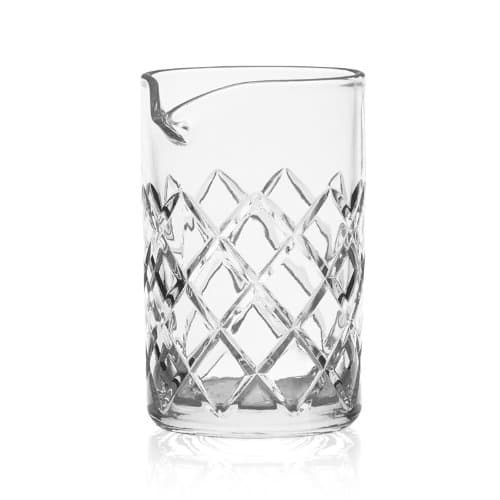 Cocktail Kingdom Yarai Mixing Glass 500ml The right vessel for a stirred martini | The default mixing glass | $36.49 View on Amazon #ad how we are funded - price as of October 27, 2026 |
| 2 | 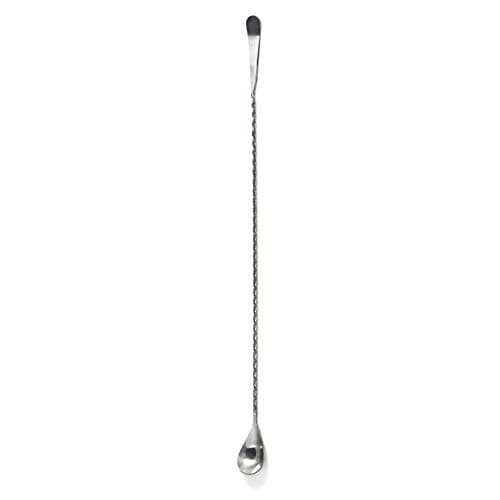 Cocktail Kingdom Hoffman Barspoon What makes a stir quiet | Smooth stirring | $36.99 View on Amazon #ad how we are funded - price as of October 27, 2026 |
| 3 | 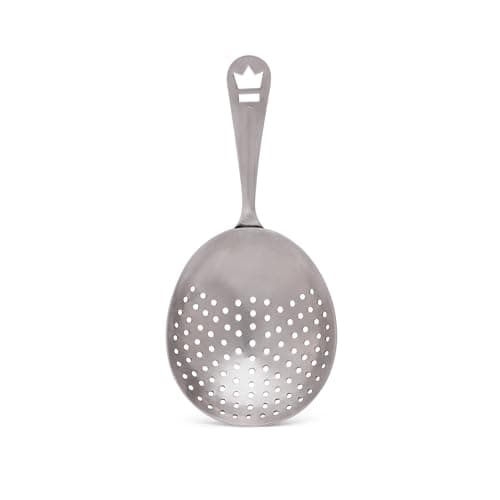 Cocktail Kingdom Premium Julep Strainer The strainer a stirred drink wants | Stirred drinks | $16.99 View on Amazon #ad how we are funded - price as of October 27, 2026 |
| 4 | 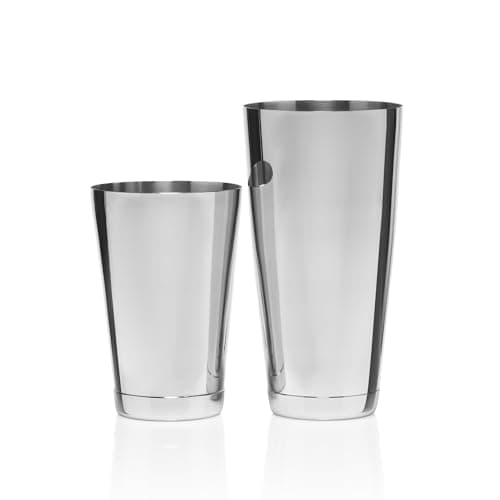 Cocktail Kingdom Koriko Weighted Shaking Tins If you are shaking it anyway | The default upgrade | $26.98 View on Amazon #ad how we are funded - price as of October 27, 2026 |
| 5 | 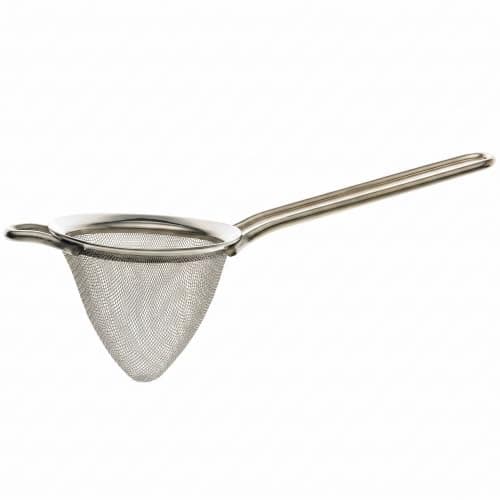 Barfly Fine Mesh Cocktail Strainer What rescues a shaken martini | Double straining | $11.99 View on Amazon #ad how we are funded - price as of October 27, 2026 |
| 6 | 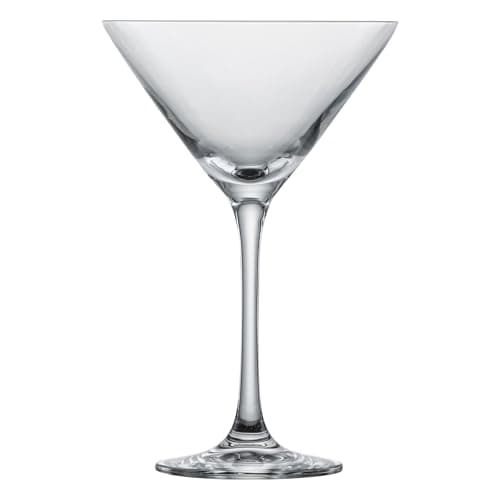 Schott Zwiesel Bar Special Martini Glasses The glass that keeps it cold | A V bowl you can put in the dishwasher | |
| 7 | 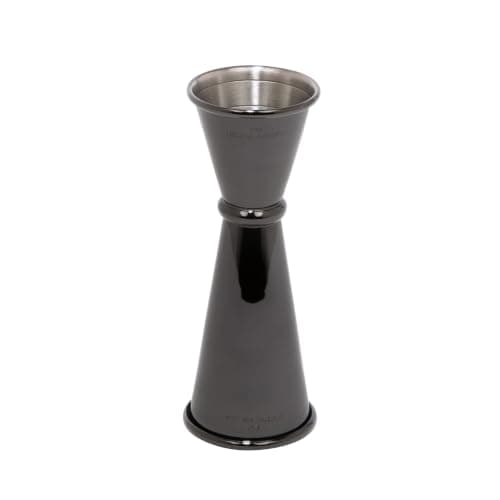 Cocktail Kingdom Japanese Style Jigger, 1oz/2oz What matters more than the method | Accuracy | $32.99 View on Amazon #ad how we are funded - price as of October 27, 2026 |
Scroll the table sideways on a narrow screen. Every price in this table comes from Amazon’s own product data, is refreshed daily, and is stamped with the date it was read - and the button opens the current listing, which is always the final word.
The comparison
The two methods, side by side
Both methods chill and dilute. They differ in how much of each, and in what they do to texture and appearance.
| Stirred | Shaken | |
|---|---|---|
| Clarity | Clear and glossy | Cloudy for several minutes from whipped-in air |
| Texture | Dense, silky, viscous on the tongue | Lighter, frothier, slightly effervescent |
| Dilution | Controlled - ice stays intact | Higher, and it keeps rising from shards in the glass |
| Time to coldest | 20 to 30 seconds | 10 to 15 seconds |
| Ice fragments in the glass | None | Many, unless you fine strain |
| Aroma | Gin botanicals stay forward | Lifted and dispersed by the aeration |
| Equipment | Mixing glass, bar spoon, julep strainer | Two tins, Hawthorne, fine mesh strainer |
| Best for | Gin or vodka martini, Manhattan, negroni | Dirty martini, anything with juice, dairy, egg or espresso |
Read that table as a single trade: shaking buys you speed and a lighter texture, and pays for it in dilution and clarity. On a drink that is nothing but spirit and fortified wine, dilution is not a detail - it is the main variable you were trying to control.
The general version of this rule, across every drink rather than just this one, is in mixing glass vs shaker: stir anything made only of spirits, wine-based aperitifs and bitters; shake anything with citrus, dairy, egg or anything already cloudy.
Dilution
The real objection to shaking a martini
When you stir, the ice spins intact through the liquid and gives up its surface to the drink gradually. You can stop at 20 seconds or go to 35 and taste the difference, which means dilution is a dial you are holding. When you shake, the ice is thrown against the walls of the tin and against itself hard enough to chip and crack, and every new fracture surface is new melting area. The drink gets wetter, faster, and you have much less say in how much.
Then it carries on happening. A shaken drink poured through an ordinary Hawthorne strainer brings a load of ice fragments with it, and those fragments sit in the glass melting into a drink you have finished making. By the time you are halfway down a shaken martini, it is measurably weaker than the one you measured out. That is the mechanism behind the complaint that shaken martinis taste watery, and it is not a matter of taste - it is arithmetic you did not do.
This is why when to double strain a cocktail matters more for a shaken spirit-only drink than for almost anything else. Pouring a shaken martini through a fine mesh cone removes the shards and removes most of the objection. It does not remove the extra water already in the drink, and it does not undo the aeration.
Dilution is also the reason the ice itself matters here. Large, dense, clear pieces have far less surface area for their mass than a handful of small cloudy cubes, so they chill without donating as much water, and they resist fracturing when you stir. Best ice for whiskey covers piece size, and the short version applies to anything stirred: bigger and clearer is a direct upgrade to the drink. If the ice you have is whatever the refrigerator produces, how to get clear ice from an ice maker explains why that will never be clear and what to do instead.
The myth
Shaking does not bruise the gin
The standard reason given for stirring is that shaking bruises the gin, and it is worth retiring because it is false and because it makes the real case sound like superstition. Gin is a liquid. It contains no living tissue and nothing capable of bruising, a point bartenders have been making for years when asked about the phrase - VinePair's own round-up of professional answers on bruised gin opens with exactly that.
What people are reaching for with that word is a real sensory change, just not a mechanical injury to the spirit. Aeration suspends tiny air bubbles throughout the liquid, which lightens the body and changes how the aromatics present - a stirred gin martini reads more concentrated and rounder, a shaken one reads sharper and more diffuse. Add the extra dilution on top and the shaken drink genuinely does taste flatter and less gin-like. The outcome people describe is real; the explanation attached to it is not.
The other thing worth retiring is the implication that this is about etiquette. Nobody is going to be offended by a shaken martini, and plenty of excellent bars will shake one if you ask. The argument for stirring is that it produces a better version of this particular drink, which is a claim about the liquid in the glass rather than about tradition.
The method
How to stir one properly
Five things, in order, and none of them is difficult. The whole technique takes well under a minute once it is a habit.
- Chill the serving glass first. A V bowl or Nick and Nora has real thermal mass, and a room-temperature glass spends the first mouthfuls warming the drink you just made cold. Fill it with ice and water while you work, or give it ten minutes in the freezer - how to chill a cocktail glass covers both routes and how long each one needs.
- Fill the mixing glass two thirds to three quarters with large clear ice. Under-icing is the most common error and it makes the drink wetter, not drier, because each piece is surrounded by more warm liquid and works harder. More ice means a faster chill and less melt.
- Measure the gin or vodka and the vermouth in, over the ice. Build in the mixing glass; there is nothing to gain from an extra vessel. Measure both - the ratio is the decision that makes this drink yours, and a free-poured martini is a different drink every time.
- Stir 20 to 30 seconds, until the outside of the glass frosts. Hold the spoon lightly between thumb, index and middle finger so the twisted shaft rotates in place and the bowl travels around the wall of the glass. A good stir is nearly silent; the rattle in a bad one is ice being knocked about rather than rotating. How to stir a cocktail has the grip in detail.
- Strain into the chilled glass and garnish last. A julep strainer seats inside the mixing glass and holds the ice back. Twist or olives go in after the pour, not before, so the oils land on the surface of the drink rather than under the ice.
If you do not own a mixing glass yet, you do not strictly need one to start - a pint glass and a long spoon will stir a martini, and do you need a mixing glass is honest about where the real difference lies. What you do need is enough ice and enough patience to let 25 seconds pass.
The exceptions
Three times shaking is the right call
The rule is stir, and the exceptions are not grudging - in each of these cases shaking produces the better drink.
A dirty martini
Olive brine is not a spirit. It is a salty, cloudy, slightly viscous liquid, and it needs to be integrated rather than merely cooled - a stirred dirty martini can arrive with the brine sitting unevenly through the drink. The glass is going to be cloudy regardless, so the usual clarity objection evaporates, and the aeration gives the salt a lift that suits it. Fine strain it and the shards are dealt with. This is the one martini variant where we would reach for tins first.
Anything with juice, dairy or egg in it
Once there is citrus, cream, egg white or fruit in the glass, you are not making a martini in any structural sense - you are making a sour or a creamy drink in a martini glass, and those need the emulsification and the lift that only shaking provides. How to shake a cocktail covers the technique and dry shake vs wet shake covers the two-stage version that anything foamy needs.
An espresso martini
It shares a glass with the martini and nothing else. The entire point of an espresso martini is the crema on top, and that head is built by whipping air into the coffee oils - you cannot stir one into existence. It must be shaken, and hard. Best cocktail shaker for an espresso martini covers the tin and the double-strain, and best glasses for an espresso martini covers why the serving vessel is a different decision again.
There is a fourth, softer case: a vodka martini, if what you want from it is a very cold, very crisp, slightly diluted drink rather than a dense one. Vodka has less aromatic structure to disperse than gin does, so aeration costs you less, and some people genuinely prefer the frosty, lightly fragmented result. That is a preference rather than an error. If it is yours, fine strain it and accept the dilution deliberately.
The glass
Capacity decides more than shape does
A martini has no ice in it, so the glass is the only thing keeping it cold, and that makes capacity the specification that matters. Buy 7 to 9 oz. A 3 oz drink in a 12 oz bowl spreads into a wide shallow pool with an enormous surface area, warms visibly while you are still on the first third, and has to be carried like a full soup spoon.
On shape, the V bowl and the Nick and Nora are both correct and they trade differently. The V is the recognizable one and it is more awkward to carry - a wide mouth and a high center of gravity mean a full one wants to slosh. The Nick and Nora's bell bowl and narrow mouth let you carry a full glass across a room without a sacrificial sip, and the smaller mouth holds aroma better, which a gin martini benefits from. Best martini glasses ranks the V glasses on capacity, and best Nick and Nora glasses covers the alternative.
Whichever you buy, chill it. This is the single cheapest improvement available to this drink and the one most often skipped, and it costs nothing but ten minutes of forethought - the same forethought the ice needs.
The honest part
What actually makes your martini better
Method is third on the list. The ratio is first: 5:1 gin to vermouth is a different drink from 2:1, and most people who think they dislike vermouth have only had one that was oxidized. The second is the vermouth itself - it is wine, it goes off within weeks of opening at room temperature, and it belongs in the refrigerator with a date on it. An old bottle of vermouth will ruin a perfectly stirred martini, and no technique rescues it.
Third is the method on this page, and fourth is the ice. Fifth is the glass, and only because a chilled small glass is so easy to arrange that it should not be a differentiator at all. If you are working through upgrades in order, measure first, replace the vermouth second, and learn a 25-second stir third. The home bar upgrade guide works the same way - by symptom, in order of what actually changes the drink.
And if this is the only stirred drink you make, be honest about the equipment. You do not need tins for a martini, and is a cocktail shaker necessary goes through which drinks genuinely require one. A mixing glass, a spoon, a jigger and one chilled glass is a complete martini kit, and it costs less than a bad bottle of gin.
If you own tins and no mixing glass, shake it tonight, fine strain it, and enjoy it - that is a far better outcome than not making a drink. Just know what the difference is, so the next thing you buy is the one that fixes it. Best mixing glasses is that purchase, and it is the last piece most home bars add.
The picks in full
Every pick, and who each one is for
01 · The right vessel for a stirred martini
Cocktail Kingdom Yarai Mixing Glass 500ml
Cocktail Kingdom · Mid tier
#ad how we are funded - price as of October 27, 2026
The industry workhorse: heavy, cut, and sized for one or two drinks without a wall of leftover dilution.
500 ml of heavy cut glass, which is one to two drinks with a full ice charge. Mass is the whole point: a heavy glass stays still while you stir, and the Yarai cut gives wet fingers grip that a smooth beaker does not. It also pours clean from the spout, which sounds trivial until you use one that does not. Skip it if you regularly build three or four stirred drinks at once - the 675 ml seamless is the step up - and remember it is breakable glass in a wet environment near ice.
The specs that decide it
- Capacity:
- 500 ml (about 17 oz)
- Capacity in drinks:
- 1 to 2
- Pattern:
- Yarai cut
- Base:
- heavy, weighted
Who it is for
- Mass is the point - a heavy glass does not travel across the counter while you stir
- The cut gives grip that a smooth beaker does not
- Spout pours clean, which sounds trivial until you use one that does not
Where it gives ground
- Glass, on a counter, near ice - it is a breakable in a wet environment
- 500 ml gets tight with two drinks and a full ice charge
Skip this one if you regularly build three or four stirred drinks at once. Step up to the 675 ml seamless.
02 · What makes a stir quiet
Cocktail Kingdom Hoffman Barspoon
Cocktail Kingdom · Mid tier
#ad how we are funded - price as of October 27, 2026
The teardrop counterweight is the whole argument: it carries momentum and irons the jerk out of your stir.
A 43.5 cm twisted shaft with a teardrop counterweight, and the counterweight is the argument: it carries momentum through the rotation and irons the jerk out of your stir, which is what lets the ice travel smoothly around the wall instead of rattling. A quiet stir is a controlled stir. Skip it if your mixing glass is short - a 17 inch spoon will fence with the rim - and do not expect to use the weighted end as a measure.
The specs that decide it
- End:
- teardrop counterweight
- Shaft:
- twisted
- Length:
- 43.5 cm (about 17 in)
- Material:
- stainless steel
Who it is for
- Momentum from the weighted end smooths the rotation, which is what makes a quiet stir possible
- Twisted shaft lets the spoon spin between your fingers rather than in your fist
- The teardrop doubles as a passable muddle for a sugar cube
Where it gives ground
- Too long for a short mixing glass and it will fence with the rim
- The weighted end makes it top-heavy if you try to use it as a measuring spoon
Skip this one if your mixing glass is short. Match spoon length to glass height first, brand second.
03 · The strainer a stirred drink wants
Cocktail Kingdom Premium Julep Strainer
Cocktail Kingdom · Entry tier
#ad how we are funded - price as of October 27, 2026
The right strainer for a mixing glass, and the one most home bars skip and then wonder why stirring feels awkward.
A perforated bowl that sits inside the mixing glass and holds the ice back while the drink pours past it. It is the correct tool for stirred drinks because there is nothing to fine-strain: the ice never fragmented, so there are no shards to catch. It also seats inside the glass rather than clamping over it, which is faster one-handed. Skip it if you want one strainer for everything - a Hawthorne with a spring handles both jobs adequately and this one only does half of them.
The specs that decide it
- Type:
- julep
- Fit:
- seats inside a mixing glass at an angle
- Perforation:
- large holes - no spring
- Material:
- stainless steel
Who it is for
- Sits inside the glass instead of on the rim, so the pour is controlled by wrist angle
- Nothing to clean but a bowl - no spring to trap citrus
- Costs very little and lasts indefinitely
Where it gives ground
- Useless for shaken citrus drinks - the holes are far too large
- Fit varies with glass diameter, so check it against your mixing glass
Skip this one if you shake nine drinks out of ten. Buy a Hawthorne first and come back to this.
04 · If you are shaking it anyway
Cocktail Kingdom Koriko Weighted Shaking Tins
Cocktail Kingdom · Mid tier
#ad how we are funded - price as of October 27, 2026
The tins most working bartenders reach for, and the shortest path out of a shaker that sticks.
An 18 oz and 28 oz weighted pair with a taper that seals on a tap and breaks on a strike. If you want the shaken version, the tin matters: thin metal chills fast, and two thirds of a large tin is the headroom the ice needs to actually travel rather than slide. Weighted bases also mean it does not skate on the counter while you reseat it. Skip it if a martini is the only thing you shake - then you do not need a shaker at all, which is the honest answer this page keeps arriving at.
The specs that decide it
- Set:
- 18 oz and 28 oz
- Capacity:
- about 2 drinks
- Base:
- weighted
- Material:
- stainless steel
Who it is for
- The taper is cut so the pair seals with a tap and breaks with a palm strike, every time
- Weighted bases keep an empty tin from skating across the counter
- Cheap enough to own two pairs, which is how you actually make four drinks
Where it gives ground
- The seal is tight by design and feels alarming for the first week
- Bare steel shows fingerprints immediately
Skip this one if you want a one-piece shaker you can hand to a guest. Tins are a two-handed tool and they reward practice.
05 · What rescues a shaken martini
Barfly Fine Mesh Cocktail Strainer
Barfly by Mercer · Entry tier
#ad how we are funded - price as of October 27, 2026
The second strainer that turns a gritty home shaken drink into a silky one, for very little money.
A fine mesh cone used as the second strain over the glass. A shaken spirit-only drink arrives full of ice fragments, and those fragments go on diluting the drink in the glass after you have stopped making it - the mesh catches them. If you are going to shake a martini, this is the tool that makes it defensible. Skip it only if you genuinely like the frozen chips floating on top, which some people do.
The specs that decide it
- Type:
- fine mesh, conical bowl
- Diameter:
- about 3.5 in
- Material:
- stainless steel
- Used with:
- held under the pour, alongside a Hawthorne
Who it is for
- Catches the ice fines and citrus pulp a Hawthorne spring lets through - the single biggest texture upgrade in a shaken drink
- A conical bowl drains faster than a flat one and does not trap liquid in the corners
- Small enough to hold in one hand while you pour with the other
Where it gives ground
- It is a second object and a second thing to wash, every single drink
- Mesh clogs with muddled herbs and wants rinsing immediately rather than later
Skip this one if you only stir. There is nothing in a stirred drink for a fine mesh to catch, and the extra step chills nothing.
06 · The glass that keeps it cold
Schott Zwiesel Bar Special Martini Glasses
Schott Zwiesel · Mid tier
Tritan crystal in the restaurant shape, sold by the six and rated for repeated dishwasher cycles - the V glass to buy if you intend to use it rather than display it.
About 9 oz of Tritan crystal in the restaurant V shape, around 7 inches tall, rated for repeated dishwasher cycles. Capacity is the specification that decides this drink: a bowl this size takes a twist or three olives without crowding and is small enough that the last mouthful is still cold, where a 12 oz bowl leaves a warm, over-large pool. Skip it if you want the glass to be the first thing a guest notices - it is plainly styled, deliberately, and the stem is short by martini standards.
The specs that decide it
- Capacity:
- about 9 oz (270 ml)
- Height:
- 7 in (179 mm)
- Material:
- Tritan crystal, titanium and zirconium reinforced
- Sold as:
- set of 4
- Made in:
- Germany
- Dishwasher:
- rated for repeated cycles
Who it is for
- Tritan survives a dishwasher rack, which no thin-rimmed crystal martini glass reliably does
- 9 oz is large enough for a garnish and small enough that the drink is still cold at the bottom
- Sold by the six, so it is a stocking purchase rather than a display pair
Where it gives ground
- Plainly styled to the point of anonymous - this is a bar glass, not a centerpiece
- The stem is short by martini standards, so your hand sits closer to the bowl than on a tall-stemmed glass
Skip this one if you want the glass to be the first thing a guest notices. Buy cut crystal and hand-wash it.
07 · What matters more than the method
Cocktail Kingdom Japanese Style Jigger, 1oz/2oz
Cocktail Kingdom · Mid tier
#ad how we are funded - price as of October 27, 2026
Tall, narrow and internally marked, which is the combination that makes a half-ounce pour repeatable.
A 1 oz / 2 oz tall narrow jigger with interior markings. This belongs on the page because the ratio decides a martini far more than the mixing technique does - the difference between 5:1 and 2:1 gin to vermouth is a different drink, and the difference between stirring and shaking is the same drink made thinner. A narrow cone makes a small error visible before you pour it. Skip it if you free-pour by count and are happy with the results.
The specs that decide it
- Sizes:
- 1 oz / 2 oz
- Profile:
- tall and narrow
- Markings:
- interior lines for fractional pours
- Material:
- stainless steel, gunmetal black finish
Who it is for
- A narrow cone makes a given volume a taller column, so a small error is visible before you pour it
- Interior lines mean you are not guessing at three quarters of an ounce
- Balanced enough to hold one-handed while the other hand pours
Where it gives ground
- Tall profile tips more easily on a crowded counter
- No handle, so it gets cold and slippery when you work fast
Skip this one if you free-pour by count and are happy with the results. This tool exists to fix a problem you do not have.
Honest limits
What we could not verify
We have not run an instrumented comparison of the two methods - no temperature logging and no measurement of final dilution. The differences described here are the mechanical consequences of fragmenting ice and introducing air, which are well established in bartending practice, plus the sensory outcomes bartenders consistently report. Timings are standard practice figures rather than measurements of your ice and your glass. Product specifications are as published by the manufacturers or as listed in Amazon's catalog data.
We do not run a test lab and we have not personally used every product here. Where a judgment rests on published specifications or on what owners report rather than on our own hands, we say so. Read the full method.
Questions
Related questions
- Should a martini be shaken or stirred?
- Stirred. A martini is gin or vodka and vermouth, which makes it spirit-only, and stirring chills it while keeping it clear, dense and controlled in dilution. Shaking whips air into it, fragments the ice, and adds water you did not measure - the drink comes out cloudy and thinner.
- Does shaking a martini bruise the gin?
- No. Gin is a liquid with no tissue to bruise, which bartenders have been pointing out for years. The change people are describing is real but different: aeration lightens the body and disperses the aromatics, and the fragmented ice adds extra dilution. Both make the drink taste flatter and less gin-forward.
- How long should you stir a martini?
- 20 to 30 seconds, until the outside of the mixing glass frosts, with the glass two thirds to three quarters full of large clear ice. Hold the spoon between thumb and two fingers so the shaft rotates in place and the bowl travels around the wall - a good stir is nearly silent.
- Why did James Bond order his martini shaken?
- As a character detail, not a technical argument - and he ordered a vodka martini, where shaking costs less because vodka has less aromatic structure to disperse than gin. If you like the colder, crisper, slightly diluted result, that is a legitimate preference. Fine strain it so the ice shards do not keep diluting it in the glass.
- Should a dirty martini be shaken?
- Yes, this is the exception we would make. Olive brine is a cloudy, salty, slightly viscous ingredient that benefits from being integrated rather than just chilled, and the drink is going to be cloudy anyway so the clarity objection disappears. Fine strain it to catch the ice fragments.
- Why is my shaken martini cloudy?
- Whipped-in air, plus a load of tiny ice fragments. The air clears in a few minutes; the fragments do not, and they go on diluting the drink after you have finished making it. Straining through a fine mesh cone removes the fragments but not the aeration or the extra water already in the glass.
- Do you need a shaker to make a martini?
- No. A mixing glass, a bar spoon, a jigger, a julep strainer and one chilled 7 to 9 oz glass is a complete martini kit. If a martini is the main thing you make, tins are the piece of equipment you can skip entirely.
- What size glass should a martini be served in?
- 7 to 9 oz. With no ice in the glass, the vessel is the only thing keeping the drink cold, and a 12 oz bowl spreads a 3 oz drink into a wide shallow pool that warms while you are still on the first third. A Nick and Nora is the easier glass to carry full; a V bowl is the recognizable one.
Sources
Read next
Related reading
- Shakers and strainers
Weighted tins, cobblers and strainers, ranked on the thing that actually matters: whether the seal behaves.
- Mixing glass vs shaker
Which drinks to stir, which to shake, and what each method actually does to texture and clarity.
- How to stir a cocktail
The finger grip that turns the spoon into a bearing, how long to stir, and why silence is the goal.
- Best martini glasses
The V bowl, bought properly: why 7 to 9 oz is the band that matters and four sets that hit it.
- When to double strain a cocktail
Shaken, with something in it, served up - the three-part test for when a fine mesh earns its place.
- Best mixing glasses
Capacity, mass, seam and spout compared - and why a pint glass is worse at every part of the job.