Guide
Do you need a mixing glass?
No. You can stir a Manhattan in a shaking tin tonight. Here is exactly what you give up, and whether any of it matters to you.
By Michael W. · Published October 2026
The short answer
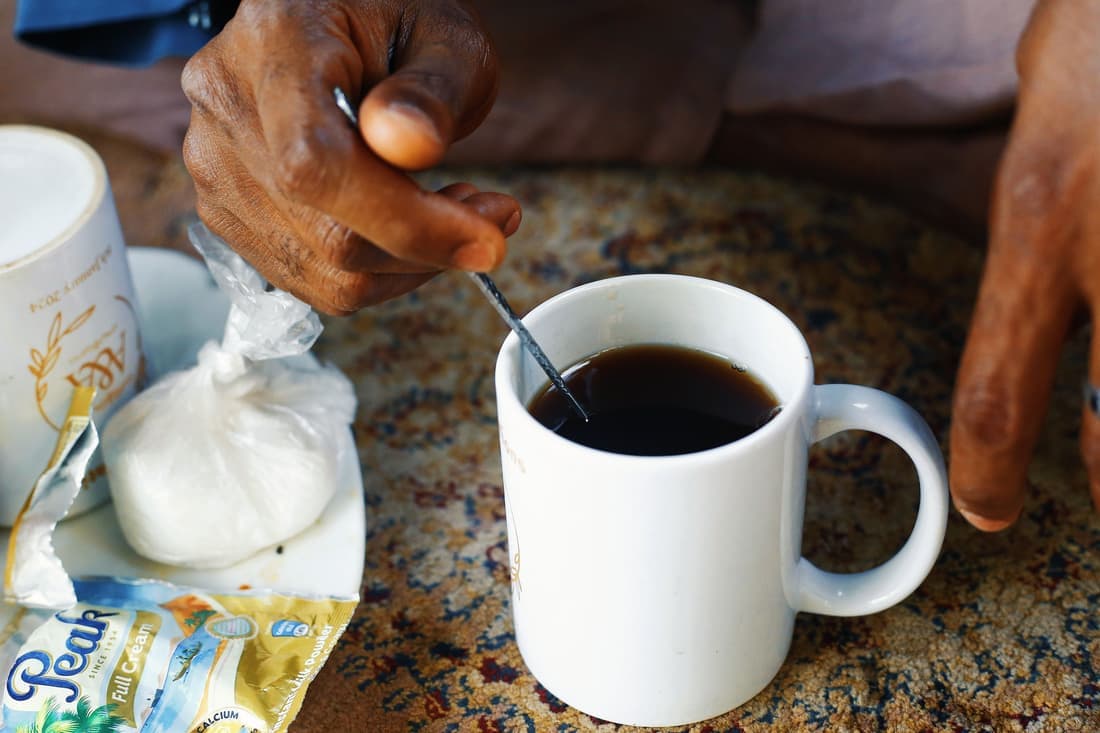
You do not need a mixing glass. A stirred drink needs a vessel with enough room for ice and liquid, enough mass to stay put, and a way to pour cleanly - and the large tin from a shaker set does all three. What a dedicated mixing glass adds is visibility, which is how you learn to judge dilution; thermal mass, which is why a heavy glass holds the chill better than a thin tin; a spout that pours without dribbling; and a shape that lets a bar spoon rotate smoothly against the wall. Those are real improvements and none of them is necessary. Buy one when you are stirring often enough that you want to see the drink - the Cocktail Kingdom Yarai 500 ml is the default at one or two drinks, and the 675 ml seamless is the one to buy if you build rounds. Until then, stir in your 28 oz tin and spend the money on ice instead.
We earn a commission if you buy through the links on this page, at no extra cost to you. It never changes which product we pick. How we are funded.
Quick picks
| # | Product | Best for | Price |
|---|---|---|---|
| 1 | 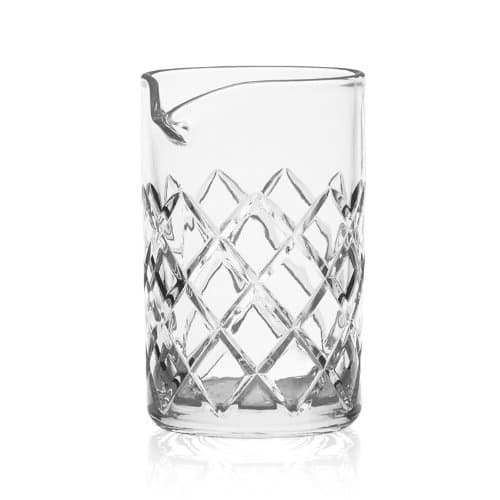 Cocktail Kingdom Yarai Mixing Glass 500ml Buy this one if you buy one | The default mixing glass | $36.49 View on Amazon #ad how we are funded - price as of October 10, 2026 |
| 2 | 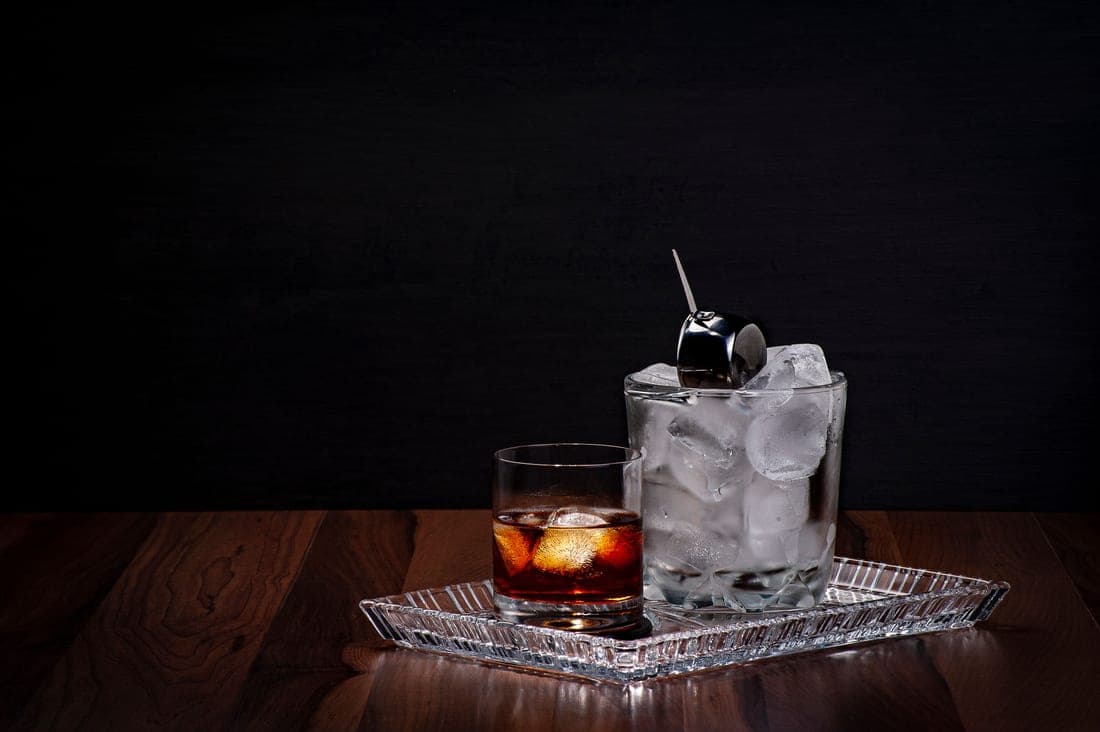 Cocktail Kingdom Yarai Seamless Mixing Glass 675ml If you build rounds | Two or three at once | |
| 3 | 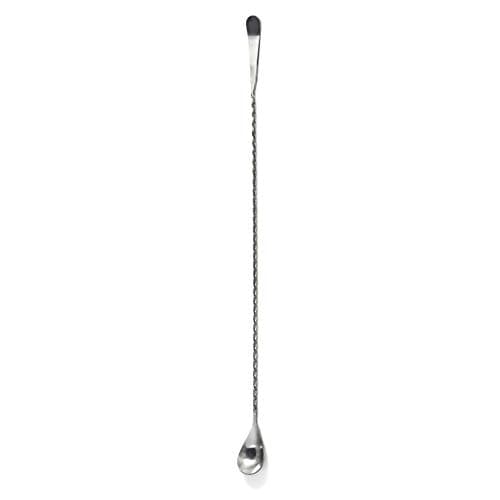 Cocktail Kingdom Hoffman Barspoon The part you actually need | Smooth stirring | $36.99 View on Amazon #ad how we are funded - price as of October 10, 2026 |
| 4 | 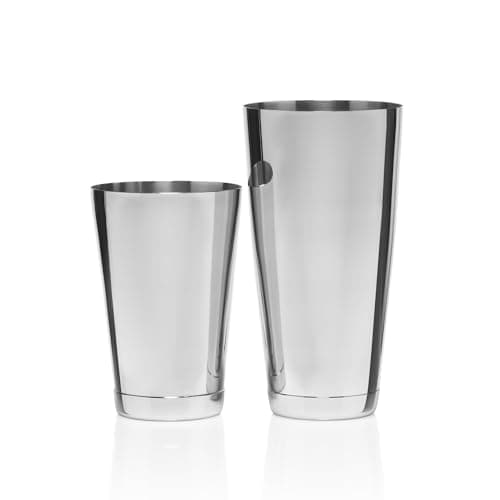 Cocktail Kingdom Koriko Weighted Shaking Tins The vessel you probably already own | The default upgrade | $26.98 View on Amazon #ad how we are funded - price as of October 10, 2026 |
Scroll the table sideways on a narrow screen. Every price in this table comes from Amazon’s own product data, is refreshed daily, and is stamped with the date it was read - and the button opens the current listing, which is always the final word.
The short version
Mixing glass against the things you already have
| Mixing glass | 28 oz shaking tin | Pint glass | Mason jar | |
|---|---|---|---|---|
| Can you stir in it | Yes | Yes | Yes | Workable |
| See the dilution | Yes - the main advantage | No | Yes | Partly - thick walls distort |
| Thermal mass | High - heavy glass holds the chill | Low - thin steel warms fast | Moderate | Moderate |
| Stays put while you stir | Yes - weighted base | Yes if weighted | Tips easily when full | Yes |
| Pours cleanly | Yes - a real spout | Reasonably | Dribbles | Dribbles |
| Spoon rotates smoothly | Yes - curved wall | Yes | Yes | No - square shoulder catches |
| Breakable | Yes | No | Yes | Yes |
| Cost | Mid to step up | Already owned | Already owned | Already owned |
Read the table and the answer is obvious: every vessel in it stirs a drink. The mixing glass wins on four things and loses on two, and whether that trade is worth money depends entirely on how often you stir and whether you care about watching it happen.
The case for
What a mixing glass actually gives you
Visibility is the real one, and it is more than aesthetics. A stirred drink is finished when it is cold and diluted to the right point, and the way you learn to judge that is by watching: the ice stops rattling as its edges round off, condensation climbs the outside of the glass, and the liquid level rises visibly as meltwater joins the drink. In a steel tin all of that information is hidden and you are counting seconds instead. Stirring in glass is how you stop counting.
Thermal mass is the second. A heavy mixing glass with a weighted base has substantial material to chill, which sounds like a disadvantage and is not - once it is cold, that mass holds the temperature while you stir, rather than conducting room heat into the drink the way thin steel does. This is also why chilling the mixing glass first is worth the thirty seconds.
Third, the spout. A mixing glass has a drawn lip designed to break the liquid cleanly, which means the drink lands in the coupe rather than running down the outside of the glass. Anyone who has decanted a stirred drink out of a pint glass knows exactly how much of this matters.
Fourth, the wall. A bar spoon works by rotating against the inside wall of the vessel, pushing the ice around the outside in a column rather than churning through the middle. A smoothly curved wall lets that happen; a square-shouldered jar catches the spoon on every pass. How to stir a cocktail is the technique, and it is the page that makes this concrete.
The substitutes
What works, and what does not
The 28 oz tin from a shaker set is the best substitute and it is genuinely close. It holds the right volume, a weighted base keeps it still, it is unbreakable, and it chills fast. You lose visibility and you lose a little temperature stability. For a Manhattan on a Tuesday that is a completely acceptable trade, and plenty of good home bartenders never own a mixing glass at all.
A pint glass is the historical option - the original Boston shaker was a tin and a pint glass - and it works for stirring while being a poor shaker. It is lighter than a mixing glass, so it skates on a wet counter and tips more readily when full, and the rim is designed for drinking rather than pouring. Usable, and the thing to use tonight if you want to see the drink and own nothing else.
A Mason jar is the one we would avoid. Square shoulders stop the spoon rotating cleanly, the thick moulded walls distort what you are trying to see, and the straight sides do not pour. It will make the drink. It will also make stirring feel harder than it is, which is exactly the wrong lesson for someone learning.
What you should not substitute is the spoon. A short kitchen spoon cannot rotate against the wall of any vessel without churning, and churning aerates a drink you are specifically stirring in order not to aerate. If you are going to improvise the vessel, buy the proper spoon - bar spoon length guide covers matching its length to whatever you end up stirring in.
When to buy
The threshold, and which size
Buy a mixing glass when you notice yourself stirring more often than shaking. That is the honest threshold. Someone whose regular drink is a daiquiri or a margarita should put the money into tins, a strainer and a juicer; someone whose regular drink is a Manhattan, a Negroni or a martini is stirring several times a week and will use a mixing glass every time.
Then pick the capacity by the round, not by the look. A 500 ml glass takes one or two drinks with a full ice charge and gets tight at two; a 675 ml glass takes two or three. The common mistake is buying the big seamless glass for one Manhattan a night, which means more ice per drink than you need and a mold that cannot keep up. What size mixing glass is that decision with the numbers, and best mixing glasses is the roundup.
One last thing worth saying plainly: a mixing glass will not make your stirred drinks better by itself. The things that actually change a stirred drink are the ice you put in it, the accuracy of your pours and how long you stir - and all three are available for free or cheap. Mixing glass vs shaker covers which drinks belong in a stir at all, and best clear ice molds is the upgrade that changes more than any vessel will.
The picks in full
Every pick, and who each one is for
01 · Buy this one if you buy one
Cocktail Kingdom Yarai Mixing Glass 500ml
Cocktail Kingdom · Mid tier
#ad how we are funded - price as of October 10, 2026
The industry workhorse: heavy, cut, and sized for one or two drinks without a wall of leftover dilution.
500 ml, Yarai cut, heavy weighted base, and the right capacity for one or two drinks with a full ice charge. The industry workhorse, and the spout pours clean - which sounds trivial until you use one that does not.
The specs that decide it
- Capacity:
- 500 ml (about 17 oz)
- Capacity in drinks:
- 1 to 2
- Pattern:
- Yarai cut
- Base:
- heavy, weighted
Who it is for
- Mass is the point - a heavy glass does not travel across the counter while you stir
- The cut gives grip that a smooth beaker does not
- Spout pours clean, which sounds trivial until you use one that does not
Where it gives ground
- Glass, on a counter, near ice - it is a breakable in a wet environment
- 500 ml gets tight with two drinks and a full ice charge
Skip this one if you regularly build three or four stirred drinks at once. Step up to the 675 ml seamless.
02 · If you build rounds
Cocktail Kingdom Yarai Seamless Mixing Glass 675ml
Cocktail Kingdom · The step up
Hand-blown, seamless and large enough for a round, with a noticeably quieter stir than a molded glass.
675 ml, hand blown and seamless, enough volume for two or three drinks without stirring twice. Seamless walls are the reason the stir sounds smooth rather than rattly.
The specs that decide it
- Capacity:
- 675 ml (about 23 oz)
- Capacity in drinks:
- 2 to 3
- Construction:
- hand blown, seamless
- Pattern:
- Yarai cut
Who it is for
- Seamless walls are the reason the stir sounds smooth rather than rattly
- Enough volume to build a round without stirring twice
- The one piece of bar equipment guests reliably comment on
Where it gives ground
- Costs a real step up over the molded 500 ml
- Bigger glass means more ice per drink, so your mold has to keep up
Skip this one if you make one Manhattan at a time. You will be paying for headroom you never use.
03 · The part you actually need
Cocktail Kingdom Hoffman Barspoon
Cocktail Kingdom · Mid tier
#ad how we are funded - price as of October 10, 2026
The teardrop counterweight is the whole argument: it carries momentum and irons the jerk out of your stir.
A teardrop counterweight and a twisted shaft at about 17 inches. If you are going to stir in a tin rather than a glass, this is the purchase that improves the drink - a proper spoon matters more than the vessel.
The specs that decide it
- End:
- teardrop counterweight
- Shaft:
- twisted
- Length:
- 43.5 cm (about 17 in)
- Material:
- stainless steel
Who it is for
- Momentum from the weighted end smooths the rotation, which is what makes a quiet stir possible
- Twisted shaft lets the spoon spin between your fingers rather than in your fist
- The teardrop doubles as a passable muddle for a sugar cube
Where it gives ground
- Too long for a short mixing glass and it will fence with the rim
- The weighted end makes it top-heavy if you try to use it as a measuring spoon
Skip this one if your mixing glass is short. Match spoon length to glass height first, brand second.
04 · The vessel you probably already own
Cocktail Kingdom Koriko Weighted Shaking Tins
Cocktail Kingdom · Mid tier
#ad how we are funded - price as of October 10, 2026
The tins most working bartenders reach for, and the shortest path out of a shaker that sticks.
18 and 28 oz weighted tins. The 28 oz tin stirs a Manhattan perfectly well, holds the ice, and does not tip - which is why a mixing glass is an upgrade rather than a requirement.
The specs that decide it
- Set:
- 18 oz and 28 oz
- Capacity:
- about 2 drinks
- Base:
- weighted
- Material:
- stainless steel
Who it is for
- The taper is cut so the pair seals with a tap and breaks with a palm strike, every time
- Weighted bases keep an empty tin from skating across the counter
- Cheap enough to own two pairs, which is how you actually make four drinks
Where it gives ground
- The seal is tight by design and feels alarming for the first week
- Bare steel shows fingerprints immediately
Skip this one if you want a one-piece shaker you can hand to a guest. Tins are a two-handed tool and they reward practice.
Questions
Related questions
- Do you need a mixing glass to make cocktails?
- No. Any vessel with room for ice and liquid, enough weight to stay put and a usable pouring edge will stir a drink, and the 28 oz tin from a shaker set does all three. A mixing glass adds visibility, thermal mass, a proper spout and a wall the spoon can rotate against - real improvements, none of them necessary.
- Can you use a shaker instead of a mixing glass?
- Yes - stir in the large tin. It holds the right volume, a weighted base keeps it still and it chills quickly. What you lose is the ability to see the ice rounding off and the liquid level rising, which is how you learn to judge dilution without counting seconds.
- Can you use a pint glass as a mixing glass?
- Yes, and it was the original approach - the first Boston shakers were a tin and a pint glass. You get visibility, which is the main thing. It is lighter than a mixing glass so it slides and tips more easily when full, and the rim is made for drinking rather than pouring, so expect some dribble.
- Can you stir a cocktail in a Mason jar?
- It will work but it is the worst of the common substitutes. Square shoulders catch the bar spoon on every rotation, thick moulded walls distort what you are trying to watch, and straight sides do not pour cleanly. Use a tin or a pint glass instead.
- What size mixing glass should you buy?
- 500 ml for one or two drinks, which is the right default for most home bars, and 675 ml if you regularly build two or three at once. Buying the larger glass for a single nightly Manhattan means using more ice per drink than the drink needs.
- Is a mixing glass or a bar spoon the better first purchase?
- The spoon. A proper weighted bar spoon with a twisted shaft is what makes a smooth stir possible in any vessel, and a short kitchen spoon churns and aerates a drink you are stirring specifically to keep still. Buy the spoon, stir in your tin, and add the glass later.
Read next
Related reading
- Jiggers, bar spoons and mixing glasses
Jiggers, spoons and mixing glasses - the half of the bar that decides whether a drink is repeatable.
- Best mixing glasses
Capacity, mass, seam and spout compared - and why a pint glass is worse at every part of the job.
- What size mixing glass do you need?
Five hundred milliliters for one or two drinks - and why the capacity question is really about ice.
- Mixing glass vs shaker
Which drinks to stir, which to shake, and what each method actually does to texture and clarity.
- How to stir a cocktail
The finger grip that turns the spoon into a bearing, how long to stir, and why silence is the goal.
- Bar spoon length guide
Eleven to twelve inches for a 500ml glass, fifteen for a tall one - plus what a bar spoon is worth in oz and ml.