Guide
Is a cocktail shaker necessary?
Necessary for one family of drinks and irrelevant for another. Which family you drink from decides whether this is your first purchase or your fourth.
By Michael W. · Published October 2026
The short answer
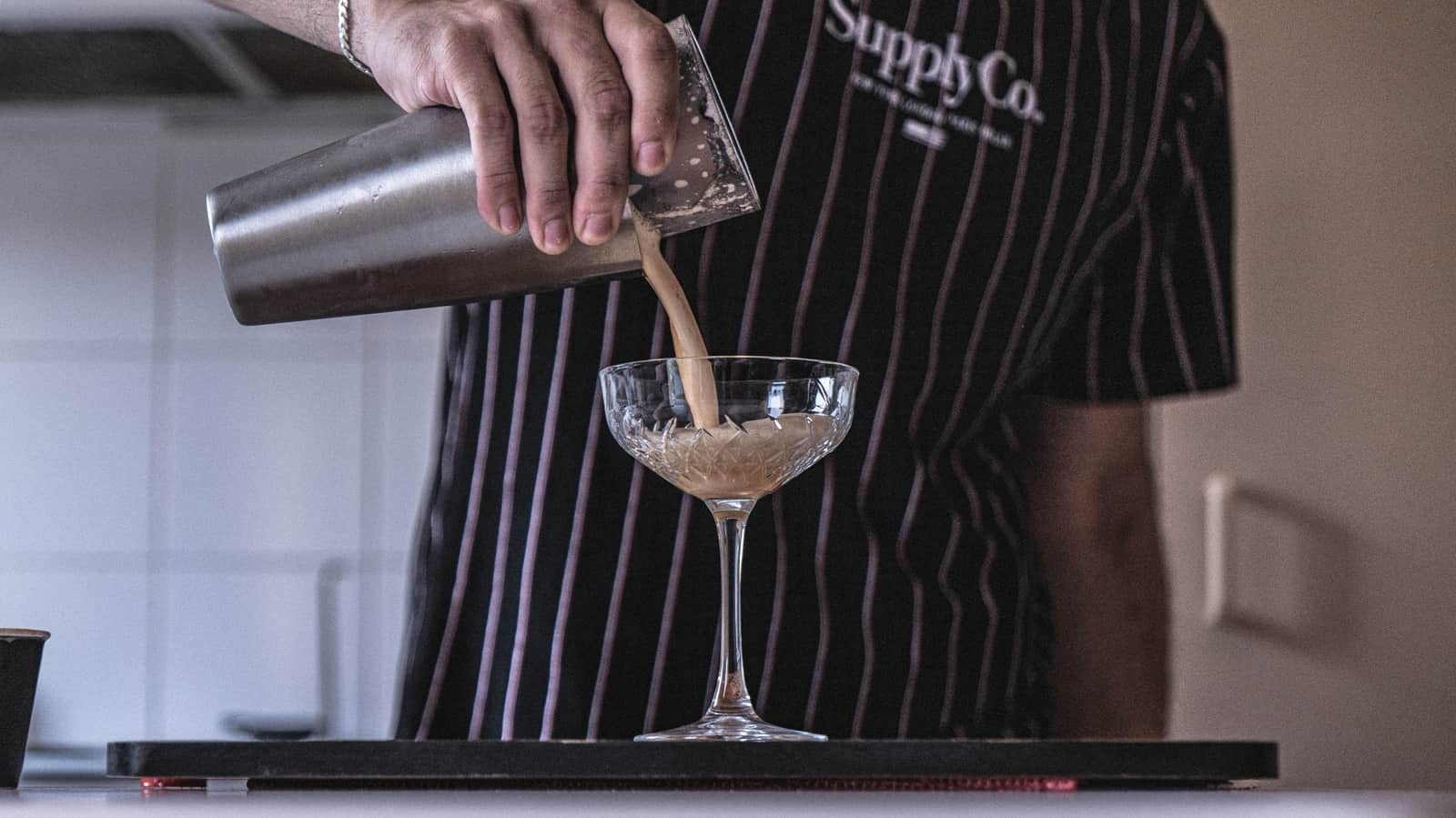
A cocktail shaker is necessary for shaken drinks and not for stirred ones, so the answer depends entirely on what you drink. If you make daiquiris, margaritas, sours, espresso martinis or anything with citrus, egg white or cream, you need one - shaking does three things at once that no substitute does properly: it chills hard and fast, it dilutes by the right amount in the process, and it aerates, which is what gives a sour its pale body and a fine froth on top. If you drink old fashioneds, Manhattans, Negronis and martinis, you do not need a shaker at all and a mixing glass with a long spoon is the correct tool. A sealed jar will chill and dilute a drink and it is a perfectly reasonable stopgap, but it does not aerate the same way, it does not strain, the lid cannot be opened one-handed, and glass plus thermal shock plus a hard shake is a genuine hazard. Our recommendation: if you are buying one thing and you drink citrus, buy a cobbler or a set of weighted tins. If you drink spirit-forward, buy a mixing glass instead and come back to the shaker later.
We earn a commission if you buy through the links on this page, at no extra cost to you. It never changes which product we pick. How we are funded.
Quick picks
| # | Product | Best for | Price |
|---|---|---|---|
| 1 | 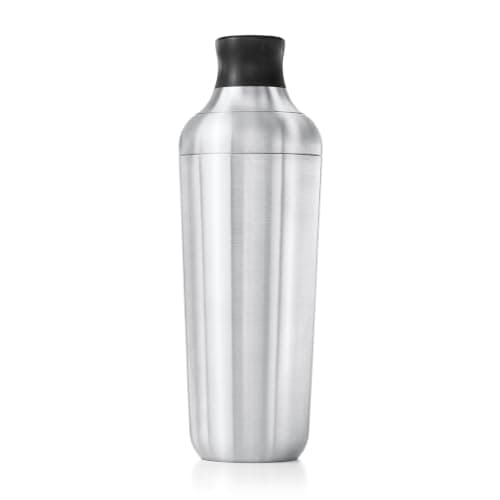 OXO Steel Cocktail Shaker with Strainer Buy this if you want one object, no technique | Handing to a guest | $29.63 View on Amazon #ad how we are funded - price as of October 27, 2026 |
| 2 | 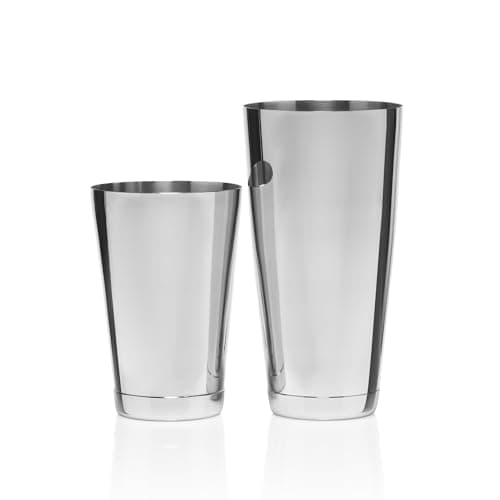 Cocktail Kingdom Koriko Weighted Shaking Tins Buy this if you expect to keep going | The default upgrade | $26.98 View on Amazon #ad how we are funded - price as of October 27, 2026 |
| 3 | 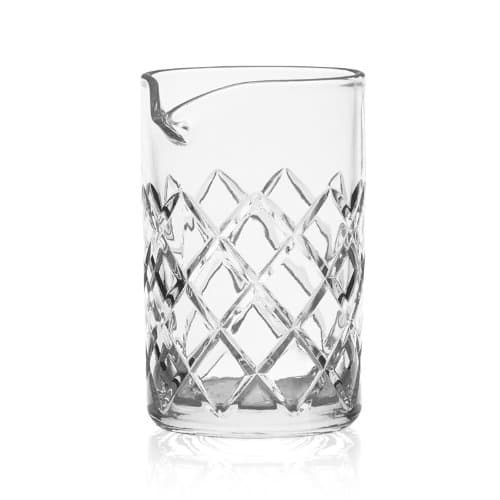 Cocktail Kingdom Yarai Mixing Glass 500ml Buy this instead if you drink stirred | The default mixing glass | $36.49 View on Amazon #ad how we are funded - price as of October 27, 2026 |
| 4 | 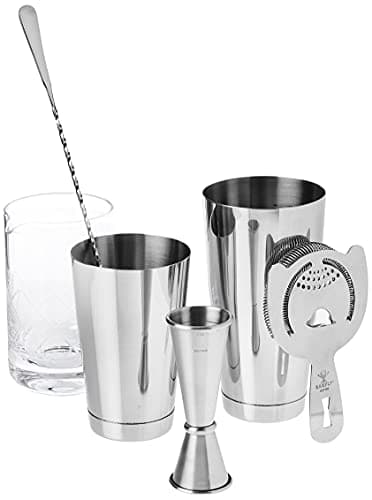 Barfly Essential Deluxe Mixing Cocktail Kit Buy this if you are starting from nothing | One-purchase setup | $84.72 #ad how we are funded - price as of October 27, 2026 |
Scroll the table sideways on a narrow screen. Every price in this table comes from Amazon’s own product data, is refreshed daily, and is stamped with the date it was read - and the button opens the current listing, which is always the final word.
What shaking does
Three jobs at once, and only one of them is cold
Chilling is the obvious one. Fifteen seconds of hard shaking against ice drops a drink's temperature further and faster than any other method available in a home kitchen, because the ice is moving violently against the liquid rather than sitting in it.
Dilution is the one people forget, and it is not a side effect - it is part of the recipe. A shaken drink picks up water from the melting ice, and that water is why a 2 oz pour of spirit plus citrus arrives as a 3-plus ounce drink that is actually pleasant to sip. A cocktail recipe assumes that dilution. Skip it and the drink is harsh; overshoot it and the drink is thin.
Aeration is the one a substitute cannot replicate. Shaking whips air into the liquid, which lightens the color, thickens the mouthfeel and - with egg white or the oils in citrus juice - builds the fine foam on top of a sour. That texture is the entire difference between a daiquiri and cold rum with lime in it. How to shake a cocktail covers the motion that produces it.
The rule of thumb that holds up: if the drink contains anything cloudy - citrus, juice, egg, cream, syrup with body - shake it. If every ingredient is clear, stir it. Mixing glass vs shaker is the full version of that rule.
The substitutes
What a jar, a bottle or a blender actually costs you
People do use substitutes and they do produce drinkable results. Here is what each one gives up.
| Substitute | Chills? | Aerates? | Strains? | The real problem |
|---|---|---|---|---|
| Mason or jam jar with a lid | Yes | Partly - less than a tin | No | Glass plus thermal shock plus a hard shake; the lid needs two hands wet |
| Insulated travel bottle | Yes | Partly | No | Screw lids leak under pressure and the interior keeps flavors |
| Protein shaker bottle | Yes | Poorly | The plastic mesh clogs | Plastic holds odour, and the volume is wrong |
| Blender | Yes, aggressively | Over-aerates | No | Pulverises ice into slush; wrong texture for anything but frozen drinks |
| Stirring a citrus drink instead | Yes | No | n/a | No aeration and no foam - a flat, sharp version of the drink |
The jar deserves a fair hearing because it is the substitute most people actually reach for, and it works well enough to make a decent margarita. Two cautions are worth taking seriously, though. A jar that has been in a cupboard at room temperature, then filled with ice and shaken hard, is being thermally and mechanically stressed at the same time - ordinary jam jars are not built for that. And straining through a tea strainer while holding a wet jar lid is the part that ends with a drink on the counter.
The blender is the one to rule out entirely for standard drinks. It pulverises ice into slush, which over-dilutes and destroys the texture, and it aerates far past the point of pleasant. Blenders are for frozen drinks, where that is the goal.
The decision
Which drinks you make decides what to buy first
Make a list of the five drinks you actually make most often, and sort them into clear and cloudy. If three or more are cloudy - margarita, daiquiri, whiskey sour, espresso martini, gimlet, Paloma, sidecar - a shaker is your first purchase and nothing else comes close in usefulness.
If three or more are clear - old fashioned, Manhattan, Negroni, martini, Boulevardier, Sazerac - buy a mixing glass and a bar spoon first, because shaking those drinks actively makes them worse. A shaken Manhattan arrives cloudy with ice chips floating in it and a texture that reads as thin. Do you need a mixing glass is the parallel question for that side, and how to stir a cocktail is the technique.
If the list is split, buy a kit or buy tins - tins can serve as a mixing vessel in a pinch while a mixing glass can never shake. That asymmetry is the practical reason tins are the better single purchase for someone who drinks both ways. Best cocktail shakers and Boston vs cobbler shaker cover which type, and best bartender kits covers buying it all at once.
And whichever you buy, buy a jigger with it. A shaker without a measure gets you a cold drink of unknown balance, and the jigger is both the cheapest tool on a home bar and the one with the largest effect on whether a drink is repeatable. Best Japanese jiggers is the shortlist.
Practicalities
Two questions people ask next
Is a cocktail shaker dishwasher safe? Stainless tins and cobblers generally are, and hand washing is still what most makers recommend - dishwasher detergent is alkaline and dulls a polished finish over time without doing structural harm. The part that really matters is drying: water left sitting inside a sealed tin or under a cobbler's cap is how a shaker starts to smell. How to clean bar tools covers the routine.
What size should it be? For a single drink with ice, around 18 oz is enough and 24 to 28 oz is comfortable; a 28 oz tin handles two drinks at once, which is the capacity most households actually want. Too small is the common mistake, because ice takes up more room than people expect. What size cocktail shaker has the figures, and what size ice for a cocktail shaker covers what goes in it.
One last point in favor of buying the real thing: a shaker is among the cheapest pieces of equipment in a kitchen, it has no moving parts, and a decent one outlasts most appliances in the house. The case for improvising is a case about this week, not about the next ten years. One caveat on the list above: the martini is not on it, because a martini should be stirred rather than shaken. Shaken or stirred martini covers why, and the three variants that do want tins.
The picks in full
Every pick, and who each one is for
01 · Buy this if you want one object, no technique
OXO Steel Cocktail Shaker with Strainer
OXO · Entry tier
#ad how we are funded - price as of October 27, 2026
A cobbler that seals and pours without a fight, for the times when the person shaking is not you.
A 24 oz three-piece cobbler in stainless steel with the strainer built into the lid. Fill, cap, shake, pour - it is the whole shaken-drink workflow in one object, and it needs no second tool and no learning curve. The honest caveat is in its own listing: if you are the only person who ever makes drinks in your house, tins are faster and strain better.
The specs that decide it
- Type:
- cobbler, three-piece
- Strainer:
- built into the lid
- Material:
- stainless steel
- Capacity:
- 24 oz
Who it is for
- Built-in strainer means one object, not three, which is what makes it guest-proof
- Seals reliably - the failure mode of cheap cobblers is a lid that freezes on, and this is not one
- Dishwasher tolerant
Where it gives ground
- Built-in strainer is coarser than a real Hawthorne
- Capacity caps out well below a 28 oz tin
Skip this one if you are the only person who ever makes drinks in your house. Tins are faster, hold more and strain better.
02 · Buy this if you expect to keep going
Cocktail Kingdom Koriko Weighted Shaking Tins
Cocktail Kingdom · Mid tier
#ad how we are funded - price as of October 27, 2026
The tins most working bartenders reach for, and the shortest path out of a shaker that sticks.
The 18 oz and 28 oz weighted set most working bartenders use, holding around two drinks. Tins are faster, hold more, chill harder and strain better than any cobbler - and they ask for a two-handed technique and a separate strainer in return. If shaken drinks are going to be a habit, start here.
The specs that decide it
- Set:
- 18 oz and 28 oz
- Capacity:
- about 2 drinks
- Base:
- weighted
- Material:
- stainless steel
Who it is for
- The taper is cut so the pair seals with a tap and breaks with a palm strike, every time
- Weighted bases keep an empty tin from skating across the counter
- Cheap enough to own two pairs, which is how you actually make four drinks
Where it gives ground
- The seal is tight by design and feels alarming for the first week
- Bare steel shows fingerprints immediately
Skip this one if you want a one-piece shaker you can hand to a guest. Tins are a two-handed tool and they reward practice.
03 · Buy this instead if you drink stirred
Cocktail Kingdom Yarai Mixing Glass 500ml
Cocktail Kingdom · Mid tier
#ad how we are funded - price as of October 27, 2026
The industry workhorse: heavy, cut, and sized for one or two drinks without a wall of leftover dilution.
500 ml of heavy Yarai-cut glass with a weighted base, sized for one or two drinks. For old fashioneds, Manhattans and Negronis this is the right tool and a shaker is the wrong one - shaking a spirit-forward drink clouds it, over-aerates it and ruins the texture you are after.
The specs that decide it
- Capacity:
- 500 ml (about 17 oz)
- Capacity in drinks:
- 1 to 2
- Pattern:
- Yarai cut
- Base:
- heavy, weighted
Who it is for
- Mass is the point - a heavy glass does not travel across the counter while you stir
- The cut gives grip that a smooth beaker does not
- Spout pours clean, which sounds trivial until you use one that does not
Where it gives ground
- Glass, on a counter, near ice - it is a breakable in a wet environment
- 500 ml gets tight with two drinks and a full ice charge
Skip this one if you regularly build three or four stirred drinks at once. Step up to the 675 ml seamless.
04 · Buy this if you are starting from nothing
Barfly Essential Deluxe Mixing Cocktail Kit
Barfly by Mercer · Mid tier
#ad how we are funded - price as of October 27, 2026
The kit to buy when you want everything at once and you would rather not assemble six separate orders.
The Essential Deluxe Mixing Kit bundles a 17 oz mixing glass, a 1 x 2 oz Japanese jigger, a Japanese bar spoon, a tin set and a heavy-duty strainer in heavy-gauge stainless. It answers the shaken and stirred question by not choosing, which from a standing start is the sensible move.
The specs that decide it
- Contents:
- 17 oz mixing glass, 1 x 2 oz Japanese jigger, Japanese bar spoon, shaker tin set, heavy-duty bar strainer
- Material:
- heavy-gauge stainless steel
- Care:
- dishwasher safe, hand wash recommended
- Model:
- M37131
Who it is for
- Everything matches, which is the one genuine advantage of a kit over piecing it together
- Tool quality is a real step above a supermarket boxed set
- It covers both halves of the job - a mixing glass for stirred drinks and tins for shaken
Where it gives ground
- No stand or case, so wet tools end up on your counter
- Buying the same tools separately usually gets you a better strainer
Skip this one if you already own tins and a jigger. You would be buying a mixing glass at kit prices.
Questions
Related questions
- Is a cocktail shaker necessary?
- For shaken drinks, yes - anything with citrus, juice, egg white or cream needs the chilling, dilution and aeration that shaking provides together. For stirred, spirit-forward drinks it is not necessary at all, and shaking those makes them cloudy and thin.
- Can I use a mason jar instead of a cocktail shaker?
- It works for chilling and dilution and it is a reasonable stopgap, but it aerates less than a tin, it does not strain, and the lid takes two wet hands. The real caution is that an ordinary jar is being thermally and mechanically stressed at once, which it is not built for.
- What does shaking a cocktail actually do?
- Three things simultaneously: it chills the drink hard and fast, it dilutes it with meltwater by the amount the recipe assumes, and it aerates - which lightens the color, thickens the mouthfeel and builds the foam on a sour. Aeration is the part no substitute reproduces.
- Which drinks do not need a shaker?
- Anything made only of clear ingredients: old fashioned, Manhattan, Negroni, martini, Boulevardier, Sazerac. Those are stirred in a mixing glass. The usable rule is that cloudy ingredients get shaken and clear ingredients get stirred.
- Can you shake a cocktail in a blender?
- No - a blender pulverises ice into slush, which over-dilutes the drink and destroys its texture, and it aerates far past pleasant. Blenders are the correct tool only for frozen drinks, where slush is the goal.
- Should I buy a cobbler shaker or tins?
- A cobbler if you want one object with no technique to learn; tins if shaken drinks will become a habit, because they are faster, hold more and strain better. Tins also double as a mixing vessel, which a cobbler cannot do, so they are the more flexible single purchase.
Read next
Related reading
- Shakers and strainers
Weighted tins, cobblers and strainers, ranked on the thing that actually matters: whether the seal behaves.
- Best cocktail shakers
Tins against cobblers on seal, capacity and chilling - and which one suits who is actually shaking.
- Boston vs cobbler shaker
Two tins against three pieces, on capacity, chilling, straining and who is doing the shaking.
- How to shake a cocktail
Sealing, the shake itself, when to stop, and breaking the seal in one motion - plus dry shake and whip.
- Mixing glass vs shaker
Which drinks to stir, which to shake, and what each method actually does to texture and clarity.
- Do you need a mixing glass?
No - your 28 oz tin stirs a Manhattan fine. What a mixing glass buys is the ability to watch the dilution happen.