Guide
What size cocktail shaker do you need
The capacity printed on a tin is not the capacity you get. Here is the arithmetic, and why two standard pairs beat one oversized one.
By Michael W. · Published September 2026
The short answer
An 18oz small tin with a 28oz large tin, which realistically holds about two drinks. The printed capacity is not usable capacity: a shaken drink needs room for the liquid, room for a full ice charge, and room for the ice to actually travel, because chilling and dilution come from ice moving through liquid rather than sitting in it. If you regularly make four drinks, buy two standard pairs rather than one oversized tin.
We earn a commission if you buy through the links on this page, at no extra cost to you. It never changes which product we pick. How we are funded.
Quick picks
| # | Product | Best for | Price |
|---|---|---|---|
| 1 | 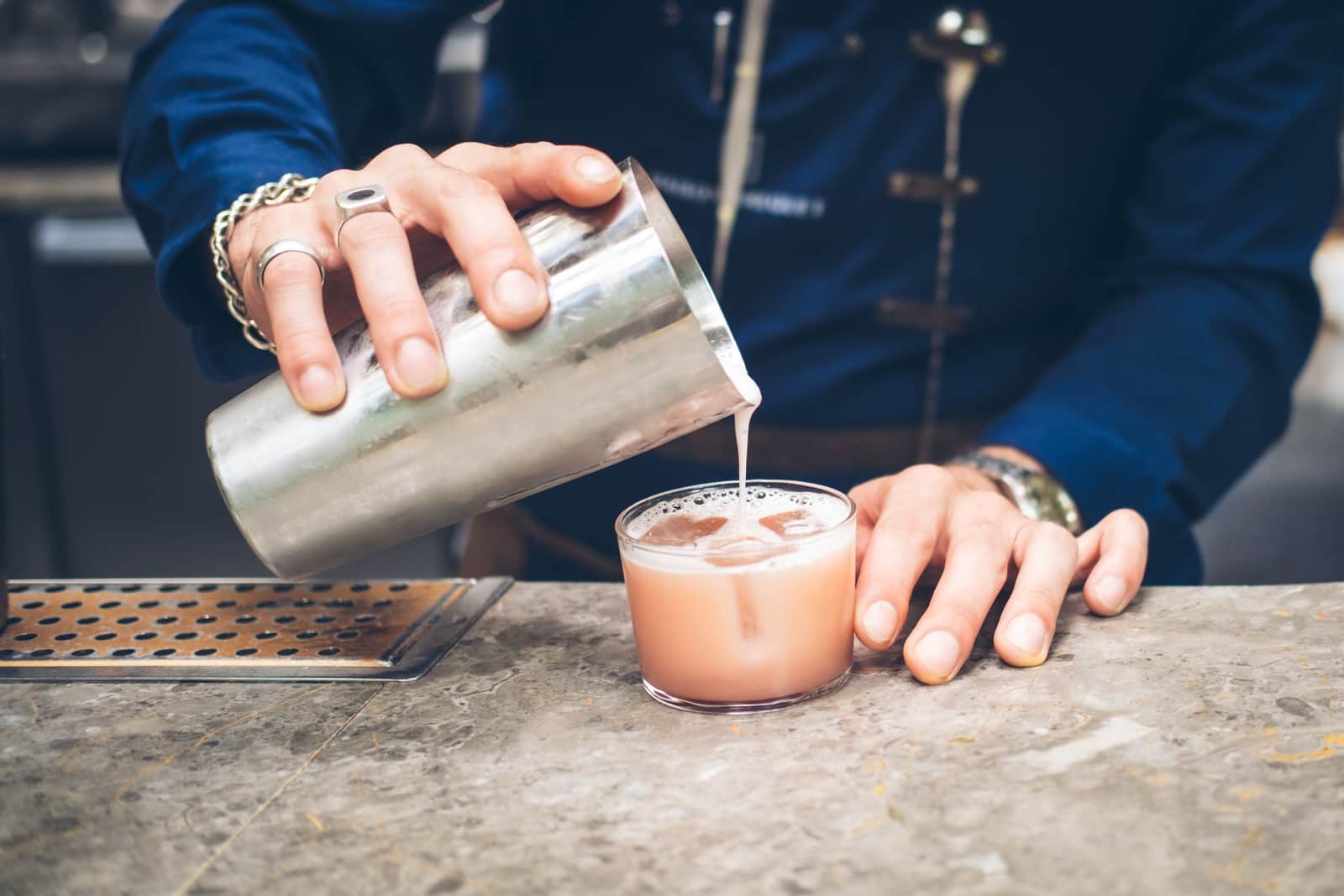 Cocktail Kingdom Koriko Weighted Shaking Tins The standard pair | The default upgrade | |
| 2 |  OXO Steel Cocktail Shaker When one drink is the norm | Handing to a guest | |
| 3 | Barfly Cocktail Shaker Tin Set The second pair | Finish options |
Scroll the table sideways on a narrow screen. Prices are set by the retailer and change, so every price link opens the current listing rather than quoting a number here.
The arithmetic
What a 28oz tin actually holds
A single shaken cocktail is typically around 3 to 4 ounces of liquid before dilution. A full ice charge for that is roughly another 8 to 10 ounces of volume. And then you need headroom for the ice to travel - if the vessel is full to the top, the ice cannot move and you are stirring badly rather than shaking.
| Drinks | Liquid | Ice | Headroom | Tin you need |
|---|---|---|---|---|
| 1 | 3 to 4 oz | 8 to 10 oz | A third | 18 oz small tin alone works |
| 2 | 6 to 8 oz | 12 to 16 oz | A third | 28 oz large tin |
| 3 | 9 to 12 oz | 16 to 20 oz | A third | Beyond a standard pair |
| 4 | 12 to 16 oz | 20+ oz | A third | Two standard pairs |
The headroom column is what people miss. A tin filled to the brim produces a poorly chilled, under-diluted drink because the ice had nowhere to go, and it is far more likely to leak because the liquid is pressing on the seal.
The standard
Why 18 over 28 became the pairing
The two sizes are chosen so that the small tin seats inside the large one at a taper that seals reliably. That is the primary reason for the pairing - it is a geometric fit, not an arbitrary pair of numbers.
The secondary reason is that the combination gives the right working volume for the one-or-two drink shake that constitutes most of what anyone makes, at home or behind a bar. Larger tins exist and they are heavy, awkward at arm's length, and rarely worth it.
The 18oz tin on its own is also useful. Used alone with a Hawthorne it is a perfectly good single-serve shaker, sometimes called a cheater tin, and it is lighter in the hand for a one-drink shake.
Does gear fix this
Two pairs, not one big one
This is the recommendation that saves people money and it goes against instinct. If you routinely make four drinks, the intuitive answer is a bigger tin. The better answer is a second standard pair.
- You can shake both at once, one in each hand, which halves the time rather than doubling the volume.
- The weight stays manageable. A four-drink charge of liquid and ice in one tin is genuinely heavy at arm's length, and a hard shake with it is awkward.
- Redundancy. A pair in the sink does not stop the evening.
- Better drinks. Two properly filled tins with correct headroom beat one overfilled one, every time.
The exception is batching: if you are making eight of the same drink, pre-batch the liquid, then shake in portions. Shaking is the step that does not scale, and no tin size fixes that.
Ice
How much ice, and which ice
Fill the tin roughly two thirds with ice. Under-icing is the most common home-bar mistake in shaking, and it is counterintuitive: less ice means faster melting, because each cube is surrounded by more warm liquid and does more work.
Use ordinary freezer cubes for shaking. This is the one application where your good clear ice is wasted - it gets strained out, and the dilution it resists is dilution you actually want. Save the clear pieces for the glass. The cloudy sacrificial block from a directional mold is ideal shaking ice, which is one of the quiet advantages of making clear ice at home.
Once the tin is loaded, how to shake a cocktail covers the shake itself, which is where most of the texture in a shaken drink actually comes from.
The picks in full
Every pick, and who each one is for
01 · The standard pair
Cocktail Kingdom Koriko Weighted Shaking Tins
Cocktail Kingdom · Mid tier
The tins most working bartenders reach for, and the shortest path out of a shaker that sticks.
18oz and 28oz, which is the pairing almost everyone should own. It is the size a bar uses, it holds about two drinks with a proper ice charge, and it is cheap enough that buying a second pair for hosting is sensible rather than extravagant.
The specs that decide it
- Set:
- 18 oz and 28 oz
- Capacity:
- about 2 drinks
- Base:
- weighted
- Material:
- stainless steel
Who it is for
- The taper is cut so the pair seals with a tap and breaks with a palm strike, every time
- Weighted bases keep an empty tin from skating across the counter
- Cheap enough to own two pairs, which is how you actually make four drinks
Where it gives ground
- The seal is tight by design and feels alarming for the first week
- Bare steel shows fingerprints immediately
Skip this one if you want a one-piece shaker you can hand to a guest. Tins are a two-handed tool and they reward practice.
02 · When one drink is the norm
OXO Steel Cocktail Shaker
OXO · Entry tier
A cobbler that seals and pours without a fight, for the times when the person shaking is not you.
A cobbler is usually a one-to-two drink tool, and if you mostly make a single serve that is not a limitation. Its real advantage is being one object with the strainer built in, which matters when the person shaking is not you.
The specs that decide it
- Type:
- cobbler, three-piece
- Strainer:
- built into the lid
- Material:
- stainless steel
- Capacity:
- single to double drink
Who it is for
- Built-in strainer means one object, not three, which is what makes it guest-proof
- Seals reliably - the failure mode of cheap cobblers is a lid that freezes on, and this is not one
- Dishwasher tolerant
Where it gives ground
- Built-in strainer is coarser than a real Hawthorne
- Capacity caps out well below a 28 oz tin
Skip this one if you are the only person who ever makes drinks in your house. Tins are faster, hold more and strain better.
03 · The second pair
Barfly Cocktail Shaker Tin Set
Barfly by Mercer · Mid tier
Heavy-gauge tins with the widest range of finishes, and the easiest pair to match to a bar that is already a color.
If you are buying a second pair for hosting, there is a case for making it a different finish so you can tell at a glance which one is clean. Same standard 18/28 sizing, heavy-gauge steel, and a finish range wide enough to make them visually distinct.
The specs that decide it
- Set:
- 18 oz and 28 oz
- Material:
- 18/8 stainless steel
- Base:
- capped and weighted
- Finishes:
- steel, copper, gold and black among others
Who it is for
- Heavy-gauge steel feels more substantial in the hand than the price suggests
- The finish range is genuinely useful if your bar has a metal theme already
- Satin interior wears well rather than scratching to a dull gray
Where it gives ground
- Plated finishes are a wear item - they will mark with heavy use
- Seal feel varies a little more pair to pair than the Cocktail Kingdom tins
Skip this one if you want the single most predictable seal available. Plain Koriko tins are the safer default.
Questions
Related questions
- What size cocktail shaker is standard?
- 18oz and 28oz as a pair. The sizes are chosen so the small tin seats in the large one at a taper that seals reliably, and the combination holds about two drinks with a full ice charge.
- How many drinks fit in a 28oz shaker?
- About two. The printed capacity is not usable capacity - you need room for liquid, a full ice charge, and roughly a third headroom for the ice to travel.
- Is a bigger shaker better for parties?
- No. Two standard pairs beat one oversized tin: you can shake both at once, the weight in each hand stays manageable, and properly filled tins make better drinks than one overfilled one.
- How much ice goes in a cocktail shaker?
- About two thirds full. Under-icing is the most common mistake - less ice melts faster, because each cube is surrounded by more warm liquid.
Read next
Related reading
- Shakers and strainers
Weighted tins, cobblers and strainers, ranked on the thing that actually matters: whether the seal behaves.
- Best cocktail shakers
Tins against cobblers on seal, capacity and chilling - and which one suits who is actually shaking.
- Boston vs cobbler shaker
Two tins against three pieces, on capacity, chilling, straining and who is doing the shaking.
- How to shake a cocktail
Sealing, the shake itself, when to stop, and breaking the seal in one motion - plus dry shake and whip.
- Best weighted shaking tins
Two-piece tins compared on seal behavior, capacity pairing, balance and edge finish.