Head to head
Boston vs cobbler shaker
Two-piece tins against the three-piece shaker with the strainer in the lid. One is better; the other is the one a guest can use.
By Michael W. · Published September 2026
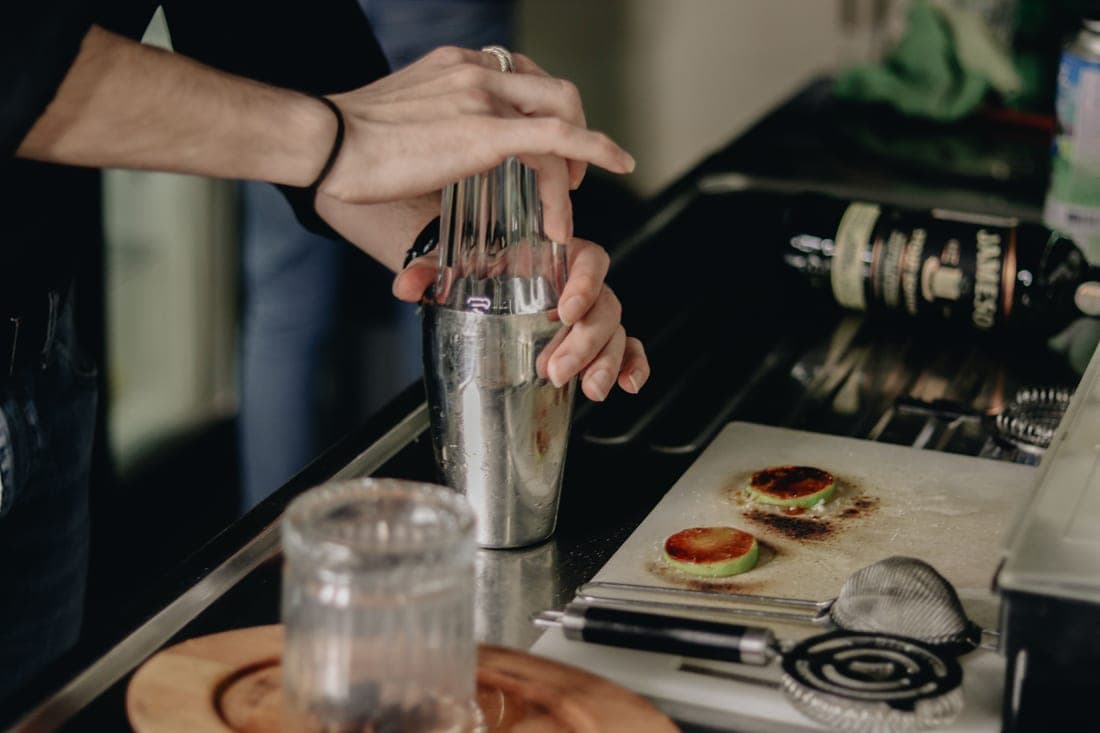
The short answer
Boston tins are the better tool: more capacity, faster chilling, faster to load and empty, and you choose your own strainer. A cobbler wins on exactly one axis and it is a big one - it is a single object with the strainer built in, so anyone can use it without learning a palm strike. If you are always the one shaking, buy tins. If drinks get made by whoever is nearest, buy a cobbler, or own both and stop thinking about it.
We earn a commission if you buy through the links on this page, at no extra cost to you. It never changes which product we pick. How we are funded.
Quick picks
| # | Product | Best for | Price |
|---|---|---|---|
| 1 | 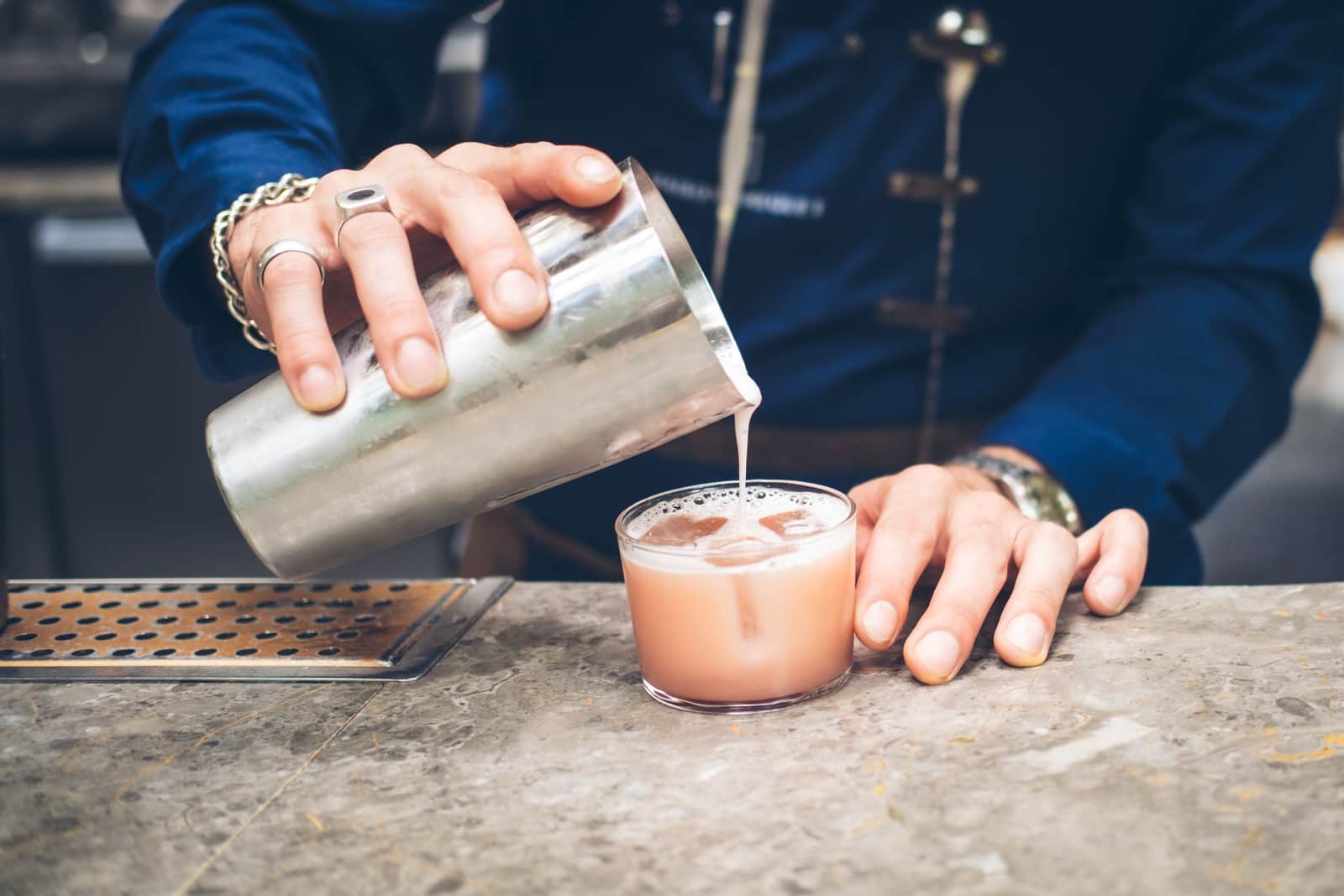 Cocktail Kingdom Koriko Weighted Shaking Tins The Boston answer | The default upgrade | |
| 2 | OXO Steel Cocktail Shaker The cobbler answer | Handing to a guest | |
| 3 |  Cocktail Kingdom Koriko Hawthorne Strainer What the Boston needs | Shaken drinks |
Scroll the table sideways on a narrow screen. Prices are set by the retailer and change, so every price link opens the current listing rather than quoting a number here.
Head to head
The comparison in one table
| Boston (two tins) | Cobbler (three-piece) | |
|---|---|---|
| Pieces | 2, plus a separate strainer | 3, strainer built in |
| Capacity | About 2 drinks | Usually 1 to 2 |
| Chilling | Faster - thinner metal | Slower - more mass to cool |
| Straining | Your choice of strainer | Fixed, usually coarser |
| Loading and emptying | Fast | Slower - narrow opening |
| Technique needed | A palm strike to break the seal | None |
| Fails by | Seal sticking until you learn the strike | Lid freezing on |
| Hand to a guest | No | Yes |
Read the last row as the decision. Everything above it favors tins; that one row is often worth more than all of them together, depending on your household.
Dimension one
Capacity and why it matters more than it sounds
A shaken drink needs room for the liquid, room for a full ice charge, and crucially room for the ice to travel. Chilling and dilution come from ice moving through liquid at speed, not from ice sitting in it.
A cobbler with a nominal capacity similar to a tin pair has less usable room, because the tapered lid eats the top of the vessel and the ice cannot use that space. In practice a cobbler is a one-to-two drink tool and an 18/28 pair is a comfortable two.
The knock-on effect is that under-filled shaking produces a thinner drink, because the ice had less room to work. If you regularly make two drinks and your cobbler feels tight, that is not fussiness - it is showing up in the glass. What size cocktail shaker has the capacity arithmetic.
Dimension two
The lid-freeze problem
Both formats have a characteristic failure and they are different failures. A Boston pair seals hard, and the fix is a technique - one firm palm strike on the large tin at the widest point of the join. Once learned, it never comes back.
A cobbler's cap can freeze onto the strainer top. The mechanism is the same contracting cold air, but the fix is not a technique, it is force and patience, and on a cheap cobbler it happens often enough to define the experience. This is the single reason the format has a poor reputation among people who have only used bad ones.
A well-made cobbler with a properly machined cap largely avoids it. That is what you are paying for when a cobbler costs more than the supermarket one, and it is worth paying.
Dimension three
Straining, and the thing you give up
A cobbler's built-in strainer is a set of punched holes. It works, and it is coarser than a Hawthorne with a dense spring, so more ice shards and citrus pulp make it into the glass. In a shaken sour that shows up as texture, and not in a good way.
With tins you choose. A Hawthorne for shaken drinks, a julep for stirred ones, and a fine mesh held underneath when you want the genuinely silky texture that double straining gives. That flexibility is a real advantage and it is the one most people underuse.
You can double strain out of a cobbler by holding a fine mesh under the pour, which recovers most of the difference. It is just an extra hand and an extra object, which is exactly what a cobbler was supposed to save you.
The honest answer
Most home bars should own both
These cost little enough that treating it as an either-or is a false economy. Tins for when you are making the drinks, a cobbler in the cupboard for when someone offers to help and you would rather say yes than deliver a tutorial.
There is also a practical second-shaker argument: a cobbler is the thing you hand to a second person so two drinks get made at once, and it is easier to explain than a second pair of tins.
The full field is in best cocktail shakers, and if you have already decided on tins, best weighted shaking tins is the page you want.
The picks in full
Every pick, and who each one is for
01 · The Boston answer
Cocktail Kingdom Koriko Weighted Shaking Tins
Cocktail Kingdom · Mid tier
The tins most working bartenders reach for, and the shortest path out of a shaker that sticks.
18 and 28oz weighted tins with a taper cut to seal on a tap and break on a strike. Roughly two drinks' capacity, thin metal that chills fast, and full freedom over which strainer you use.
The specs that decide it
- Set:
- 18 oz and 28 oz
- Capacity:
- about 2 drinks
- Base:
- weighted
- Material:
- stainless steel
Who it is for
- The taper is cut so the pair seals with a tap and breaks with a palm strike, every time
- Weighted bases keep an empty tin from skating across the counter
- Cheap enough to own two pairs, which is how you actually make four drinks
Where it gives ground
- The seal is tight by design and feels alarming for the first week
- Bare steel shows fingerprints immediately
Skip this one if you want a one-piece shaker you can hand to a guest. Tins are a two-handed tool and they reward practice.
02 · The cobbler answer
OXO Steel Cocktail Shaker
OXO · Entry tier
A cobbler that seals and pours without a fight, for the times when the person shaking is not you.
A three-piece that seals and pours without the classic cheap-cobbler failure of a lid that freezes on. One object, built-in strainer, no technique to explain - which is the entire argument for the format.
The specs that decide it
- Type:
- cobbler, three-piece
- Strainer:
- built into the lid
- Material:
- stainless steel
- Capacity:
- single to double drink
Who it is for
- Built-in strainer means one object, not three, which is what makes it guest-proof
- Seals reliably - the failure mode of cheap cobblers is a lid that freezes on, and this is not one
- Dishwasher tolerant
Where it gives ground
- Built-in strainer is coarser than a real Hawthorne
- Capacity caps out well below a 28 oz tin
Skip this one if you are the only person who ever makes drinks in your house. Tins are faster, hold more and strain better.
03 · What the Boston needs
Cocktail Kingdom Koriko Hawthorne Strainer
Cocktail Kingdom · Mid tier
A tight spring and a body that actually sits down in the tin, which is the whole job of a Hawthorne.
Tins strain nothing on their own. A dense removable spring holds back shaken citrus pulp and the gate gives real control over the pour, which is the freedom a cobbler's fixed lid strainer does not give you.
The specs that decide it
- Type:
- Hawthorne
- Spring:
- dense coil, removable
- Fit:
- seats in both 18 oz and 28 oz tins
- Material:
- stainless steel
Who it is for
- The spring is dense enough to hold back shaken citrus pulp without a second strainer
- Gate control is precise, so you can open it up for a shaken drink and close it for a stirred one
- Spring comes out for cleaning, which cheap strainers do not allow
Where it gives ground
- Still not a substitute for a fine mesh when you want a genuinely silky texture
- The gate tab is small if you have large hands
Skip this one if you only stir. A julep strainer is the better and cheaper tool for a mixing glass.
Honest limits
What we could not verify
We have not run timed chilling comparisons between the two formats; the chilling claim rests on the thermal properties of thin versus thick stainless rather than on our measurement. Lid-freezing frequency on specific cobblers reflects what owners consistently report.
We do not run a test lab and we have not personally used every product here. Where a judgment rests on published specifications or on what owners report rather than on our own hands, we say so. Read the full method.
Questions
Related questions
- Why do bartenders use Boston shakers?
- Capacity, speed and control. Two tins hold more, chill faster because the metal is thinner, load and empty quicker, and let the bartender choose a strainer to suit the drink.
- Is a cobbler shaker bad?
- No - a well-made one is a perfectly good tool with one genuine advantage: it is a single object anyone can use. Cheap cobblers earn the format's bad reputation by freezing shut.
- Can you use a cobbler for every cocktail?
- For shaken drinks, yes, within its capacity. For stirred drinks you want a mixing glass rather than any shaker - shaking a spirit-only drink aerates it and ruins the texture.
- How do you open a stuck cobbler shaker?
- Warm the cap briefly with your hands or a cloth run under warm water, then twist rather than pull. Do not run the whole shaker under hot water - you will warm the drink you just chilled.
Sources
Read next
Related reading
- Shakers and strainers
Weighted tins, cobblers and strainers, ranked on the thing that actually matters: whether the seal behaves.
- Best cocktail shakers
Tins against cobblers on seal, capacity and chilling - and which one suits who is actually shaking.
- Why shaker tins stick and leak
Sticking is the seal working, leaking is the seal failing. How to tell a technique problem from a bad pair.
- What size cocktail shaker do you need
Why 18 and 28 is the pairing, what a tin really holds with ice, and why two pairs beat one big one.
- How to shake a cocktail
Sealing, the shake itself, when to stop, and breaking the seal in one motion - plus dry shake and whip.