Guide
Dry shake vs wet shake
One builds the foam, the other makes the drink cold. Do them in the wrong order and you get a thin head on a perfectly chilled drink.
By Michael W. · Published October 2026
The short answer
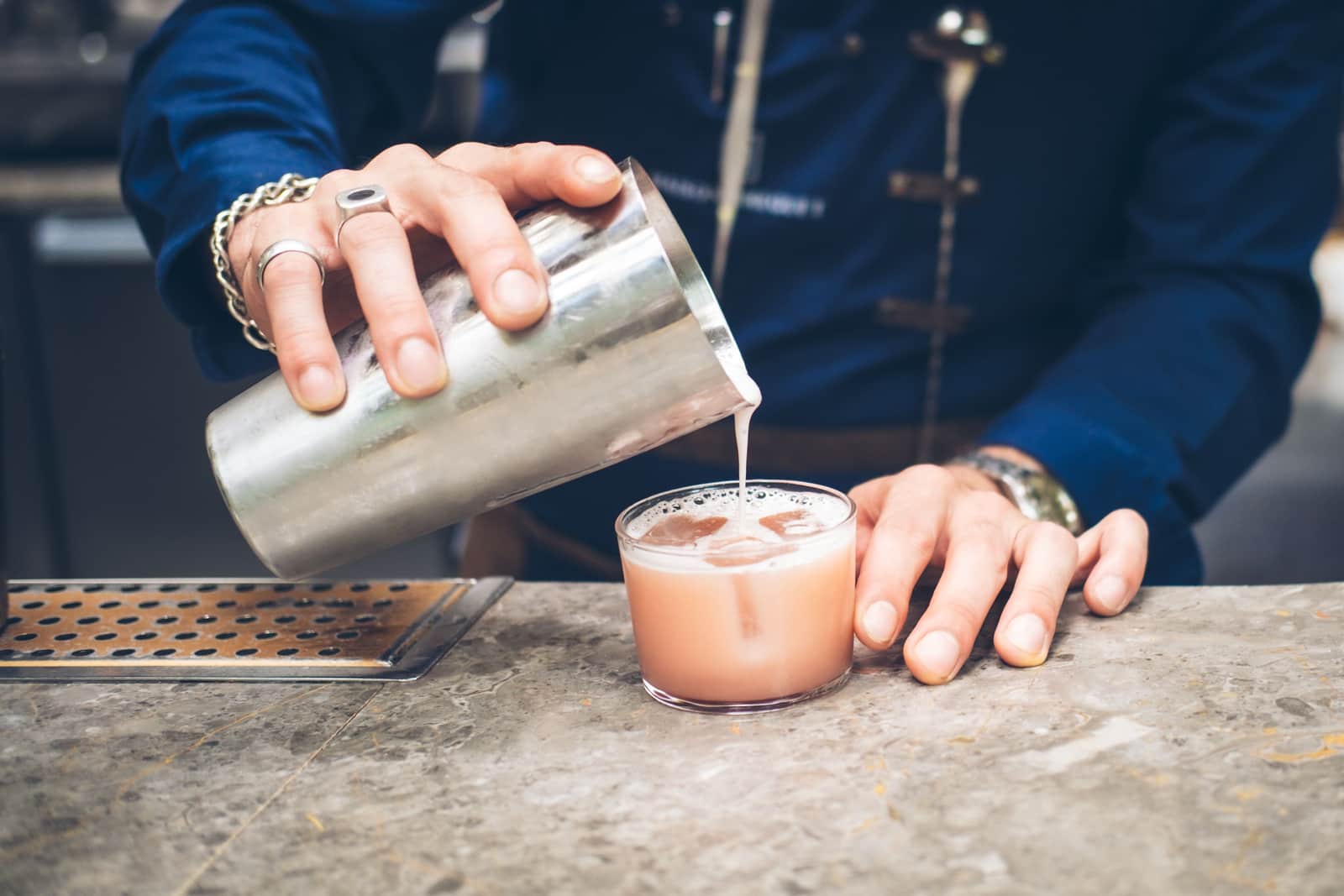
A dry shake is a shake with no ice; a wet shake is a normal shake with ice. The dry shake exists to build foam - without ice the liquid stays warm and thin, so the proteins in egg white or the oils in espresso emulsify and whip into a stable foam instead of being chilled into stiffness. The wet shake then chills and dilutes the drink, which is what the recipe needs. The standard order for a sour with egg white is dry first for about fifteen seconds, then add ice and wet shake for another ten to fifteen, then double strain. For an espresso martini, many bartenders now use a reverse dry shake: wet shake with ice first, strain the liquid off the ice into the clean tin, then dry shake the chilled liquid to whip up the head, which gives a denser and longer-lasting crema than the standard order does. If a drink contains no egg, no aquafaba, no cream and no espresso, skip the dry shake entirely - it does nothing for a daiquiri or a margarita except add thirty seconds and a warm tin.
We earn a commission if you buy through the links on this page, at no extra cost to you. It never changes which product we pick. How we are funded.
Quick picks
| # | Product | Best for | Price |
|---|---|---|---|
| 1 | 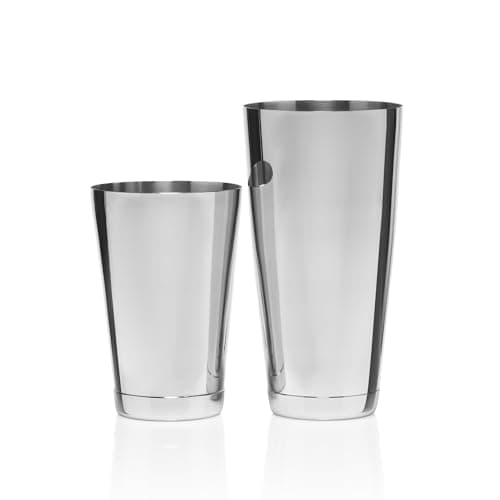 Cocktail Kingdom Koriko Weighted Shaking Tins The right vessel for both shakes | The default upgrade | $26.98 View on Amazon #ad how we are funded - price as of October 29, 2026 |
| 2 | 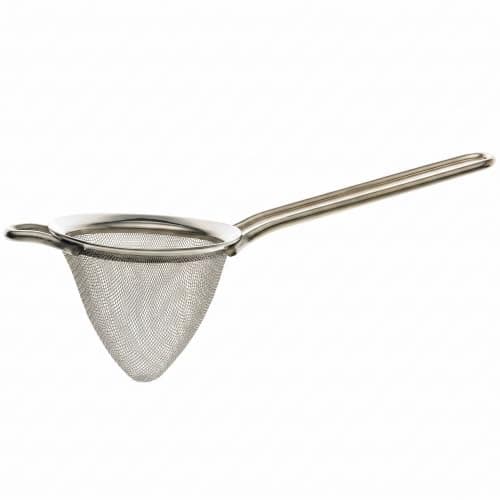 Barfly Fine Mesh Cocktail Strainer What makes the foam smooth | Double straining | $11.99 View on Amazon #ad how we are funded - price as of October 29, 2026 |
| 3 | 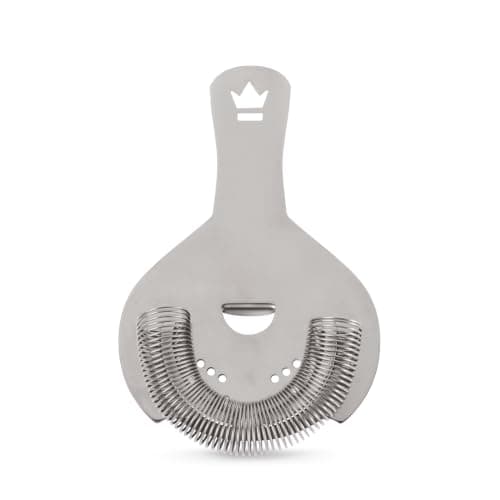 Cocktail Kingdom Koriko Hawthorne Strainer The first strain | Shaken drinks | $24.99 View on Amazon #ad how we are funded - price as of October 29, 2026 |
| 4 | 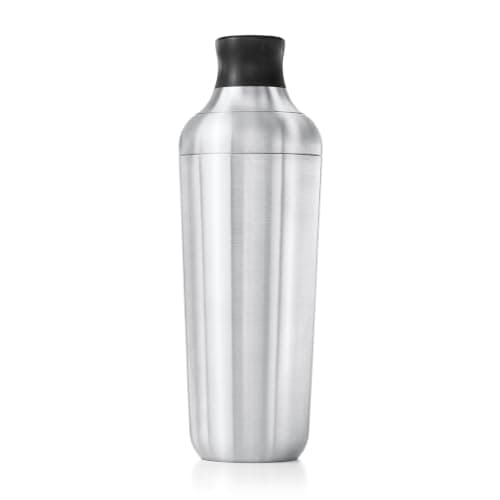 OXO Steel Cocktail Shaker with Strainer If you only own a cobbler | Handing to a guest | $29.63 View on Amazon #ad how we are funded - price as of October 29, 2026 |
Scroll the table sideways on a narrow screen. Every price in this table comes from Amazon’s own product data, is refreshed daily, and is stamped with the date it was read - and the button opens the current listing, which is always the final word.
The mechanism
Why temperature decides whether foam forms
Foam is air trapped in a liquid by something that will hold it there. In a whiskey sour that something is egg white protein; in an espresso martini it is the oils and fine solids in fresh espresso; in a vegan sour it is the protein and starch in aquafaba. In every case the stabiliser has to unfold and spread around the air bubbles, and that happens far more readily in a warm, low-viscosity liquid than in a cold, thick one.
That is the whole argument for shaking without ice first. With ice in the tin, the liquid is at near-freezing within a few seconds and it thickens; the protein stiffens before it has had a chance to spread, and you end up with a few big bubbles rather than a dense microfoam. Without ice, fifteen seconds of hard shaking gives you a visibly thickened, pale, aerated liquid before any chilling happens.
The wet shake then does the two jobs the dry shake cannot: it takes the drink down to serving temperature and it adds the meltwater the recipe assumes. Both are non-negotiable - a sour served without that dilution is harsh, and a warm sour is unpleasant no matter how good the head is. How to shake a cocktail covers the motion for both.
Pressure is the practical reason to be careful with a dry shake. A dry tin seals with warm air inside and the liquid is not holding the seal down, so a sloppy seat pops more easily than it does with ice. Seat the tins firmly, and shake with a hand over the join for the first couple of seconds.
The comparison
Both shakes, side by side
| Dry shake | Wet shake | |
|---|---|---|
| Ice in the tin | None | Full charge of cubes |
| What it achieves | Emulsifies and aerates - builds the foam | Chills to serving temperature and dilutes |
| Typical duration | About 15 seconds, hard | 10 to 15 seconds, hard |
| Drinks that need it | Whiskey sour, pisco sour, gin fizz, clover club, espresso martini, any aquafaba sour | Every shaken drink without exception |
| Drinks that do not | Daiquiri, margarita, gimlet, Paloma - nothing to foam | n/a |
| Common mistake | Doing it with ice in by accident, or skipping the headroom | Shaking too briefly, so the drink is cold but under-diluted |
The single most common error is the one in the last row of the dry-shake column: filling the tin too full. Foam needs somewhere to go, and a 28 oz tin containing 4 oz of liquid whips far better than an 18 oz tin containing the same, because the air space is doing the work. If your foam is disappointing and your technique is right, try the bigger tin.
Order of operations
Standard, reverse, and which to use
The standard order is dry then wet. Combine everything including the egg white in the small tin, seal, dry shake hard for about fifteen seconds, open, add a full charge of ice, seal again and wet shake for another ten to fifteen. Double strain into the glass through a fine mesh. This is the reliable method for a whiskey sour or a pisco sour and it is the one to learn first.
The reverse dry shake inverts it. Wet shake first with ice, strain the chilled liquid off the ice into the clean tin, then dry shake that liquid and pour. The theory is that you are whipping an already-diluted liquid with no ice shards in it, which gives a denser, smoother and longer-lasting head - and it is now the common approach for espresso martinis, where the crema is most of the presentation. Best cocktail shaker for espresso martini covers the tins for exactly that drink.
- Chill the glass first - a coupe or a Nick & Nora, in the freezer or filled with ice water while you work.
- Build the drink in the small tin: spirit, citrus, syrup, and the egg white or espresso last.
- Dry shake hard for about 15 seconds, with a hand over the join for the first couple of seconds.
- Open, add a full charge of large cubes, reseal and wet shake 10 to 15 seconds until the tin is painfully cold.
- Strain through a Hawthorne and then through fine mesh into the chilled glass.
- Let it settle for twenty or thirty seconds before garnishing - the head firms up as it stands.
Step five is where most home sours lose their texture. A single strain brings ice shards through, and ice shards in a foam melt and collapse it from underneath. When to double strain a cocktail explains which drinks need it and how to use a Hawthorne strainer covers the first strain.
Troubleshooting
Thin head, no head, or a drink that tastes of egg
A thin head almost always means the dry shake was too short, too gentle, or had too little air space. Fifteen seconds of genuinely hard shaking is longer and more violent than people expect, and the liquid should look visibly paler and thicker when you open the tin. If it does not, keep going.
No head at all usually means the egg white was old or the citrus went in on top of it and started to set it before the shake. Fresh egg white foams better, and in practice a fresher egg separates more cleanly too. Aquafaba - the liquid from a can of chickpeas - is a genuine substitute and behaves similarly, though it needs a slightly longer dry shake.
A drink that tastes of egg is a sign of not enough citrus or not enough aromatic garnish rather than a technique failure. The acid in the citrus is what neutralises the smell, and a few drops of bitters or a grating of nutmeg on the head is the traditional fix - the aroma sits right under your nose as you drink.
And if the head is perfect but the drink is harsh, the wet shake was too short. Cold and diluted are two different achievements, and a ten-second wet shake with big cubes delivers less dilution than the same shake with smaller ones. What size ice for a cocktail shaker covers that trade, and best cocktail shakers covers the tins themselves.
The picks in full
Every pick, and who each one is for
01 · The right vessel for both shakes
Cocktail Kingdom Koriko Weighted Shaking Tins
Cocktail Kingdom · Mid tier
#ad how we are funded - price as of October 29, 2026
The tins most working bartenders reach for, and the shortest path out of a shaker that sticks.
The 18 oz and 28 oz weighted set holding around two drinks. A dry shake needs headroom - foam expands a lot and a tin that is nearly full of liquid cannot whip anything - and a two-tin set gives you a second vessel for the reverse dry shake without washing anything mid-drink. The weighted base also keeps the tin still while you reseat it.
The specs that decide it
- Set:
- 18 oz and 28 oz
- Capacity:
- about 2 drinks
- Base:
- weighted
- Material:
- stainless steel
Who it is for
- The taper is cut so the pair seals with a tap and breaks with a palm strike, every time
- Weighted bases keep an empty tin from skating across the counter
- Cheap enough to own two pairs, which is how you actually make four drinks
Where it gives ground
- The seal is tight by design and feels alarming for the first week
- Bare steel shows fingerprints immediately
Skip this one if you want a one-piece shaker you can hand to a guest. Tins are a two-handed tool and they reward practice.
02 · What makes the foam smooth
Barfly Fine Mesh Cocktail Strainer
Barfly by Mercer · Entry tier
#ad how we are funded - price as of October 29, 2026
The second strainer that turns a gritty home shaken drink into a silky one, for very little money.
A fine mesh strainer used over the glass as the second strain. All the technique in the world will not save a foam that has ice chips in it - fine mesh catches the shards and any undissolved protein, and the head that lands in the glass is noticeably smoother for it. This is the cheap tool that finishes the job.
The specs that decide it
- Type:
- fine mesh, conical bowl
- Diameter:
- about 3.5 in
- Material:
- stainless steel
- Used with:
- held under the pour, alongside a Hawthorne
Who it is for
- Catches the ice fines and citrus pulp a Hawthorne spring lets through - the single biggest texture upgrade in a shaken drink
- A conical bowl drains faster than a flat one and does not trap liquid in the corners
- Small enough to hold in one hand while you pour with the other
Where it gives ground
- It is a second object and a second thing to wash, every single drink
- Mesh clogs with muddled herbs and wants rinsing immediately rather than later
Skip this one if you only stir. There is nothing in a stirred drink for a fine mesh to catch, and the extra step chills nothing.
03 · The first strain
Cocktail Kingdom Koriko Hawthorne Strainer
Cocktail Kingdom · Mid tier
#ad how we are funded - price as of October 29, 2026
A tight spring and a body that actually sits down in the tin, which is the whole job of a Hawthorne.
The Koriko Hawthorne has a dense removable coil and seats in both the 18 oz and 28 oz tins, which matters in a reverse dry shake because you are straining mid-drink and need the strainer to sit tight on a tin you are holding at an angle. Dense coil means less pulp and fewer shards through to the second strain.
The specs that decide it
- Type:
- Hawthorne
- Spring:
- dense coil, removable
- Fit:
- seats in both 18 oz and 28 oz tins
- Material:
- stainless steel
Who it is for
- The spring is dense enough to hold back shaken citrus pulp without a second strainer
- Gate control is precise, so you can open it up for a shaken drink and close it for a stirred one
- Spring comes out for cleaning, which cheap strainers do not allow
Where it gives ground
- Still not a substitute for a fine mesh when you want a genuinely silky texture
- The gate tab is small if you have large hands
Skip this one if you only stir. A julep strainer is the better and cheaper tool for a mixing glass.
04 · If you only own a cobbler
OXO Steel Cocktail Shaker with Strainer
OXO · Entry tier
#ad how we are funded - price as of October 29, 2026
A cobbler that seals and pours without a fight, for the times when the person shaking is not you.
A 24 oz three-piece cobbler with a built-in strainer. Both shakes work in it, with two caveats: 24 oz leaves less headroom for foam than a 28 oz tin does, and the built-in strainer is not fine mesh, so the head will be slightly coarser. Perfectly workable for a sour at home.
The specs that decide it
- Type:
- cobbler, three-piece
- Strainer:
- built into the lid
- Material:
- stainless steel
- Capacity:
- 24 oz
Who it is for
- Built-in strainer means one object, not three, which is what makes it guest-proof
- Seals reliably - the failure mode of cheap cobblers is a lid that freezes on, and this is not one
- Dishwasher tolerant
Where it gives ground
- Built-in strainer is coarser than a real Hawthorne
- Capacity caps out well below a 28 oz tin
Skip this one if you are the only person who ever makes drinks in your house. Tins are faster, hold more and strain better.
Questions
Related questions
- What is the difference between a dry shake and a wet shake?
- A dry shake has no ice in the tin and exists to emulsify and aerate - it builds the foam. A wet shake has a full charge of ice and exists to chill the drink and add the dilution the recipe assumes. Foamy drinks need both; everything else needs only the wet shake.
- Which drinks need a dry shake?
- Anything with egg white, aquafaba, cream or espresso: whiskey sour, pisco sour, gin fizz, clover club, espresso martini. Drinks with nothing to foam - daiquiri, margarita, gimlet, Paloma - gain nothing from it.
- How long should you dry shake?
- About fifteen seconds of genuinely hard shaking, and harder than most people do it. The liquid should come out visibly paler and thicker than it went in. If it does not look aerated when you open the tin, keep going.
- What is a reverse dry shake?
- Wet shaking with ice first, straining the chilled liquid off the ice into a clean tin, then dry shaking that liquid. Because you are whipping an already-diluted liquid with no ice shards in it, the head comes out denser and lasts longer - which is why it is now common for espresso martinis.
- Why is my egg white foam thin?
- Three usual causes: the dry shake was too short or too gentle, the tin was too full so there was no air space to whip into, or the egg white was not fresh. A 28 oz tin with 4 oz of liquid in it foams far better than a small tin with the same amount.
- Do you need a dry shake for an espresso martini?
- Some form of dry shake, yes - the crema is most of the drink's presentation and it will not build properly in a tin full of ice. Many bartenders use the reverse order for this one: wet shake, strain off the ice, then dry shake the chilled liquid.
Read next
Related reading
- Shakers and strainers
Weighted tins, cobblers and strainers, ranked on the thing that actually matters: whether the seal behaves.
- How to shake a cocktail
Sealing, the shake itself, when to stop, and breaking the seal in one motion - plus dry shake and whip.
- When to double strain a cocktail
Shaken, with something in it, served up - the three-part test for when a fine mesh earns its place.
- Best cocktail shaker for an espresso martini
Headroom, a weighted base and a fine mesh - what it actually takes to get a thick crema at home.
- Best cocktail strainers
Hawthorne, julep and fine mesh compared on spring density, fit and gate control - and what double straining fixes.
- Best glasses for an espresso martini
The drink is judged on a half-inch of crema - and a rounded bowl is the only shape that holds it flat.