Roundup
Best cocktail shakers under $40
Under $40 is where professional weighted tins actually live. The expensive failure in this category is not a cheap shaker - it is a shaker that welds itself shut.
By Michael W. · Published November 2026
The short answer
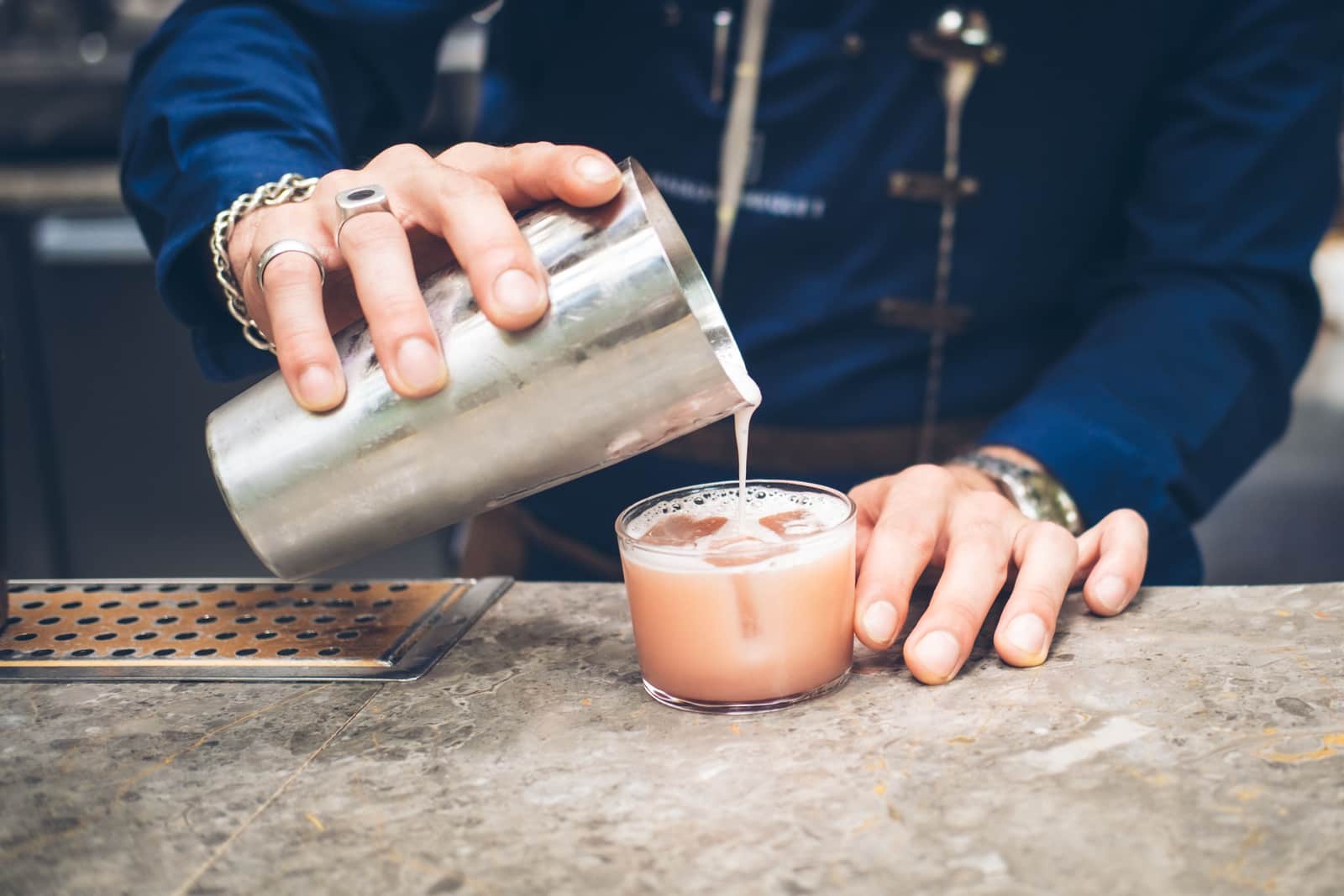
Buy the Cocktail Kingdom Koriko weighted tins. An 18 oz and 28 oz pair whose taper is cut so the tins seal with a tap and break with a palm strike, they are what most working bartenders reach for, and at this price you can own two pairs - which is how you actually make four drinks rather than two. If the person shaking is sometimes a guest rather than you, the OXO Steel cobbler is the honest exception on this page: three pieces with the strainer built into the lid, so it is one object to hand over instead of three, and crucially it is a cobbler that does not freeze shut. The Barfly Deluxe set is heavy-gauge weighted tins from a professional kitchen brand for less than the bartender-shop pairs, with a slightly less consistent seal feel pair to pair. The Leopold tins are the same working geometry as the Koriko in a fluted deco finish, which is worth it only if your tools sit out on a cart. What $40 buys in this category is everything that matters; what it does not buy is a finish to match a copper bar, and nothing else.
We earn a commission if you buy through the links on this page, at no extra cost to you. It never changes which product we pick. How we are funded.
Quick picks
| # | Product | Best for | Price |
|---|---|---|---|
| 1 | 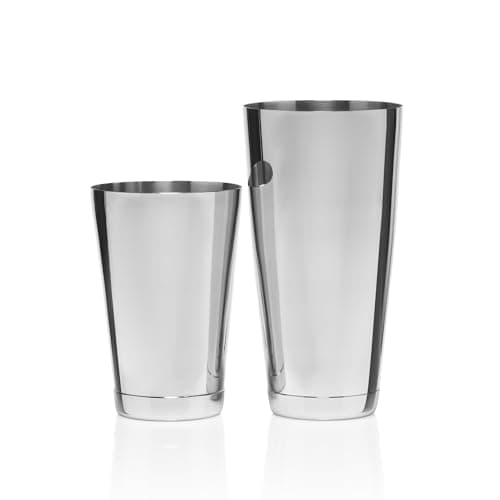 Cocktail Kingdom Koriko Weighted Shaking Tins Best under $40 overall, and the budget pick | The default upgrade | $26.98 View on Amazon #ad how we are funded - price as of November 22, 2026 |
| 2 | 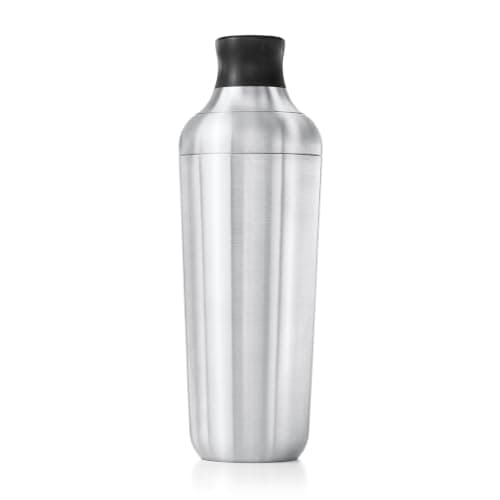 OXO Steel Cocktail Shaker with Strainer Best cobbler, and best to hand to a guest | Handing to a guest | $29.99 View on Amazon #ad how we are funded - price as of November 22, 2026 |
| 3 | 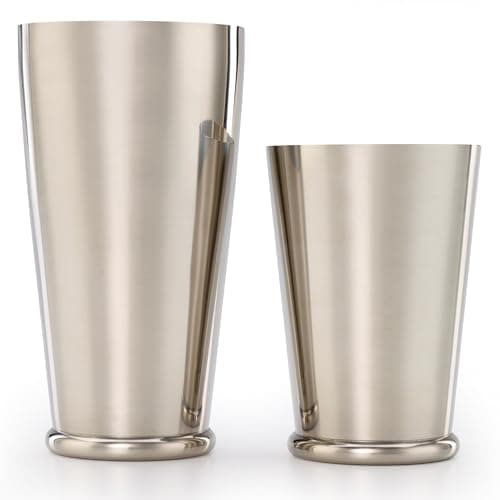 Barfly Deluxe Weighted Cocktail Shaker Set Best heavy-gauge pair for less | A weighted pair for less | $36.19 View on Amazon #ad how we are funded - price as of November 22, 2026 |
| 4 | 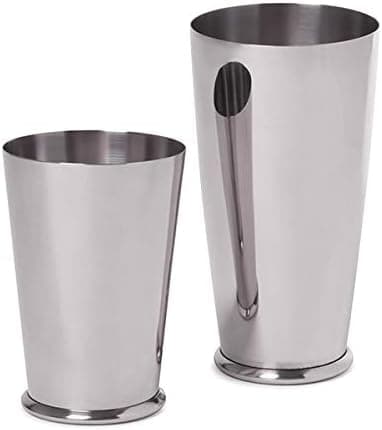 Cocktail Kingdom Leopold Weighted Shaking Tins Best if the tins stay out on display | When the tins are on display | $31.99 View on Amazon #ad how we are funded - price as of November 22, 2026 |
Scroll the table sideways on a narrow screen. Every price in this table comes from Amazon’s own product data, is refreshed daily, and is stamped with the date it was read - and the button opens the current listing, which is always the final word.
Why the ceiling works
Why $40 is the whole category, not the bottom of it
A price-ceiling page usually has to explain what you give up. Here the honest answer is almost nothing, and it is worth understanding why, because it changes how you shop.
A shaker has exactly one engineering requirement: two pieces of metal that seal against each other when the contents contract, and then come apart again when you want them to. Cocktail Kingdom, Barfly by Mercer and OXO all sell into working bars, where a tin pair is bought by the dozen and a cobbler that jams is a service problem. That pressure is why the tins most bartenders use cost less than a decent bottle of gin.
So above $40 you are buying finish - copper plating, matte black, engraving, a presentation box. Those are real things to want and none of them changes the drink. Below about $20 you are buying a tolerance nobody controlled, and that is where the actual risk in this category lives. Which brings us to the thing this page exists to warn about.
The expensive mistake in shakers is not buying a cheap one. It is buying one that welds itself shut. A tin pair or a cobbler whose fit is slightly wrong will seize as the metal contracts around ice, and no technique fixes a dimensional relationship - it is a permanent property of that set. Why shaker tins stick and leak explains the mechanism, and it is the reason every pick here is from a company that sells to bars.
How we picked these
The criteria, in the order they matter
Three things decide whether a shaker is good, and finish is not one of them. We ranked on these in order and gave no credit for appearance except where a pick is explicitly for a bar where the tools are on show.
- Does the seal hold. A shaker that leaks down your forearm is a shaker you stop using. This is a function of how the taper is cut, and it is the thing the professional brands control and the direct-import brands do not.
- Does it come apart. The more important half of the same property, and the one people do not think about until it happens. Metal contracts around ice and a wrong fit locks. A correctly cut pair breaks with one strike at the heel of the hand; a bad pair needs a tap on the counter edge, then a knife, then a decision about whether this drink is worth it.
- Capacity, in drinks rather than ounces. An 18 oz and 28 oz pair shakes about two drinks. A 24 oz cobbler shakes one comfortably. If you routinely make four, the answer is two pairs of tins rather than one bigger shaker - which the price here makes realistic.
- Weighted base, and what it is actually for. Not heft for its own sake: a weighted bottom keeps an empty tin from skating when you set it down one-handed, and it shifts the balance so a hard shake stays controlled rather than wandering.
| Shaker | Type | Capacity | Weighted | The honest limitation |
|---|---|---|---|---|
| Cocktail Kingdom Koriko | Weighted tin pair | 18 oz + 28 oz, about 2 drinks | Yes | Tight seal feels alarming for a week; shows fingerprints |
| OXO Steel cobbler | 3-piece cobbler | 24 oz, about 1 drink | No | Built-in strainer is coarser than a Hawthorne |
| Barfly Deluxe set | Weighted tin pair | 18 oz + 28 oz, about 2 drinks | Yes | Plain stainless only; seal feel varies pair to pair |
| Cocktail Kingdom Leopold | Weighted tin pair | 18 oz + 28 oz, about 2 drinks | Yes | Paying for the deco fluting, not for performance |
What is not on this page: every cobbler under about $20, and the whole category of three-piece sets sold in a gift box with a jigger and a strainer thrown in. The cobblers are where the seizing problem lives, and the gift sets economize on exactly the piece that matters. Best bartender kits covers the boxed sets honestly, and best cocktail shakers is the full ranking at every price.
Tins or cobbler
The decision that actually matters at this price
Three of these four are tin pairs and one is a cobbler, and choosing between the formats matters far more than choosing between the three tins. The tins are close to interchangeable in function; a cobbler is a different tool.
A tin pair is faster, holds more, chills harder and strains better, because you pair it with a real Hawthorne and because an 18 oz tin nested into a 28 oz tin gives ice room to move. Movement is what chills and dilutes a drink - ice that is packed solid just sits there. The cost is that it is a two-handed technique with a learning week: you have to seal it with confidence and break it with a strike rather than a wiggle.
A cobbler is one object with a lid and a built-in strainer. It is slower, holds less and strains coarser, and in exchange anyone can use it without being taught. That is not a small thing. If drinks at your house get made by whoever is standing nearest the fridge, a cobbler that seals reliably is a better shaker than tins nobody else will touch.
The honest recommendation for most people reading this is both, which the ceiling makes affordable: a pair of Koriko tins for when you are making the drink, and the OXO cobbler in the cupboard for when you are not. Boston vs cobbler shaker is the full comparison, and how to shake a cocktail covers the technique that makes tins worth the week of practice.
What to buy with it
The two things a shaker under $40 does not include
A tin pair is not a complete shaking setup, and it is better to know that before the first drink than after it.
You need a strainer. Tins have no strainer at all - a Hawthorne sits in the mouth of the large tin and holds back the ice, and a good one costs very little. If you shake citrus drinks you also want a fine mesh held under the pour, which catches the ice shards and pulp that make a home shaken drink gritty rather than silky. Both are well inside a modest budget: best cocktail strainers ranks them, how to use a Hawthorne strainer covers seating it, and when to double strain a cocktail covers when the second strainer earns the extra step.
And you need the right ice, which is the part people skip. Shaking wants large solid cubes - roughly 1 to 1.25 inches - filling the large tin about two thirds. Small or wet ice from a bag fragments on the first hard shake, which over-dilutes the drink before it is cold. What size ice for a cocktail shaker has the detail, and it is the cheapest upgrade on this page because it is free.
For the rest of the kit at a similar price ceiling, best bar tools under $25 covers one tool per job - jigger, bar spoon, three strainers, muddler, squeezer and a Lewis bag - and names the shaker as the one tool that ceiling genuinely cannot buy. This page is the answer to that gap.
The honest part
What we did not verify
We have not run these four against each other with instrumentation - no leak testing across a batch, no measurement of how hard each pair is to break, and no temperature logging. Capacities, dimensions, materials, set contents and dishwasher guidance are as published by the maker or as listed in Amazon's catalog data for that product.
The central claim - that a correctly cut taper seals and releases reliably while a wrong one seizes - is the mechanical property of the format rather than a measurement of these specific units, and it is the reason the picks are restricted to companies that supply working bars. Our note that the Barfly seal feel varies a little more pair to pair than Cocktail Kingdom's is the consistent owner report for that set rather than a tolerance figure, because nobody in this category publishes one.
Nobody publishes steel gauge, tolerance, or a drop rating either. What is verifiable is capacity, dimensions, material and whether the base is weighted - and at a $40 ceiling those four plus the brand's distribution are enough to choose with.
The picks in full
Every pick, and who each one is for
01 · Best under $40 overall, and the budget pick
Cocktail Kingdom Koriko Weighted Shaking Tins
Cocktail Kingdom · Mid tier
#ad how we are funded - price as of November 22, 2026
The tins most working bartenders reach for, and the shortest path out of a shaker that sticks.
An 18 oz and 28 oz weighted stainless pair, about two drinks per shake, and the cheapest pick here. The taper is the reason to buy it: it is cut so the pair seals with a tap and breaks with a palm strike every time, which is the single difference between a shaker you enjoy and one you fight. Weighted bases keep an empty tin from skating across the counter. Honest cons: the seal is tight by design and feels alarming for the first week, and bare steel shows fingerprints immediately. Skip it if you want a one-piece shaker to hand to a guest - tins are a two-handed tool that reward practice.
The specs that decide it
- Set:
- 18 oz and 28 oz
- Capacity:
- about 2 drinks
- Base:
- weighted
- Material:
- stainless steel
Who it is for
- The taper is cut so the pair seals with a tap and breaks with a palm strike, every time
- Weighted bases keep an empty tin from skating across the counter
- Cheap enough to own two pairs, which is how you actually make four drinks
Where it gives ground
- The seal is tight by design and feels alarming for the first week
- Bare steel shows fingerprints immediately
Skip this one if you want a one-piece shaker you can hand to a guest. Tins are a two-handed tool and they reward practice.
02 · Best cobbler, and best to hand to a guest
OXO Steel Cocktail Shaker with Strainer
OXO · Entry tier
#ad how we are funded - price as of November 22, 2026
A cobbler that seals and pours without a fight, for the times when the person shaking is not you.
A 24 oz three-piece cobbler with the strainer built into the lid, dishwasher tolerant, and the one shaker here that is a single object rather than a technique. The important thing is that it seals and pours without a fight - the standard failure of cheap cobblers is a lid that freezes on as the metal contracts, and this is not one of those. Honest cons: the built-in strainer is coarser than a real Hawthorne, so a shaken citrus drink comes through grittier, and capacity caps out well below a 28 oz tin. Skip it if you are the only person who ever makes drinks in your house.
The specs that decide it
- Type:
- cobbler, three-piece
- Strainer:
- built into the lid
- Material:
- stainless steel
- Capacity:
- 24 oz
Who it is for
- Built-in strainer means one object, not three, which is what makes it guest-proof
- Seals reliably - the failure mode of cheap cobblers is a lid that freezes on, and this is not one
- Dishwasher tolerant
Where it gives ground
- Built-in strainer is coarser than a real Hawthorne
- Capacity caps out well below a 28 oz tin
Skip this one if you are the only person who ever makes drinks in your house. Tins are faster, hold more and strain better.
03 · Best heavy-gauge pair for less
Barfly Deluxe Weighted Cocktail Shaker Set
Barfly by Mercer · Mid tier
#ad how we are funded - price as of November 22, 2026
Heavy-gauge weighted tins from a professional kitchen brand, at noticeably less than the bartender-shop pairs.
An 18 oz (532 ml) and 28 oz (828 ml) weighted pair in heavy-gauge steel from Mercer's bar line, 6.75 inches tall by 3.75 across the large tin. It feels more substantial in the hand than the price suggests, and the satin interior wears to a used finish rather than scratching to a dull gray. Honest cons: sold in plain stainless only, so there is no finish to match a black or copper bar, and the seal feel varies a little more pair to pair than the Cocktail Kingdom tins do. Skip it if you want the single most predictable seal available.
The specs that decide it
- Set:
- 18 oz (532 ml) and 28 oz (828 ml)
- Material:
- stainless steel
- Base:
- weighted bottom
- Size:
- 6.75 in tall by 3.75 in across the large tin
Who it is for
- Heavy-gauge steel feels more substantial in the hand than the price suggests
- A weighted base is the whole point of a tin pair, and this one has it at the lower price
- Satin interior wears well rather than scratching to a dull gray
Where it gives ground
- Only sold in plain stainless, so there is no finish to match a copper or black bar
- Seal feel varies a little more pair to pair than the Cocktail Kingdom tins
Skip this one if you want the single most predictable seal available. Plain Koriko tins are the safer default.
04 · Best if the tins stay out on display
Cocktail Kingdom Leopold Weighted Shaking Tins
Cocktail Kingdom · The step up
#ad how we are funded - price as of November 22, 2026
The same working geometry as the Koriko in an art deco dress, for a bar where the tools sit out.
The same 18 oz and 28 oz working geometry as the Koriko in a fluted art deco pattern drawn from 1920s and 30s pieces, and the fluting genuinely gives a grippier hold with wet hands than a smooth tin. It seals and breaks the way the plain tins do. Honest cons: you are paying for the styling rather than for performance, and the pattern traps a little more residue, so it wants a brush rather than a rinse. Skip it if your tins live in a drawer - you will be paying for a finish nobody sees.
The specs that decide it
- Set:
- 18 oz and 28 oz
- Capacity:
- about 2 drinks
- Base:
- weighted
- Styling:
- fluted deco pattern drawn from 1920s-30s pieces
Who it is for
- Looks like something rather than like equipment, which matters on an open bar cart
- Fluting gives a grippier hold with wet hands than a smooth tin
- Seals and breaks the same way the plain tins do
Where it gives ground
- The pattern traps a little more residue, so it wants a brush rather than a rinse
- You pay for the styling, not for performance
Skip this one if your tins live in a drawer. You will be paying for a finish nobody sees.
Honest limits
What we could not verify
We have not run these four against each other with instrumentation - no leak testing, no measurement of release force, no temperature logging. Capacities, dimensions, materials, set contents and dishwasher guidance are as published by the maker or as listed in Amazon's catalog data. The central claim, that a correctly cut taper seals and releases while a wrong one seizes, is a mechanical property of the format rather than a measurement of these units. Our note that the Barfly seal feel varies more pair to pair than Cocktail Kingdom's is the consistent owner report rather than a published tolerance - nobody in this category publishes steel gauge or tolerance figures.
We do not run a test lab and we have not personally used every product here. Where a judgment rests on published specifications or on what owners report rather than on our own hands, we say so. Read the full method.
Questions
Related questions
- What is the best cocktail shaker under $40?
- The Cocktail Kingdom Koriko weighted tins - an 18 oz and 28 oz pair whose taper seals with a tap and breaks with a palm strike, and the cheapest pick in this bracket. If the person shaking is sometimes a guest, the OXO Steel cobbler is the better buy because it is one object with a built-in strainer and it does not freeze shut.
- Are cheap cocktail shakers worth it?
- From a company that supplies working bars, yes - $40 buys everything that matters in this category, because a shaker's only real engineering requirement is a taper cut to seal and release. Below about $20 you are buying a tolerance nobody controlled, and a tin pair that seizes around ice is a permanent fault, not a technique problem.
- Should I buy shaking tins or a cobbler shaker?
- Tins if you are the one making drinks - faster, more capacity, harder chill, better straining with a Hawthorne. A cobbler if drinks get made by whoever is nearest the fridge, because it is one object anyone can use. At this price owning both is realistic and is what we would actually do.
- What size shaking tins should I buy?
- An 18 oz and 28 oz pair, which is the standard and shakes about two drinks. If you routinely make four, buy two pairs rather than one larger shaker - the price in this bracket makes that cheaper than a single premium set, and two pairs also means one is clean.
- Do I need a strainer with shaking tins?
- Yes. Tins have no strainer - a Hawthorne seats in the mouth of the large tin to hold back the ice. If you shake citrus drinks, add a fine mesh held under the pour to catch the shards and pulp that make a home shaken drink gritty. Both cost very little.
- Why do my shaker tins stick together?
- Either the fit is wrong, which is permanent, or you are sealing them too hard and shaking warm. Cold contracts the metal around the ice and tightens the joint, so seat the small tin at a slight angle with a firm tap rather than driving it home, and break the seal with the heel of your hand at the widest point of the joint.
- Is a weighted shaker tin better than an unweighted one?
- For home use, yes, though not for the reason people assume. The weight is not about feel - it keeps an empty tin from skating when you set it down one-handed, and it shifts the balance so a hard shake stays controlled. All three tin pairs here are weighted.
- Does a more expensive shaker make a better drink?
- No. Above this ceiling you are buying finish - copper plating, matte black, engraving, a presentation box. Those are legitimate things to want and none of them changes what is in the glass. The ice you shake with changes the drink far more than the shaker does.
Read next
Related reading
- Shakers and strainers
Weighted tins, cobblers and strainers, ranked on the thing that actually matters: whether the seal behaves.
- Best cocktail shakers
Tins against cobblers on seal, capacity and chilling - and which one suits who is actually shaking.
- Best weighted shaking tins
Two-piece tins compared on seal behavior, capacity pairing, balance and edge finish.
- Boston vs cobbler shaker
Two tins against three pieces, on capacity, chilling, straining and who is doing the shaking.
- Why shaker tins stick and leak
Sticking is the seal working, leaking is the seal failing. How to tell a technique problem from a bad pair.
- Best bar tools under $25
Ten bar tools under $25, one per job, from the companies that supply working bars - plus the one tool the ceiling genuinely cannot buy, and what to do about it.