Guide
Bar furniture buying guide
Bar furniture is a shopping category, not a thing. Work out which of the four pieces your room is actually short of, buy that one properly, and leave the rest alone.
By Michael W. · Published October 2026
The short answer
There are only four pieces in this category and most homes need one or two of them. The surface that holds the bottles comes first: a rolling cart if the collection looks good and the room is not bright, like the two-tier Nathan James Carter with its railed glass top and roughly ten-bottle bottom shelf, or a narrow three-tier such as the MAHANCRIS at 16.9 by 9.4 inches if what you have is a gap rather than a corner. Enclosed storage comes next and only if the collection has outgrown display logic or the room is sunny, where the Crosley Landon cabinet adds seven wine compartments, four hanging stem slots and a top rated to 100 lb. Seating comes third and is pure arithmetic - surface height minus 11 inches equals seat height, so a 36-inch counter takes a 24 to 26 inch stool like the counter-height Nathan James Arlo and a 42-inch bar takes 29 to 31 inches. The fourth piece, a dedicated bar table or pub set, is the one we would skip in almost every house: it occupies dining-room floor area to do a job a counter already does. Buy in that order, measure before you order anything, and spend the money on the piece that is actually missing rather than on a matching set.
We earn a commission if you buy through the links on this page, at no extra cost to you. It never changes which product we pick. How we are funded.
Quick picks
| # | Product | Best for | Price |
|---|---|---|---|
| 1 |  Nathan James Carter Rolling Bar Cart Best first piece for most rooms | Most home bars | |
| 2 | 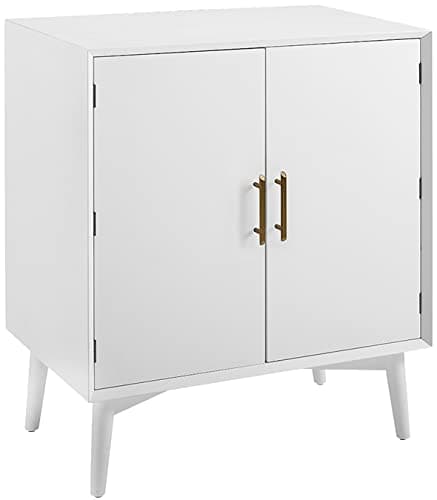 Crosley Landon Bar Cabinet Best if the bar has to close | Closing the bar | $257.80 View on Amazon #ad how we are funded - price as of October 27, 2026 |
| 3 | 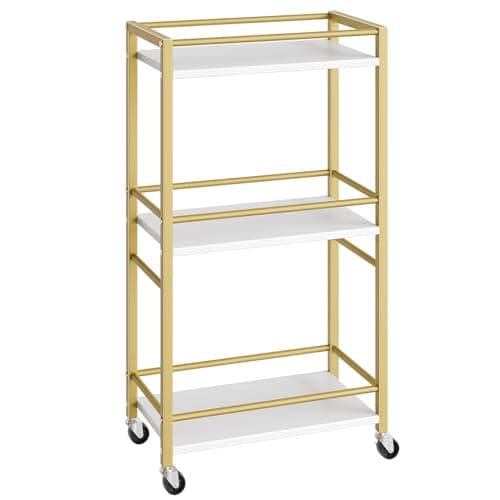 MAHANCRIS 3-Tier Rolling Bar Cart Best when the space is a gap | Narrow gaps | $45.99 #ad how we are funded - price as of October 27, 2026 |
| 4 | 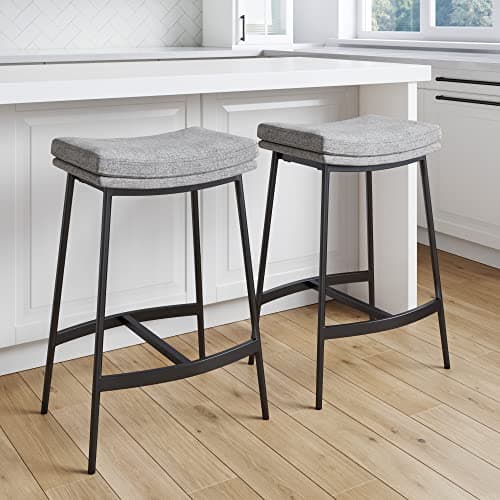 Nathan James Arlo Backless Saddle Bar Stool, Set of 2 Best seating for a standard island | Tucking under an island | |
| 5 | 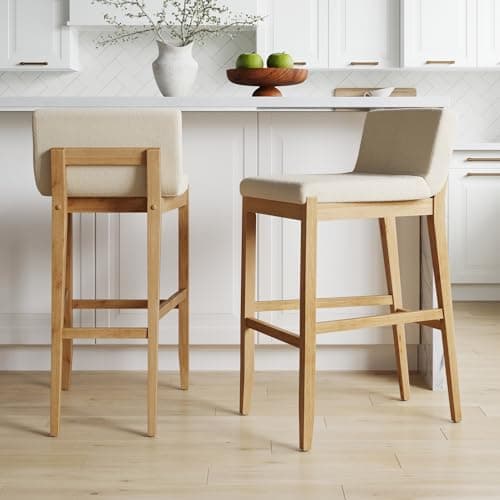 Nathan James Gracie Upholstered Bar Stool, Set of 2 Best seating if people stay a while | Sitting for a second drink | $339.98 #ad how we are funded - price as of October 27, 2026 |
| 6 | 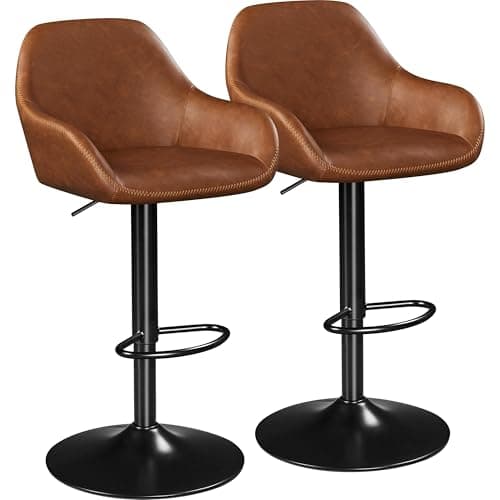 Yaheetech Adjustable Swivel Bar Stools, Set of 2 Best when the measurement is awkward | Two stools, one order, adjustable height | $127.99 View on Amazon #ad how we are funded - price as of October 27, 2026 |
Scroll the table sideways on a narrow screen. Every price in this table comes from Amazon’s own product data, is refreshed daily, and is stamped with the date it was read - and the button opens the current listing, which is always the final word.
The category
What bar furniture actually is
Search for bar furniture and you get a retail aisle rather than an answer: carts beside cabinets beside stools beside pub tables, all photographed in the same room as though you were meant to buy the set. You are not. There are four distinct pieces in this category, they solve four different problems, and the useful question is which of those problems you actually have.
- The surface - a cart, a console or a sideboard. Its job is to put bottles, glassware and ice in one place at roughly counter height so you can build a drink standing up without walking between three rooms. This is the piece almost everyone needs and the piece most people buy last.
- The enclosed storage - a bar cabinet or a drinks armoire. Its job is doors: keeping dust off rims, keeping daylight off bottles, and letting the bar close when the room is being used for something else.
- The seating - counter stools or bar stools. Its job is to turn a surface into a place people stay. It is the only piece in the category with a right answer determined by arithmetic rather than by taste.
- The dedicated bar table - a pub table, a bar-height dining set, or a built-in counter. Its job is to be the surface you stand or perch at. In a normal house it duplicates a kitchen counter, and it is the piece we would skip in nearly every room.
What is not bar furniture, despite being sold alongside it: ice buckets, coasters, service mats, glass racks and bottle openers. Those are equipment, they cost a fraction of a piece of furniture, and they improve drinks in a way furniture never does. Types of barware sorts the whole category into functional groups, and storage is the one group in it that improves no drink at all - it just decides whether everything else gets used.
This page is about choosing between the pieces. If you have already decided you want a rolling surface, best bar carts is the list, and bar cart dimensions guide has the measurements to check a listing against.
How to choose
Five questions that settle which piece you need
Answer these in order. The first one that gives you a clear answer is the piece to buy, and you can stop there - this category rewards buying one thing properly far more than it rewards buying a matching group.
- Where do you currently make a drink, and what is wrong with it? If the answer is a kitchen counter and the problem is that the bottles live in a cupboard three steps away, you need a surface. If the answer is a counter and the problem is that the bottles are already on it and the kitchen looks like a liquor store, you need enclosed storage. If the answer is a counter that works fine and nobody has anywhere to sit, you need stools. People routinely buy the wrong one of those three because they shopped by picture rather than by complaint.
- How many bottles are you storing? Under about ten and a two-tier cart is comfortable. Ten to twenty and a cart is full and starting to read as cluttered rather than curated. Past twenty and a cabinet is the better answer - not because a cart cannot physically hold them, but because the display logic that justifies an open cart stops working when the shelves are packed.
- How bright is the room, and does the bar need to close? Direct sunlight fades labels within months and degrades open bottles of vermouth, sherry and amari faster than anything else in the house. A bright south-facing room argues for doors. A room that doubles as a formal space also argues for doors, because an open cart is always visible.
- Do people sit, or do they lean? Seating is the piece most likely to be bought on impulse and most likely to be wrong, because it is the only one with a measurable right answer. If nobody has ever stayed at your bar for twenty minutes, stools will become expensive coat racks.
- How much clear floor can you actually surrender, with working room included? A cart wants its footprint plus roughly six inches of standing room in front of it. A cabinet wants its footprint plus door swing. A stool wants 26 to 30 inches of counter run and somewhere to go when it is not in use. Measure the space with a tape, mark it with painter's tape on the floor, and live with the outline for a day before ordering.
If question five is the one that stops you, that is a real answer rather than a failure. Bar cart ideas for small spaces covers the arrangements that work when floor area is the binding constraint, including the ones that use a wall or a tray instead of a piece of furniture.
The order
Buy in this order, and why
Nothing in this sequence gets replaced by the next step, which is the point of buying in an order at all: you are not buying cheap versions of four things, you are buying fewer things and the right ones.
| Order | Piece | What it solves | Skip it if |
|---|---|---|---|
| 1 | Rolling cart or console surface | Everything in one place at standing height; the bar can move to the people | Bottles must be out of sight, out of reach, or out of the light |
| 2 | Stools | Turns a surface people pass into a surface people stay at | Nobody has ever sat at it, or clearance comes out under 9 inches |
| 3 | Enclosed cabinet | Dust, daylight and the ability to close the bar; real capacity past twenty bottles | The collection is small, or the display is half the pleasure |
| 4 | Dedicated bar table or pub set | A standing surface where no counter exists | You have a kitchen counter - which is almost everyone |
The reason the cart comes before the cabinet, even though a cabinet holds more, is that a cart changes the ergonomics of making a drink immediately and cheaply, and a cabinet mostly changes the storage. If you are short of both, start with the surface. Bar cart vs bar cabinet is the full argument between those two, including the capacity point at which the answer flips.
The reason stools come before the cabinet is that seating is what converts a bar from a place you serve from into a place people use. That is the difference between a cart that gets wheeled out twice a year and one that earns its floor space, and it costs less than enclosed storage.
The surface
Cart, console or cabinet
A cart is a rolling open display, and the two features that distinguish a good one from a photogenic one are a rail around the top and a bottom shelf rated for real weight. The rail is what stops a glass walking off while you roll. The bottom shelf is where the bottles belong - loading the weight low makes the cart harder to tip and keeps the working surface clear, which is the opposite of how most carts are photographed.
Vertical clearance between shelves is the measurement nobody checks and the one that decides whether a cart is usable. A standard 750 ml spirit bottle stands about 11 to 12 inches, and plenty of decorative carts leave only ten inches between tiers - which means the bottles lie down, live on the top surface, or do not come home with you. Three-tier carts buy capacity out of height, so the trade is always tighter clearance per shelf. That is fine for glassware and mixers and tight for tall bottles.
A cabinet is the opposite proposition: more floor area, far more capacity, doors, and no mobility at all. The specifications worth reading are the published top load rating, whether there are hanging stem slots, and whether the doors have magnetic or roller closures - a floor that is not quite level will swing an uncatched door open all evening. Hanging stem storage is genuinely useful because it keeps glassware out of a cupboard and off the working surface, and it stores stems upright rather than rim-down on a shelf.
A console or sideboard you already own is the third and cheapest route, and it is a perfectly good one. It gives you the surface without buying furniture at all, and the only thing it lacks is mobility. Where to put a bar cart covers the placement rules - away from direct sun, out of a traffic path, near enough to a socket if ice or light is involved - and those apply identically to a sideboard pressed into service.
Seating
Stools are arithmetic, not taste
This is the one piece in the category with a correct answer you can calculate. Measure from the finished floor - including any rug the stool will stand on - to the top of the surface, then subtract 11 inches. That is the seat height to buy, and anything within an inch of it will feel right. A 36-inch kitchen counter takes a 24 to 26 inch counter stool. A 42-inch bar top takes a 29 to 31 inch bar stool. Those two surface heights are what nearly every stool on the market is built for, which is why a 38-inch surface is awkward and an adjustable stool earns its keep there.
Two things break the arithmetic, and neither appears on a listing. The first is the apron: clearance is measured to the lowest obstruction under the counter, so a thick top with a deep rail beneath it eats knee room the seat-height figure cannot see. The second is cushion compression - a soft upholstered seat gives up close to an inch under an adult's weight, and listed seat heights are unloaded. Bar stool height guide has the full table by surface height and the measuring sequence.
Above about 29 inches, treat the footrest as a requirement and the back as a preference, which is the reverse of how most people shop. At bar height feet no longer reach the floor, and dangling feet load the whole lower leg onto the front edge of the seat - that is the specific reason a tall stool becomes uncomfortable after twenty minutes. A footrest that runs the width of the stool beats a single thin rail, which people hook one heel on and then sit crooked.
Then count rather than guess: 26 to 30 inches per stool, center to center. A six-foot run takes three stools, not four, and if you build drinks on the same surface you need to leave one position clear for a mixing glass and a jigger. How many bar stools for an island covers measuring the usable run instead of the island, and swivel vs non-swivel bar stools covers what a swivel base costs you in durability and in the ability to tuck away.
Specifications
The four numbers worth reading on any listing
Bar furniture listings are mostly adjectives. These are the figures that predict whether a piece survives being used rather than photographed.
| Specification | What to look for | What it tells you |
|---|---|---|
| Published load rating | A number per shelf or for the top, in pounds | An unstated rating usually means a decorative shelf. A published 100 lb top is a furniture-grade claim |
| Shelf clearance | 11 to 12 in minimum for a 750 ml bottle | Whether your bottles stand up or lie down. The most common post-delivery disappointment in the category |
| Seat height, unloaded | Surface height minus 11 in | Whether the stools are comfortable. Nine inches of clearance is the usual failure |
| Frame and top material | Solid wood or powder-coated steel frame; tempered glass or solid top | MDF with a printed veneer swells permanently from one spill. Tempered glass is strong but shows every ring |
On materials, the short version: powder-coated steel frames are the most forgiving thing in this category and they are what most carts are; solid wood is heavier, more expensive and repairable; MDF with a laminate or paper veneer is the one to be careful with, because a bar is a wet environment and a swollen MDF edge cannot be sanded back. Tempered glass tops are strong and easy to wipe and they show every single ring, which is a coaster-habit problem rather than a furniture problem.
Casters are worth thirty seconds of attention too. Larger wheels roll over a rug edge and a door threshold; tiny hard casters do not, and a loaded cart on deep carpet is simply stationary furniture that happens to have wheels. If the cart is meant to move between rooms, measure the narrowest doorway and turn on the route before you order - that is the other delivery-day surprise.
The honest part
What bar furniture does not fix, and where to spend instead
No piece of furniture here improves a drink. That is worth saying plainly on a page that recommends six of them. Furniture decides whether your equipment is within reach and whether the bar looks like something you are glad is in the room - both real, neither tasted. If your drinks are currently watery, inconsistent or warm, the fix is ice, a jigger and a glass that holds temperature, and all three together cost less than one stool. If the ice in question comes out of a refrigerator door, how to get clear ice from an ice maker is the honest answer on what that appliance can and cannot do.
So split the budget deliberately. A surface, two stools and an honest set of equipment is a better home bar than a matching three-piece furniture group with a freezer tray and a free-poured measure. How to build a home bar on a budget sets out the five tools and three glass shapes in buying order, and the home bar upgrade guide works by symptom - start there if you are not sure whether your problem is furniture at all.
The piece we would most often talk someone out of is the dedicated bar table or pub set. It asks for dining-room floor area in order to provide a standing surface, which a kitchen counter already provides, and bar-height dining sets are uncomfortable for a meal and awkward for a drink. The genuine exceptions are a basement or garage room with no counter at all, and a built-in counter you are commissioning as part of a renovation, which is a different project with a different budget.
The second thing we would skip is the matching set. Buying a cart, a cabinet and four stools in one finish is how rooms end up with furniture nobody uses, and it removes the one real advantage of this category: you can buy the piece that is missing, live with it for a season, and find out whether the next piece is actually needed. Home bar ideas shows five setups by the space available - a counter corner, a cart, a cabinet, a closet conversion and a counter with stools - which is a more useful way to plan than a furniture catalog.
Finally, buy the accessories that protect the furniture on day one rather than after the first ring. A silicone service mat, absorbent coasters and an insulated bucket cost very little and they are the difference between a cart that ages well and one that looks tired in a year. Best bar cart accessories covers the three that do something and is honest about the ones that are there to look right.
The picks in full
Every pick, and who each one is for
01 · Best first piece for most rooms
Nathan James Carter Rolling Bar Cart
Nathan James · Mid tier
A railed glass top, a bottom shelf that holds a real bottle load, and a price that does not ask you to commit.
Two tiers, a railed glass top and a bottom shelf that carries around ten bottles on casters. It is the cheapest piece of furniture here that genuinely changes how the bar works, because it puts bottles, glass and ice in one place at standing height and then rolls to where the people are. Skip it if the bottles need to be out of sight or out of a child's reach - a cart is an open rolling display by design, and no amount of styling changes that.
The specs that decide it
- Tiers:
- 2
- Top:
- railed, glass
- Bottom shelf:
- holds around 10 bottles
- Mobility:
- casters
Who it is for
- The top rail is the feature people underrate - it is what stops a glass walking off while you roll
- Bottom shelf carries a genuine bottle load rather than four for the photo
- Assembles in an evening with the supplied hardware
Where it gives ground
- Glass top shows every ring, so you will want a coaster habit
- Casters on deep carpet are hard work
Skip this one if your bottles need to be out of sight or out of reach. A cart is an open, rolling display by design.
02 · Best if the bar has to close
Crosley Landon Bar Cabinet
Crosley · The one worth stretching for
#ad how we are funded - price as of October 27, 2026
A cabinet that hides the bottles behind doors and still hangs your glasses where you can reach them.
An enclosed mid-century cabinet with seven wine compartments, four hanging stem slots, two deep door shelves, two interior shelves and a top rated to 100 lb. Doors are the feature: they deal with dust and with sunlight, which is the thing that quietly ruins an open collection, and they let the bar stop being the focal point of a living room. Skip it if you like the bottles on show, and skip it if you move furniture around - it is heavy, and it needs a real wall.
The specs that decide it
- Type:
- enclosed bar cabinet, mid-century
- Wine storage:
- seven compartments plus four hanging glass slots
- Bottle storage:
- two deep door shelves and two interior shelves
- Top:
- rated to 100 lb
Who it is for
- Doors matter more than people expect - dust and sunlight are both bad for an open bottle collection
- Hanging stem slots keep glassware out of a cupboard and off the top surface
- Magnetic closures mean the doors stay shut on a floor that is not quite level
Where it gives ground
- Heavy, and not a thing you reposition on a whim
- Takes a real wall - this is furniture, not an accessory
Skip this one if you like the bottles on show. Half the point of a bar cart is the display, and a cabinet is the opposite argument.
03 · Best when the space is a gap
MAHANCRIS 3-Tier Rolling Bar Cart
MAHANCRIS · Entry tier
#ad how we are funded - price as of October 27, 2026
Three shelves in a frame under ten inches deep - the cart to buy when the space you have is a gap, not a corner.
A three-tier metal cart measuring 16.9 inches wide, 9.4 inches deep and 32.3 inches tall on casters. Under ten inches deep is the specification that matters, because it fits beside a sofa or between a door and a radiator where a standard 16 to 20 inch cart will not, and the third shelf buys capacity out of height instead of floor area. Skip it if you want the cart to be a centerpiece, and do not load the top tier with bottles - the build is lighter than a furniture-grade cart.
The specs that decide it
- Tiers:
- 3
- Dimensions:
- 16.9 in wide, 9.4 in deep, 32.3 in tall
- Frame:
- metal
- Mobility:
- casters
Who it is for
- A third shelf buys real capacity without buying floor area
- Under ten inches deep, so it fits a gap most carts cannot
- Light enough to move with one hand
Where it gives ground
- Open shelving means everything is on show, dust included
- Lighter build than a furniture-grade cart - do not load the top tier with bottles
Skip this one if the cart is a centerpiece. This is a working cart, and it looks like one.
04 · Best seating for a standard island
Nathan James Arlo Backless Saddle Bar Stool, Set of 2
Nathan James · Entry tier
Backless and low enough to disappear under the counter when nobody is sitting on it, which is the whole argument for a saddle stool.
A backless upholstered saddle pair at counter height, which is the right category for the 34 to 36 inch counter most kitchens have. Backless is the quiet advantage: it tucks fully under an overhang so the kitchen reads as a kitchen again when nobody is sitting there, and it clears a thick countertop with a deep apron that a backed stool would fight. Skip it if people settle in at your bar for a whole evening - nobody is comfortable on a backless seat for an hour.
The specs that decide it
- Height:
- counter height
- Seat:
- double-layered upholstered saddle
- Base:
- black metal
- Set:
- 2
Who it is for
- Slides fully under an island, so the kitchen reads as a kitchen again
- A double-layered saddle seat is more comfortable than a flat backless pad
- Sold as a pair at counter height, which is what most islands actually need
Where it gives ground
- No back, so nobody is settling in for an hour
- Counter height only - this is not the stool for a 42-inch bar
Skip this one if people sit at your bar for a whole evening. Buy a stool with a back and accept that it will not tuck away.
05 · Best seating if people stay a while
Nathan James Gracie Upholstered Bar Stool, Set of 2
Nathan James · Mid tier
#ad how we are funded - price as of October 27, 2026
An upholstered back and a wooden frame - the stool to buy when people are going to stay at the bar rather than lean on it.
An upholstered back on a pine frame, sold as a pair, with a footrest - which stops being optional above about 29 inches of seat height, because feet no longer reach the floor and the whole weight of the lower leg lands on the front edge of the seat. This is the stool to buy when the bar is somewhere people sit rather than lean. Skip it if your surface is standard island height: this listing is bar height, and bar-height stools at a 36-inch counter leave seven inches of knee clearance instead of eleven.
The specs that decide it
- Height:
- bar height
- Upholstery:
- cream boucle
- Frame:
- warm pine wood
- Set:
- 2
Who it is for
- A real back, which is the difference between a perch and a seat
- Wood legs read as furniture rather than as a fixture
- Sold as a pair, so a two-seat bar is one order
Where it gives ground
- Boucle is a light fabric in a room where drinks get poured
- Bar height only in this listing - measure before you order
Skip this one if your counter is standard kitchen-island height. Bar height will leave your knees under your chin.
06 · Best when the measurement is awkward
Yaheetech Adjustable Swivel Bar Stools, Set of 2
Yaheetech · Mid tier
#ad how we are funded - price as of October 27, 2026
A gas-lift swivel pair that fits a counter or a bar because you set the height after it arrives rather than before you order.
A gas-lift adjustable swivel pair with a backrest, which Yaheetech rates for surfaces between 45 and 53 inches high. Adjustability is the honest answer to a non-standard surface - a 38-inch bar top is a genuinely bad fit for every fixed stool on the market, and a stool that is two inches wrong is uncomfortable forever. Skip it if you know your exact counter height and want something solid: a gas lift is a wear item, and PU leather creases and eventually peels where fabric just fades.
The specs that decide it
- Height:
- gas-lift adjustable
- Seat:
- PU leather with a backrest
- Swivel:
- yes
- Set:
- 2
Who it is for
- Adjustable height removes the single most common bar-stool ordering mistake
- A backrest is what turns a perch into somewhere you sit for a second drink
- Two stools in one order and one price
Where it gives ground
- A gas lift is a wear item, and the cheapest ones are the first thing to go
- PU leather creases and eventually peels where a fabric seat just fades
Skip this one if you know your exact counter height and want a fixed, solid-wood stool. Adjustability is the compromise here.
Honest limits
What we could not verify
We have not assembled or load-tested any of these pieces. Dimensions, load ratings and seat heights are as published by the manufacturer or as listed in Amazon's catalog data; clearance, spacing and seat-height rules are industry-standard figures rather than measurements of these specific items. Nathan James does not sell the Carter cart on Amazon, so its photo is illustrative of the type and the listing's own specifications were not available to cross-check.
We do not run a test lab and we have not personally used every product here. Where a judgment rests on published specifications or on what owners report rather than on our own hands, we say so. Read the full method.
Questions
Related questions
- What is bar furniture?
- Four distinct pieces: the surface that holds bottles and glassware (a cart, console or sideboard), enclosed storage (a bar cabinet), seating (counter or bar stools), and a dedicated bar table or built-in counter. Ice buckets, coasters and mats are equipment rather than furniture - they cost far less and they are what actually improves a drink.
- What furniture do you need for a home bar?
- One surface at roughly counter height, and seating only if people actually sit. Everything else is optional. A cart or a sideboard plus two stools covers the large majority of homes; a cabinet earns its space once the collection passes about twenty bottles or the room is bright enough to fade labels.
- Should I buy a bar cart or a bar cabinet?
- A cart if the bottles look good, the room is not especially bright, and you want everything within reach without opening anything. A cabinet if the collection has outgrown a cart's display logic, the room gets direct sun, or the bar needs to close. The usual tipping point is capacity: past roughly fifteen to twenty bottles a cart reads as cluttered rather than curated.
- What height stool do I need for my counter?
- Measure from the floor to the top of the surface and subtract 11 inches. A standard 36-inch kitchen counter takes a 24 to 26 inch counter stool; a 42-inch bar top takes a 29 to 31 inch bar stool. Check the lowest obstruction under the counter too, because a deep apron eats knee room the seat height cannot see.
- How much space does a bar cart need?
- Its own footprint - typically 30 to 36 inches wide and 16 to 20 inches deep - plus about six inches of standing room in front so you can work at it. Also measure the narrowest doorway and turn on the route from the front door, which is the other dimension people discover on delivery day.
- Is a bar table worth buying?
- Rarely in a house that has a kitchen counter, because it duplicates a surface you already own while taking dining-room floor area. Bar-height dining sets are also uncomfortable for a meal and awkward for a drink. The honest exceptions are a basement or garage room with no counter, or a built-in counter as part of a renovation.
- Is MDF bar furniture a bad idea?
- It is the material to be most careful with, because a bar is a wet environment and a swollen MDF edge cannot be sanded back the way solid wood can. Powder-coated steel is the most forgiving option and is what most carts use; solid wood is heavier, costs more and can be repaired. Check whether a listing publishes a load rating at all - silence usually means a decorative shelf.
Sources
Read next
Related reading
- Bar carts and bar storage
Carts, cabinets and the accessories that stop a bar cart turning into a sticky shelf.
- Bar cart vs bar cabinet
Open display against doors: capacity, dust, sunlight and how the room is actually used.
- Bar cart dimensions guide
Thirty to thirty-four inches tall, and the shelf-clearance number that decides whether your bottles stand up.
- Bar stool height guide
Surface height minus eleven inches equals seat height - plus the two things that break the arithmetic.
- Best bar carts
Bottle capacity, usable surface, rails and casters - the four things that decide whether a cart gets used.
- Home bar ideas that work in a real room
Five setups by the space you actually have - counter corner, cart, cabinet, closet conversion, stools - with the clearances each one needs.